Kirjojen hintavertailu. Mukana 12 595 353 kirjaa ja 12 kauppaa.

Kirjailija

Bin Liang

Kirjat ja teokset yhdessä paikassa: 9 kirjaa, julkaisuja vuosilta 2007-2025, suosituimpien joukossa Data Analytics for Smart Infrastructure. Vertaile teosten hintoja ja tarkista saatavuus suomalaisista kirjakaupoista.

9 kirjaa

Kirjojen julkaisuhaarukka 2007-2025.

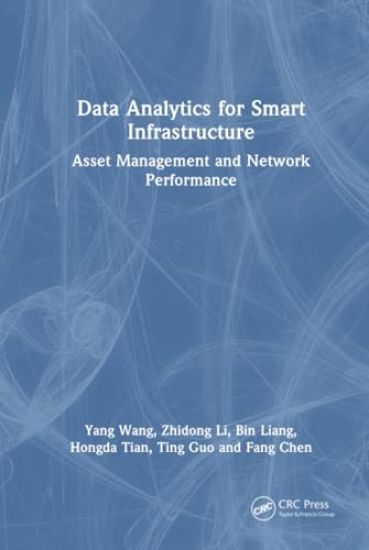
Data Analytics for Smart Infrastructure

Data Analytics for Smart Infrastructure

Yang Wang; Zhidong Li; Bin Liang; Hongda Tian; Ting Guo; Fang Chen

TAYLOR FRANCIS LTD
2025
sidottu
This book presents, for the first time, data analytics for smart infrastructures. The authors draw on over a decade’s experience working with industry and demonstrating the capabilities of data analytics for infrastructure and asset management. The volume gives data-driven solutions to cover critical capabilities for infrastructure and asset management across three domains: 1) situation awareness 2) predictive analytics and 3) decision support. The reader will gain from various data analytic techniques including anomaly detection, performance evaluation, failure prediction, trend analysis, asset prioritization, smart sensing and real-time/online systems. These data analytic techniques are vital to solving problems in infrastructure and asset management. The reader will benefit from case studies drawn from critical infrastructures such as water management, structural health monitoring and rail networks. This groundbreaking work will be essential reading for those studying and practicing analytics in the context of smart infrastructure.
Data Analytics for Smart Infrastructure

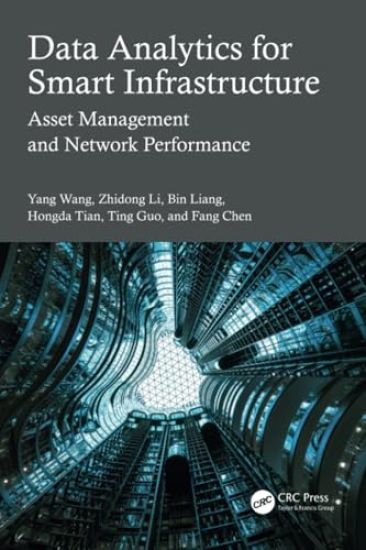
Data Analytics for Smart Infrastructure

Yang Wang; Zhidong Li; Bin Liang; Hongda Tian; Ting Guo; Fang Chen

TAYLOR FRANCIS LTD
2025
nidottu
This book presents, for the first time, data analytics for smart infrastructures. The authors draw on over a decade’s experience working with industry and demonstrating the capabilities of data analytics for infrastructure and asset management. The volume gives data-driven solutions to cover critical capabilities for infrastructure and asset management across three domains: 1) situation awareness 2) predictive analytics and 3) decision support. The reader will gain from various data analytic techniques including anomaly detection, performance evaluation, failure prediction, trend analysis, asset prioritization, smart sensing and real-time/online systems. These data analytic techniques are vital to solving problems in infrastructure and asset management. The reader will benefit from case studies drawn from critical infrastructures such as water management, structural health monitoring and rail networks. This groundbreaking work will be essential reading for those studying and practicing analytics in the context of smart infrastructure.
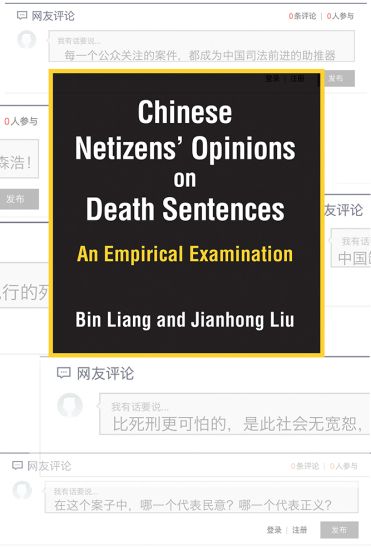
Chinese Netizens' Opinions on Death Sentences

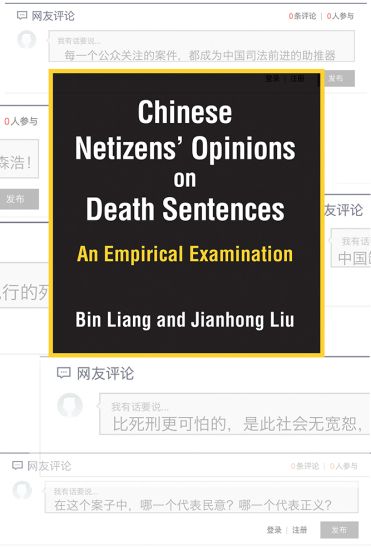
Chinese Netizens' Opinions on Death Sentences

Bin Liang; Jianhong Liu

The University of Michigan Press
2021
sidottu
Few social issues have received more public attention and scholarly debate than the death penalty. While the abolitionist movement has made a successful stride in recent decades, a small number of countries remain committed to the death penalty and impose it with a relatively high frequency. In this regard, the People’s Republic of China no doubt leads the world in both numbers of death sentences and executions. Despite being the largest user of the death penalty, China has never conducted a national poll on citizens’ opinions toward capital punishment, while claiming “overwhelming public support” as a major justification for its retention and use. Based on a content analysis of 38,512 comments collected from 63 cases in 2015, this study examines the diversity and rationales of netizens’ opinions of and interactions with China’s criminal justice system. In addition, the book discusses China’s social, systemic, and structural problems and critically examines the rationality of netizens’ opinions based on Habermas’s communicative rationality framework. Readers will be able to contextualize Chinese netizens’ discussions and draw conclusions about commonalities and uniqueness of China’s death penalty practice.
Chinese Netizens' Opinions on Death Sentences

Chinese Netizens' Opinions on Death Sentences

Bin Liang; Jianhong Liu

The University of Michigan Press
2021
nidottu
Few social issues have received more public attention and scholarly debate than the death penalty. While the abolitionist movement has made a successful stride in recent decades, a small number of countries remain committed to the death penalty and impose it with a relatively high frequency. In this regard, the People’s Republic of China no doubt leads the world in both numbers of death sentences and executions. Despite being the largest user of the death penalty, China has never conducted a national poll on citizens’ opinions toward capital punishment, while claiming “overwhelming public support” as a major justification for its retention and use. Based on a content analysis of 38,512 comments collected from 63 cases in 2015, this study examines the diversity and rationales of netizens’ opinions of and interactions with China’s criminal justice system. In addition, the book discusses China’s social, systemic, and structural problems and critically examines the rationality of netizens’ opinions based on Habermas’s communicative rationality framework. Readers will be able to contextualize Chinese netizens’ discussions and draw conclusions about commonalities and uniqueness of China’s death penalty practice.
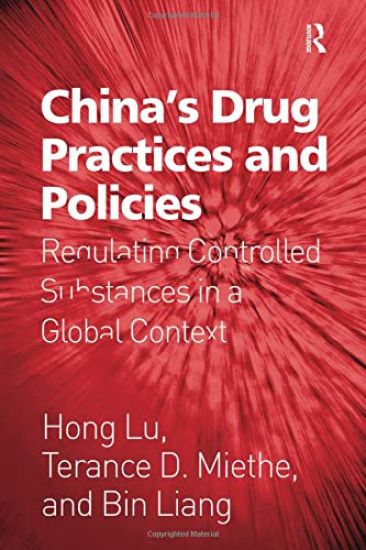
China's Drug Practices and Policies

China's Drug Practices and Policies

Hong Lu; Terance D. Miethe; Bin Liang

Routledge
2016
nidottu
In the context of global efforts to control the production, distribution and use of narcotic drugs, China's treatment of the problem provides an important means of understanding the social, political, and economic limits of national and international policies to regulate drug practices. In the nineteenth and early twentieth centuries, China was known for its national addiction to opium, but its drug-eradication campaigns from the 1950s to the 1970s achieved unprecedented success that ultimately transformed China into a "drug-free" society. However, since the economic reforms and open-door policy of the late twentieth century, China is now facing a re-emergence of the production, use and trafficking of narcotic drugs. Employing case studies and a comparative historical approach, and drawing on a variety of data sources including historical records, official crime data only recently made available, and news reports, this book is the first English-language publication to provide such a comprehensive documentation and analysis of the nature of China's legal regulation of controlled substances. The authors also offer theoretical approaches for studying drug regulation, aspects of drug consumption cultures, the socio-political treatment of drugs during various historical periods and ongoing efforts to legislate drug trade, criminalize drug use and manage the drug addict population within national and international contexts.
The Changing Chinese Legal System, 1978-Present
This groundbreaking book examines the changing Chinese legal system since 1978. In addition to historical analyses of changes at the economic, political-legal, and social levels, Liang gives special attention to crime and punishment functions of the legal system, and the current judicial system based on field research, i.e., court observations in both Beijing and Chengdu. The court system has been in a process of systemization, both internally and externally, seeking more power and relative independence. However, traditional influences, such as preference of mediation (over litigation) and substantive justice (over procedural justice), and lack of respect (from the masses) and guaranteed power (from the political structure), still have major impacts on the building and operation of the judicial system. Liang also shrewdly places the Chinese legal and political reform within the global system. This book, which reshapes our understanding of the economic, political, and essentially legal changes in China within the global context, will be crucial reading for scholars of Asia, law, criminal justice, and sociology.
China's Drug Practices and Policies

China's Drug Practices and Policies

Hong Lu; Terance D. Miethe; Bin Liang

Ashgate Publishing Limited
2009
sidottu
In the context of global efforts to control the production, distribution and use of narcotic drugs, China's treatment of the problem provides an important means of understanding the social, political, and economic limits of national and international policies to regulate drug practices. In the nineteenth and early twentieth centuries, China was known for its national addiction to opium, but its drug-eradication campaigns from the 1950s to the 1970s achieved unprecedented success that ultimately transformed China into a "drug-free" society. However, since the economic reforms and open-door policy of the late twentieth century, China is now facing a re-emergence of the production, use and trafficking of narcotic drugs. Employing case studies and a comparative historical approach, and drawing on a variety of data sources including historical records, official crime data only recently made available, and news reports, this book is the first English-language publication to provide such a comprehensive documentation and analysis of the nature of China's legal regulation of controlled substances. The authors also offer theoretical approaches for studying drug regulation, aspects of drug consumption cultures, the socio-political treatment of drugs during various historical periods and ongoing efforts to legislate drug trade, criminalize drug use and manage the drug addict population within national and international contexts.
The Changing Chinese Legal System, 1978-Present
This groundbreaking book examines the changing Chinese legal system since 1978. In addition to historical analyses of changes at the economic, political-legal, and social levels, Liang gives special attention to crime and punishment functions of the legal system, and the current judicial system based on field research, i.e., court observations in both Beijing and Chengdu. The court system has been in a process of systemization, both internally and externally, seeking more power and relative independence. However, traditional influences, such as preference of mediation (over litigation) and substantive justice (over procedural justice), and lack of respect (from the masses) and guaranteed power (from the political structure), still have major impacts on the building and operation of the judicial system. Liang also shrewdly places the Chinese legal and political reform within the global system. This book, which reshapes our understanding of the economic, political, and essentially legal changes in China within the global context, will be crucial reading for scholars of Asia, law, criminal justice, and sociology.