Kirjojen hintavertailu. Mukana 12 390 323 kirjaa ja 12 kauppaa.

Kirjailija

Biswajit Mandal

Kirjat ja teokset yhdessä paikassa: 10 kirjaa, julkaisuja vuosilta 2020-2026, suosituimpien joukossa Rethinking Competitive Trade Models. Vertaile teosten hintoja ja tarkista saatavuus suomalaisista kirjakaupoista.

10 kirjaa

Kirjojen julkaisuhaarukka 2020-2026.

Rethinking Competitive Trade Models

Rethinking Competitive Trade Models

Biswajit Mandal

TAYLOR FRANCIS LTD
2026
sidottu
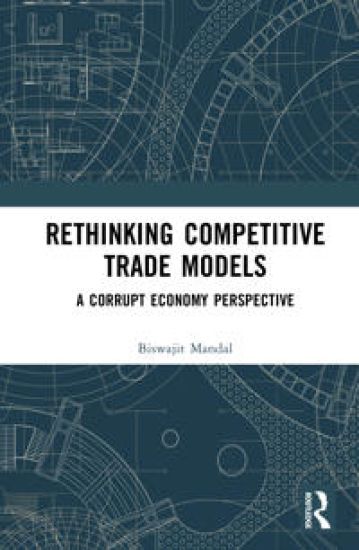
This book presents competitive trade models to recast them from the perspective of an economy which is beset with corruption and related intermediation that requires some sort of cost. It innovatively transforms traditional models (HOSV, SFM, HO nugget) by treating intermediation as a distinct economic sector that consumes factors of production. Through rigorous general equilibrium analysis, it also discusses real life events such as trade liberalization, capital inflow, labor immobility, extortion, etc. It is unquestionably an exciting approach to paving the way for future research around trade and development in competitive trade models befitting developing economies where ramifications of corruption and related damages are pervasive. This book will be of interest to researchers, faculty members, and policy makers working with international trade theory and policy, development economics and labour economics.
Virtual Trade in a Changing World

Virtual Trade in a Changing World

Sugata Marjit; Gouranga G. Das; Biswajit Mandal

Cambridge University Press
2023
pokkari
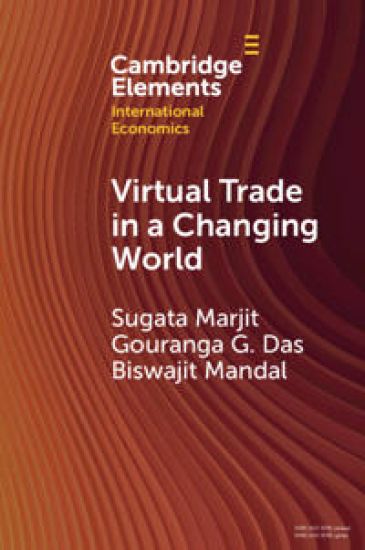
Virtual economic transactions have radically transformed the way we think about trade and markets in closed and open economies. Continuous decline in costs of information and communications and setting up of phenomenally large number of virtual platforms have brought in 'Time' as an essential element in the discourse on international trade. This work delves deep into the issue of how Time enters as a major catalyst of international trade and virtual transactions. This changes the way we look at ideas of comparative advantage, factor mobility, growth, income distribution, and allied concepts. A key result is that greater physical distance might encourage trade contrary to what we are accustomed to accept.
Le verre comme engrais inorganique à long terme

Le verre comme engrais inorganique à long terme

Goutam Hazra; Biswajit Mandal

Editions Notre Savoir
2023
pokkari
Les engrais de verre sont un nouveau type d'engrais avanc et lib ration contr l e, compos de matrices de verre contenant des macro- l ments (K, P, Mg, S, Ca) tr s utiles pour les plantes et galement incorpor s avec des micro- l ments (B, Fe, Mo, Cu, Zn, Mn) qui sont importants pour la croissance et le d veloppement des corps ou des plantes. La quantit de micro- l ments incorpor s dans le verre sous forme d'oxyde est comprise entre 1 et 5 %. L'utilisation d'engrais en verre pr sente de nombreux avantages: en raison de leur solubilit faible ou contr l e, ils vitent la pollution des eaux souterraines; le pH du sol peut tre r gul par le pH de la matrice de verre; ils ne lib rent pas d'anions acides (Cl-, SO42-) qui sont nocifs pour les plantes, de sorte qu'il n'y a pas de risque de br lure du sol lorsqu'ils sont mal dos s; dans un seul type d'engrais peuvent tre incorpor s presque tous les l ments utiles aux plantes; le taux contr l de solubilit dans l'eau peut tre facilement ajust en changeant la composition de la matrice de verre; une seule dose d'application d'engrais de verre peut fournir des nutriments la plante pendant une longue p riode. Avec le besoin croissant d'une utilisation efficace des ressources, de tels engrais de verre sont d plorer et appellent des changements radicaux dans les engrais inorganiques.
Il vetro come fertilizzante inorganico a lungo termine

Il vetro come fertilizzante inorganico a lungo termine

Goutam Hazra; Biswajit Mandal

Edizioni Sapienza
2023
pokkari
I fertilizzanti in vetro sono un nuovo tipo di fertilizzante avanzato e a rilascio controllato, costituito da matrici di vetro con i macroelementi (K, P, Mg, S, Ca) pi utili per le piante e incorporati anche con i microelementi (B, Fe, Mo, Cu, Zn, Mn) che sono importanti per la crescita e lo sviluppo delle piante. La quantit di microelementi incorporati nel vetro come ossido compresa tra l'1 e il 5%. L'uso di fertilizzanti in vetro offre molti vantaggi: grazie alla bassa o controllata solubilit , evita l'inquinamento delle acque sotterranee; il pH del suolo pu essere regolato dal pH della matrice di vetro; non rilasciano anioni acidi (Cl-, SO42-) che sono dannosi per le piante, quindi non c' il rischio di bruciare il suolo quando vengono dosati in modo errato; in un unico tipo di fertilizzante possono essere incorporati quasi tutti gli elementi utili per le piante; il tasso controllato di solubilit nell'acqua pu essere regolato facilmente cambiando la composizione della matrice di vetro; una singola dose di applicazione di fertilizzante in vetro pu fornire i nutrienti alle piante per un lungo periodo. Con la crescente necessit di un uso efficiente delle risorse, questi fertilizzanti di vetro sono molto deplorevoli e richiedono cambiamenti radicali nei fertilizzanti inorganici.
Vidro como fertilizante inorgânico de longa duração

Vidro como fertilizante inorgânico de longa duração

Goutam Hazra; Biswajit Mandal

Edicoes Nosso Conhecimento
2023
pokkari
Os adubos de vidro s o um novo tipo de adubo avan ado e de liberta o controlada, constitu dos por matrizes de vidro com macroelementos (K, P, Mg, S, Ca) mais teis para as plantas e tamb m incorporados com microelementos (B, Fe, Mo, Cu, Zn, Mn) que s o importantes para o crescimento e desenvolvimento de plantas. A quantidade de microelementos incorporados no vidro como xido varia entre 1-5%. A utiliza o de fertilizantes de vidro oferece muitas vantagens: devido sua baixa solubilidade ou solubilidade controlada, evita a polui o das guas subterr neas; o pH do solo pode ser regulado pelo pH da matriz de vidro; n o libertam ani es cidos (Cl-, SO42-), que s o prejudiciais para as plantas, pelo que n o h risco de queimar o solo quando s o incorretamente doseados; num nico tipo de fertilizante podem ser incorporados quase todos os elementos teis para as plantas; a taxa controlada de solubilidade na gua pode ser facilmente ajustada alterando a composi o da matriz de vidro; uma nica dose de aplica o de fertilizante de vidro pode fornecer nutrientes s plantas durante muito tempo. Com a necessidade crescente de uma utiliza o eficiente dos recursos, estes adubos de vidro s o muito deplor veis e exigem mudan as radicais nos adubos inorg nicos.
Glas als anorganischer Langzeitdünger

Glas als anorganischer Langzeitdünger

Goutam Hazra; Biswajit Mandal

Verlag Unser Wissen
2023
pokkari
Glasd nger sind eine neue Art von fortschrittlichen und kontrolliert freigesetzten D ngemitteln, die aus einer Glasmatrix mit Makroelementen (K, P, Mg, S, Ca) bestehen, die f r Pflanzen sehr n tzlich sind, und die auch Mikroelemente (B, Fe, Mo, Cu, Zn, Mn) enthalten, die f r das Wachstum und die Entwicklung von Pflanzen wichtig sind. Die Menge der Spurenelemente, die im Glas als Oxid enthalten sind, liegt im Bereich von 1-5%. Die Verwendung von Glasd nger bietet viele Vorteile: aufgrund der geringen oder kontrollierten L slichkeit wird die Verschmutzung des Grundwassers vermieden; der pH-Wert des Bodens kann durch den pH-Wert der Glasmatrix reguliert werden; es werden keine sauren Anionen (Cl-, SO42-) freigesetzt, die f r Pflanzen sch dlich sind, so dass bei falscher Dosierung keine Gefahr der Bodenverbrennung besteht; in einem einzigen D ngemitteltyp k nnen fast alle f r Pflanzen n tzlichen Elemente enthalten sein; die kontrollierte Rate der Wasserl slichkeit kann durch nderung der Zusammensetzung der Glasmatrix leicht angepasst werden; eine einzige Dosis Glasd nger kann die Pflanzenn hrstoffe f r eine lange Zeit liefern. Angesichts des wachsenden Bedarfs an effizienter Ressourcennutzung sind solche Glasd nger u erst bedauerlich und erfordern radikale Ver nderungen bei den anorganischen D ngemitteln.
Virtual Trade and Comparative Advantage

Virtual Trade and Comparative Advantage

Sugata Marjit; Biswajit Mandal; Noritsugu Nakanishi

Springer Verlag, Singapore
2021
nidottu
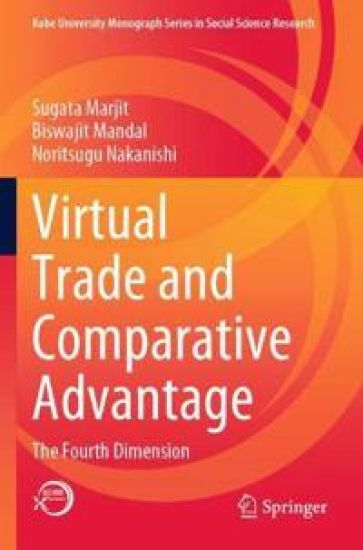
The main purpose of this book is to expose economics graduate students and researchers to the most significant development in international trade that has taken place in the recent past. Service transactions now make up a sizeable portion of global trade. Trade in both final and intermediate inputs is done virtually through information and communication networks, raising afresh the question of the basis of trade and calling for in-depth investigation. This book succinctly comes up with a relatively new explanation for the basis of trade, thus it adds a new dimension to three existing building blocks: technology, endowment, and returns to scale. Against a backdrop of standard Ricardian and Heckscher–Ohlin competitive models of trade, the chapters of this book nicely introduce the issue of communication cost and the difference in time zones between two trading nations. Then follow many intricate phenomena such as informality, skill formation, growth, wage inequality, and decisions regarding foreign direct investment (FDI). However, imperfectly competitive models are not dealt with in great detail as they deserve more space than can be allotted to them here. Given the nonexistence of any research-oriented in-depth analyses of competitive trade models with time-zone differences, this book is a valuable addition to the resources available to researchers and policymakers interested in deciphering recent developments in global trade patterns and the subsequent welfare effect.
Virtual Trade and Comparative Advantage

Virtual Trade and Comparative Advantage

Sugata Marjit; Biswajit Mandal; Noritsugu Nakanishi

Springer Verlag, Singapore
2020
sidottu
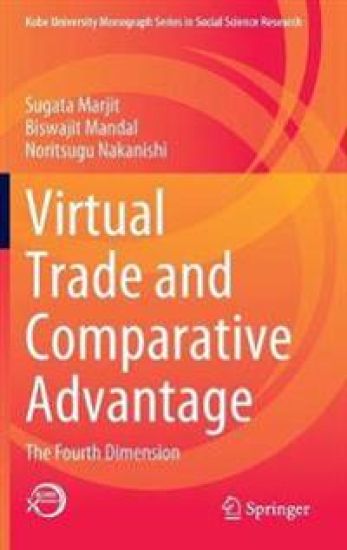
The main purpose of this book is to expose economics graduate students and researchers to the most significant development in international trade that has taken place in the recent past. Service transactions now make up a sizeable portion of global trade. Trade in both final and intermediate inputs is done virtually through information and communication networks, raising afresh the question of the basis of trade and calling for in-depth investigation. This book succinctly comes up with a relatively new explanation for the basis of trade, thus it adds a new dimension to three existing building blocks: technology, endowment, and returns to scale. Against a backdrop of standard Ricardian and Heckscher–Ohlin competitive models of trade, the chapters of this book nicely introduce the issue of communication cost and the difference in time zones between two trading nations. Then follow many intricate phenomena such as informality, skill formation, growth, wage inequality, and decisions regarding foreign direct investment (FDI). However, imperfectly competitive models are not dealt with in great detail as they deserve more space than can be allotted to them here. Given the nonexistence of any research-oriented in-depth analyses of competitive trade models with time-zone differences, this book is a valuable addition to the resources available to researchers and policymakers interested in deciphering recent developments in global trade patterns and the subsequent welfare effect.