
Kirjailija
Blaise Pascal
Kirjat ja teokset yhdessä paikassa: 242 kirjaa, julkaisuja vuosilta 1830-2026, suosituimpien joukossa Pensées, Suivies Des Lettres Écrites À Un Provincial. Vertaile teosten hintoja ja tarkista saatavuus suomalaisista kirjakaupoista.
242 kirjaa
Kirjojen julkaisuhaarukka 1830-2026.

This work has been selected by scholars as being culturally important, and is part of the knowledge base of civilization as we know it. This work was reproduced from the original artifact, and remains as true to the original work as possible. Therefore, you will see the original copyright references, library stamps (as most of these works have been housed in our most important libraries around the world), and other notations in the work.This work is in the public domain in the United States of America, and possibly other nations. Within the United States, you may freely copy and distribute this work, as no entity (individual or corporate) has a copyright on the body of the work.As a reproduction of a historical artifact, this work may contain missing or blurred pages, poor pictures, errant marks, etc. Scholars believe, and we concur, that this work is important enough to be preserved, reproduced, and made generally available to the public. We appreciate your support of the preservation process, and thank you for being an important part of keeping this knowledge alive and relevant.
This work has been selected by scholars as being culturally important, and is part of the knowledge base of civilization as we know it. This work was reproduced from the original artifact, and remains as true to the original work as possible. Therefore, you will see the original copyright references, library stamps (as most of these works have been housed in our most important libraries around the world), and other notations in the work.This work is in the public domain in the United States of America, and possibly other nations. Within the United States, you may freely copy and distribute this work, as no entity (individual or corporate) has a copyright on the body of the work.As a reproduction of a historical artifact, this work may contain missing or blurred pages, poor pictures, errant marks, etc. Scholars believe, and we concur, that this work is important enough to be preserved, reproduced, and made generally available to the public. We appreciate your support of the preservation process, and thank you for being an important part of keeping this knowledge alive and relevant.
This work has been selected by scholars as being culturally important, and is part of the knowledge base of civilization as we know it. This work was reproduced from the original artifact, and remains as true to the original work as possible. Therefore, you will see the original copyright references, library stamps (as most of these works have been housed in our most important libraries around the world), and other notations in the work.This work is in the public domain in the United States of America, and possibly other nations. Within the United States, you may freely copy and distribute this work, as no entity (individual or corporate) has a copyright on the body of the work.As a reproduction of a historical artifact, this work may contain missing or blurred pages, poor pictures, errant marks, etc. Scholars believe, and we concur, that this work is important enough to be preserved, reproduced, and made generally available to the public. We appreciate your support of the preservation process, and thank you for being an important part of keeping this knowledge alive and relevant.
This work has been selected by scholars as being culturally important, and is part of the knowledge base of civilization as we know it. This work was reproduced from the original artifact, and remains as true to the original work as possible. Therefore, you will see the original copyright references, library stamps (as most of these works have been housed in our most important libraries around the world), and other notations in the work.This work is in the public domain in the United States of America, and possibly other nations. Within the United States, you may freely copy and distribute this work, as no entity (individual or corporate) has a copyright on the body of the work.As a reproduction of a historical artifact, this work may contain missing or blurred pages, poor pictures, errant marks, etc. Scholars believe, and we concur, that this work is important enough to be preserved, reproduced, and made generally available to the public. We appreciate your support of the preservation process, and thank you for being an important part of keeping this knowledge alive and relevant.
Blaise Pascals (1623-62) "Tanker" er skissene til et apologetisk skrift - et forsvar for kristendommens sannhet - rettet mot de tallrike fritenkerne i Pascals samtid. Den apologetiske sjanger har sine røtter tilbake til kristendommens første tider, men Pascals apologi skiller seg fra andre ved at den ikke leder fritenkerne i retning av den kristne Gud gjennom metafysiske beviser eller argumenter om paradisisk herlighet, men gjennom en dyptloddende analyse av det moderne gudløse menneskets situasjon her og nå. Pascal inviterer sin sekulære leser til å reflektere over sitt eget liv, til å se sin egen litenhet, uro, utilstrekkelighet og bortkommenhet i sin jakt på et fast punkt i tilværelsen. Denne nye oversettelsen følger Philippe Selliers franske utgave fra 2003 og baserer seg på ny Pascal-forskning.
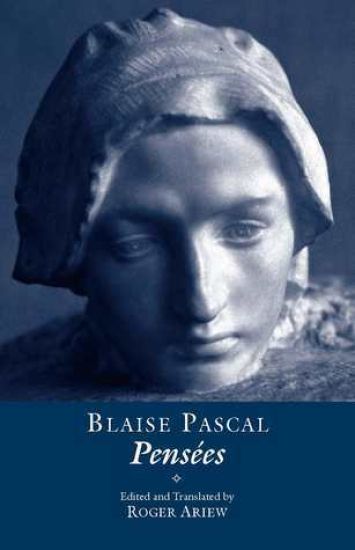
Roger Ariew masterfully renders the oddities of seventeenth-century French vocabulary and syntax in this eloquent and philosophically astute translation -- the first complete English translation based on the Sellier edition of Pascal's manuscript, widely accepted as the version closest to what Pascal intended.

Blaise Pascal Thoughts, Letters and Minor Works
Blaise Pascal; Charles W. (EDT) Eliot
Kessinger Pub
2004
pokkari
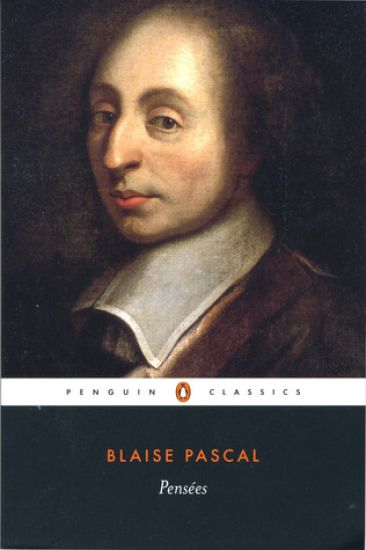
A passionate defence of religious faith by the great seventeenth-century philosopher, mathematician and physicistBlaise Pascal was the precociously brilliant contemporary of Descartes, but it is his unfinished apologia for the Christian religion upon which his reputation now rests. The Pensées is a collection of philosophical fragments, notes and essays in which he explores the contradictions of human nature in psychological, social, metaphysical and, above all, theological terms. Humankind emerges from Pascal's analysis as a wretched and desolate creature within an impersonal universe, but also as a being whose existence can be transformed through faith in God's grace.Translated with an Introduction by A. J. Krailsheimer

Pascal was a scientist and man of the world who came to be a passionately devout Christian. The fragments of his great defense of Christianity, left unfinished at his death in 1662, survive in the form of the Pensees. This series of brief, dramatic notes on his religious convictions are here translated into English. These thoughts expose Pascal's vision of the world and display powerful reasoning and a profound faith.
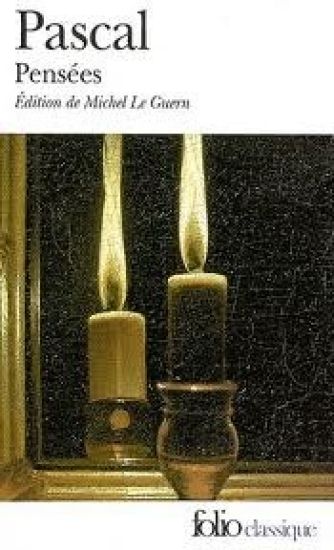
One of the world's great minds ruminates on God, the world and reason in jewel-like fragments of thought.