
Kirjailija
Blaise Pascal
Kirjat ja teokset yhdessä paikassa: 242 kirjaa, julkaisuja vuosilta 1830-2026, suosituimpien joukossa Pensées, Suivies Des Lettres Écrites À Un Provincial. Vertaile teosten hintoja ja tarkista saatavuus suomalaisista kirjakaupoista.
242 kirjaa
Kirjojen julkaisuhaarukka 1830-2026.

Published in 1950: The Penseés is a collection of philosophical fragments, notes and essays in which Pascal explores the contradictions of human nature in psychological, social, metaphysical and - above all - theological terms. Mankind emerges from Pascal's analysis as a wretched and desolate creature within an impersonal universe, but who can be transformed through faith in God's grace.
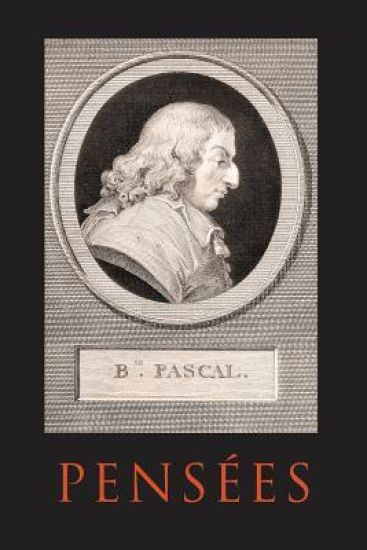
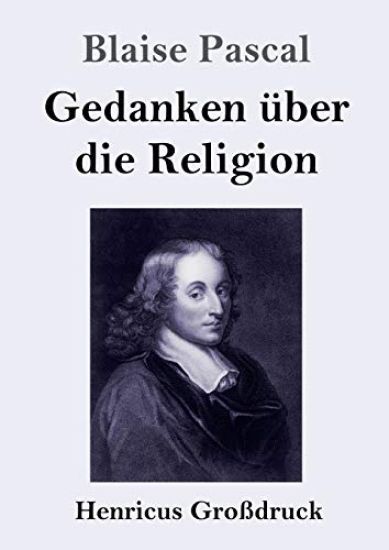
Blaise Pascal: Gedanken ber die Religion Lesefreundlicher Gro druck in 16-pt-Schrift Als Blaise Pascal stirbt hinterl sst er rund 1000 ungeordnete Zettel, die er in den letzten Jahren vor seinem fr hen Tode als Skizze f r ein gro es Werk zur Verteidigung des christlichen Glaubens angelegt hatte. In akribischer Feinarbeit wurde aus den nachgelassenen Fragmenten 1670 die sogenannte Port-Royal-Ausgabe, die 1710 erstmalig ins Deutsche bersetzt wurde. Diese Ausgabe folgt der bersetzung von Karl Adolf Blech von 1840. Gro format, 210 x 297 mm Berliner Ausgabe, 2019 Durchgesehener Neusatz mit einer Biographie des Autors bearbeitet und eingerichtet von Theodor Borken Entstanden etwa zwischen 1656 und Pascals Tod 1662. Erstdruck nach den v llig ungeordneten Fragmenten des Nachlasses: Paris 1669 (Vorausausgabe) und Paris 1670 (1. offizielle Ausgabe, sog. Port-Royal-Ausgabe). Erste deutsche bersetzung: Augsburg 1710. Der Text folgt der bersetzung durch Karl Adolf Blech von 1840. Textgrundlage ist die Ausgabe: Pascal's Gedanken ber die Religion und einige andere Gegenst nde. Aus dem Franz sischen bersetzt von Karl Adolf Blech. Mit einem Vorwort von August Neander, Berlin: Wilhelm Besser, 1840. Dieses Buch folgt in Rechtschreibung und Zeichensetzung obiger Textgrundlage. Umschlaggestaltung von Thomas Schultz-Overhage. Gesetzt aus der Minion Pro, 16 pt. Henricus Edition Deutsche Klassik UG (haftungsbeschr nkt) ber den Autor: 1623 in Clermont-Ferrand geboren, wird Blaise Pascal fr h Mitglied der Acad mie Mersenne, wo er u.a. Ren Descartes kennenlernt. Er konstruiert eine Rechenmaschine, entdeckt das Gesetz der kommunizierenden R hren, erbringt den Nachweis der Abnahme des Luftdrucks in der H he und publiziert umfangreich zur Kombinatorik und Wahrscheinlichkeitstheorie. Am 19. August 1662 stirbt Blaise Pascal in Paris.
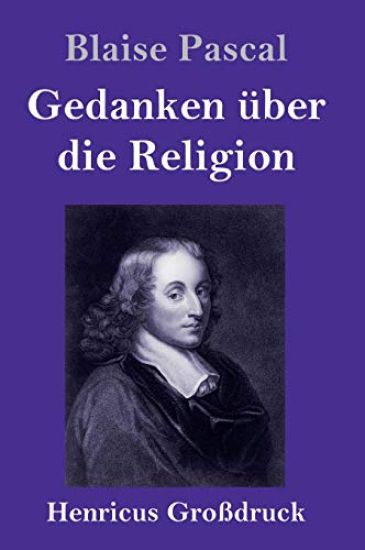
Blaise Pascal: Gedanken ber die Religion Lesefreundlicher Gro druck in 16-pt-Schrift Als Blaise Pascal stirbt hinterl sst er rund 1000 ungeordnete Zettel, die er in den letzten Jahren vor seinem fr hen Tode als Skizze f r ein gro es Werk zur Verteidigung des christlichen Glaubens angelegt hatte. In akribischer Feinarbeit wurde aus den nachgelassenen Fragmenten 1670 die sogenannte Port-Royal-Ausgabe, die 1710 erstmalig ins Deutsche bersetzt wurde. Diese Ausgabe folgt der bersetzung von Karl Adolf Blech von 1840. Gro format, 210 x 297 mm Berliner Ausgabe, 2019 Durchgesehener Neusatz mit einer Biographie des Autors bearbeitet und eingerichtet von Theodor Borken Entstanden etwa zwischen 1656 und Pascals Tod 1662. Erstdruck nach den v llig ungeordneten Fragmenten des Nachlasses: Paris 1669 (Vorausausgabe) und Paris 1670 (1. offizielle Ausgabe, sog. Port-Royal-Ausgabe). Erste deutsche bersetzung: Augsburg 1710. Der Text folgt der bersetzung durch Karl Adolf Blech von 1840. Textgrundlage ist die Ausgabe: Pascal's Gedanken ber die Religion und einige andere Gegenst nde. Aus dem Franz sischen bersetzt von Karl Adolf Blech. Mit einem Vorwort von August Neander, Berlin: Wilhelm Besser, 1840. Dieses Buch folgt in Rechtschreibung und Zeichensetzung obiger Textgrundlage. Umschlaggestaltung von Thomas Schultz-Overhage. Gesetzt aus der Minion Pro, 16 pt. Henricus Edition Deutsche Klassik UG (haftungsbeschr nkt) ber den Autor: 1623 in Clermont-Ferrand geboren, wird Blaise Pascal fr h Mitglied der Acad mie Mersenne, wo er u.a. Ren Descartes kennenlernt. Er konstruiert eine Rechenmaschine, entdeckt das Gesetz der kommunizierenden R hren, erbringt den Nachweis der Abnahme des Luftdrucks in der H he und publiziert umfangreich zur Kombinatorik und Wahrscheinlichkeitstheorie. Am 19. August 1662 stirbt Blaise Pascal in Paris.
Monsieur Pascall's Thoughts, Meditations and Prayers, Touching Matters Moral and Divine
Blaise Pascal; Joseph Walker; Madame Perier
Hansebooks
2019
nidottu
Pensées. Texte Authentique, Vie de l'Auteur, Un Commentaire Suivi Et Une Étude Littéraire
Blaise Pascal; Ernest Havet
Hachette Livre - BNF
2019
pokkari
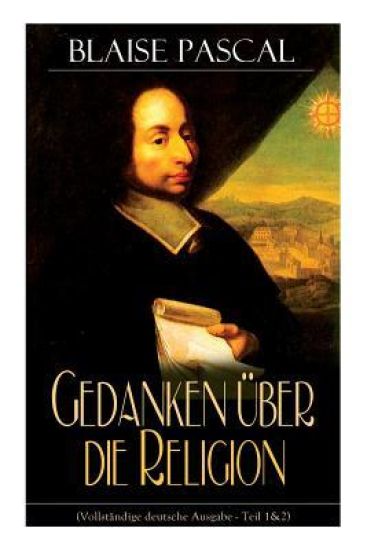
Les Pens es ('die Gedanken') ist einer der meistgelesenen philosophischen bzw. theologischen Texte der europ ischen Geistesgeschichte. Es handelt sich um kein geschlossenes, fertiges Werk, sondern um eine von Ausgabe zu Ausgabe divergierende Zusammenstellung von Notizen aus dem Nachlass des Autors. Pascal verfolgt in diesem Werk ein einziges Ziel: er will die Menschen bekehren. Daf r wird er einerseits das Elend des Menschen und insbesondere des Menschen ohne Gott schildern. Er wird andererseits die ber hmte Theorie des "pari" (Pascalsche Wette) entwickeln. Selbst wenn man die Existenz Gottes nicht beweisen kann, argumentiert Pascal, so ist es doch vorteilhaft zu "wetten," dass er existiert. Falls man sich irrt, hat man nichts verloren und falls man recht hat, kann man dadurch das Heil seiner Seele gew hrleisten. Blaise Pascal (1623-1662) war ein franz sischer Mathematiker, Physiker, Literat und christlicher Philosoph.
Abrégé de la Vie de Jésus-Christ, Avec Le Testament de Blaise Pascal
Blaise Pascal
Hachette Livre - BNF
2018
pokkari
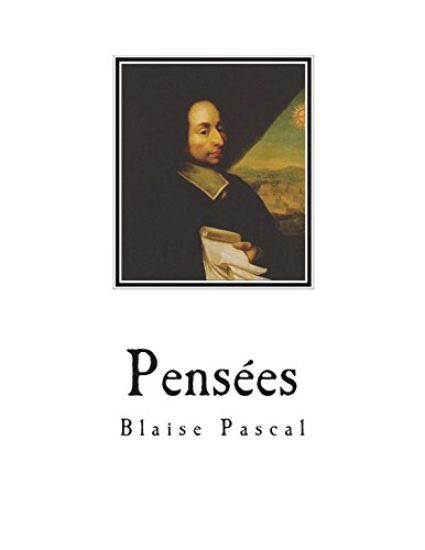
Pens es: Pascal's Pens es by Blaise Pascal and translated by W. F. Trotter. The Pens es ("Thoughts") is a collection of fragments on theology and philosophy written by 17th-century philosopher and mathematician Blaise Pascal. Pascal's religious conversion led him into a life of asceticism, and the Pens es was in many ways his life's work. The Pens es represented Pascal's defense of the Christian religion. The concept of "Pascal's Wager" stems from a portion of this work. 'The difference between the mathematical and the intuitive mind. - In the one, the principles are palpable, but removed from ordinary use; so that for want of habit it is difficult to turn one's mind in that direction: but if one turns it thither ever so little, one sees the principles fully, and one must have a quite inaccurate mind who reasons wrongly from principles so plain that it is almost impossible they should escape notice. But in the intuitive mind the principles are found in common use and are before the eyes of everybody. One has only to look, and no effort is necessary; it is only a question of good eyesight, but it must be good, for the principles are so subtle and so numerous that it is almost impossible but that some escape notice. Now the omission of one principle leads to error; thus one must have very clear sight to see all the principles and, in the next place, an accurate mind not to draw false deductions from known principles.'
Lettres, Accompagnées de Lettres de Ses Correspondants
Blaise Pascal
Hachette Livre - BNF
2018
pokkari
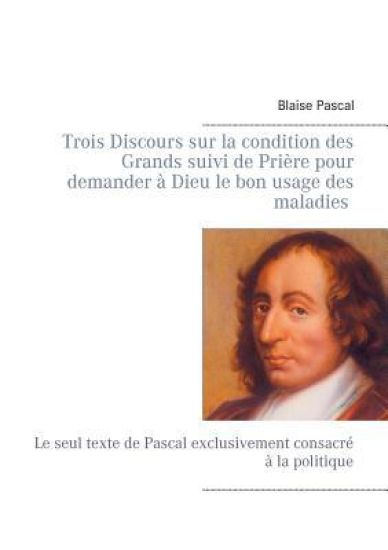
Trois Discours sur la condition des Grands suivi de Prière pour demander à Dieu le bon usage des maladies
Blaise Pascal
Books on Demand
2018
pokkari
Les Trois discours sur la condition des grands sont un ensemble de discours ducatifs tenus par Blaise Pascal au futur duc de Chevreuse Charles-Honor d'Albert, probablement vers 1660. Ils sont reconstitu s et retranscris par Pierre Nicole dans son ouvrage De l' ducation d'un prince, publi en 1670. Dans un premier discours, Pascal affirme que la condition des grands n'est pas li e des qualit s naturelles, mais une suite de hasard tablie par la coutume: un grand doit donc avoir une double-pens e, en se comportant ext rieurement comme le veut son rang, mais en sachant par-devers lui qu'il n'est pas intrins quement sup rieur aux autres hommes. Dans un second, il dit qu'il existe des grandeurs d' tablissement et des grandeurs naturelles: on doit le respect aux grandeurs d' tablissement, m me si elles sont seulement le fruit de la coutume, car le respect des conventions tablies par les hommes est n cessaire; un grand ne peut toutefois pas exiger qu'on admire chez lui des grandeurs naturelles (qui sont le fait du talent ou de la vertu) s'il n'en poss de pas, car cela serait commettre une injustice en confondant les deux sortes de grandeurs. Enfin, dans un troisi me discours, Pascal tablit quelles relations un grand entretient avec son entourage: ce sont celles d'un roi de concupiscence, qui poss de ce que d sire ce dernier; pour ne pas se comporter en tyran, il doit mettre seulement son plaisir satisfaire cette concupiscence. Les Trois discours sur la condition des grands sont le seul texte issu de Pascal, exclusivement consacr la politique. On y retrouve des th mes abord s dans les Pens es, tel le caract re conventionnel des coutumes. En leur d couvrant leur vraie nature, Pascal cherche emp cher les grands de se comporter en tyrans, tout en vitant le chaos qui r sulterait d'une remise en cause de leur rang par le peuple. Il s'agit toutefois seulement pour lui d'un pis-aller: la v ritable grandeur consiste suivre la voie de Dieu Ed
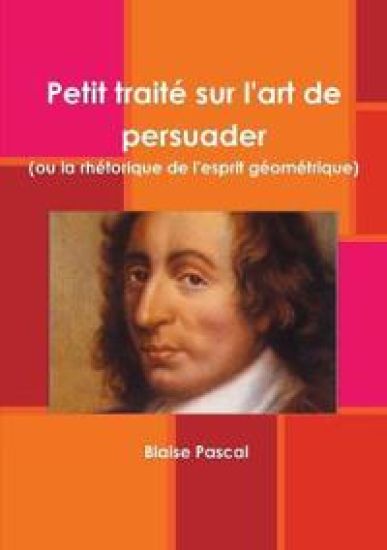
Petit traité sur l'art de persuader (ou la rhétorique de l'esprit géométrique)
Blaise Pascal
Lulu.com
2018
pokkari
L'Art de persuader est une oeuvre philosophique de Blaise Pascal. R dig vers 1660, ce texte s'inscrit dans un combat th ologique. ce moment-l , pour les Jans nistes, il quivaut au Discours de la m thode, il " t moigne de l'efficacit redoutable de l'argumentation . L'Art de persuader est un art de penser la mesure de la faiblesse et de la grandeur de l'homme. Penser, c'est mettre m thodiquement en balance, en doute et l' preuve, sur deux plateaux, avant d' valuer et juger, les objets de l'exp rience entre eux, et avec soi-m me. L'Art de persuader de Pascal, crit en 1658, texte h ritier de L'Art de conf rer (1580) de Montaigne, suppose une alliance de la raison et de l'intuition, de la logique et des figures rh toriques, qui rend l'esprit capable de toucher juste.
![Pensées (Thoughts): [translated by W. F. Trotter with an Introduction by Thomas S. Kepler]](/covers/9781420958317.jpg)
Pensées (Thoughts): [translated by W. F. Trotter with an Introduction by Thomas S. Kepler]
Blaise Pascal
Digireads.com
2018
nidottu
Blaise Pascal was a 17th century French scientist, author, and Christian philosopher who is best known for his work, "Pens es" or "Thoughts." First published posthumously in 1670, "Thoughts" is an edited compilation of the notes that Pascal had prepared for a planned work that scholars refer to as an "Apology for the Christian Religion." Given its incompleteness when Pascal died, the order and composition of the work has been debated and as a result has produced many variant publications. In spite of their incompleteness and frequent incoherence, "Thoughts" has long held a high place among the great classics of the Christian religion. Much of the theological argument implied in these utterances has little appeal to the modern mind, but the acuteness of the observation of human life, the subtlety of the reasoning, the combination of precision and fervid imagination in the expression, make this a book to which the discerning mind can return again and again for insight and inspiration. This edition is printed on premium acid-free paper, follows the translation of W. F. Trotter, with an introduction by Thomas S. Kepler.

"I know of no religious writer more pertinent to our time." -- T. S. Eliot, Introduction to Pens es"Men despise religion. They hate it and are afraid it may be true," declared Pascal in his Pens es. "The cure for this," he explained, "is first to show that religion is not contrary to reason, but worthy of reverence and respect. Next make it attractive, make good men wish it were true, and then show that it is."Motivated by the 17th-century view of the supremacy of human reason, Pascal (1623-62) had intended to write an ambitious apologia for Christianity, in which he argued the inability of reason to address metaphysical problems. His untimely death prevented his completion of the work, but the fragments published posthumously in 1670 form a vital part of religious and philosophical literature. Essential reading for students of history, philosophy, and theology, the Pens es remain among the liveliest and most eloquent defenses of Christianity ever written.
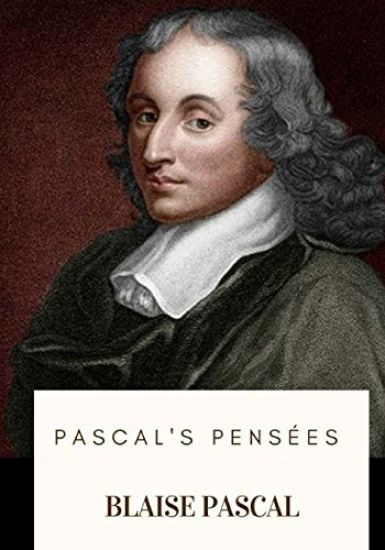
Pascal's Pens es is a masterpiece, and a landmark in French literature. This is Pascal's most influential theological work-in it he surveys several philosophical paradoxes: infinity and nothing; faith and reason; soul and matter; death and life; meaning and vanity-seemingly arriving at no definitive conclusions besides humility, ignorance, and grace.