Kirjojen hintavertailu. Mukana 12 576 097 kirjaa ja 12 kauppaa.
Kirjailija
Bob Costas
Kirjat ja teokset yhdessä paikassa: 13 kirjaa, julkaisuja vuosilta 2001-2025, suosituimpien joukossa "Bad News". Vertaile teosten hintoja ja tarkista saatavuus suomalaisista kirjakaupoista.
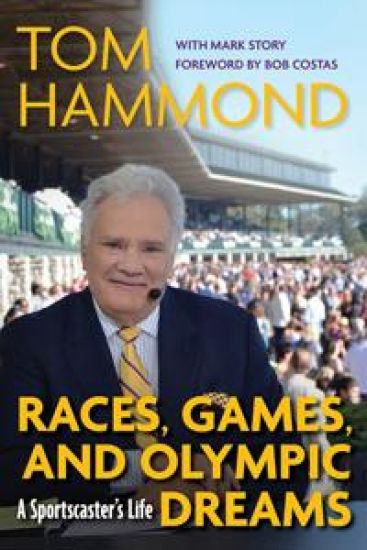
In sports, not all the long shots who succeed are athletes. In 1984, Tom Hammond, a forty-year-old sportscaster who had primarily worked in Kentucky and the Southeast, got an unlikely opportunity to appear on the NBC Sports telecast of the inaugural Breeders' Cup. Assigned to report from the stall area on what was supposed to be a single broadcast, Hammond performed so well that an NBC executive offered him a chance to call NFL games on the spot. That broadcast launched Hammond's thirty-four-year career with NBC Sports and his rise to the top levels of American television sportscasting. Along with cowriter Mark Story, Hammond pulls back the curtain on how a Kentucky native who started out reading horse racing results on Lexington radio went on to broadcast from thirteen Olympic Games. While covering Thoroughbred racing for NBC, Hammond broadcast sixteen Kentucky Derby and Preakness Stakes races and eleven runnings of the Belmont Stakes, including American Pharoah's historic 2015 Triple Crown victory. Hammond offers glimpses into his time as the play-by-play voice for Notre Dame football, calling NBA and NFL games, and his long-running stint announcing Southeastern Conference men's basketball for the league's syndicated TV package. Races, Games, and Olympic Dreams is an intimate and gripping look at Hammond's experiences, including his coverage of Olympic track and field, figure skating, speed skating, ice dancing, diving, and basketball events. Hammond worked with broadcasting luminaries such as Dick Enberg, Bob Costas, Cris Collinsworth, and Bill Walton, and encountered world-class athletes like Allyson Felix, Michael Jordan, Sarah Hughes, and Peyton Manning. Although his career has spanned the nation and the world, Hammond's roots have always remained firmly planted in the Bluegrass State.
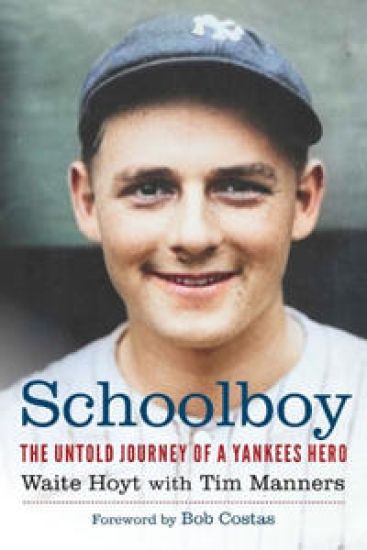
Waite “Schoolboy” Hoyt’s improbable baseball journey began when the 1915 New York Giants signed him as a high school junior, for no pay and a five-dollar bonus. After nearly having both his hands amputated and cavorting with men twice his age in the hardscrabble Minor Leagues, he somehow ended up the best pitcher for the New York Yankees in the 1920s. Based on a trove of Hoyt’s writings and interview transcripts, Tim Manners has reanimated the baseball legend’s untold story, entirely in Hoyt’s own words. Schoolboy dives straight into early twentieth-century America and the birth of modern-day baseball, as well as Hoyt’s defining conflict: Should he have pursued something more respectable than being the best pitcher on the 1927 New York Yankees, arguably the greatest baseball team of all time? Over his twenty-three-year professional baseball career, Hoyt won 237 big league games across 3,845 ? innings-and one locker room brawl with Babe Ruth. He also became a vaudeville star who swapped dirty jokes with Mae West and drank champagne with Al Capone, a philosophizer who bonded with Lou Gehrig over the meaning of life, and a funeral director who left a body chilling in his trunk while pitching an afternoon game at Yankee Stadium. Hoyt shares his thoughts on famous moments in the golden age of baseball history; assesses baseball legends, including Ty Cobb, Stan Musial, and Pete Rose; and describes the strategies of baseball managers John McGraw, Miller Huggins, and Connie Mack. He writes at length about the art of pitching and how the game and its players changed-and didn’t-over his lifetime. After retiring from baseball at thirty-eight and coming to terms with his alcoholism, Hoyt found some happiness as a family man and a beloved, pioneering Cincinnati Reds radio sportscaster with a Websterian vocabulary spiked with a Brooklyn accent. When Hoyt died in 1984 his foremost legacy may have been as a raconteur who punctuated his life story with awe-inspiring and jaw-dropping anecdotes. In Schoolboy he never flinches from an unsparing account of his remarkable and paradoxical eighty-four-year odyssey.
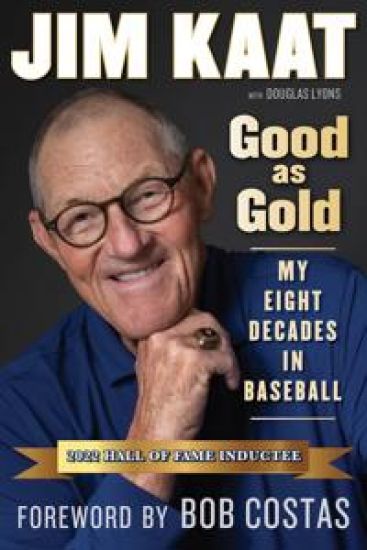
An unforgettable look at a lifetime of baseball packed with humor and passion for the game. With a career that has now touched eight decades, Jim Kaat has had a prime front row seat for baseball's continuing evolution. Not only was he a major-league pitcher for 25 seasons, but his time as a pitching coach and his many years as a broadcaster have given him a singular long view of the game. In Good as Gold, Kaat weaves the tale of a lifetime, taking fans on the field, into the clubhouse, and behind the mic as only he can.Full of priceless stories from New York, Minnesota, and across the major leagues, this honest and engaging autobiography gives fans a rare seat alongside Kaat on a tour of baseball history.
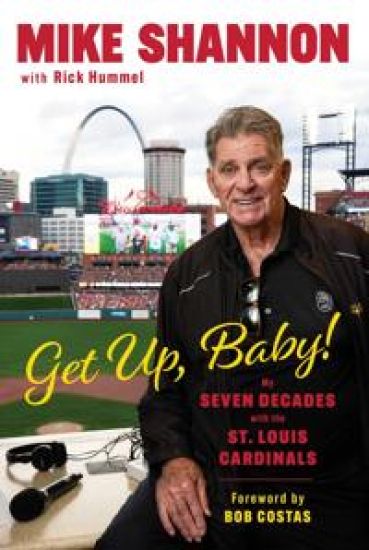
An unforgettable look at a lifetime of Cardinals baseball packed with Mike Shannon's passion for the game Mike Shannon's voice served as the soundtrack of St. Louis Cardinals baseball for 50 years. Millions of fans have enjoyed his observations, insight, and magical storytelling on radio broadcasts. Now, with the help of Hall of Fame baseball writer Rick Hummel, the St. Louis native and lifelong Cards fan takes fans behind the mic, into the clubhouse, and beyond as only he can. Shannon weaves countless unforgettable tales, from childhood memories growing up in south St. Louis to champagne-soaked World Series celebrations as a player in 1964 and 1967, plus encounters with Cardinals legends ranging from Bob Gibson and Ozzie Smith, to Albert Pujols and Yadier Molina. This unmissable autobiography gives fans a rare seat to over six decades of Cardinals history, hijinks, and lore.
One Nation Under Baseball highlights the intersection between American society and America’s pastime during the 1960s, when the hallmarks of the sport-fairness, competition, and mythology-came under scrutiny. John Florio and Ouisie Shapiro examine the events of the era that reshaped the game: the Koufax and Drysdale million-dollar holdout, the encroachment of television on newspaper coverage, the changing perception of ballplayers from mythic figures to overgrown boys, the arrival of the everyman Mets and their free-spirited fans, and the lawsuit brought against team owners by Curt Flood.One Nation Under Baseball brings to life the seminal figures of the era-including Bob Gibson, Marvin Miller, Tom Seaver, and Dick Young-richly portraying their roles during a decade of flux and uncertainty.
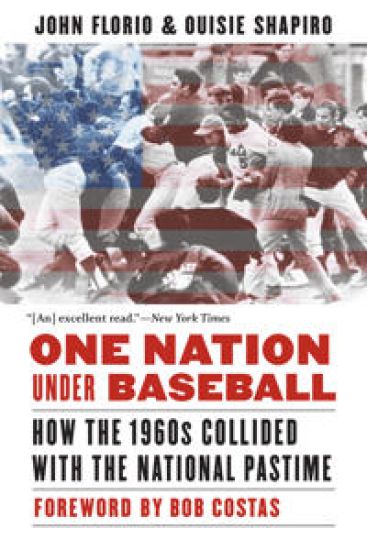
One Nation Under Baseball highlights the intersection between American society and America’s pastime during the 1960s, when the hallmarks of the sport—fairness, competition, and mythology—came under scrutiny. John Florio and Ouisie Shapiro examine the events of the era that reshaped the game: the Koufax and Drysdale million-dollar holdout, the encroachment of television on newspaper coverage, the changing perception of ballplayers from mythic figures to overgrown boys, the arrival of the everyman Mets and their free-spirited fans, and the lawsuit brought against team owners by Curt Flood.One Nation Under Baseball brings to life the seminal figures of the era—including Bob Gibson, Marvin Miller, Tom Seaver, and Dick Young—richly portraying their roles during a decade of flux and uncertainty.
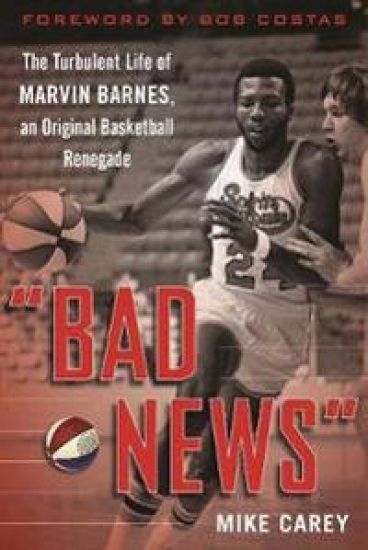
Marvin ?Bad News” Barnes was considered a future Hall of Fame basketball player before he even graduated from college. A standout at Providence College, where he averaged 20.7 points and 17.9 rebounds per game, he was an All-American with the world at his fingertips. Although Barnes enjoyed two highly successful years in the American Basketball Association with the Spirits of St. Louis (winning Rookie of the Year honors and twice being named an All-Star), his career fizzled in the NBA as he wore out his welcome with the Detroit Pistons, Buffalo Braves, Boston Celtics, and San Diego Clippers in four years. His immaturity, as well as a chronic losing battle with drugs and alcohol, turned a potential superstar into a has-been by 1979. By then, his swagger was gone. So too was his game. Written by Mike Carey, who opened his house to Barnes later in his life, this is the story of a supremely gifted athlete whose self-destructive nature led to him living on the mean streets of East San Diego for three years as a panhandler and pimp. Eventually he would serve a total of five years in prison for various felony charges, including the sale of cocaine. Throughout his life, every time it appeared that ?Bad News” had turned the corner, his demons reappeared and succeeded in luring him back into becoming a conniving dope fiend. On September 8, 2014, Barnes finally hit rock bottom, passing away due to acute cocaine and heroin intoxication. He was sixty-two years old. With stories and quotes from Julius Erving, Bill Walton, Larry Brown, Mike D’Antoni, and many others who crossed paths with Barnes, as well as a foreword from former Spirits announcer Bob Costas, ?Bad News” is the story of a squandered talent who could never defeat his inner demons.
Peek into the mind of a champion swimmer Michael Phelps, the most decorated Olympian of all time (28 medals, including 23 gold)In this candid memoir, Phelps talks openly about his battle with attention deficit disorder, the trauma of his parents’ divorce, and the challenges that come with being thrust into the limelight.Readers will relive all the heart-stopping glory as Phelps completes his journey from the youngest man to ever set a world swimming record in 2001, to an Olympic powerhouse in 2008, to surpassing the greatest athlete of ancient Greece, Leonidas of Rhodes, with 13 triumphs in 2016. Athletes and fans alike will be fascinated by insights into Phelps’s training, mental preparation, and behind-the-scenes perspective on international athletic competitions.A chronicle of Phelps’s evolution from awkward teenager to record-breaking powerhouse, Beneath the Surface is a must-read for any sports fan.
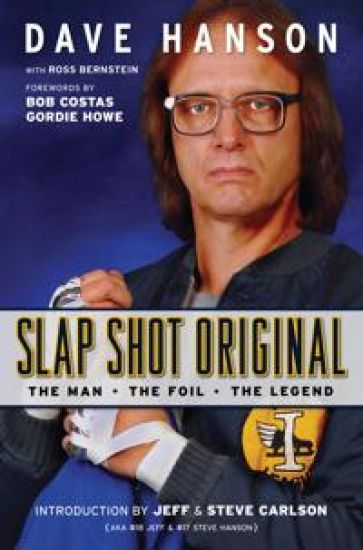
More than 30 years after its cinematic debut, Slap Shot remains one of the most popular sports movies of all time, and this book is actor Dave Hanson’s firsthand account of its making. Starring the legendary Paul Newman, the movie was based on the hilarious and outrageous antics of the fictitious Charlestown Chiefs, a tough-as-nails minor league hockey team in the early 1970s. In financial trouble and due to fold at the end of the season, they bring in the Hanson Brothers—three of the toughest hockey players around—in a desperate bid to sell tickets. What ensues is pure comic genius. Here, Dave Hanson—who played ringleader Jack Hanson in the film—not only opens the vault and dishes the dirt on the making of the movie, from the bench-clearing brawls and the practical jokes on set to the legendary partying that went on during filming, but also explores how the movie changed his and many of the cast and crew’s lives forever.
Over the course of his varied career, Gene A. Budig has served as a professor, the president of the American League of Major League Baseball, the head of three major universities, a major general in the Air National Guard, a newspaper man, and co-owner of a Minor League Baseball team. One can safely assume that Budig has met his share of interesting and inspiring people. In Grasping the Ring, he selects nine from this great array of individuals and offers candid biographical sketches of these compelling characters. Though they are very different, George Steinbrenner, Larry Doby, Tom Osborne, Roy Williams, Gale Sayers, Jerry Reinsdorf, Bob Kerrey, Al Neuharth, and Bob Dole are all exceptional people whose achievements and faults have captured the national interest. Budig writes Grasping the Ring as an insider whose acquaintance with these individuals enables him to ask the kinds of penetrating questions that make these stories intimate, honest, and revealing.
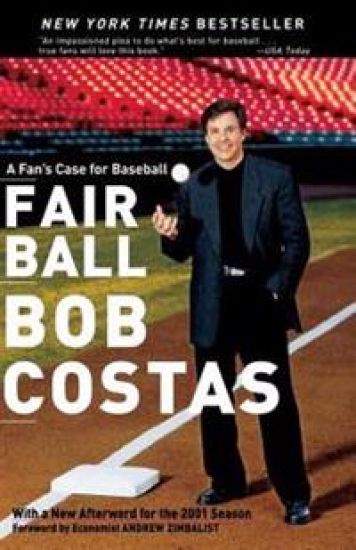
From his perspective as a journalist and a true fan, Bob Costas, NBC's award-winning broadcaster, shares his unflinching views on the forces that are diminishing the appeal of major league baseball and proposes realistic changes that can be made to protect and promote the game's best interests.In this cogent--and provocative--book, Costas examines the growing financial disparities that have resulted in nearly two-thirds of the teams in major league baseball having virtually no chance of contending for the World Series. He argues that those who run baseball have missed the crucial difference between mere change and real progress. And he presents a withering critique of the positions of both the owners and players while providing insights on the wild-card system, the designated-hitter rule, and interleague play. Costas answers each problem he cites with an often innovative, always achievable strategy for restoring genuine competition and rescuing fans from the forces that have diluted the sheer joy of the game.Balanced by Costas's unbridled appreciation for what he calls the "moments of authenticity" that can still make baseball inspiring, Fair Ball offers a vision of our national pastime as it can be, a game that retains its traditional appeal while initiating thoughtful changes that will allow it to thrive into the next century.