Kirjojen hintavertailu. Mukana 12 595 353 kirjaa ja 12 kauppaa.

Kirjailija

Bob Coulter

Kirjat ja teokset yhdessä paikassa: 8 kirjaa, julkaisuja vuosilta 1999-2017, suosituimpien joukossa Building Kids' Citizenship Through Community Engagement. Vertaile teosten hintoja ja tarkista saatavuus suomalaisista kirjakaupoista.

8 kirjaa

Kirjojen julkaisuhaarukka 1999-2017.

Building Kids' Citizenship Through Community Engagement

Building Kids' Citizenship Through Community Engagement

Bob Coulter

Peter Lang Publishing Inc
2017
sidottu
Building Kids’ Citizenship Through Community Engagement offers a compelling, empirically-based argument for giving young people opportunities to grow through productive involvement with their local community. Drawing on John Dewey’s pragmatic frame of experience and concepts of bildung that inform educational practice in Europe, the book speaks directly to teachers and parents who are looking for a way to support young people in their efforts to become confident, self-directed citizens. Throughout, the book offers a paradigm for growth that counters the limits of narrow visions of schooling and equally thin out-of-school learning opportunities which serve to limit young people’s potential. In framing the argument, veteran educator Bob Coulter draws on more than 30 years of experience that includes extensive work with youth as a classroom teacher and in a variety of other community-based efforts, as well as 18 years of work as a mentor to teachers and parents. Key themes running through Building Kids’ Citizenship Through Community Engagement include a cogent argument in support of young people assuming an active, age-appropriate role as citizens, as well as a modern updating of Dewey’s concept of experience that is suitable for a technological age. These theoretical ideas are made tangible through specific recommendations for productive uses of digital technology and a critical review of several frameworks that have proven useful for designing and evaluating the quality of kids’ community-based learning experiences.
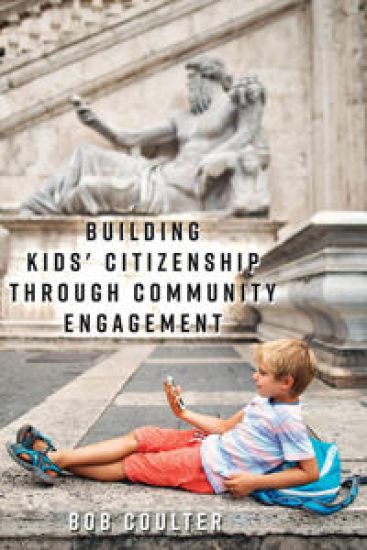
Building Kids' Citizenship Through Community Engagement

Building Kids' Citizenship Through Community Engagement

Bob Coulter

Peter Lang Publishing Inc
2017
nidottu
Building Kids’ Citizenship Through Community Engagement offers a compelling, empirically-based argument for giving young people opportunities to grow through productive involvement with their local community. Drawing on John Dewey’s pragmatic frame of experience and concepts of bildung that inform educational practice in Europe, the book speaks directly to teachers and parents who are looking for a way to support young people in their efforts to become confident, self-directed citizens. Throughout, the book offers a paradigm for growth that counters the limits of narrow visions of schooling and equally thin out-of-school learning opportunities which serve to limit young people’s potential. In framing the argument, veteran educator Bob Coulter draws on more than 30 years of experience that includes extensive work with youth as a classroom teacher and in a variety of other community-based efforts, as well as 18 years of work as a mentor to teachers and parents. Key themes running through Building Kids’ Citizenship Through Community Engagement include a cogent argument in support of young people assuming an active, age-appropriate role as citizens, as well as a modern updating of Dewey’s concept of experience that is suitable for a technological age. These theoretical ideas are made tangible through specific recommendations for productive uses of digital technology and a critical review of several frameworks that have proven useful for designing and evaluating the quality of kids’ community-based learning experiences.
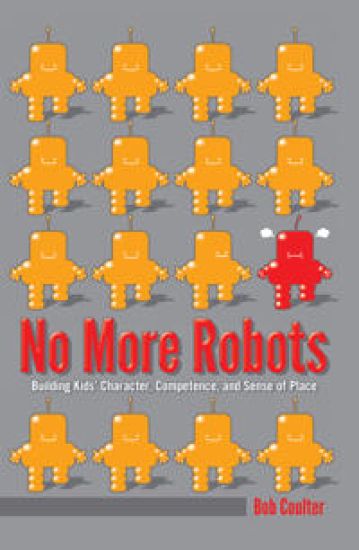
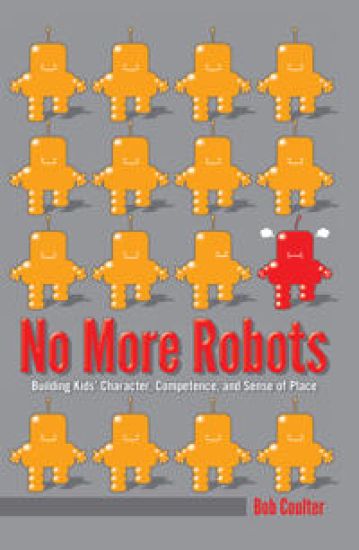
No More Robots

No More Robots

Bob Coulter

Peter Lang Publishing Inc
2014
nidottu
This book was named a 2015 Choice magazine Outstanding Academic Title. Place-based education offers a compelling opportunity to engage students in the life of their community. More than just taking a field trip, participants in a place-based project make sustained efforts to make a difference and learn basic skills along the way. Academic concepts come to life as real-world problems are investigated from a local angle. Even global issues can be connected to the community, such as the high school in Missouri that linked local land-use choices to the «dead zone» in the Gulf of Mexico. For teachers, place-based projects offer a chance for professional revitalization as they orchestrate complex and meaningful learning environments that go well beyond scripted curriculum mandates. Both teachers and students benefit from a new level of agency as they take ownership of their work. Drawing on his own experience as a teacher and more than a decade of work supporting teachers in crafting their own projects, the author outlines the many benefits of place-based education and describes the challenges that must be overcome if we are to realize its potential.
No More Robots

No More Robots

Bob Coulter

Peter Lang Publishing Inc
2014
sidottu
This book was named a 2015 Choice magazine Outstanding Academic Title. Place-based education offers a compelling opportunity to engage students in the life of their community. More than just taking a field trip, participants in a place-based project make sustained efforts to make a difference and learn basic skills along the way. Academic concepts come to life as real-world problems are investigated from a local angle. Even global issues can be connected to the community, such as the high school in Missouri that linked local land-use choices to the «dead zone» in the Gulf of Mexico. For teachers, place-based projects offer a chance for professional revitalization as they orchestrate complex and meaningful learning environments that go well beyond scripted curriculum mandates. Both teachers and students benefit from a new level of agency as they take ownership of their work. Drawing on his own experience as a teacher and more than a decade of work supporting teachers in crafting their own projects, the author outlines the many benefits of place-based education and describes the challenges that must be overcome if we are to realize its potential.
Mobile Media Learning

Mobile Media Learning

Seann Dikkers; John Martin; Bob Coulter

Lulu.com
2012
pokkari
Mobile Media Learning shares innovative uses of mobile technology for learning in a variety of settings. From camps to classrooms, parks to playgrounds, libraries to landmarks, Mobile Media Learning shows that exciting learning can happen anywhere educators can imagine. Join these educator/designers as they share their efforts to amplify spaces as learning tools by engaging learners with challenges, quests, stories, and tools for investigating those spaces.
Network Science, A Decade Later

Network Science, A Decade Later

Alan Feldman; Cliff Konold; Bob Coulter; Brian Conroy

Routledge Member of the Taylor and Francis Group
1999
sidottu
Network Science, A Decade Later--the result of NSF-funded research that looked at the experiences of a set of science projects which use the Internet--offers an understanding of how the Internet can be used effectively by science teachers and students to support inquiry-based teaching and learning. The book emphasizes theoretical and critical perspectives and is intended to raise questions about the goals of education and the ways that technology helps reach those goals and ways that it cannot. The theoretical perspective of inquiry-based teaching and learning in which the book is grounded is consistent with the current discipline-based curriculum standards and frameworks. The chapters in Part I, "State of the Art," describe the history and current practice of network science. Those in Part II, "Looking Deeply," extend the inquiry into network science by examining discourse and data in depth, using both empirical data and theoretical perspectives. In Part III, "Looking Forward," the authors step back from the issues of network science to take a broader view, focusing on the question: How should the Internet be used--and not used--to support student learning? The book concludes with a reminder that technology will not replace teachers. Rather, the power of new technologies to give students both an overwhelming access to resources--experts, peers, teachers, texts, images, and data--and the opportunity to pursue questions of their own design, increases the need for highly skilled teachers and forward-looking administrators. This is a book for them, and for all educators, policymakers, students involved in science and technology education. For more information about the authors, an archived discussions space, a few chapters that can be downloaded as PDF files, and ordering information, visit teaparty.terc.edu/book/
Network Science, A Decade Later

Network Science, A Decade Later

Alan Feldman; Cliff Konold; Bob Coulter; Brian Conroy

Routledge Member of the Taylor and Francis Group
1999
nidottu
Network Science, A Decade Later--the result of NSF-funded research that looked at the experiences of a set of science projects which use the Internet--offers an understanding of how the Internet can be used effectively by science teachers and students to support inquiry-based teaching and learning. The book emphasizes theoretical and critical perspectives and is intended to raise questions about the goals of education and the ways that technology helps reach those goals and ways that it cannot. The theoretical perspective of inquiry-based teaching and learning in which the book is grounded is consistent with the current discipline-based curriculum standards and frameworks. The chapters in Part I, "State of the Art," describe the history and current practice of network science. Those in Part II, "Looking Deeply," extend the inquiry into network science by examining discourse and data in depth, using both empirical data and theoretical perspectives. In Part III, "Looking Forward," the authors step back from the issues of network science to take a broader view, focusing on the question: How should the Internet be used--and not used--to support student learning? The book concludes with a reminder that technology will not replace teachers. Rather, the power of new technologies to give students both an overwhelming access to resources--experts, peers, teachers, texts, images, and data--and the opportunity to pursue questions of their own design, increases the need for highly skilled teachers and forward-looking administrators. This is a book for them, and for all educators, policymakers, students involved in science and technology education. For more information about the authors, an archived discussions space, a few chapters that can be downloaded as PDF files, and ordering information, visit teaparty.terc.edu/book/