Kirjailija
Bob Emiliani
Kirjat ja teokset yhdessä paikassa: 27 kirjaa, julkaisuja vuosilta 2007-2023, suosituimpien joukossa The Aesthetic Compass. Vertaile teosten hintoja ja tarkista saatavuus suomalaisista kirjakaupoista.
27 kirjaa
Kirjojen julkaisuhaarukka 2007-2023.
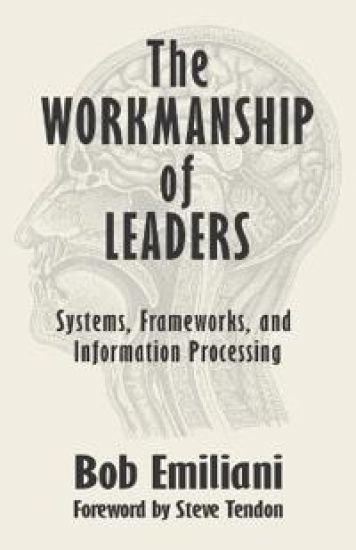
Leadership has been extensively studied and written about for 100 years. Yet the results are far more fluff than substance because the fundamental understanding of leaders and their purpose is incomplete or incorrect. The positioning of leadership as a profession means that we do not normally think of leaders' work in terms of workmanship. But what happens if we do? Because leader's work is not typically associated with the word "workmanship," it is important to explore what leadership would be like if it were thought of as workmanship and if leaders were workmanlike in carrying out their duties. Would it be any different than how leaders lead today or as they have led in the past? Could leadership be different in the future? The Workmanship of Leaders is an engaging technical analysis of the meaning of workmanship and workmanlike diligence in the context of systems, frameworks, and information processing. It shines new lights on how leaders think, how they behave, and why they do what they do. In doing so, it explains why the aims and actions of leaders have been remarkably constant for centuries. It also shows the futility of traditional leadership training programs and points to essential new directions for leadership development. Leaders at any level and in any line of work will find this book captivating and eye-opening.
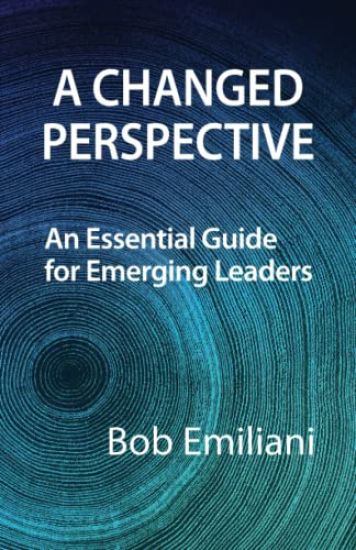
Despite a century of effort by untold numbers of people to deconstruct leadership - to understand it and identify better ways to lead and manage people - it has had little effect to narrow the range of acceptable leadership methods in organizations. Why is there so little transmittal of leadership thinking and practice of the type that engages and energizes people compared to that which neglects and discourages people? To state it simplistically, why is "command-and-control" still so popular among leaders, whether in good times or bad? What have we been missing? A Changed Perspective challenges the settled view that better leadership is brought about simply by changing leaders' behaviors. It explores three important things: First, the role of preconception in guiding leaders' thinking and actions. Second, how difficult situations arise and why difficult situations are accepted by leaders as a fait accompli. Third, how can difficult situations be made less common and less difficult to reduce human stress and frustration and enable greater human flourishing on a resource constrained planet. Readers will enjoy the insightful analysis and come away with a changed perspective to lead better than they ever have before.
The Aesthetic Compass interprets classical management through the lens of aesthetic experiences and aesthetic judgments to explain, in simpler terms, why organizations today are led much the same way as they have been led in the distant past. Readers will gain an understanding of how aesthetics informs leadership action and inaction directed towards maintaining the status quo in management thinking and practice, which delays or stops the uptake of modern progressive management that is better suited for current and future times. From the Foreword: "The original and important contribution that The Aesthetic Compass makes to the study of management is that Emiliani brings the body - the messy, dirty, chaotic world of bodily sensations and emotions - into his provocative and incisive analysis of why classical management repeatedly rejects the many forms of progressive management... Emiliani is a staunch advocate for a better system of management but feels that until we understand the current realities of executive thinking, we have little hope of bringing about positive change on a more widespread basis. To better understand current executive thinking, he argues, we cannot continue to look through the traditional lens of rationality. We must instead look through an aesthetic lens to understand the immense power that the perceptual-emotional realm has in maintaining the ironclad values and beliefs of classical management." - Ken Eakin

Does it still make sense today to talk about strategy? Or does today's liquid, interconnected, and global world only require the ability to adapt and seize opportunities from wherever they come? If strategy is to remain a useful concept and practice in business, then there needs to be a reexamination of the intent of strategy and the process by which strategy is typically developed.Wheel of Fortune is not the usual book about business strategy. It presents new and provocative relationships between strategy, leadership, and business. In addition to examining the social science of strategy, it introduces new methods for analyzing strategy failures and preventing strategy failures. It exposes risks inherent to strategy that leaders do not recognize and challenges their understanding of strategy and its role in customer satisfaction and business success.Wheel of Fortune establishes the rationale and need for leaders to think differently about strategy and execution. It provides deep insights on how to eliminate the repetitive problems that most organizations experience, and convincingly demonstrates the need for leaders to be more imaginative and creative in strategy development and execution.
What is improvement? It is accurately described as "the process of a thing moving from one state to a state considered to be better, usually through some action intended to bring about that better state. The concept of improvement is important to governments and businesses, as well as to individuals."This is a seemingly harmless concept that everyone can agree on in all its applications. Yet, it is surprisingly controversial when applied to the management and leadership of organizations. For nearly 140 years, efforts to systematically improve management practice have encountered one barrier after another and commission of repetitive mistakes that thwart sustained progress towards better leadership and management practice. What should by now be common practice in organizations, progressive management, remains a rarity.For progressive management to advance, its promoters and practitioners need to understand the principal arguments against it and the recurring mistakes that are made which serve only to further extend the useful life of classical management. Improvement puts progressive management into historical perspective and helps readers understand the progress that has been made and what has yet to be achieved. It provides clear guidelines that current and future generations can put into practical use so that progressive management will gain wider acceptance and continuously evolve in response to changing conditions.

Management Mysterium follows two earlier works, The Triumph of Classical Management Over Lean Management and Irrational Institutions, which examine the question of why most leaders resist or reject Lean management and other forms of progressive personal and organizational change. The former provides a comprehensive materialist analysis while the latter describes the dynamic interplay between rational and irrational thinking and the role of aesthetic judgments in informing management thinking and decision-making.Management Mysterium adds to this insightful body of work by examining invisible aspects of leadership and management practice: the intangible spiritual, sacred, and the sometimes mysterious and mythical aspects of leading and managing organizations. Readers will learn how and why secular spirituality exists, how it functions, and what it achieves in both classical management and Lean management.The trilogy of books meticulously exposes the material and spiritual forces that guide leaders' thinking which results in maintaining the status quo and continued adherence to archaic classical management.
For more than a century people have speculated why business leaders resist or reject new systems of progressive management. The first comprehensive analysis of this problem appeared in the book The Triumph of Classical Management Over Lean Management (2018). Irrational Institutions examines this problem from a different direction using two new analytical methods. It explores how irrationality functions within the institutions of business, leadership, and the Lean movement, and how the social habits of thought and action that produce these institutions thwart efforts to impose rationality in leadership and management practice. Irrational Institutions critiques the aesthetics of the institution leadership and the Lean movement, and describes how aesthetics function as a powerful mechanism to maintain the status quo despite the obvious need for change.
Eliminating Waste In Teaching: Timeless Lessons for Improving Teaching and Training
Bob Emiliani; Lillian Moller Gilbreth
Cubic, LLC
2019
nidottu
Dr. Lillian Moller Gilbreth (1878-1972) was a principal leader of the early 20th century Scientific Management movement. Recognized internationally for her work in industrial psychology and industrial engineering, her work shaped the development of Toyota's management system and its derivative, Lean management. Eliminating Waste in Teaching presents, for the first time, Dr. Gilbreth's 1915 doctoral dissertation exactly as it was written. Teachers at all levels, educational administrators, and education policy makers, as well as corporate trainers and consultants will enjoy this book and be inspired to develop dozens of practical new ideas for improving teaching and training.Dr. Gilbreth's analyses and prescriptions for improving teaching are as relevant today as they were then. She successfully bridges gaps between the improvement methods used by industry to improve work and applies these same methods to improving teaching. Readers will marvel at the depth of Dr. Gilbreth's insights and her unceremonious exposing of the truth.Commentary and analysis by Professor Bob Emiliani, who has been applying Lean principles and practices to eliminate waste in teaching for 20 years, brings the story up to date and contributes a chapter on his most recent work improving teaching.
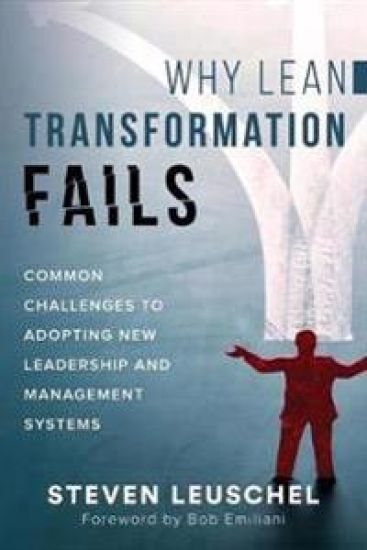
Why Lean Transformation Fails
Steven Leuschel; Bob Emiliani; Martial Durin
Align Kaizen
2019
pokkari
Failure is merely a temporary weakening of momentum on the way to sustained success. Learning from past Lean transformation failures will help any organization mitigate against the many challenges of changing culture, management systems, and leadership styles. Why Lean Transformation Fails is a brief it contains summaries, antcidotes, and reproduced content from organizations such as Virginia Mason Medical Center; New United Motor Manufacturing, Inc; Saturn Corporation; General Motors; Toyota; Toyota's suppliers; the Saskatchewan health System; ThedaCare; and Wiremold. With a Foreword from Bob Emiliani, PhD and Afterword from Martial Durin the Managing Director, Kaizen Institute China; contributor, editor, and author Steven Leuschel pulls together stories and lessons anyone implementing a lean journey can learn from to overcome barriers of Lean transformation.
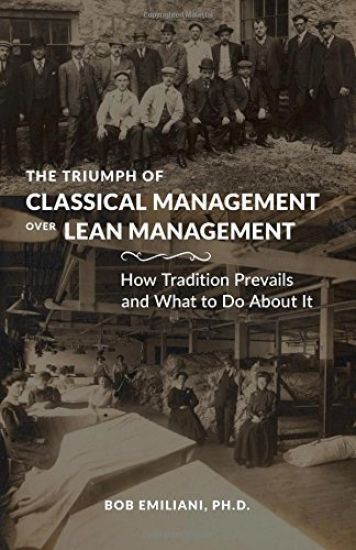
The Triumph of Classical Management Over Lean Management
Bob Emiliani
Center for Lean Business Management, LLC
2018
pokkari
Conversations with Taiichi Ohno is a fictional account of probing conversations between the author and Taiichi Ohno. It explores the purpose and meaning of the Toyota Production System and how it anticipated today's digital age. Ohno's remarkable work and his unique way of thinking created a new management system that will energize and strengthen corporate digital transformation. Learn why the Toyota Production System is more relevant in the 21st century than it was in the 20th century and how it will help your company survive and prosper in the digital age.In danger of being forgotten as the years go by, critical elements of Ohno's work remain unknown, poorly known, or misunderstood. Ohno reminds us that good thinking, steady work habits, daily improvement, and long-term commitment to a purpose remain necessary now and into the future. Conversations with Taiichi Ohno is an exposition of the management thinking, practice, and decision-making that enables TPS to be established and evolve in your company to achieve success in the digital age.

Speed Leadership
Massimo Torinesi; Bob Emiliani
Center for Lean Business Management, LLC
2015
pokkari
Speed Leadership is a breakthrough in understanding leadership and how to improve leadership capabilities and effectiveness. This practical new approach takes a process view of leadership in preference to the traditional view of leadership based on personality, behaviors, or authenticity. Understanding leadership as processes is a powerful new perspective on what constitutes effective leadership and offers new pathways for meaningful improvement.Leaders with an open mind, a willing heart, and genuine concern for the long-term success of an organization and its stakeholders, will find this book extremely helpful if not life-changing.
Shingijutsu-Kaizen
Michael Herscher; Bob Emiliani; Ralph Wood
Center for Lean Business Management, LLC
2015
pokkari
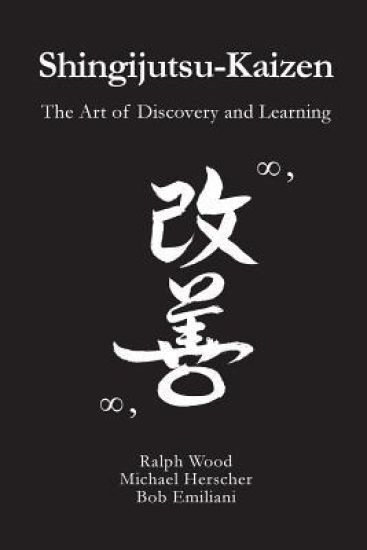
For more than 28 years, Kaizen consultants from Shingijutsu USA Corporation have been helping manufacturing and service organizations improve processes by teaching people the methods and tools of flow production.This book is a humble attempt to share the spirit, mindset, and methods of Shingijutsu-Kaizen and their approach to improving the human condition. You will learn how unique and sincere Shingijutsu sensei are as they work to eliminate waste from business processes.Shingijutsu-Kaizen teaches people how to think. You will learn, as never before, how to identify and correct abnormal conditions by "trystorming" -- rapid, hands-on trial-and-error testing and experimentation. It is the most powerful way togrow as a person while simultaneously improving both business and humanity.Efforts must begin at the genba with the intent to master the basics. Then, one can move forward to eliminate waste in larger scale activities.We hope this book will inspire and motivated you to learn how to eliminate waste and improve both business and humanity.
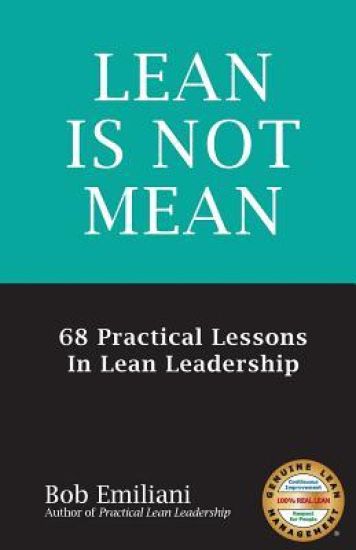
The long-term viability of Lean as an alternative management system depends on the ability of its practitioners to recognize the differences, both great and small, between it and conventional management practice.Foremost among the differences is the way in which Lean management must be led. For some three decades, the great majority of leaders have led Lean in ways that resulted in good outcomes for the company and its shareholders, but bad outcomes for employees, suppliers, and other key stakeholders.If it's mean, it's not Lean.The intent of Lean management is to instead create outcomes that are good for everyone: employees, suppliers, customers, investors, and communities.This book will help leaders close the gap between actual outcomes and required outcomes. It presents 68 practical lessons to improve their understanding and practice of Lean management and achieve outcomes that benefit all stakeholders.
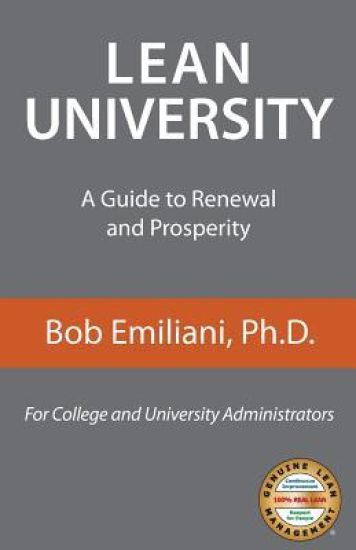
Higher education has undergone major changes inprice and competition, yet the status quo prevailswhen it comes to management. Long-used practices are losing their appeal among faculty, staff, students, and others. They want and deserve better.Lean University is a practical guide for college anduniversity administrators who are interested in becoming better leaders. It explains how to correctly apply Lean principles and practices and avoid common pitfalls. Readers will also learn a true student-centered vision for teaching and administration that will enable higher education to prosper in the 21st century.Whether you are new to administration or a 30 year veteran, you will find in Lean University many new things to learn and put into practice.
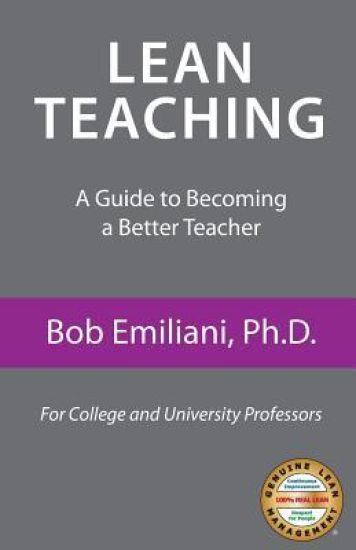
Higher education has undergone major changes inprice and competition, yet the status quo prevailswhen it comes to teaching. Long-used pedagogiesare losing their appeal among students, payers, and employers. They want and deserve better.Lean Teaching is a practical guide for college anduniversity professors who are interested in becoming better teachers. It shows how to apply Lean principles and practices through the use of detailed examples. Readers will also learn the results of applying the Lean teaching pedagogy for more than 15 years, and how they too can achieve similar results.Whether you are new to teaching or a 30 year veteran, you will find in Lean Teaching manynew things to learn and put into practice.