Kirjojen hintavertailu. Mukana 12 595 353 kirjaa ja 12 kauppaa.

Kirjailija

Bob Hodge

Kirjat ja teokset yhdessä paikassa: 13 kirjaa, julkaisuja vuosilta 1987-2020, suosituimpien joukossa Borderwork in Multicultural Australia. Vertaile teosten hintoja ja tarkista saatavuus suomalaisista kirjakaupoista.

13 kirjaa

Kirjojen julkaisuhaarukka 1987-2020.

Language and Control

Language and Control

Roger Fowler; Bob Hodge; Gunther Kress; Tony Trew

Routledge
2020
nidottu
Originally published in 1979. This book studies language variation as a part of social practice - how language expresses and helps regulate social relationships of all kinds. Different groups, classes, institutions and situations have their special modes of language and these varieties are not just stylistic reflections of social differences; speaking or writing in a certain manner entails articulating certain social meanings, however implicit. This book focuses on the repressive and falsifying side of linguistic practice but not without recognising the power of language to reveal and communicate. It analyses the language used in a variety of situations, including news reporting, interviews, rules and regulations, even such apparently innocuous language as the rhymes on greetings cards. It argues for a critical linguistics capable of exposing distortion and mystification in language, and introduces some basic tools for a do-it-yourself analysis of language, ideology and control.

Language and Control

Language and Control

Roger Fowler; Bob Hodge; Gunther Kress; Tony Trew

Routledge
2018
sidottu
Originally published in 1979. This book studies language variation as a part of social practice - how language expresses and helps regulate social relationships of all kinds. Different groups, classes, institutions and situations have their special modes of language and these varieties are not just stylistic reflections of social differences; speaking or writing in a certain manner entails articulating certain social meanings, however implicit. This book focuses on the repressive and falsifying side of linguistic practice but not without recognising the power of language to reveal and communicate. It analyses the language used in a variety of situations, including news reporting, interviews, rules and regulations, even such apparently innocuous language as the rhymes on greetings cards. It argues for a critical linguistics capable of exposing distortion and mystification in language, and introduces some basic tools for a do-it-yourself analysis of language, ideology and control.

Myths of Oz

Myths of Oz

John Fiske; Bob Hodge; Graeme Turner

Routledge
2018
nidottu
This book, first published in 1987, sets out to examine and extend our understanding of Australian popular culture, and to counter the long-established, traditional criticism bewailing its lack. The authors argue that the 'knocker's' view started from an elitist viewpoint, yearning for Australia to aspire to a European culture in art, music, literature and other traditional cultural fields. They argue however that there are other definitions of culture that are more populist, more comprehensive, and which represent a vitality and dynamism which is a true reflection of the lives and aspirations of Australians. Myths of Oz offers no comprehensive definition of Australian culture, but rather a way of interpreting its various aspects. The barbeque or the pub, an expedition to the shops or a day at the beach, the home, the workplace or the job queue; all these intrinsic parts of Australian life are examined and conclusions drawn as to how they shape or are shaped by what we call popular culture. The authors look too at monuments and symbols, from Ayers Rock to the Sydney Opera House, which both shape and reflect Australian culture, while a chapter on the Australian accent shows how language and terminology play a powerful role in establishing cultural standpoints. A particular strength of this book is that while delivering a provocative and stimulating series of viewpoints on popular culture, it also makes use of current academic tools and methodology to ensure that we gain new insights into the meanings and pleasures we derive from our everyday experiences.
Social Semiotics for a Complex World
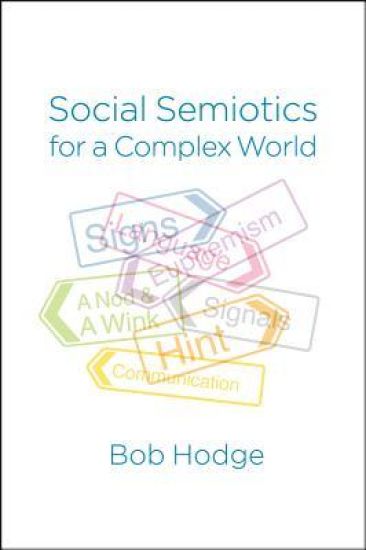
Social semiotics reveals language?s social meaning ? its structures, processes, conditions and effects ? in all social contexts, across all media and modes of discourse. This important new book uses social semiotics as a one-stop shop to analyse language and social meaning, enhancing linguistics with a sociological imagination. Social Semiotics for a Complex World develops ideas, frameworks and strategies for better understanding key problems and issues involving language and social action in today?s hyper-complex world driven by globalization and new media. Its semiotic basis incorporates insights from various schools of linguistics (such as cognitive linguistics, critical discourse analysis and sociolinguistics) as well as from sociology, anthropology, philosophy, psychology and literary studies. It employs a multi-modal perspective to follow meaning across all modes of language and media, and a multi-scalar approach that ranges between databases and one-word slogans, the local and global, with examples from English, Chinese and Spanish. Social semiotics analyses twists and turns of meanings big and small in complex contexts. This book uses semiotic principles to build a powerful, flexible analytic toolkit which will be invaluable for students across the humanities and social sciences.
Social Semiotics for a Complex World
Social semiotics reveals language?s social meaning ? its structures, processes, conditions and effects ? in all social contexts, across all media and modes of discourse. This important new book uses social semiotics as a one-stop shop to analyse language and social meaning, enhancing linguistics with a sociological imagination. Social Semiotics for a Complex World develops ideas, frameworks and strategies for better understanding key problems and issues involving language and social action in today?s hyper-complex world driven by globalization and new media. Its semiotic basis incorporates insights from various schools of linguistics (such as cognitive linguistics, critical discourse analysis and sociolinguistics) as well as from sociology, anthropology, philosophy, psychology and literary studies. It employs a multi-modal perspective to follow meaning across all modes of language and media, and a multi-scalar approach that ranges between databases and one-word slogans, the local and global, with examples from English, Chinese and Spanish. Social semiotics analyses twists and turns of meanings big and small in complex contexts. This book uses semiotic principles to build a powerful, flexible analytic toolkit which will be invaluable for students across the humanities and social sciences.
Myths of Oz

Myths of Oz

John Fiske; Bob Hodge; Graeme Turner

Routledge
2016
sidottu
This book, first published in 1987, sets out to examine and extend our understanding of Australian popular culture, and to counter the long-established, traditional criticism bewailing its lack. The authors argue that the 'knocker's' view started from an elitist viewpoint, yearning for Australia to aspire to a European culture in art, music, literature and other traditional cultural fields. They argue however that there are other definitions of culture that are more populist, more comprehensive, and which represent a vitality and dynamism which is a true reflection of the lives and aspirations of Australians. Myths of Oz offers no comprehensive definition of Australian culture, but rather a way of interpreting its various aspects. The barbeque or the pub, an expedition to the shops or a day at the beach, the home, the workplace or the job queue; all these intrinsic parts of Australian life are examined and conclusions drawn as to how they shape or are shaped by what we call popular culture. The authors look too at monuments and symbols, from Ayers Rock to the Sydney Opera House, which both shape and reflect Australian culture, while a chapter on the Australian accent shows how language and terminology play a powerful role in establishing cultural standpoints. A particular strength of this book is that while delivering a provocative and stimulating series of viewpoints on popular culture, it also makes use of current academic tools and methodology to ensure that we gain new insights into the meanings and pleasures we derive from our everyday experiences.
Social Fuzziology

Social Fuzziology

Vladimir Dimitrov; Bob Hodge

Physica Verlag,Wien
2012
nidottu
Fuzziology studies the fuzziness inherent in what we know about ourselves, the sources and nature of our experience, our thoughts and feelings, drives for understanding and urges to create and realise our potential. This kind of fuzziness is at the core of our existence, at the essence of our humanness. It affects any field of human activity, be it mathematical study of fuzzy equations and fuzzy integrals; engineering design and implementation of fuzzy logic-based methodologies; fuzzy control systems or fuzzy robots. Social fuzziology investigates the role of fuzziness in understanding the dynamic complexity of human existence in the social world. It is a study of the nexus between the complex demands of life -individual and social -and the fuzziness of thinking. Since human evolution over 2 billion years has seen the co-evolution of social complexity with human language and thought, it is likely that the fuzziness of language and thought is especially intimately formed by the demands of social complexity, just as social complexity is sustained by the inherent fuzziness of language and thought. Social fuzziology is not simply one field of application of fuzziology.Given the initial state of the development of fuzziology, social fuzziology needs to develop hand in hand with fuzziology, each helping to advance the other.
Chaos Theory & the Larrikin Principle

Chaos Theory & the Larrikin Principle

Bob Hodge; Gabriela Coronado; Fernanda Duarte; Greg Teal

Copenhagen Business School Press
2010
nidottu
This lively, accessible book applies ideas from chaos and complexity theory to core issues in organization studies. It develops a new critique of managerialism and (its global godfather) neo-liberalism, which are still dominant ideologies in management today. It complements theoretical critique with stories and voices from the front line of organizational life in Australia, Mexico, and Brazil. Chaos Theory and the Larrikin Principle argues that managerialism is unjust - with linearity, rigidity, and the will to control - producing dysfunctional organizations which then require alternative practices in order to survive. Managerialism's efforts to ignore these basic facts of organizational life leave it enmeshed in unacknowledged contradictions, unable to understand itself or develop new strategies. The book gathers these alternative practices under the rubric of the Larrikin Principle. The Larrikin is known in Australian popular culture as a carrier of a distinctive Australian identity: egalitarian improviser, rule-bender, relentless foe of managerial double-speak. This book takes the Larrikin figure back to its archetypal origins which have similar manifestations across the globe. The transcultural, postmodern Larrikin Principle carries principles and strategies of critical management and chaos theories into academic management studies and contemporary organizational life. It is a breath of fresh air that will be appreciated by students, practitioners, and victims of today's managerialism.
Borderwork in Multicultural Australia
Refugees. Border protection. Ethnic gangs. Terrorism. History wars. Pauline Hanson. Australia's faith in multiculturalism has been shaken by fierce attacks from its enemies and a sense of crisis among its friends. Multiculturalism has become a political tool to win votes and generate community anxiety. What is left of the multicultural ideal?Bob Hodge and John O'Carroll take the pulse of multicultural Australia in the wake of September 11. They investigate the hot spots' of multiculturalism, showing how they cluster around fiercely defended boundaries and borders, both literal and symbolic. They tackle the issues of racism past and present, and show how injustice impacts on many communities in Australia, including Aboriginals as well as more recent migrant groups.The authors argue that despite appearances, multiculturalism is alive and well in Australia, and a commitment to tolerance and diversity characterises daily life. In fact, Australia's multiculture is the best kind of borderwork against terrorism, racism and injustice. A timely, original and optimistic discussion of Australia's multicultural past and our possible futures.'Graeme Turner, Director, Centre for Critical and Cultural Studies, University of Queensland This clearly written book shines a welcome light on the fog of critique of Australian multiculturalism from both the Right and the Left.' Jock Collins, Professor of Economics, University of Technology Sydney
Social Fuzziology

Social Fuzziology

Vladimir Dimitrov; Bob Hodge

Physica-Verlag GmbH Co
2002
sidottu
Fuzziology studies the fuzziness inherent in what we know about ourselves, the sources and nature of our experience, our thoughts and feelings, drives for understanding and urges to create and realise our potential. This kind of fuzziness is at the core of our existence, at the essence of our humanness. It affects any field of human activity, be it mathematical study of fuzzy equations and fuzzy integrals; engineering design and implementation of fuzzy logic-based methodologies; fuzzy control systems or fuzzy robots. Social fuzziology investigates the role of fuzziness in understanding the dynamic complexity of human existence in the social world. It is a study of the nexus between the complex demands of life -individual and social -and the fuzziness of thinking. Since human evolution over 2 billion years has seen the co-evolution of social complexity with human language and thought, it is likely that the fuzziness of language and thought is especially intimately formed by the demands of social complexity, just as social complexity is sustained by the inherent fuzziness of language and thought. Social fuzziology is not simply one field of application of fuzziology. Given the initial state of the development of fuzziology, social fuzziology needs to develop hand in hand with fuzziology, each helping to advance the other.
Politics of Chinese Language and Culture

Politics of Chinese Language and Culture

Bob Hodge; Kam Louie

Routledge
1998
sidottu
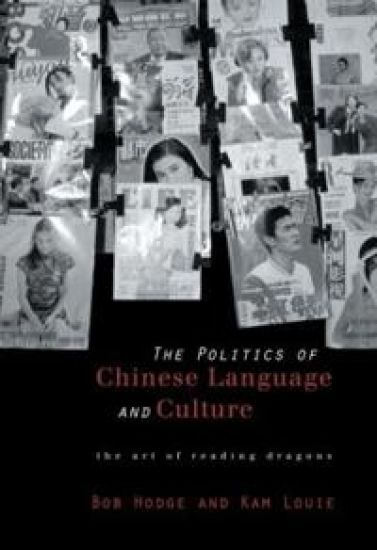
An innovative text which adopts the tools of cultural studies to provide a fresh approach to the study of Chinese language, culture and society. The book tackles areas such as grammar, language, gender, popular culture, film and the Chinese diaspora and employs the concepts of social semiotics to extend the ideas of language and reading. Covering a range of cultural texts, it will help to break down the boundaries around the ideas and identities of East and West and provide a more relevant analysis of the Chinese and China.
Children and Television

Children and Television

Bob Hodge; David Tripp

Polity Press
1987
nidottu
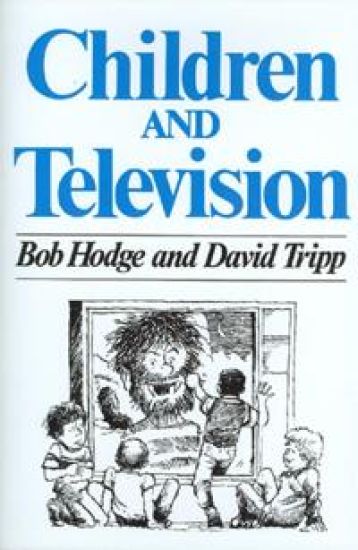
There are insights of interest and value to all in these pages. This book develops a fresh and insightful approach to the questions of children and television. Drawing on recent work in linguistics and semiotics, Hodge and Tripp analyse the rich and ambiguous messages of television and cartoons and examine the ways in which these messages are interpreted by children. The authors convincingly show that children are sophisticated viewers: they have a shrewd sense of fact and fantasy and are active interpreters of plot.