Kirjojen hintavertailu. Mukana 12 595 353 kirjaa ja 12 kauppaa.

Kirjailija

Bob Johnson

Kirjat ja teokset yhdessä paikassa: 21 kirjaa, julkaisuja vuosilta 1998-2027, suosituimpien joukossa The Colonial Climate: Remaking Nature in San Diego. Vertaile teosten hintoja ja tarkista saatavuus suomalaisista kirjakaupoista.

21 kirjaa

Kirjojen julkaisuhaarukka 1998-2027.

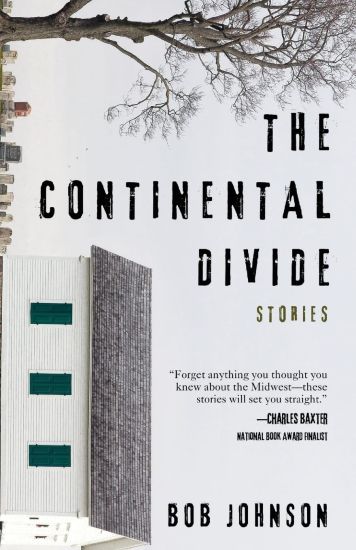
The Continental Divide

The Continental Divide

Bob Johnson

CORNERSTONE PRESS
2025
pokkari
A country woman makes a Sophie's Choice regarding her family's survival. A small town marshal hunts his own son for murder. A former football hero must face his role in a brutal locker room ritual. Ferocious and real, the fourteen tales in Bob Johnson's blistering debut The Continental Divide explore the undertow of violence and sin along the St. Lawrence Divide in northern Indiana, where men, women, and children struggle to find their way in the darkness...of the divide.
Mineral Rites

Mineral Rites

Bob Johnson

Johns Hopkins University Press
2019
sidottu
An archaeology of Western energy culture that demystifies the role that fossil fuels play in the day-to-day rituals of modern life.Spanning the past two hundred years, this book offers an alternative history of modernity that restores to fossil fuels their central role in the growth of capitalism and modernity itself, including the emotional attachments and real injuries that they generate and command. Everything about us—our bodies, minds, sense of self, nature, reason, and faith—has been conditioned by a global infrastructure of carbon flows that saturates our habits, thoughts, and practices. And it is that deep energy infrastructure that provides material for the imagination and senses and even shapes our expectations about what it means to be fully human in the twenty-first century. In Mineral Rites, Bob Johnson illustrates that fossil fuels are embodied today not only in the morning commute and in home HVAC systems but in the everyday textures, rituals, architecture, and artifacts of modern life. In a series of illuminating essays touching on such disparate topics as hot yoga, electric robots, automobility, the RMS Titanic, reality TV, and the modern novel, Johnson takes the discussion of fossil fuels and their role in climate change far beyond the traditional domains of policy and economics into the deepest layers of the body, ideology, and psyche. An audacious revision to the history of modernity, Mineral Rites shows how fossil fuels operate at the level of infrapolitics and how they permeate life as second nature.
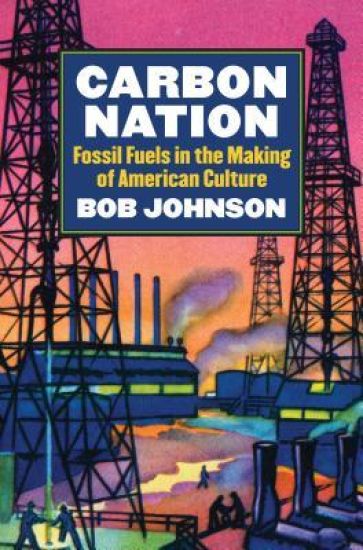
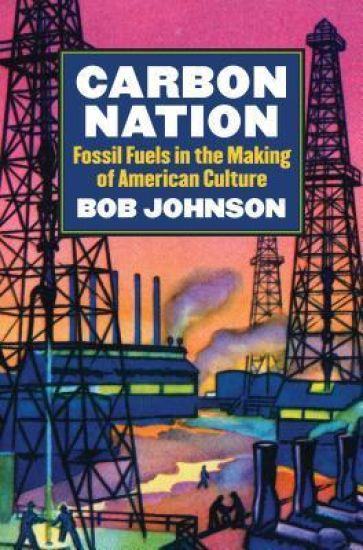
Carbon Nation

Carbon Nation

Bob Johnson

University Press of Kansas
2017
nidottu
Fossil fuels don’t simply impact our ability to commute to and from work.They condition our sensory lives, our erotic experiences, and our aesthetics; they structure what we assume to be normal and healthy; and they prop up a distinctly modern bargain with nature that allows populations and economies to grow wildly beyond the older and more clearly understood limits of the organic economy.Carbon Nation ranges across film and literary studies, ecology, politics, journalism, and art history to chart the course by which prehistoric carbon calories entered into the American economy and body. It reveals how fossil fuels remade our ways of being, knowing, and sensing in the world while examining how different classes, races, sexes, and conditions learned to embrace and navigate the material manifestations and cultural potential of these new prehistoric carbons.The ecological roots of modern America are introduced in the first half of the book where the author shows how fossil fuels revolutionized the nation’s material wealth and carrying capacity. The book then demonstrates how this eager embrace of fossil fuels went hand in hand with both a deliberate and an unconscious suppression of that dependency across social, spatial, symbolic, an psychic domains. In the works of Eugene O’Neill, Upton Sinclair, Sherwood Anderson, and Stephen Crane, the author reveals how Americans’ material dependencies on prehistoric carbon were systematically buried within modernist narratives of progress, consumption, and unbridled growth; while in films like Charlie Chaplin’’s Modern Times and George Steven’s Giant he uncovers cinematic expressions of our own deep-seated anxieties about living in a dizzying new world wrought by fossil fuels.Any discussion of fossil fuels must go beyond energy policy and technology. In Carbon Nation, Bob Johnson reminds us that what we take to be natural in the modern world is, in fact, historical, and that our history and culture arise from this relatively recent embrace of the coal mine, the stoke hole, and the oil derrick.
Managing Operations

Managing Operations

Bob Johnson

Routledge
2017
sidottu
Managing Operations is a concise guide to the fundamentals of operations management. Using examples and case studies from public, private and voluntary sector organizations, this book will enable managers to develop their competency to an excellent standard in an industrial or commercial setting. As well as being very practically based, Managing Operations also provides the theory behind operations management.The book is based on the Management Charter Initiative's Occupational Standards for Management NVQs and SVQs at level 4. It is particularly suitable for managers on the Certificate in Management, or Part 1 of the Diploma, especially those accredited by the IM and Edexcel.Managing Operations is part of the highly successful series of textbooks for managers which cover the knowledge and understanding required as part of any competency-based management programme. The books cover the three main levels of management: supervisory/first-line management (NVQ level 3), middle management (Certificate/NVQ level 4) and senior management (Diploma/NVQ level 5). Also included are titles which cover management issues in particular sectors, such as schools or the public sector, in more depth. You will find a full listing of other titles available at the front of this book.Bob Johnson is a freelance management consultant and trainer with extensive experience of the retail, service, government and voluntary sectors. He has managed operations in the sales, marketing, purchasing, training and consultancy functions.
Carbon Nation

Carbon Nation

Bob Johnson

University Press of Kansas
2014
sidottu
Fossil fuels power our cars, our food supply, our climate-controlled homes, our work, and our play. That much we know. What we understand less, and what this book makes clear, is how fossil fuels also condition Americans' sensory lives, erotic experiences, and aesthetics; how they structure what we assume to be normal and healthy; and how they prop up a distinctly modern bargain with nature that allows populations and economies to grow wildly beyond the previously understood limits of the organic economy. Carbon Nation ranges across film and literary studies, journalism, politics, art history, and ecology, to chart the course by which prehistoric carbon calories influenced--in both conscious and unconscious ways--the modern American economy and body. This includes our ways of being, sensing, and knowing as different classes, races, sexes, and conditions learned to embrace, absorb, and navigate the material manifestations, cultural potentialities, and myriad costs of fossil fuels. Combining historical ecology with cultural criticism, this book reveals the profound depths of our dependencies on carbon and the long repressed cultural history of our evasion and neglect of those dependencies. The ecological roots of modern America are introduced in the first half of the book with the revolution in material growth generated by the move from limited organic soil resources to subsoil energies. In the works of Eugene O'Neill, Upton Sinclair, Sherwood Anderson, and Stephen Crane, the author exposes how coal as a cultural object is used to suppress our dependencies, buried beneath modernist narratives of progress, consumption, and unbridled growth. In films like Charlie Chaplin's Modern Times and George Stevens's Giant we discover cinematic expressions of our deep-seated anxieties about living in a dizzying new world wrought by fossil fuels. Any discussion of fossil fuels must go beyond energy policy and technology. As Bob Johnson reminds us, in provocative and powerful ways, what we take to be natural in the modern world is, in fact, historical, and our history and our culture have risen from this relatively recent embrace of the coal mine, the stoke hole, and the oil derrick.
San Jose's Historic Downtown

San Jose's Historic Downtown

Lauren Miranda Gilbert; Bob Johnson; San Jose Public Library

Arcadia Publishing (SC)
2004
nidottu
San Jose is the Capital of the Silicon Valley, the high-rise, economic engine of advanced technology. Yet it was once a verdant valley, inhabited by wildlife, waterfowl, and the native Ohlone people. The Spanish who founded California's first civilian settlement here in 1777 named it for Saint Joseph, the patron saint of the Spanish Expedition. Their farms fed the soldiers at the Monterey and San Francisco presidios, beginning an agricultural industry that thrived for nearly 200 years. Although serving briefly as California's first state capital, for many decades downtown was the somewhat sleepy commercial center of the Santa Clara Valley. A housing and population expansion that began in the 1950s exploded with San Jose's rebirth as a technological mecca.