Kirjojen hintavertailu. Mukana 12 595 353 kirjaa ja 12 kauppaa.

Kirjailija

Bob Sproull

Kirjat ja teokset yhdessä paikassa: 16 kirjaa, julkaisuja vuosilta 2001-2023, suosituimpien joukossa Process Problem Solving. Vertaile teosten hintoja ja tarkista saatavuus suomalaisista kirjakaupoista.

16 kirjaa

Kirjojen julkaisuhaarukka 2001-2023.

Learning from the Past, Present, and Future to Drive Profits to New Levels
The content of this book is centered around three seemingly diverse themes. The first theme is why it’s so important for companies to learn from the past, the present, and the future. The author covers some of the key learnings from the distant and current past, and how these learnings changed the course for many companies. He discusses new learnings that have been developed in our current state and will continue to be brought forward. He provides a look into the future, just to make sure companies understand that they should always be looking for better ways to function. The second theme is centered around problem-solving, problem prevention, and decision-making. That is, how to successfully define problems that already exist in your current reality, how to prevent problems from occurring in the future, and how to make much more effective decisions. Problems have plagued many companies for many years and knowing how to follow a structured approach to solve them should prove to be very useful. And perhaps even more important than solving problems, is how companies can go about preventing the problems from occurring in the first place. Think about how your company might look if the plethora of problems to solve didn’t exist. And with current or potential problems, many decisions must be made. The final theme in this book is how to successfully implement the Theory of Constraints, and then combine Lean Manufacturing, Six Sigma, and the Theory of Constraints. The Theory of Constraints should be considered the "missing link" in most improvement initiatives. The author presents, in detail, why combining the Theory of Constraints with Lean and Six Sigma and all of the associated improvement tools and techniques will take your company to new levels of profitability. He introduces two new roadmaps. One roadmap is on how to implement the Theory of Constraints, while the other new roadmap is how to implement my Ultimate Improvement Cycle.
Learning from the Past, Present, and Future to Drive Profits to New Levels
The content of this book is centered around three seemingly diverse themes. The first theme is why it’s so important for companies to learn from the past, the present, and the future. The author covers some of the key learnings from the distant and current past, and how these learnings changed the course for many companies. He discusses new learnings that have been developed in our current state and will continue to be brought forward. He provides a look into the future, just to make sure companies understand that they should always be looking for better ways to function. The second theme is centered around problem-solving, problem prevention, and decision-making. That is, how to successfully define problems that already exist in your current reality, how to prevent problems from occurring in the future, and how to make much more effective decisions. Problems have plagued many companies for many years and knowing how to follow a structured approach to solve them should prove to be very useful. And perhaps even more important than solving problems, is how companies can go about preventing the problems from occurring in the first place. Think about how your company might look if the plethora of problems to solve didn’t exist. And with current or potential problems, many decisions must be made. The final theme in this book is how to successfully implement the Theory of Constraints, and then combine Lean Manufacturing, Six Sigma, and the Theory of Constraints. The Theory of Constraints should be considered the "missing link" in most improvement initiatives. The author presents, in detail, why combining the Theory of Constraints with Lean and Six Sigma and all of the associated improvement tools and techniques will take your company to new levels of profitability. He introduces two new roadmaps. One roadmap is on how to implement the Theory of Constraints, while the other new roadmap is how to implement my Ultimate Improvement Cycle.
The New Beginning

The New Beginning

Bob Sproull; Matt Hutcheson

CRC Press
2021
sidottu
This book is a sequel to the business novel, The Secret to Maximizing Profitability – A Business Novel on How to Successfully Combine the Theory of Constraints, Lean, and Six Sigma to Drive Profit Margins to New Levels. In The New Beginning, Tom Mahanan, Tires for All’s former Director of Finance, who learned how to combine the Theory of Constraints with Lean and Six Sigma, and then applied it to Tires for All, strives to take his company to levels of profitability they had never experienced before. As a reward for his work, Tom was given a permanent seat on the Board of Directors, as long as he continued his improvement work at the remaining portfolio of companies owned by the Board of Directors. Tom performed extremely well, but one day he receives a life-changing phone call from his former mentor, Bob Nelson, the man who he had worked with at Tires for All to make amazing improvements. Bob asks him to play golf with him and two others, Jeff Johnson, from Toner International, and Pete Hallwell, the CFO at Maximo Health Center Complex. Pete and Tom share a golf cart during the round and begin chatting about the work Tom had done at Tires for All and the other portfolio of companies. Pete, who works for a healthcare complex of hospitals, is so impressed with the results Tom had achieved, that he invites him to lunch the following week. Tom accepts his offer of lunch and ultimately, Tom signs a consulting agreement with Pete. Tom had provided an example from a previous improvement effort where he worked with a hospital in Chicago to improve their Emergency Department time for STEMI-type heart attack patients. In his explanation, Tom presents a variety of improvement tools which includes the integration of the Theory of Constraints, Lean, and Six Sigma. Tom then meets with his current employer and specifically, the Chairman of the Board of Directors, Jonathan Briggs, to let him know that he will be resigning to form his own consulting firm. Jonathan then surprises Tom by offering him a consulting agreement to improve all of their portfolio companies. The remainder of the book is all about teaching companies how to combine the Theory of Constraints, Lean, and Six Sigma to obtain optimal results. In the final two chapters, a new problem surfaces, which is the Corona Virus. Essentially, this book teaches the reader how to successfully combine and implement the Theory of Constraints, Lean, and Six Sigma to produce results that many companies only dream of having. It covers a variety of different company types including manufacturing and healthcare.
The New Beginning

The New Beginning

Bob Sproull; Matt Hutcheson

CRC Press
2021
nidottu
This book is a sequel to the business novel, The Secret to Maximizing Profitability – A Business Novel on How to Successfully Combine the Theory of Constraints, Lean, and Six Sigma to Drive Profit Margins to New Levels. In The New Beginning, Tom Mahanan, Tires for All’s former Director of Finance, who learned how to combine the Theory of Constraints with Lean and Six Sigma, and then applied it to Tires for All, strives to take his company to levels of profitability they had never experienced before. As a reward for his work, Tom was given a permanent seat on the Board of Directors, as long as he continued his improvement work at the remaining portfolio of companies owned by the Board of Directors. Tom performed extremely well, but one day he receives a life-changing phone call from his former mentor, Bob Nelson, the man who he had worked with at Tires for All to make amazing improvements. Bob asks him to play golf with him and two others, Jeff Johnson, from Toner International, and Pete Hallwell, the CFO at Maximo Health Center Complex. Pete and Tom share a golf cart during the round and begin chatting about the work Tom had done at Tires for All and the other portfolio of companies. Pete, who works for a healthcare complex of hospitals, is so impressed with the results Tom had achieved, that he invites him to lunch the following week. Tom accepts his offer of lunch and ultimately, Tom signs a consulting agreement with Pete. Tom had provided an example from a previous improvement effort where he worked with a hospital in Chicago to improve their Emergency Department time for STEMI-type heart attack patients. In his explanation, Tom presents a variety of improvement tools which includes the integration of the Theory of Constraints, Lean, and Six Sigma. Tom then meets with his current employer and specifically, the Chairman of the Board of Directors, Jonathan Briggs, to let him know that he will be resigning to form his own consulting firm. Jonathan then surprises Tom by offering him a consulting agreement to improve all of their portfolio companies. The remainder of the book is all about teaching companies how to combine the Theory of Constraints, Lean, and Six Sigma to obtain optimal results. In the final two chapters, a new problem surfaces, which is the Corona Virus. Essentially, this book teaches the reader how to successfully combine and implement the Theory of Constraints, Lean, and Six Sigma to produce results that many companies only dream of having. It covers a variety of different company types including manufacturing and healthcare.
The Secret to Maximizing Profitability
This book fully details, as the title suggests, the real secret to maximizing an organization's profitability. While many companies have implemented improvement initiatives such as Six Sigma and Lean Manufacturing, there is a missing link which, when discovered and implemented, will take these same companies to profit levels not seen before. This missing link is the Theory of Constraints, and when it’s combined with Lean and Six Sigma, true transformational improvements are sure to follow. In this book, the author walks you through the step-by-step method on how to combine these three methodologies with the result being significant improvements to flow, major improvements in variation, substantial reductions in waste, superior on-time delivery, and ultimately, maximized profitability. He has been using this integrated methodology for many years and each time, the results realized were well beyond what the leadership teams had experienced previously. The genesis behind this combined improvement cycle is based upon many years of analysis of both failures and successes using Lean, Six Sigma, and the Theory of Constraints as stand-alone improvement initiatives.By integrating Lean, Six Sigma and the Theory of Constraints into a single improvement cycle, the author has developed a recipe that will maximize your return on investment, cash flow, and net profit. The Secret to Maximizing Profitability is both stimulating and thought provoking, but more importantly it will provide your organization with a roadmap for maximizing the use of your resources to achieve more bottom-line improvement than you ever imagined possible.
The Secret to Maximizing Profitability
This book fully details, as the title suggests, the real secret to maximizing an organization's profitability. While many companies have implemented improvement initiatives such as Six Sigma and Lean Manufacturing, there is a missing link which, when discovered and implemented, will take these same companies to profit levels not seen before. This missing link is the Theory of Constraints, and when it’s combined with Lean and Six Sigma, true transformational improvements are sure to follow. In this book, the author walks you through the step-by-step method on how to combine these three methodologies with the result being significant improvements to flow, major improvements in variation, substantial reductions in waste, superior on-time delivery, and ultimately, maximized profitability. He has been using this integrated methodology for many years and each time, the results realized were well beyond what the leadership teams had experienced previously. The genesis behind this combined improvement cycle is based upon many years of analysis of both failures and successes using Lean, Six Sigma, and the Theory of Constraints as stand-alone improvement initiatives.By integrating Lean, Six Sigma and the Theory of Constraints into a single improvement cycle, the author has developed a recipe that will maximize your return on investment, cash flow, and net profit. The Secret to Maximizing Profitability is both stimulating and thought provoking, but more importantly it will provide your organization with a roadmap for maximizing the use of your resources to achieve more bottom-line improvement than you ever imagined possible.
Theory of Constraints, Lean, and Six Sigma Improvement Methodology
Many leaders and managers have led improvement initiatives in a variety of different industry sectors. Most believe that when they begin these efforts, they already have the tools they need in their improvement "backpack." Using these tools, they make substantial improvements to processes in a wide array of industry segments. As time passes, however, most realize that there is a missing link in their arsenal of tools for improvement. The author of this book faced this same predicament and he discovered what the missing link was in his improvement tool kit: Theory of Constraints (TOC). Once he learned the details of TOC, his ability to make major improvements jettisoned upward to levels he had not seen before. TOC is the common denominator in all the case studies presented in this book. This book opens with a chapter on what Theory of Constraints is and why it works so well in improvement efforts. The second and third chapters cover the important points related to Lean Manufacturing and Six Sigma as well as key points related to variability. Chapter 4 demonstrates how to effectively combine these three components to achieve maximum improvement and the corresponding enhancement to your company’s profitability. The remainder of this book is composed of true case studies from different industry segments, using this integrated improvement methodology. Essentially, this book lays the foundation for what most practitioners are just beginning to understand—this integrated improvement methodology is superior to the three components used in isolation from each other. This book presents a step-by-step method of how to combine the Theory of Constraints, Lean, and Six Sigma, and then demonstrates its effectiveness in a very diverse array of industries.
The Focus and Leverage Improvement Book
Companies all over the world try their best to improve their business by implementing efforts such as Six Sigma, Lean Manufacturing, or a combination of the two methodologies. Logic would tell you that these two methods would be the right approach because you would have an improvement method that, through Lean, reduces waste and make value flow, while Six Sigma reduces and controls variation. If this were true, then why is it that many of these initiatives simply aren’t delivering quantifiable bottom-line results?After having studied many of these on-going improvement efforts, the author believes that these efforts are missing an important focusing mechanism. That is, most of these improvement efforts attempt to improve "everything" rather than finding that key part of the system that should be assessed and improved, the constraining factor, and then focusing the improvement efforts there and only there.The hallmark of this book is how to first locate this constraining factor and then determine the best way to exploit it to generate extreme profits, radically improve on-time delivery of products or services and increase market share by outperforming your competition at rates you never expected possible. How do we do this? By combining Lean and Six Sigma with the Theory of Constraints. This book demonstrates both the basics of improvement (i.e. results) with the "how to" (i.e. the methodology) in a very simple format that everyone within your organization will understand.
The Problem-Solving, Problem-Prevention, and Decision-Making Guide
Each day, managers and employees are confronted with a plethora of real problems and decisions that are creating issues suchs as lost throughput, poor quality, personnel problems, and material shortages.How they approach these daily quandaries will determine how successful they are at resolving problems and making effective decisions. It is human nature for managers to solutions before they even understand the nature of the problems they are trying to solve. As a result, they end up making blind decisions that change perfectly acceptable processes for incorrect reasons. The real secret to solving problems does not depend upon the number of sophisticated statistical tools that one applies -- The secret to solving most problems is to keep the approach simple and uncomplicated. Many managers and employees make mistakes because they fail to do what Toyota does so effortlessly -- . They fail to perform the 'genmba walk,' during which they go to see the actual process, understand the work, ask questions, and learn. By following a structured approach, and using only simple tools, most problems can be solved, effective decisions can be made, and problems prevented. The cornerstones of this book are three detailed roadmaps for solving problems, preventing problems, and making effective decisions. Each roadmap contains a step-by-step explanation on how to solve existing problems, how to prevent future problems, and how to make effective decisions. The book provides real case studies to illustrate each of the techniques presented in the book.
Process Problem Solving

Process Problem Solving

Bob Sproull

CRC Press
2017
sidottu
To be a successful manufacturing operation, employees must eliminate equipment and production related losses. However, most shopfloor workers don't have the necessary skills to perform the problem-solving tasks that accomplish this goal. They must be trained in the proper methods for logically and systematically discovering the root causes of a situation.Based on the firsthand experiences of author Bob Sproull, Process Problem Solving: A Guide for Maintenance and Operations Teams presents a precise methodology for understanding problems in a manufacturing environment. The book begins by introducing various problem-solving tools, including fish diagrams, tree diagrams, cause-and-effect diagrams, and flow diagrams. Using real-world examples, Sproull takes readers systematically through each tool and discusses them in depth.The central tool in Process Problem Solving is the Problem Analysis Flow (PAF) chart. Containing ten major sections, it combines many of the tools discussed at the beginning of the book. According to the author, the PAF chart is the most thorough and comprehensive problem-solving tool. It creates a systematic method for understanding and solving the root causes of problems.To teach the necessary problem-solving skills, Sproull uses powerful learning techniques that guide the reader through the process. Each chapter begins with a section entitled "What You Should Learn in this Chapter," which specifically emphasizes the main points presented. In addition, each chapter is sprinkled with "keyword" boxes that advise the reader of important terms.Process Problem Solving is filled with Sproull's "Problem Solving Truths." These are key ideas the author wants to highlight, so the reader retains important pieces of information. Finally, Process Problem Solving follows a "learn and do" approach. The end of each chapter asks the reader to talk about what they have learned. This interactive approach helps readers retain a
Focus and Leverage

Focus and Leverage

Bruce Nelson; Bob Sproull

CRC Press
2017
sidottu
Most books about continuous and process improvement are written in a textbook format with straightforward information and plenty of graphs and charts to convey the points being made. Sometimes, even the best step-by-step instructions can escape even the most adamant of followers for an improvement method in determining exactly how to apply what they ve learned.Taking a different approach, Focus and Leverage is presented in an engaging business-novel format and is a sequel to the authors bestselling book, Epiphanized, Second Edition. The primary characters remain the same, but this time the storyline features two different industries: Maintenance, Repair, and Overhaul (MRO) and Healthcare (hospital) environments.This book expands and highlights the two improvement methods first introduced in the appendix section of Epiphanized: the Interference Diagram (ID)/Intermediate Objectives (IO) map (ID/IO Simplified Strategy) and Multiple-Drum-Buffer-Rope (M-DBR).Both of these innovative methods are the result of some much-focused thinking that allows for multiple improvement methods, and steps, to be combined into a single thinking process tool. This groundbreaking new method is designed to save time and money and allows faster and better results to be achieved.The two storylines move the reader through the necessary system analysis, problem identification, and solution implementation. The novel format aids in presenting several realistic situational discussions as well as a multitude of graphs and figures to explain the step-by-step process for success.The storyline of this book weaves some well-known and some not-so-well-known thinking tools into the problem-solving sphere to provide you with an understanding of how to first discover and then overcome issues not readily known or expected at the start of any project.
Epiphanized

Epiphanized

Bob Sproull

CRC Press
2017
sidottu
Updating the tools, principles, and methods presented in the bestselling first edition, this updated edition explains how to implement the authors proven improvement methodology that unifies the Theory of Constraints with Lean and Six Sigma. The book uses a compelling novel format to demonstrate how to achieve superior on-time delivery along with unprecedented levels of profitability.Besides explaining how to implement the authors unified improvement methodology, the book arms readers with a proven method for convincing management that using the improvement methodology outlined in the text will lead to significantly higher levels of profitability.This edition has been updated with an expanded appendix that includes more in-depth discussions of the tools covered in the first edition. This edition also sheds more light on the reasoning behind why the very best improvement results can be achieved by the unification of the Theory of Constraints, Lean, and Six Sigma (TLS). The appendix also provides additional detail about how the concepts covered in the book can be applied to your organization.The primary theme throughout this book is the focus on the unity and enhancement of improvement tools and methods. The book includes an appendix that allows readers to explore, in much more detail, the principles, tools, and techniques presented in the novel portion of the book.The authors detail a pioneering pathway for significant gains in profitability and market share for any company choosing to implement the methodologies that are presented. Some of the concepts, tools, and principles presented may seem counterintuitive to many readers, but if the principles are understood and followed, the exceptional results are sure to follow
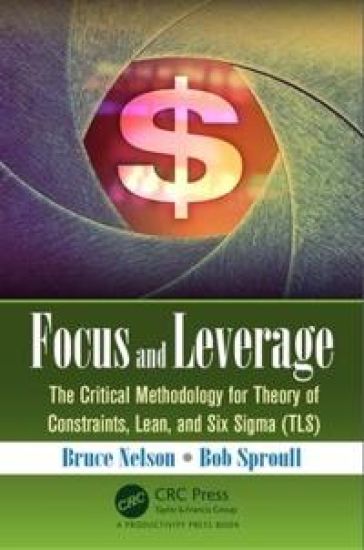
Focus and Leverage

Focus and Leverage

Bruce Nelson; Bob Sproull

Productivity Press
2015
nidottu
Most books about continuous and process improvement are written in a textbook format with straightforward information and plenty of graphs and charts to convey the points being made. Sometimes, even the best step-by-step instructions can escape even the most adamant of followers for an improvement method in determining exactly how to apply what they’ve learned.Taking a different approach, Focus and Leverage is presented in an engaging business-novel format and is a sequel to the authors’ bestselling book, Epiphanized, Second Edition. The primary characters remain the same, but this time the storyline features two different industries: Maintenance, Repair, and Overhaul (MRO) and Healthcare (hospital) environments.This book expands and highlights the two improvement methods first introduced in the appendix section of Epiphanized: the Interference Diagram (ID)/Intermediate Objectives (IO) map (ID/IO Simplified Strategy) and Multiple-Drum-Buffer-Rope (M-DBR).Both of these innovative methods are the result of some much-focused thinking that allows for multiple improvement methods, and steps, to be combined into a single thinking process tool. This groundbreaking new method is designed to save time and money and allows faster and better results to be achieved.The two storylines move the reader through the necessary system analysis, problem identification, and solution implementation. The novel format aids in presenting several realistic situational discussions as well as a multitude of graphs and figures to explain the step-by-step process for success.The storyline of this book weaves some well-known and some not-so-well-known thinking tools into the problem-solving sphere to provide you with an understanding of how to first discover and then overcome issues not readily known or expected at the start of any project.
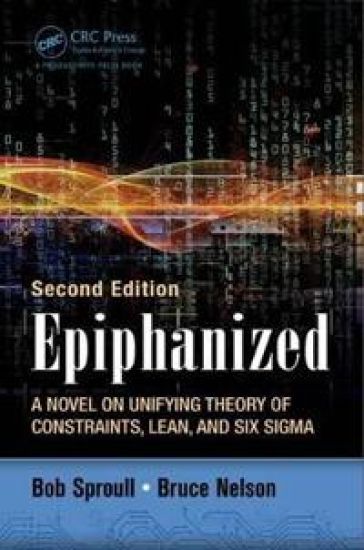
Epiphanized

Epiphanized

Bob Sproull

Productivity Press
2015
nidottu
Updating the tools, principles, and methods presented in the bestselling first edition, this updated edition explains how to implement the authors’ proven improvement methodology that unifies the Theory of Constraints with Lean and Six Sigma. The book uses a compelling novel format to demonstrate how to achieve superior on-time delivery along with unprecedented levels of profitability.Besides explaining how to implement the authors’ unified improvement methodology, the book arms readers with a proven method for convincing management that using the improvement methodology outlined in the text will lead to significantly higher levels of profitability.This edition has been updated with an expanded appendix that includes more in-depth discussions of the tools covered in the first edition. This edition also sheds more light on the reasoning behind why the very best improvement results can be achieved by the unification of the Theory of Constraints, Lean, and Six Sigma (TLS). The appendix also provides additional detail about how the concepts covered in the book can be applied to your organization.The primary theme throughout this book is the focus on the unity and enhancement of improvement tools and methods. The book includes an appendix that allows readers to explore, in much more detail, the principles, tools, and techniques presented in the novel portion of the book.The authors detail a pioneering pathway for significant gains in profitability and market share for any company choosing to implement the methodologies that are presented. Some of the concepts, tools, and principles presented may seem counterintuitive to many readers, but if the principles are understood and followed, the exceptional results are sure to follow
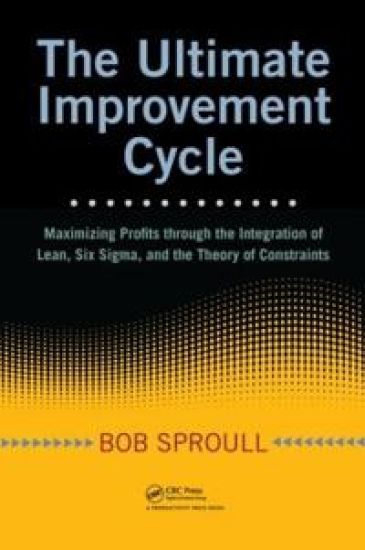
The Ultimate Improvement Cycle

The Ultimate Improvement Cycle

Bob Sproull

Productivity Press
2009
sidottu
Recognizing the need to implement quality and eliminate waste, companies embrace Lean, Six Sigma, or a combination of the two, typically taking a broad approach that seeks to remediate every process, critical or not. When this happens, efforts become distracted, improvements indefinitely delayed, and results mediocre at best. The Ultimate Improvement Cycle (UIC) integrates Lean, Six Sigma, and the Theory of Constraints into a combined strategy that will help you immediately focus your efforts on those areas that will make the greatest difference. The book presents basic laws of factory physics that show why the UIC delivers significant bottom-line improvement while other initiatives so often fail. It explains to you why focusing your efforts on apparent problems rather than systemic concerns is wasted effort.Focus on key areas and take improvement to the next levelThe Ultimate Improvement Cycle: Maximizing Profits through the Integration of Lean, Six Sigma, and the Theory of Constraints show you how to draw the best from Lean and Six Sigma by employing principles drawn from the Theory of Constraints. This approach will ensure that your effort is focused in the right place, at the right time, using the right tools, and the right amount of resources. This multi-pronged approach addresses cost accounting, variation, waste, and performance measurements. But most importantly, it focuses your organization on the right areas to optimize. Applying years of hands-on work in many environments, Bob Sproull has developed a unique proven method that capitalizes on a time-release formula for evoking the key tools that improvement requires. He shows you how to take advantage of the cyclical nature of improvement to implement change that is perpetually effective, and his approach does not require more resources than you have on hand. Although originally developed in manufacturing, the UIC works equally well in any environment whether it be manufacturing or service-oriented, including Maintenance, Repair and Overhaul (MRO) and Critical Chain Project Management (CCPM).
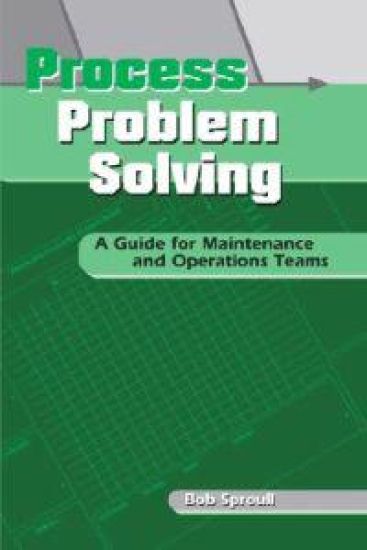
Process Problem Solving

Process Problem Solving

Bob Sproull

Productivity Press
2001
nidottu
To be a successful manufacturing operation, employees must eliminate equipment and production related losses. However, most shopfloor workers don't have the necessary skills to perform the problem-solving tasks that accomplish this goal. They must be trained in the proper methods for logically and systematically discovering the root causes of a situation.Based on the firsthand experiences of author Bob Sproull, Process Problem Solving: A Guide for Maintenance and Operations Teams presents a precise methodology for understanding problems in a manufacturing environment. The book begins by introducing various problem-solving tools, including fish diagrams, tree diagrams, cause-and-effect diagrams, and flow diagrams. Using real-world examples, Sproull takes readers systematically through each tool and discusses them in depth.The central tool in Process Problem Solving is the Problem Analysis Flow (PAF) chart. Containing ten major sections, it combines many of the tools discussed at the beginning of the book. According to the author, the PAF chart is the most thorough and comprehensive problem-solving tool. It creates a systematic method for understanding and solving the root causes of problems.To teach the necessary problem-solving skills, Sproull uses powerful learning techniques that guide the reader through the process. Each chapter begins with a section entitled "What You Should Learn in this Chapter," which specifically emphasizes the main points presented. In addition, each chapter is sprinkled with "keyword" boxes that advise the reader of important terms.Process Problem Solving is filled with Sproull's "Problem Solving Truths." These are key ideas the author wants to highlight, so the reader retains important pieces of information. Finally, Process Problem Solving follows a "learn and do" approach. The end of each chapter asks the reader to talk about what they have learned. This interactive approach helps readers retain and understand the material.With this informative book, shopfloor workers get the training they need to understand the root causes of manufacturing problems.It contains:Forms for problem-solving toolsReal-world examplesA step-by-step programDiagrams, graphs, and essential chartsQuestions at the end of each chapter that encourage interactive learningAppendices that contain actual case studies40 problem-solving truths