Kirjojen hintavertailu. Mukana 12 595 353 kirjaa ja 12 kauppaa.

Kirjailija

Bob Zhang

Kirjat ja teokset yhdessä paikassa: 10 kirjaa, julkaisuja vuosilta 2015-2026, suosituimpien joukossa Tongue Image Analysis. Vertaile teosten hintoja ja tarkista saatavuus suomalaisista kirjakaupoista.

10 kirjaa

Kirjojen julkaisuhaarukka 2015-2026.

Advanced Palmprint Authentication

Advanced Palmprint Authentication

David Zhang; Dandan Fan; Xu Liang; Bob Zhang

Springer Nature Switzerland AG
2025
sidottu
This book presents a comprehensive exploration of palmprint recognition, synthesizing over a decade of research in contact-based, contactless, 3D, and multispectral systems. As one of the earliest approaches in biometrics, contact-based palmprint systems have evolved significantly, achieving greater portability and accuracy, even when handling large-scale datasets. In contrast, contactless systems, which allow users to position their palms near the camera without physical contact, offer a hygienic, user-friendly alternative that has quickly gained popularity in various applications. Additionally, the advancement of 3D palmprint recognition and the introduction of cutting-edge sensors, such as line-scan and multicamera systems, have further enhanced the accuracy and reliability of these systems. This book is structured into 13 chapters, divided into three key sections. The first part delves into contact-based systems, emphasizing their growing efficiency and performance in both small devices and large-scale scenarios. The second part provides in-depth coverage of contactless systems, detailing essential processes like palmprint acquisition, ROI localization, feature extraction, and matching techniques. The third section examines the latest developments in multiple sensing systems, focusing on 3D and multispectral recognition. Targeted at researchers and engineers in biometrics, particularly those specializing in palmprint recognition, this book offers valuable insights and practical algorithms for enhancing system performance. It is also an excellent resource for readers with a broader interest in biometric technologies, offering a rich understanding of the latest trends and innovations in the field.

Tongue Image Analysis

Tongue Image Analysis

David Zhang; Hongzhi Zhang; Bob Zhang

Springer Verlag, Singapore
2018
nidottu
This is the first book offering a systematic description of tongue image analysis and processing technologies and their typical applications in computerized tongue diagnostic (CTD) systems. It features the most current research findings in all aspects of tongue image acquisition, preprocessing, classification, and diagnostic support methodologies, from theoretical and algorithmic problems to prototype design and development of CTD systems. The book begins with a very in-depth description of CTD on a need-to-know basis which includes an overview of CTD systems and traditional Chinese medicine (TCM) in order to provide the information on the context and background of tongue image analysis. The core part then introduces algorithms as well as their implementation methods, at a know-how level, including image segmentation methods, chromatic correction, and classification of tongue images. Some clinical applications based on these methods are presented for the show-how purpose in the CTD research field. Case studies highlight different techniques that have been adopted to assist the visual inspection of appendicitis, diabetes, and other common diseases. Experimental results under different challenging clinical circumstances have demonstrated the superior performance of these techniques. In this book, the principles of tongue image analysis are illustrated with plentiful graphs, tables, and practical experiments to provide insights into some of the problems. In this way, readers can easily find a quick and systematic way through the complicated theories and they can later even extend their studies to special topics of interest. This book will be of benefit to researchers, professionals, and graduate students working in the field of computer vision, pattern recognition, clinical practice, and TCM, as well as those involved in interdisciplinary research.
Tongue Image Analysis

Tongue Image Analysis

David Zhang; Hongzhi Zhang; Bob Zhang

Springer Verlag, Singapore
2017
sidottu
This is the first book offering a systematic description of tongue image analysis and processing technologies and their typical applications in computerized tongue diagnostic (CTD) systems. It features the most current research findings in all aspects of tongue image acquisition, preprocessing, classification, and diagnostic support methodologies, from theoretical and algorithmic problems to prototype design and development of CTD systems. The book begins with a very in-depth description of CTD on a need-to-know basis which includes an overview of CTD systems and traditional Chinese medicine (TCM) in order to provide the information on the context and background of tongue image analysis. The core part then introduces algorithms as well as their implementation methods, at a know-how level, including image segmentation methods, chromatic correction, and classification of tongue images. Some clinical applications based on these methods are presented for the show-how purpose in the CTD research field. Case studies highlight different techniques that have been adopted to assist the visual inspection of appendicitis, diabetes, and other common diseases. Experimental results under different challenging clinical circumstances have demonstrated the superior performance of these techniques. In this book, the principles of tongue image analysis are illustrated with plentiful graphs, tables, and practical experiments to provide insights into some of the problems. In this way, readers can easily find a quick and systematic way through the complicated theories and they can later even extend their studies to special topics of interest. This book will be of benefit to researchers, professionals, and graduate students working in the field of computer vision, pattern recognition, clinical practice, and TCM, as well as those involved in interdisciplinary research.
Advanced Medical Biometrics

Advanced Medical Biometrics

David Zhang; Chaoxun Guo; Bob Zhang

WORLD SCIENTIFIC PUBLISHING CO PTE LTD
2026
sidottu
In brief, this book provides the advanced sensing technologies including multi-sensor collaborative sensing for pulse signal acquisition, sensor array design for breath odor perception, and voice signal acquisition. Besides, this book summarizes the advances about pulse feature extraction with improved Gabor function, odor feature extraction based on de-convolution methods. This book also presents the latest recognition methods including evolutionary ensemble model to handle the imbalance problem, multi-feature complementary methods for face image, tongue images, and pulse analysis. Multi-modal hybrid fusion and self-adaptive score fusion for disease classification are proposed and proved effective for medical biometrics.Medical biometrics achieves disease detection and health monitor by sensing and recognizing multi-modal body surface information. It is believed that body surface information, e.g., face, tongue, breath odor, voice, and wrist pulse, is one of the most important biometric features that contains rich pathological information and can be used for health assessments or disease detection. Focusing on the latest progresses in medical biometrics, this book systematically presents advanced signal acquisition techniques, feature extraction methods, and recognition algorithms.Both researchers and engineers in pattern recognition and medical diagnosis will benefit from this book as it offers comprehensive understanding of the advanced signal acquisition techniques, related feature extraction methods, and state-of-the-art analysis methods.
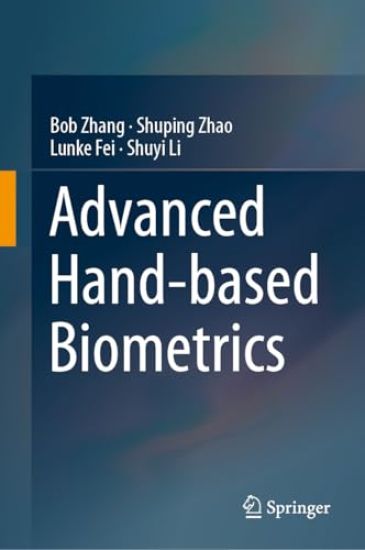
Advanced Hand-based Biometrics

Advanced Hand-based Biometrics

Bob Zhang; Shuping Zhao; Lunke Fei; Shuyi Li

SPRINGER VERLAG, SINGAPORE
2026
sidottu
This book offers a scholarly examination of innovative biometric recognition technologies, focusing on palmprint, finger-knuckle-print, palm-vein, dorsal-hand-vein, and multi-modal hand-based recognition systems.
Information Fusion

Information Fusion

Jinxing Li; Bob Zhang; David Zhang

SPRINGER VERLAG, SINGAPORE
2023
nidottu
In the big data era, increasing information can be extracted from the same source object or scene. For instance, a person can be verified based on their fingerprint, palm print, or iris information, and a given image can be represented by various types of features, including its texture, color, shape, etc. These multiple types of data extracted from a single object are called multi-view, multi-modal or multi-feature data. Many works have demonstrated that the utilization of all available information at multiple abstraction levels (measurements, features, decisions) helps to obtain more complex, reliable and accurate information and to maximize performance in a range of applications.This book provides an overview of information fusion technologies, state-of-the-art techniques and their applications. It covers a variety of essential information fusion methods based on different techniques, including sparse/collaborative representation, kernel strategy,Bayesian models, metric learning, weight/classifier methods, and deep learning. The typical applications of these proposed fusion approaches are also presented, including image classification, domain adaptation, disease detection, image restoration, etc. This book will benefit all researchers, professionals and graduate students in the fields of computer vision, pattern recognition, biometrics applications, etc. Furthermore, it offers a valuable resource for interdisciplinary research.
Information Fusion

Information Fusion

Jinxing Li; Bob Zhang; David Zhang

SPRINGER VERLAG, SINGAPORE
2022
sidottu
In the big data era, increasing information can be extracted from the same source object or scene. For instance, a person can be verified based on their fingerprint, palm print, or iris information, and a given image can be represented by various types of features, including its texture, color, shape, etc. These multiple types of data extracted from a single object are called multi-view, multi-modal or multi-feature data. Many works have demonstrated that the utilization of all available information at multiple abstraction levels (measurements, features, decisions) helps to obtain more complex, reliable and accurate information and to maximize performance in a range of applications.This book provides an overview of information fusion technologies, state-of-the-art techniques and their applications. It covers a variety of essential information fusion methods based on different techniques, including sparse/collaborative representation, kernel strategy,Bayesian models, metric learning, weight/classifier methods, and deep learning. The typical applications of these proposed fusion approaches are also presented, including image classification, domain adaptation, disease detection, image restoration, etc. This book will benefit all researchers, professionals and graduate students in the fields of computer vision, pattern recognition, biometrics applications, etc. Furthermore, it offers a valuable resource for interdisciplinary research.
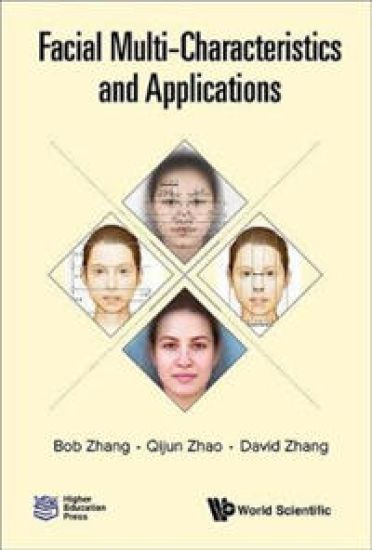
Facial Multi-characteristics And Applications

Facial Multi-characteristics And Applications

Bob Zhang; Qijun Zhao; David Zhang

World Scientific Publishing Co Pte Ltd
2019
sidottu
What features or information can we observe from a face, and how can these information help us to understand the person concerned, in terms of their well-being and what can we learn about and from each given feature? This book answers these questions by first dividing a face's multiple characteristics into two main categories: original (or physiological) features and features that change over a lifetime. The first category, original features, may be further divided into two sub-classes: features special (or unique) to an individual, and features common to a particular group. The second, changed features, can also be subdivided into two groups: features altered due to disease or features altered by other external factors. From these four sub-categories, four different applications — facial identification using original and special features; beauty analysis using original common features; facial diagnosis by disease changed features; and expression recognition through affect-changed features — are identified.The book will benefit researchers, professionals, and graduate students working in the field of computer vision, pattern recognition, security/clinical practice, and beauty analysis, and will also be useful for interdisciplinary research.
Intended Evolution: How Selection of Intelligence Guides Life Forward
DISCOVER A NEW OUTLOOK ON THE PROCESS OF LIFE-AND IMPROVE YOUR HEALTH AS A RESULT In Intended Evolution, authors Dongxun and Bob Zhang introduce a different perspective on the theory of evolution: Life is not only selected by nature but intentionally interacts with it, learning how to better its future. They explain that applying this idea to generally accepted principles of biology can have startling results in your ability to affect your own health-and even your evolution. According to the theory of intended evolution, organisms gather information through sensory experience and use that knowledge to effect change in themselves and their environments. The authors propose that organisms use this saved information to make choices projected to enhance their survival. It is through experience, choices, and action, within a given environment, that life changes itself from moment to moment and determines what changes are needed for future generations. Because of humans' unique ability to understand how our own evolution functions, we can effect changes within ourselves to influence and enhance our health and fitness, even to lengthen our lifespan.