Kirjojen hintavertailu. Mukana 12 595 353 kirjaa ja 12 kauppaa.

Kirjailija

Bojan Dimitrijevic

Kirjat ja teokset yhdessä paikassa: 8 kirjaa, julkaisuja vuosilta 2015-2025, suosituimpien joukossa Silver Birds Over the Estuary. Vertaile teosten hintoja ja tarkista saatavuus suomalaisista kirjakaupoista.

8 kirjaa

Kirjojen julkaisuhaarukka 2015-2025.

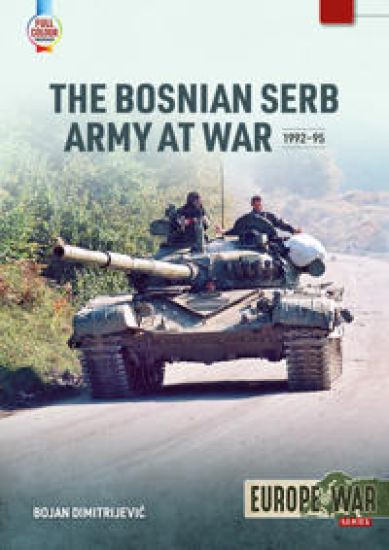
The Bosnian Serb Army at War 1992-95

The Bosnian Serb Army at War 1992-95

Bojan Dimitrijevic

HELION COMPANY
2025
nidottu
The book describes the Bosnian Serb Army in the Bosnian War 1992-1995. It provides a detailed account on organization, personnel, equipment and combat activities during the years of war. It covers the transfer parts of the Yugoslav People's Army into Vojske Republike Srpske 1992, the initial operations and offensives in 1992-1993 ('Koridor', Jajce, Podrinje, Trnovo). Short overview of the other warring parties: Army of BiH, Croatian Council of Defense, Army of Western Bosnia, UNPROFOR and NATO Rapid Reaction Force. The book shall outline the development of the VRS organisation, list the equipment and problems in the command chain. It shall follow with the descriptions of the operations in 1994 (Gorazde, Bihac Pocket, wider Sarajevo) and 1995 (Sarajevo, Western Krajina, Srebrenica, Zepa, Drvar and Banja Luka). The book discusses further NATO involvement through the air attacks in 1994/95, deployment of the Rapid Reaction Force and finally, Operation Deliberated Force which led to the wider, Croat-Muslim offensive causing the end of the war under the auspices of the US shuttle diplomat R. Holbrooke. The final chapter examines the influence of the Dayton accord, Paris peace treaty, deployment of the IFOR, Implementation Force and demilitarizing of the warring parties.
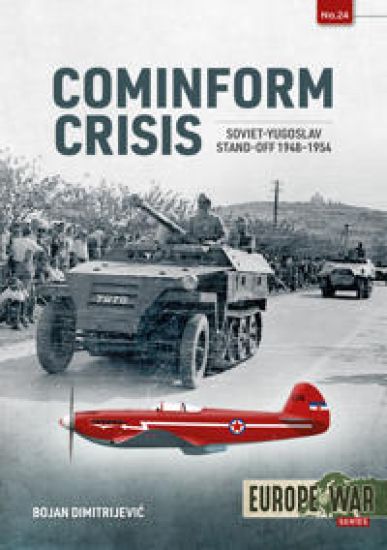
Cominform Crisis

Cominform Crisis

Bojan Dimitrijevic

HELION COMPANY
2023
pokkari
COMINFORM Crisis describes the first armed conflict within the Communist world after the Second World War. This occurred between Tito's Yugoslavia and the states led by the Soviet Union, in the period between 1948 and 1954. It start with an explanation of the process of "Sovietization" of the former Yugoslav Partisan Army, its ambitious development plans, and its influence in neighboring Albania, Bulgaria and in Greek Civil War, all of which led to growing suspicions amongst the Soviet leadership, especially Stalin. This would lead to the slow break up of mutual ties in spring of 1948, and finally to the Cominform Resolution on 28 June 1948.The Resolution marked the start of the conflict that would last for almost seven years. Communist brothers-in-arms became bitter enemies and Yugoslavian borders with the communist countries of Albania, Bulgaria, Rumania and Hungary became front lines. The political clash turned into open hostilities at the borders: with firing at border-guards, attacks on border posts, intrusions by agents and armed groups, and surveillance and troop movements. Despite Tito's Yugoslavs being frightened by the expectation of aggression from East, no invasion was launched and the war in the Korean Peninsula turned the attention of the Soviets and Americans to the Far East. Ultimately, the Cominform-Yugoslav conflict came to a slow end; through the acceptance of Yugoslavia into the US Mutual Defence Aid Programme in November 1951; and after the Stalin death in March 1953.COMINFORM Crisis describes the Yugoslav Army's organization, stressing the differences in pre-1948 and later reorganizations during the conflict, and provides the reader with detailed orders of battle of the Yugoslav Army based on archival research. COMINFORM Crisis also describes the attempts of the Yugoslavs to establish an indigenous defense industry during this period to overcome the problem of the supplying its army, stressing the development of the first Yugoslav tank, piston engine fighters, several types of vessel for the navy, and series of small arms. This book also examines the work of the Yugoslav military Counterintelligence Service (KOS) and State Security (UDBA) in the widespread struggle with the Soviet and satellite intelligence services on the borders and in the ranks of the army and security forces.
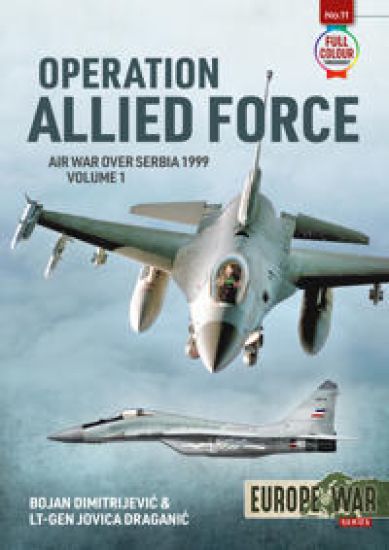
Operation Allied Force

Operation Allied Force

Bojan Dimitrijevic; Jovica Draganic

Helion Company
2021
nidottu
On 24 March 1999, the North Atlantic Treaty Organisation (NATO) launched Operation Allied Force against Serbia. Lasting 78 days, this was an unusual conflict fought at several levels. The campaign was fought at the negotiation tables, in the media, and via cyber warfare. In the air, NATO sought to destroy or at least minimise the capability of the Serbian forces, while on the ground the Serbian forces fought the Kosovo-Albanian insurgency. It had an unusual outcome, too: without NATO losing a single soldier in direct action, they still forced the Serbian authorities and armed forces to withdraw from Kosovo, which in 2008 then proclaimed its independence. In turn, the war inflicted serious human and material losses upon the Serbian’s and the air force was particularly devastated by air strikes on its facilities. Nevertheless, many within NATO subsequently concluded that the skies over Serbia were as dangerous on the last night of this conflict as they were on its first. Largely based on cooperation with the joint commission of the Serbian Air Force and the U.S. Air Force in Europe (USAFE), Operation Allied Force provides a detailed account of NATO's aerial campaign, including reconstructions of operations by 'stealth' aircraft such as the F-117A and B-2A. Operation Allied Force also offers a detailed reconstruction of the planning and conduct of combat operations by the Serbian Air Force, with special emphasis on the attempts of its sole MiG-29 squadron to challenge enemy strike packages. The volume is illustrated by a rich collection of exclusive photography collected from both sides, and along with custom-drawn artworks provides a set of entirely new and unique insights into what was the last war fought in Europe during the 20th century.
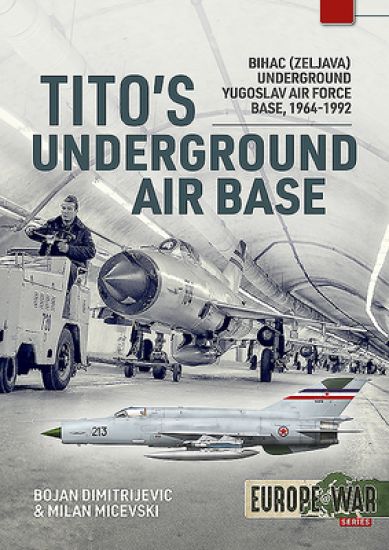
Tito'S Underground Air Base

Tito'S Underground Air Base

Bojan Dimitrijevic; Milan Micevski

Helion Company
2020
nidottu
The air force of Tito’s Yugoslavia has had many different peculiarities - from a unique Cold War position of having operated a mix of US, Soviet, and indigenous aircraft and equipment, to the changeable strategies in case of war. One such feature was an entire underground air base constructed inside a hill near the town of Bihac, in western Bosnia. ‘The Object’ was the core, the heart, of this air base: it housed four MiG-21 squadrons for nearly 25 years, until the civil war tore Yugoslavia apart. ‘The Object’ was built as the outcome of Yugoslav military efforts to build up its independent defence capabilities, especially the air force which was regarded as the strategic tool in keeping Tito’s Yugoslavia's independence from both Cold War blocks. There were a few other underground shelters built at Yugoslavia’s air bases, but Bihac underground air base remained the only underground facility which was permanently used. Bihac Air Base was constructed directly on the border between two former federal states of Yugoslavia, now two independent countries: The Republic of Croatia, and The Republic of Bosnia and Herzegovina. Indeed, their post-independence border runs between the former taxiways and underground entrances. Nowadays, its ruins are a place of pilgrimage by many aviation and military enthusiasts, and is known as ‘Zeljava’, after a nearby village on the Croatian side. In its five chapters this book provides an in-depth account of the design and construction of the air base and its ‘underground object’, and a detailed account of the activities of its MiG-21 squadrons and everyday operations in the period between 1968 and 1991. The book concludes with an exhaustive description of combat operations during the final year of the existence of the Bihac Air Base in 1991-1992, under the conditions of the civil war. Drawing upon exclusive archival sources – many of them classified until very recently – the authors have expanded the emerging story through interviews with dozens of officers and other ranks that served at this ‘underground aircraft carrier’, thus managing to fill the gaps in usage not covered by the documentation. Tito’s Underground Air Base is lavishly illustrated with a huge collection of exclusive photographs collected from numerous archives, museums, and private collections, and a set of authentic colour profiles and diagrams. It is a unique source of reference about one of most fascinating projects related to underground military facilities constructed during the Cold War.
Silver Birds Over the Estuary

Silver Birds Over the Estuary

Bojan Dimitrijevic; Milan Micevski

Helion Company
2020
nidottu
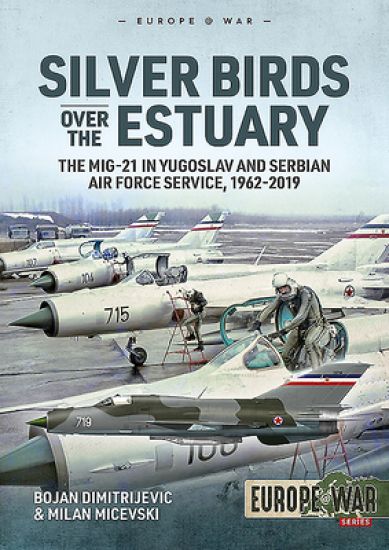
The Mikoyan i Gurevich MiG-21 has been built in greater numbers than any other combat aircraft since 1945. It also saw service with more air forces than any other type manufactured over the last 70 years. Locally designated the ‘L’ (for Lovac or fighter), for more than half a century over 260 MiG-21s in 12 different versions and sub-variants formed the backbone of the Yugoslav Air Force and Air Defence Force (JRV i PVO) and later the Serbian Air Force (RV i PVO). Entering service at the peak of the Cold War, the MiG-21 quickly replaced the US-supplied North American F-86E and F-86D Sabres in the Yugoslav inventory. The first version, MiG-21F-13, was followed by the MiG-21PFM in 1967, and MiG-21M/MF in 1970. Serving with the 204th Fighter Regiment, the task of these fighters was the air defence of Belgrade, capital of Yugoslavia. Whenever a new and more advanced variant became available, older types were handed over to other units. This is how the 117th Fighter Regiment came into being, based at the famous underground air base outside the town of Bihac. The Pristina-based 83rd Fighter Regiment followed in 1972. In Tito’s Yugoslavia, the MiG-21 was also deployed for strategic reconnaissance. In 1968-1969, the JRV i PVO introduced the MiG-21R to service, which became the primary photo- and electronic reconnaissance platform of the entire military. The importance of the fleet was further increased in 1984, when US-made Fairchild KA-112 LORAP containers were added to their arsenal. The final and most widely used version became the MiG-21bis, delivered to Yugoslavia in the 1977-1983 period. By the time of the dissolution of the country, in 1991-1992, it formed the backbone of the fleet and saw intensive combat service as a fighter-bomber during the conflicts in Slovenia, Croatia, and Bosnia and Herzegovina. Of particular interest during this period was the widespread use of diverse ordnance of native and NATO-origins. While operated by the RV i PVO, MiG-21s did not fly any combat sorties during NATO’s campaign against the Federal Republic of Yugoslavia of 1999 – better known as the ‘Kosovo War’. Nevertheless, it was intensively targeted by NATO’s air power, resulting in destruction of nearly half the fleet. Although subsequently considered ‘obsolete’, and operated in continuously declining numbers, the MiG-21bis continued soldiering on with the RV i PVO, and even maintained quick reaction alert duty until late 2015, when officially retired. The final handful of two-seat conversion trainers is still in service as this volume is prepared. The book is based upon the author’s extensive research in Serbian and Croatian archives, museums and interviews with veterans that flew this type. Most of the photos in this volume have never been published before.
Unef: the Yugoslav Contingent

Unef: the Yugoslav Contingent

Bojan Dimitrijevic

Helion Company
2019
nidottu
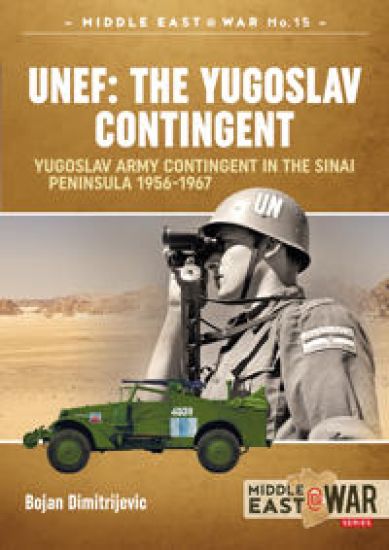
Pursuing a policy of social revolution, national liberation, and non-alignment, Yugoslavia under Josip Broz Tito became involved in the Middle East in the mid-1950s. Combined with some initial interest in economic and military assistance, this involvement found a positive reception among several Arab states, foremost Egypt under Gamal Abdel Nasser. Close personal ties between Tito and Nasser significantly contributed to the deployment of a contingent from the Yugoslav Popular Army (JNA) within the United Nations Emergency Force (UNEF) in Egypt, following the Suez War of 1956. Established in a hurry and deployed to Egypt in late November 1956, the JNA’s part of the UNEF consisted of a reinforced reconnaissance battalion. The unit was manned by conscript soldiers and equipped with vehicles provided by the USA within the frame of the Mutual Defence Assistance Program (MDAP). The story of the unit’s difficult task of entering the Sinai Peninsula right on the heels of withdrawing Israeli forces is the centrepiece of this book. While warmly welcomed by the local inhabitants, through late 1956 and all of 1957, the JNA contingent had the difficult task of reaching the demarcation lines, establishing observation posts, and making sure the cease-fire would be respected by all of the belligerents. For a force that understood itself to have a national-liberation and revolutionary role, rather than being an expeditionary military, the Yugoslav Popular Army thus went through a particularly unusual experience. The mission of the JNA’s contingent with the UNEF on the Sinai came to a sudden end during the crisis leading to the June 1967 Arab-Israeli War: squeezed between the advancing Israeli forces, it had to be quickly evacuated, leaving all its heavy equipment and vehicles behind. Prepared with help of the original documentation from a host of archival sources of the former JNA, the book Yugoslav UNEF Contingent focuses foremost on the deployment immediately after the Suez Crisis of 1956. Providing detailed coverage of the much underreported closing chapter of that conflict, it is illustrated by more than 150 original photographs, most of which have never been published before.
The Trieste Crisis 1953

The Trieste Crisis 1953

Bojan Dimitrijevic

Helion Company
2019
nidottu
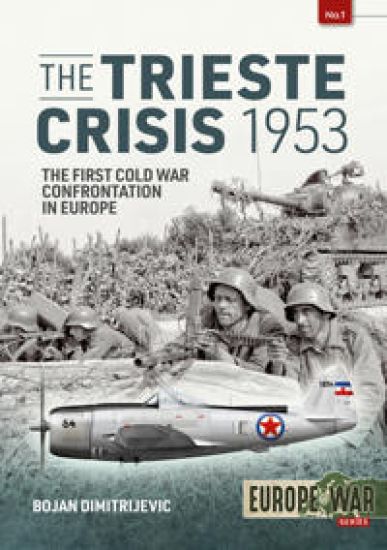
The city of Trieste stands as a symbol of the Italian-Yugoslav border dispute in the first decade after the Second World War. The problem included a much larger territory which covers the wider area of Trieste: ranging from the Julian Alps in the north to the base of the Istrian peninsula in the south; in the area where the Italians meet the South Slavs. Moreover, after the Second World War it was an area of confrontation for two ideologies: western democracy and communism. It was the place where the Iron Curtain lay between the two worlds for many decades of the Cold War. Often discussed from the socio-economic point of view, military aspects of the Trieste Crisis remain remarkably under-reported – and not only in the English language. One of the primary reasons is the relative unavailability of relevant Italian and Yugoslav documentation, but also the general focus on political and ethnic issues instead. The Trieste Crisis focusses on military-related affairs in this part of the world from the ‘race to Trieste’ of May 1945 until the creation of the Free Territory of Trieste and the culmination of tensions between Italy and former Yugoslavia, in October 1953. By the later date, the crisis had reached a point where it resulted in the largest deployment of military forces from both countries. Correspondingly, this work provides a detailed account of the Allied, Italian and Yugoslav military presence in the area before, and their build-up during this near-war. Paying special attention to the description of the troops involved, their armament and equipment, the heavy weaponry deployed, and aerial and naval forces, The Trieste Crisis is illustrated by more than 150 photographs – most of them never published before – colour profiles and maps, and thus closing a gap in the history of the early Cold War in Europe of the mid-20th Century.