Kirjojen hintavertailu. Mukana 12 152 606 kirjaa ja 12 kauppaa.

Kirjailija

Bonnie Laughlin-Schultz

Kirjat ja teokset yhdessä paikassa: 2 kirjaa, julkaisuja vuosilta 2013-2018, suosituimpien joukossa The Tie That Bound Us. Vertaile teosten hintoja ja tarkista saatavuus suomalaisista kirjakaupoista.

2 kirjaa

Kirjojen julkaisuhaarukka 2013-2018.

The Tie That Bound Us

The Tie That Bound Us

Bonnie Laughlin-Schultz

Cornell University Press
2018
pokkari
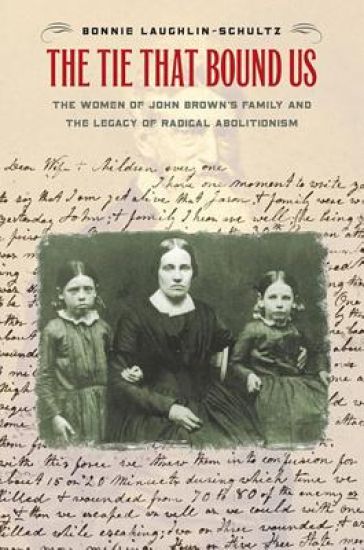
John Brown was fiercely committed to the militant abolitionist cause, a crusade that culminated in Brown's raid on the Federal armory at Harpers Ferry in 1859 and his subsequent execution. Less well known is his devotion to his family, and they to him. Two of Brown's sons were killed at Harpers Ferry, but the commitment of his wife and daughters often goes unacknowledged. In The Tie That Bound Us, Bonnie Laughlin-Schultz reveals for the first time the depth of the Brown women's involvement in his cause and their crucial roles in preserving and transforming his legacy after his death. As detailed by Laughlin-Schultz, Brown's second wife Mary Ann Day Brown and his daughters Ruth Brown Thompson, Annie Brown Adams, Sarah Brown, and Ellen Brown Fablinger were in many ways the most ordinary of women, contending with chronic poverty and lives that were quite typical for poor, rural nineteenth-century women. However, they also lived extraordinary lives, crossing paths with such figures as Frederick Douglass and Lydia Maria Child and embracing an abolitionist moral code that sanctioned antislavery violence in place of the more typical female world of petitioning and pamphleteering. In the aftermath of John Brown's raid at Harpers Ferry, the women of his family experienced a particular kind of celebrity among abolitionists and the American public. In their roles as what daughter Annie called "relics" of Brown's raid, they tested the limits of American memory of the Civil War, especially the war's most radical aim: securing racial equality. Because of their longevity (Annie, the last of Brown's daughters, died in 1926) and their position as symbols of the most radical form of abolitionist agitation, the story of the Brown women illuminates the changing nature of how Americans remembered Brown's raid, radical antislavery, and the causes and consequences of the Civil War.
The Tie That Bound Us

The Tie That Bound Us

Bonnie Laughlin-Schultz

Cornell University Press
2013
sidottu
John Brown was fiercely committed to the militant abolitionist cause, a crusade that culminated in Brown's raid on the Federal armory at Harpers Ferry in 1859 and his subsequent execution. Less well known is his devotion to his family, and they to him. Two of Brown's sons were killed at Harpers Ferry, but the commitment of his wife and daughters often goes unacknowledged. In The Tie That Bound Us, Bonnie Laughlin-Schultz reveals for the first time the depth of the Brown women's involvement in his cause and their crucial roles in preserving and transforming his legacy after his death.As detailed by Laughlin-Schultz, Brown's second wife Mary Ann Day Brown and his daughters Ruth Brown Thompson, Annie Brown Adams, Sarah Brown, and Ellen Brown Fablinger were in many ways the most ordinary of women, contending with chronic poverty and lives that were quite typical for poor, rural nineteenth-century women. However, they also lived extraordinary lives, crossing paths with such figures as Frederick Douglass and Lydia Maria Child and embracing an abolitionist moral code that sanctioned antislavery violence in place of the more typical female world of petitioning and pamphleteering.In the aftermath of John Brown's raid at Harpers Ferry, the women of his family experienced a particular kind of celebrity among abolitionists and the American public. In their roles as what daughter Annie called "relics" of Brown's raid, they tested the limits of American memory of the Civil War, especially the war's most radical aim: securing racial equality. Because of their longevity (Annie, the last of Brown's daughters, died in 1926) and their position as symbols of the most radical form of abolitionist agitation, the story of the Brown women illuminates the changing nature of how Americans remembered Brown's raid, radical antislavery, and the causes and consequences of the Civil War.