Kirjojen hintavertailu. Mukana 12 390 323 kirjaa ja 12 kauppaa.
Kirjailija
Boris Groys
Kirjat ja teokset yhdessä paikassa: 34 kirjaa, julkaisuja vuosilta 2006-2026, suosituimpien joukossa Jeff Wall. Vertaile teosten hintoja ja tarkista saatavuus suomalaisista kirjakaupoista.
Jeff Wall (b.1946) adopts the nineteenth-century poet Baudelaire's famous description of one of his contemporaries as 'a painter of modern life' to describe his own very different work: huge transparencies mounted on to light boxes that diffuse a brilliant glow of white light evenly through his photographs of contemporary urban scenes and 'constructed' social situations. Wall is foremost among the pioneering artists who since the late 1960s have brought photography to the forefront of contemporary art. His constructed images employ the latest sophisticated technology in the creation of compelling tableaux, which are evocative of subjects ranging from Hollywood cinema to nineteenth-century history painting. When exhibited in their glowing light boxes they evoke both the seduction of the cinema screen and the physical presence of minimalist sculptures such as Dan Flavin's fluorescent light installations or Donald Judd's metal and Perspex wall reliefs. All of these elements - traditional figurative painting, cinema, Minimalism, Conceptual art, documentary photography - are consciously evoked and explored in Wall's work. Associated closely since the late 1960s with Conceptual artists such as Dan Graham, with whom he collaborated on The Children's Pavilion (1988-93), Wall has engaged at a sophisticated level with theories of representation and its social dimensions both as an artist and as a theoretical writer on contemporary art and culture.
To Boris Groys, everything in the modern world ultimately falls into two categories – it’s either art, or it’s garbage. Both are useless, functionless objects that simply… lie there. The difference comes when we immunize art from the destructive power of time to which we happily deliver our garbage. In this collection of essays and interviews, Groys expounds on these lines of thinking, taking in art, the dialectic of work, the afterlife, politics, utopia, philosophy, faith, revolution, the avant-garde and digitalization. Boris Groys’ philosophical writings critique the political economy of heterotopia: economic resources are finite and not everything in modernity receives the same degree of care. His writings on art concern the things of the after-life, with only the politics of immortality ensuring that one’s own form of life never becomes a piece of garbage. Groys sees modern history is a history of aestheticizations, and with every aestheticization comes a claim of protection. Western society tends to aestheticize with a desire to protect everything, including the Anthropocene and all of the exotic species dwelling within it. If we can present ourselves as objects of reverence worthy of admiration and care, then can we too survive the ravages of time?Bringing together previously unpublished texts, newly translated work and interviews, this is a coruscating trip through the complex and challenging philosophical and cultural problems that Boris Groys has made it his life’s work to deal with.
To Boris Groys, everything in the modern world ultimately falls into two categories – it’s either art, or it’s garbage. Both are useless, functionless objects that simply… lie there. The difference comes when we immunize art from the destructive power of time to which we happily deliver our garbage. In this collection of essays and interviews, Groys expounds on these lines of thinking, taking in art, the dialectic of work, the afterlife, politics, utopia, philosophy, faith, revolution, the avant-garde and digitalization. Boris Groys’ philosophical writings critique the political economy of heterotopia: economic resources are finite and not everything in modernity receives the same degree of care. His writings on art concern the things of the after-life, with only the politics of immortality ensuring that one’s own form of life never becomes a piece of garbage. Groys sees modern history is a history of aestheticizations, and with every aestheticization comes a claim of protection. Western society tends to aestheticize with a desire to protect everything, including the Anthropocene and all of the exotic species dwelling within it. If we can present ourselves as objects of reverence worthy of admiration and care, then can we too survive the ravages of time?Bringing together previously unpublished texts, newly translated work and interviews, this is a coruscating trip through the complex and challenging philosophical and cultural problems that Boris Groys has made it his life’s work to deal with.
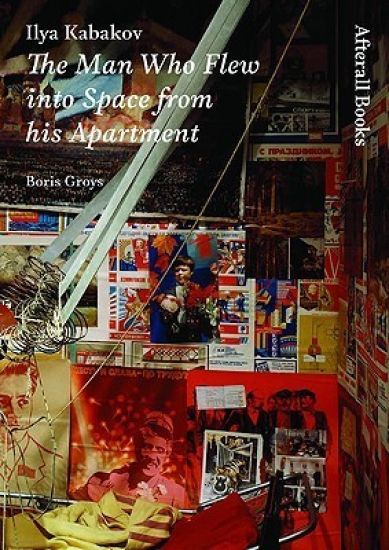
An illustrated study of one of Ilya Kabakov's most fantastic installations.The fictitious hero of this 1984 installation is a lonely dreamer who develops an impossible project: to fly alone in cosmic space. But this dream is also an individual appropriation of a collective Soviet project and the official Soviet propaganda connected to it. Having built a makeshift slingshot, the hero apparently flies through the ceiling of his shabby room and vanishes into space. The miserable room and the primitive slingshot suggest the reality behind the Soviet utopia, in which where cosmic vision and the political project of the Communist revolution are seen as indissoluble.The Man who Flew into Space from His Apartment also raises questions of authorship in modernity. All of Kabakov's work is made in the name of other, fictitious artists. This reveals a hidden rule of the modern art system: only an artist who doesn't want to be an artist or who doesn't even know that he is an artist is a real artist-just as only an artwork that does not look like an artwork is a real artwork. The installation is a narrative, the documentation of a fictitious event.Afterall Books are distributed by The MIT Press.
A dynamic contemporary examination of universalism Gathering a selection of essays by influential theorist Boris Groys, Towards a New Universalism articulates his sustained engagement with the problem of universality under contemporary conditions shaped by globalization, institutional fragmentation, and digital mediation. Rather than defending classical universalism or abandoning it in favor of cultural particularism, Groys approaches universality as something produced within shared historical, institutional, and technological frameworks. These essays address topics spanning from identity politics to migration, museums, media, and artificial intelligence, examining how universal claims make their way into social and cultural contexts. Distinct from recent philosophical treatments of universalism, Towards a New Universalism situates the question within aesthetics, media theory, and institutional critique, offering an indispensable collection for anyone interested in the intersections of politics and art. Distributed for e-flux.
A dynamic contemporary examination of universalism Gathering a selection of essays by influential theorist Boris Groys, Towards a New Universalism articulates his sustained engagement with the problem of universality under contemporary conditions shaped by globalization, institutional fragmentation, and digital mediation. Rather than defending classical universalism or abandoning it in favor of cultural particularism, Groys approaches universality as something produced within shared historical, institutional, and technological frameworks. These essays address topics spanning from identity politics to migration, museums, media, and artificial intelligence, examining how universal claims make their way into social and cultural contexts. Distinct from recent philosophical treatments of universalism, Towards a New Universalism situates the question within aesthetics, media theory, and institutional critique, offering an indispensable collection for anyone interested in the intersections of politics and art. Distributed for e-flux.
Boris Groys's new book is an intellectual biography of the fascinating and mysterious figure of Alexandre Kojève, discussing his involvement with Hegel's dialectics, his idea of communism and his vision of a universal empire as the end of history. Kojève proclaimed himself to be a Stalinist and at the same time was one of the creators of the European Union. His anthropology that describes humans as always negating their nature and their identity, and always desiring to be different from what they are, is highly political. It explains why humans can never be fully satisfied by a political system based on their allegedly "natural" rights.
Modern history is a history of aesthetizations – and every aesthetization raises a claim of protection. We aestheticize and want to protect almost everything, including Earth, oceans, the atmosphere, rare animal species and exotic plants. Humans are no exception. They also present themselves as objects of contemplation that deserve admiration and care. For some time, artists and intellectuals struggled for the sovereign right to present themselves to society in their own way – to become self-created works of art. Today everybody has not only a right but also an obligation to practice self-design. We are responsible for the way we present ourselves to others – and we cannot get rid of this aesthetic responsibility. However, we are not able to produce our own bodies. Before we begin to practice self-design, we find ourselves already designed by the gaze of others. That is why the practice of self-design mostly takes a critical and confrontational turn. We want to bring others to see us in the way we want to be seen – not only during our earthly life but also after our death. This is a complicated struggle, and the aim of this book is to describe and analyze it.
Modern history is a history of aesthetizations – and every aesthetization raises a claim of protection. We aestheticize and want to protect almost everything, including Earth, oceans, the atmosphere, rare animal species and exotic plants. Humans are no exception. They also present themselves as objects of contemplation that deserve admiration and care. For some time, artists and intellectuals struggled for the sovereign right to present themselves to society in their own way – to become self-created works of art. Today everybody has not only a right but also an obligation to practice self-design. We are responsible for the way we present ourselves to others – and we cannot get rid of this aesthetic responsibility. However, we are not able to produce our own bodies. Before we begin to practice self-design, we find ourselves already designed by the gaze of others. That is why the practice of self-design mostly takes a critical and confrontational turn. We want to bring others to see us in the way we want to be seen – not only during our earthly life but also after our death. This is a complicated struggle, and the aim of this book is to describe and analyze it.
Since Plato, philosophers have dreamed of establishing a rational state ruled through the power of language. In this radical and disturbing account of Soviet philosophy, Boris Groys argues that communism shares that dream and is best understood as an attempt to replace financial with linguistic bonds as the cement uniting society. The transformative power of language, the medium of equality, is the key to any new communist revolution.
Boris Groys; Madame Nielsen; Ida Marie Hede; Center for Militant Futurologi; Françoise Vergès; Mela Dávila Freire; Tobias Rahim; Petra Kleis; Ferdinand Ahm Krag; Helene Nymann; Studio ThinkingHand; Christian Lollike; Anders Thrue Djurslev
Museum for fremtiden er en umulig titel. Den fremlægger et paradoks, en selvmodsigelse. Et museum har sædvanligvis med fortiden at gøre. På et museum udlægges historien om fortiden. Museet har som regel kun med fremtiden at gøre i det omfang, at det anviser den som en logisk konsekvens af og brud med fortidens kultur, teknologi, design, videnskab og kunst. Museet skaber med andre ord en særlig fornemmelse af historisk tid som en samlet, kausal bevægelse. At udstille en genstand på et museum betyder i den forstand at præsentere den som et stykke overstået fortid, som død kultur. Hvad vil det så betyde at udstille fremtiden på museum? Museum for fremtiden er resultatet af et møde mellem scene- og billedkunst, mellem et teater og en samtidskunstinstitution. Kunsthal Aarhus og Sort/Hvid er gået sammen om at skabe et værk mellem kunstudstilling og teaterforestilling. Formålet er ikke at grundlægge et fremtidsmuseum eller at arkivere en samling genstande af historisk betydning for fremtiden. Det er snarere at konfrontere kunstarterne, kunstinstitutionerne, os selv og publikum med spørgsmålet om, hvad der betinger vores politiske forestillingsevne i dag – og hvad der skal til for at overkomme, udfordre eller komplicere samtidens vilkår. Bogen her fungerer som katalog for Museum for fremtiden, sådan som værket er udviklet på Sort/Hvid og i Kunsthal Aarhus. Her udfoldes og diskuteres de tidsundersøgelser, som de bidragende kunstnere bringer med sig ind i projektet. I den forbindelse fortæller Ferdinand Ahm Krag, Helene Nymann, Mikkel Dahlin Bojesen og Rhoda Ting fra Studio ThinkingHand, samt instruktør og dramatiker Christian Lollike fra Sort/Hvid, om, hvilken rolle tid spiller i deres kunst; om deres forskelligartede praksisser, om deres bidrag til Museum for fremtiden og om kompositionen af det samlede, sammenfiltrede værk. Fra hver deres position udfordrer kunstnerne de både kulturelle, psykologiske og biologiske mekanismer, som vi bruger til at forstå samtiden og forestille os fremtiden med. Hertil præsenteres skitser og eksempler, inspirationsmateriale, modeltegninger og endelig manuskriptet til forestillingen, i dets ufærdige form her en måned før premieren. For det andet har vi i udgivelsen inviteret andre til at tænke og digte med og imod og videre fra titlens umulige sammensætning af “museum” og “fremtid.” Originale tekster af Madame Nielsen, Ida Marie Hede og Center for Militant Futurologi, samt en kopi af en såkaldt NFT (et unikt kodet digitalt værk gennem blockchain-teknologi) af popsangeren Tobias Rahim, konfronterer sammen med tre oversatte teoretiske tekster, af kunstteoretiker Boris Groys, den postkoloniale tænker Françoise Vergès og kurator Mela Dávila Freire, det tidslige paradoks, der er indlejret i udstillingen af kunst. Det er igen ikke udvalgets formål at formulere en samlende eller udtømmende vision for, hvad et museum for fremtiden er, kan eller bør være. Snarere er det ønsket at udstikke nogle af de forskellige potentialer, positioner, faldgruber, eksempler, kritikker og mulige betydningsdannelser, som konstellationen giver anledning til. Udgivelsen bevæger sig derfor frem og tilbage mellem formater og genrer. Bidragene tæller skitser, fiktioner, manifestationer, kunstnersamtaler, museologiske analyser og filosofiske ekskurser. Med dens eklektiske sammensætning, forsøger vi med bogen at give form til det, vi kan kalde en samtidighed af forskellige tidsligheder og modsatrettede tidsopfattelser, som opstår i krydset mellem at udstille samtiden og forestille sig fremtider, og som måske betinger den tid, om og i hvilken vi laver samtidskunst. @font-face {font-family:"Cambria Math"; panose-1:2 4 5 3 5 4 6 3 2 4; mso-font-charset:0; mso-generic-font-family:roman; mso-font-pitch:variable; mso-font-signature:-536870145 1107305727 0 0 415 0;}@font-face {font-family:Calibri; panose-1:2 15 5 2 2 2 4 3 2 4; mso-font-charset:0; mso-generic-font-family:swiss; mso-font-pitch:variable; mso-font-signature:-536859905 -1073732485 9 0 511 0;}@font-face {font-family:Cambria; panose-1:2 4 5 3 5 4 6 3 2 4; mso-font-charset:0; mso-generic-font-family:roman; mso-font-pitch:variable; mso-font-signature:-536869121 1107305727 33554432 0 415 0;}@font-face {font-family:"Krabbesholm Serif"; panose-1:0 0 0 0 0 0 0 0 0 0; mso-font-charset:77; mso-generic-font-family:auto; mso-font-format:other; mso-font-pitch:variable; mso-font-signature:-2147483609 1073750090 0 0 147 0;}p.MsoNormal, li.MsoNormal, div.MsoNormal {mso-style-unhide:no; mso-style-qformat:yes; mso-style-parent:""; margin:0cm; mso-pagination:widow-orphan; font-size:12.0pt; font-family:"Calibri",sans-serif; mso-ascii-font-family:Calibri; mso-ascii-theme-font:minor-latin; mso-fareast-font-family:Calibri; mso-fareast-theme-font:minor-latin; mso-hansi-font-family:Calibri; mso-hansi-theme-font:minor-latin; mso-bidi-font-family:"Times New Roman"; mso-bidi-theme-font:minor-bidi; mso-fareast-language:EN-US;}.MsoChpDefault {mso-style-type:export-only; mso-default-props:yes; font-family:"Calibri",sans-serif; mso-ascii-font-family:Calibri; mso-ascii-theme-font:minor-latin; mso-fareast-font-family:Calibri; mso-fareast-theme-font:minor-latin; mso-hansi-font-family:Calibri; mso-hansi-theme-font:minor-latin; mso-bidi-font-family:"Times New Roman"; mso-bidi-theme-font:minor-bidi; mso-fareast-language:EN-US;}div.WordSection1 {page:WordSection1;}
Our current culture is dominated by the ideology of creativity. One is supposed to create the new and not to care about the things as they are. This ideology legitimises the domination of the "creative class" over the rest of the population that is predominantly occupied by forms of care - medical care, child care, agriculture, industrial maintenance and so on. We have a responsibility to care for our own bodies, but here again our culture tends to thematize the bodies of desire and to ignore the bodies of care - ill bodies in need of self-care and social care. But the discussion of care has a long philosophical tradition. The book retraces some episodes of this tradition - beginning with Plato and ending with Alexander Bogdanov through Hegel, Heidegger, Bataille and many others. The central question discussed is: who should be the subject of care? Should I care for myself or trust the others, the system, the institutions? Here, the concept of the self-care becomes a revolutionary principle that confronts the individual with the dominating mechanisms of control.
A prominent critic and theorist considers the criteria of value for collecting and storing works of art. In modernity, the museum was the institution that made art accessible to the broader public. An artwork was collected if it was considered beautiful, passionate, engaged, or critical--and primarily if it was deemed historically relevant. But today, with the total availability and saturation of images, the museum has lost its privileged status as the exclusive place for the display of art. In our age of digital media, how does a particular artwork get selected for a museum collection? Which symbolic criteria must this artwork satisfy for it to obtain value? And in what ways does the institution of the museum remain relevant? Logic of the Collection is framed by Boris Groys's original and provocative proposition: an artwork is considered historically relevant if it fits the logic of the museum collection. In these critical essays, the distinguished philosopher and theorist of art and media analyzes the relationship between the logic of the collection and various modern ideologies. He reflects on the explosion of art production and distribution through the ascendency of digital media as well as the ways in which the accumulated artworks will be collected and preserved in the future, as the potential limits of public and private collections are reached.
In the early 20th century, art and its institutions came under critique from a new democratic and egalitarian spirit. In an age of secularism and materialism, artworks would be understood as merely things among other things. This meant an attack on the techniques of realism, and the traditional mission of the museum, both designed shield a small class of objects from the entropic fate awaiting everything else-and the development of an approach that Boris Groys calls "direct realism": an art that would not produce objects, but practices that could enter the flow of time to live and die like the rest of us. But for more than a century now, every advance in this direction has been quickly followed by new means of preserving art's distinction. In this major new work, Groys, one of the world's leading art theorists, charts the paradoxes produced by this tension, which continues to structure the production and reception of new art. The internet, the latest medium through which artists have attempted to disavow this special status, inverts the most notorious consequence of early modernist developments. If the techniques of mechanical reproduction gave us objects without aura, digital production generates aura without objects, transforming all its materials into vanishing markers of the transitory present.
A TLS Book of the Year 2017In this, the first anthology of Russian contemporary art writing to be published outside Russia, many of the country’s most prominent contemporary artists, writers, philosophers, curators and historians come together to examine the region’s contemporary art, culture and and theory.With contributions from Ilya and Emilia Kabakov, Boris Groys, Dmitri Prigov, Anton Vidokle, Keti Chukhrov, Oxana Timofeeva, Pavel Pepperstein, Arseny Zhilyaev and Masha Sumnina amongst many others, this definitive collection reveals a compelling portrait of a vibrant and complex culture: one built on a contradicting dialectic between the material and the ideal, and battling its own histories and ideologies.
In the early 20th century, art and its institutions came under critique from a new democratic and egalitarian spirit, as works of art as sacred object was decried and they would be understood as merely things. This meant an attack on realism, as well as the traditional preservative mission of the museum. Acclaimed art theorist Boris Gorys argues this led to the development of "direct realism": an art that would not produce objects, but practices (from performance art to relational aesthetics) that would not survive. But for more than a century now, every advance in this direction has been quickly followed by new means of preserving art's distinction. In this major new work, Groys charts the paradoxes produced by this tension, and explores art in the age of the thingless medium, the internet. Groys claims that if the techniques of mechanical reproduction gave us objects without aura, digital production generates aura without objects, transforming all its materials into vanishing markers of the transitory present.