Kirjailija
Boris Strugatsky
Kirjat ja teokset yhdessä paikassa: 21 kirjaa, julkaisuja vuosilta 2004-2027, suosituimpien joukossa Roadside Picnic. Vertaile teosten hintoja ja tarkista saatavuus suomalaisista kirjakaupoista.
21 kirjaa
Kirjojen julkaisuhaarukka 2004-2027.
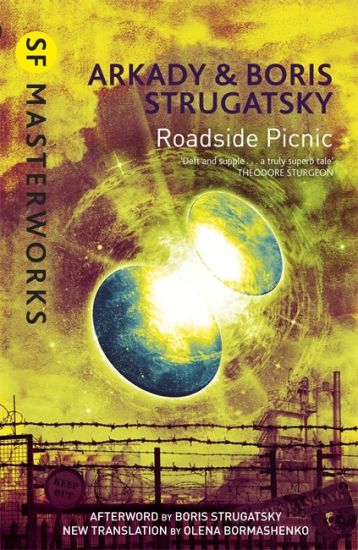
The Strugatsky brothers'' poignant and introspective novel of first contact that inspired the classic film Stalker Red Schuhart is a stalker, one of those strange misfits who are compelled by some unknown force to venture illegally into the Zone and, in spite of the extreme danger, collect the mysterious artefacts that the alien visitors left scattered around. His life is dominated by the Zone and the thriving black market in the alien products. Even the nature of his daughter has been determined by the Zone. And it is for her that Red makes his last, tragic foray into the hazardous and hostile depths. Readers can''t stop thinking about Roadside Picnic: ''A story of a horrific yet fascinating place, a story of an ordinary and unlikable man just trying to get by, a philosophical interlude on humanity and its significance or lack thereof, of greed and wonder, and the fever dream of the soul scream. It still speaks to me'' Goodreads reviewer, ⭐ ⭐ ⭐ ⭐ ⭐ ''Such an intriguing setting for me, such an unusual take on alien interaction'' Goodreads reviewer, ⭐ ⭐ ⭐ ⭐ ''It is a thought-provoking, hard-to-put down masterpiece, most probably the best introduction to Soviet science fiction. A must read for any sci-fi fan'' Goodreads reviewer, ⭐ ⭐ ⭐ ⭐ ⭐ ''A fantastic and creative exploration of what first contact might be like'' Goodreads reviewer, ⭐ ⭐ ⭐ ⭐ ⭐ ''The tone of the book is akin to that of some noir works, dark, gritty, getting darker and grittier as the tale wears on . . . Like many great books, the meaning of the ending is left up to the reader'' Goodreads reviewer, ⭐ ⭐ ⭐ ⭐ ⭐ ''A beautifully depressive and wonderfully atmospheric science fiction novel about life on Earth after an alien "Visitation" that leaves humans with more questions than answers . . . Once I started reading it today, I couldn''t stop. The story captured my heart and held my attention'' Goodreads reviewer, ⭐ ⭐ ⭐ ⭐ ⭐ ''This is the sort of book that you read and then immediately feel the need to lend it to someone you know so that they can experience and enjoy it themselves . . . I was truly astonished-by both the poignancy and the deceptive(?) simplicity of this relatively short novel'' Goodreads reviewer, ⭐ ⭐ ⭐ ⭐ ⭐
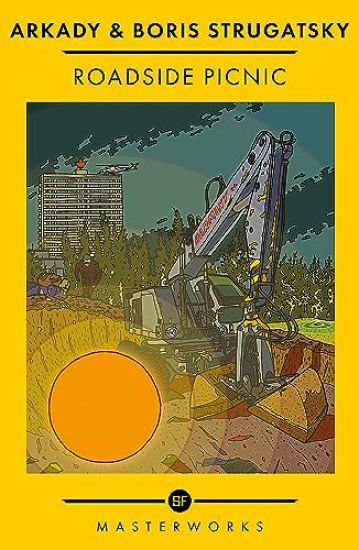
The Strugatsky brothers' poignant and introspective novel of first contact that inspired the classic film StalkerRed Schuhart is a stalker, one of those strange misfits who are compelled by some unknown force to venture illegally into the Zone and, in spite of the extreme danger, collect the mysterious artefacts that the alien visitors left scattered around. His life is dominated by the Zone and the thriving black market in the alien products. Even the nature of his daughter has been determined by the Zone. And it is for her that Red makes his last, tragic foray into the hazardous and hostile depths.Readers can't stop thinking about Roadside Picnic:'A story of a horrific yet fascinating place, a story of an ordinary and unlikable man just trying to get by, a philosophical interlude on humanity and its significance or lack thereof, of greed and wonder, and the fever dream of the soul scream. It still speaks to me' Goodreads reviewer, ? ? ? ? ?'Such an intriguing setting for me, such an unusual take on alien interaction' Goodreads reviewer, ? ? ? ? 'It is a thought-provoking, hard-to-put down masterpiece, most probably the best introduction to Soviet science fiction. A must read for any sci-fi fan' Goodreads reviewer, ? ? ? ? ?'A fantastic and creative exploration of what first contact might be like' Goodreads reviewer, ? ? ? ? ?'The tone of the book is akin to that of some noir works, dark, gritty, getting darker and grittier as the tale wears on . . . Like many great books, the meaning of the ending is left up to the reader' Goodreads reviewer, ? ? ? ? ?'A beautifully depressive and wonderfully atmospheric science fiction novel about life on Earth after an alien "Visitation" that leaves humans with more questions than answers . . . Once I started reading it today, I couldn't stop. The story captured my heart and held my attention' Goodreads reviewer, ? ? ? ? ? 'This is the sort of book that you read and then immediately feel the need to lend it to someone you know so that they can experience and enjoy it themselves . . . I was truly astonished-by both the poignancy and the deceptive(?) simplicity of this relatively short novel' Goodreads reviewer, ? ? ? ? ?
One Billion Years to the End of the World
Arkady Strugatsky; Boris Strugatsky
Penguin Classics
2020
nidottu
'A beautiful book' Ursula K. Le GuinThis mordantly funny and provocative tale from Soviet Russia's leading science fiction writers is the story of astrophysicist Dmitri Malianov. As he reaches a major breakthrough, he finds himself plagued by interruptions, from a mysterious crate of vodka to a glamorous woman on his doorstep. Is the Universe trying to tell him something?'On putting down one of their books, you feel a cold breeze still lifting the hairs on the back of your neck' The New York Times
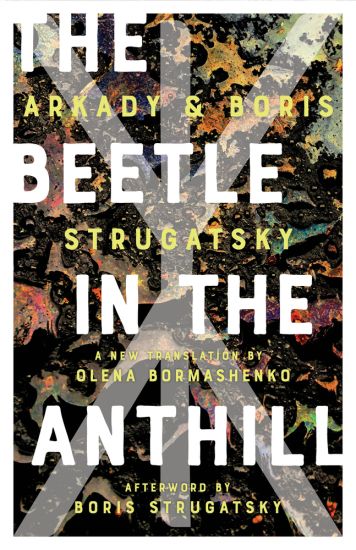
Today, Russian authors Arkady and Boris Strugatsky are counted among the best science fiction writers of the twentieth century. In their Noon Universe novels, they imagined twenty-second-century Earth as a space-faring communist utopia, devoted to guiding the progress of civilization on alien worlds. But as the authors became increasingly disillusioned with life in the Soviet Union, their Noon Universe stories grew darker and more complex as well. The Beetle in the Anthill reintroduces Maxim Kammerer, the main character of their novel The Inhabited Island. Once an intrepid young space explorer, Kammerer is now an investigator with COMCON-2, the covert agency in charge of countering threats to the homeworld. He is tasked with tracking "progressor" Lev Abalkin, who has returned to Earth after a routine mission went tragically wrong. Do the secrets of Abalkin's past pose a grave danger to humanity--or is he an innocent caught up in a deadly misunderstanding? This new edition by lauded translator Olena Bormashenko joins updated translations of Hard to Be a God, The Inhabited Island, and The Waves Extinguish the Wind to continue the ever-deepening saga of the Noon Universe.
Today, Russian authors Arkady and Boris Strugatsky are counted among the best science fiction writers of the twentieth century. In their Noon Universe novels, they imagined twenty-second-century Earth as a space-faring communist utopia, devoted to guiding the progress of civilization on alien worlds. But as the authors became increasingly disillusioned with life in the Soviet Union, their Noon Universe stories grew darker and more complex as well. The Waves Extinguish the Wind provides the epic conclusion to the Noon Universe saga, as eighty-nine-year-old Maxim Kammerer looks back at his most earth-shattering investigation, which brought an entire era of human civilization to an end. Searching for evidence that the mysterious alien Wanderers were interfering in Earth's development, Kammerer and his young trainee Toivo Glumov discovered a deeper and more disturbing secret within humanity itself. This new translation by Daniels Umanovskis joins updated editions of Hard to Be a God, The Inhabited Island, and The Beetle in the Anthill to bring the saga of the Noon Universe to its fitting end: a search for truth and answers in a universe that provides only questions.
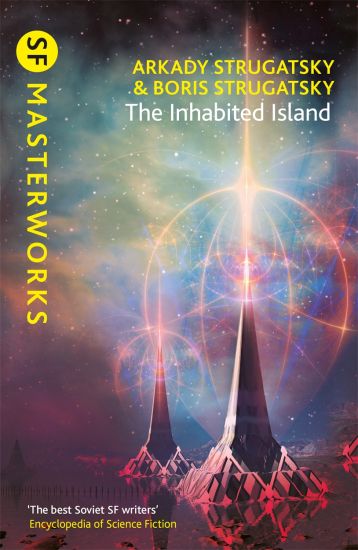
When Maxim Kammerer, a young space explorer from twenty-second-century Earth, crash-lands on an uncharted world, he thinks of himself as a latter-day Robinson Crusoe. Eager to establish first contact with the planet's humanlike inhabitants, he finds himself increasingly entangled in their primitive way of life. After his experiences in their nightmarish military, criminal justice, and mental health systems, Maxim begins to realize that his sojourn on this radioactive and war-scarred world will not be a walk in the park.The Inhabited Island is one of the Strugatsky brothers' most popular and acclaimed novels, yet the only previous English-language edition (Prisoners of Power) was based on a version heavily censored by Soviet authorities. Now, in a sparkling new edition by award-winning translator Andrew Bromfield, this landmark novel can be newly appreciated by both longtime Strugatsky fans and new explorers of the Russian science fiction masters' astonishingly rich body of work.
Lame Fate | Ugly Swans Volume 36
Arkady Strugatsky; Boris Strugatsky
Chicago Review Press
2020
nidottu
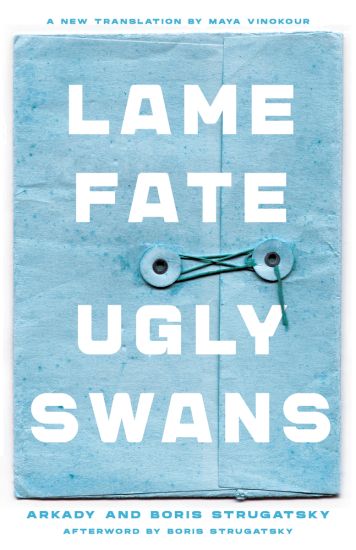
Today, Russian authors Arkady and Boris Strugatsky are counted among the best science fiction writers of the twentieth century, but their relationship with the late-Soviet literary establishment was often fraught. By the late 1960s, publishers had become increasingly reluctant to release their works, but their novels and short stories, retyped by hand, circulated widely through unofficial channels within the Soviet Union and occasionally turned up abroad in unauthorized translation. The nested novels Ugly Swans and Lame Fate offer insight into this period of enforced silence. Never before translated into English, Lame Fate tells the story of middle-aged author Felix Sorokin, who is asked by the Soviet Writers' Union to submit a writing sample to a new computer program that will scientifically evaluate its "objective value" as a literary work. Sorokin must choose whether to present something establishment- approved or risk sharing his unpublished masterpiece. Sorokin's masterwork is Ugly Swans, previously published in English as a standalone work but presented here in an authoritative new translation. Its hero, disgraced literary celebrity Victor Banev, returns to his hometown to find it haunted by the mysterious "clammies"--black-masked outcasts with supernatural talents who terrify the town's adult population but enthrall its teenagers, including Banev's own daughter. Together, Lame Fate and Ugly Swans illuminate some of the Strugatskys' favorite themes--the (im)possibility of political progress, the role of the individual in society, the nature of honor and courage, and the enduring value of art--in consummately entertaining fashion. By turns chilling, uproarious, and moving, these intertwining stories are sure to delight readers from all walks of life.
The Inhabited Island
Arkady Strugatsky; Boris Strugatsky; Andrew Bromfield
Chicago Review Press
2020
nidottu
When Maxim Kammerer, a young space explorer from twenty-second-century Earth, crash-lands on an uncharted world, he thinks of himself as a latter-day Robinson Crusoe. Eager to establish first contact with the planet's humanlike inhabitants, he finds himself increasingly entangled in their primitive way of life. After his experiences in their nightmarish military, criminal justice, and mental health systems, Maxim begins to realize that his sojourn on this radioactive and war-scarred world will not be a walk in the park. The Inhabited Island is one of the Strugatsky brothers' most popular and acclaimed novels, yet the only previous English-language edition (Prisoners of Power) was based on a version heavily censored by Soviet authorities. Now, in a sparkling new edition by award-winning translator Andrew Bromfield, this land-mark novel can be newly appreciated by both longtime Strugatsky fans and new explorers of the Russian science fiction masters' astonishingly rich body of work.
A science fiction masterpiece from the Russian greats, Arkady and Boris Strugatsky.
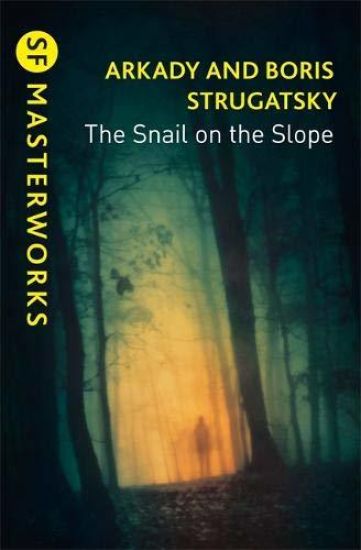
The Snail on the Slope is a neglected masterpiece by Russian science fiction greats Arkady and Boris Strugatsky, who thought of it as ther "most complete and important work." now, in a stunning translation, this tour de force is ready to be introduced to a new generation of American readers. The novel takes place in two worlds. One is the Administration, an institution run by a surreal, Kafkaesque bureaucracy whose aim is to govern the forest below. The other is the Forest, a place of fear, weird creatures, primitive but garrulous people, and violence. Peretz, who works at the Administration, wants to visit the Forest. Candide crashed in the Forest years ago and wants to return to the Administration. Their journeys are surprising and bizarre, and readers are left to puzzle out the mysteries of these foreign environments. Brilliant, enigmatic, and revelatory, The Snail on the Slope is one of the greatest literary works to come out of Soviet Russia.
A neglected masterpiece by Russian science fiction greats Arkady and Boris Strugatsky, who thought of it as their "most complete and important work," The Snail on the Slope disappeared almost immediately after it was first published in a small mass-market edition in the United States in 1980. In the meantime, however, it went through twenty-seven editions in fifteen other countries, making it one of the Strugatsky brothers' most popular works worldwide, along with Roadside Picnic and Hard to Be a God. Now, in a stunning new translation, this tour de force is ready to be introduced to a new generation of American readers. The novel takes place in two worlds. One is the Administration, an institution run by a surreal, Kafkaesque bureaucracy whose aim is to govern the forest below. The other is the forest, a place of fear, weird creatures, primitive but garrulous people, and violence. Peretz, who works at the Administration, wants to visit the forest. Candide crashed in the forest years ago and wants to return to the Administration. Their journeys are surprising and bizarre, and readers are left to puzzle out the mysteries of these foreign environments. Brilliant, enigmatic, evocative, and revelatory, The Snail on the Slope is one of the greatest literary works to come out of Soviet Russia.
From the acclaimed Soviet authors of ROADSIDE PICNIC comes a novel so incendiary that it could not be published until the freedom of perestroika came to the USSR.
A brilliant and incisive satire of the Soviet pseudo-science research of the Cold War, with a new introduction by Adam Roberts.
The magnum opus of Russia's greatest science fiction novelists translated into English for the first time Arkady and Boris Strugatsky are widely considered the greatest of Russian science fiction masters, and their most famous work, Roadside Picnic, has enjoyed great popularity worldwide. Yet the novel they worked hardest on, that was their own favorite, and that readers worldwide have acclaimed as their magnum opus, has never before been published in English. The Doomed City was so politically risky that the Strugatsky brothers kept its existence a complete secret even from their closest friends for sixteen years after its completion in 1972. It was only published in Russia during perestroika in the late 1980s, the last of their works to see publication. It was translated into a host of European languages, and now appears in English in a major new effort by acclaimed translator Andrew Bromfield. The Doomed City is set in an experimental city whose sun gets switched on in the morning and switched off at night, bordered by an abyss on one side and an impossibly high wall on the other. Its inhabitants are people who were plucked from twentieth-century history at various times and places and left to govern themselves, advised by Mentors whose purpose seems inscrutable. Andrei Voronin, a young astronomer plucked from Leningrad in the 1950s, is a die-hard believer in the Experiment, even though his first job in the city is as a garbage collector. And as increasinbly nightmarish scenarios begin to affect the city, he rises through the political hierarchy, with devastating effect. Boris Strugatsky wrote that the task of writing The Doomed City "was genuinely delightful and fascinating work." Readers will doubtless say the same of the experience of reading it.
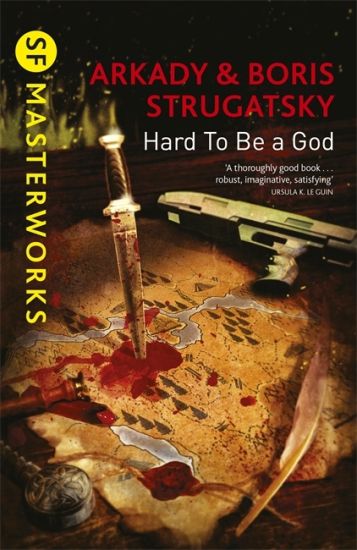
Another SF Masterwork from the giants of Soviet science fiction, Arkady and Boris Strugatsky.
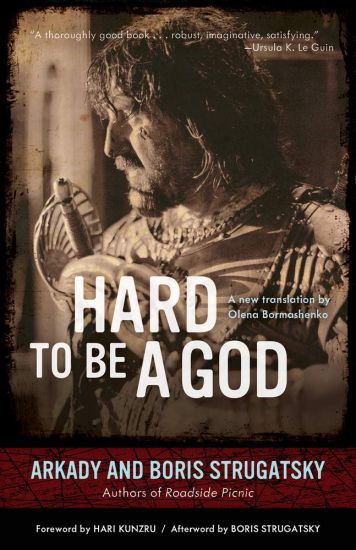
Hard to Be a God Volume 19
Arkady Strugatsky; Boris Strugatsky; Hari Kunzru
Chicago Review Press
2014
nidottu
Arkady and Boris Strugatsky are widely known as the greatest Russian writers of science fiction, and their 1964 novel Hard to Be a God is considered one of the greatest of their works. It tells the story of Don Rumata, who is sent from Earth to the medieval kingdom of Arkanar with instructions to observe and to influence, but never to directly interfere. Masquerading as an arrogant nobleman, a dueler and a brawler, Don Rumata is never defeated but can never kill. With his doubt and compassion, and his deep love for a local girl named Kira, Rumata wants to save the kingdom from the machinations of Don Reba, the First Minister to the king. But given his orders, what role can he play? Hard to Be a God has inspired a computer role-playing game and two movies, including Aleksei German's long-awaited swan song. Yet until now the only English version (out of print for over thirty years) was based on a German translation, and was full of errors, infelicities, and misunderstandings. This new edition--translated by Olena Bormashenko, whose translation of the authors' Roadside Picnic has received widespread acclaim, and supplemented with a new foreword by Hari Kunzru and an afterword by Boris Strugatsky, both of which supply much-needed context--reintroduces one of the most profound Soviet-era novels to an eager audience.
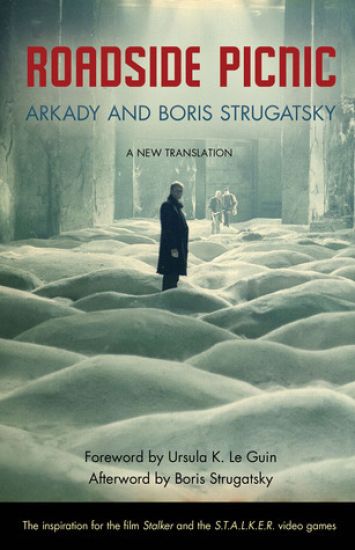
Roadside Picnic Volume 16
Arkady Strugatsky; Boris Strugatsky; Ursula K. Le Guin
Chicago Review Press
2012
nidottu
Red Schuhart is a stalker, one of those young rebels who are compelled, in spite of extreme danger, to venture illegally into the Zone to collect the mysterious artifacts that the alien visitors left scattered around. His life is dominated by the place and the thriving black market in the alien products. But when he and his friend Kirill go into the Zone together to pick up a "full empty," something goes wrong. And the news he gets from his girlfriend upon his return makes it inevitable that he'll keep going back to the Zone, again and again, until he finds the answer to all his problems. First published in 1972, Roadside Picnic is still widely regarded as one of the greatest science fiction novels, despite the fact that it has been out of print in the United States for almost thirty years. This authoritative new translation corrects many errors and omissions and has been supplemented with a foreword by Ursula K. Le Guin and a new afterword by Boris Strugatsky explaining the strange history of the novel's publication in Russia.
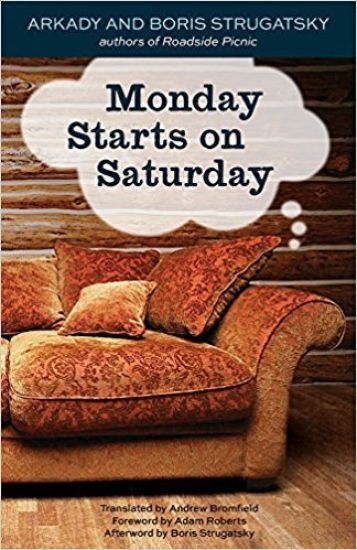
Sasha, a young computer programmer from Leningrad, is driving through the forests of Northwest Russia to meet up with some friends for a nature vacation. He picks up a couple of local hitchhikers, who persuade him to come work with them at the National Institute for the Technology of Witchcraft and Thaumaturgy, or NITWiT. The adventures Sasha has in the largely dysfunctional Institute involve all sorts of magical beings and devices--a wish-granting fish, a talking cat who can remember only the beginnings of stories, a sofa that translates fairy tales into reality, a motorcycle that can zoom into the imagined future, a hungry dog-size mosquito--along with a variety of wizards (including Merlin), vampires, and petty bureaucrats. First published in Russia in 1964, Monday Starts on Saturday has become the most popular Strugatsky novel in the authors' homeland. Like the works of Gogol and Kafka, it tackles the nature of institutions--here focusing on one devoted to discovering and perfecting human happiness. By turns wildly imaginative, hilarious, and disturbing, Monday Starts on Saturday is a comic masterpiece by two of the world's greatest science fiction writers.