Kirjojen hintavertailu. Mukana 12 374 643 kirjaa ja 12 kauppaa.

Kirjailija

Brad J Kallenberg

Kirjat ja teokset yhdessä paikassa: 10 kirjaa, julkaisuja vuosilta 2001-2025, suosituimpien joukossa Ethics As Grammar. Vertaile teosten hintoja ja tarkista saatavuus suomalaisista kirjakaupoista.

Mukana myös kirjoitusasut: Brad J. Kallenberg

10 kirjaa

Kirjojen julkaisuhaarukka 2001-2025.

Ethics As Grammar

Ethics As Grammar

Brad J. Kallenberg

University of Notre Dame Press
2001
nidottu
Wittgenstein, one of the most influential, and yet widely misunderstood, philosophers of our age, confronted his readers with aporias—linguistic puzzles—as a means of countering modern philosophical confusions over the nature of language without replicating the same confusions in his own writings. In Ethics as Grammar, Brad Kallenberg uses the writings of theological ethicist Stanley Hauerwas as a foil for demonstrating how Wittgenstein's method can become concrete within the Christian tradition. Kallenberg shows that the aesthetic, political, and grammatical strands epitomizing Hauerwas's thought are the result of his learning to do Christian ethics by thinking through Wittgenstein. Kallenberg argues that Wittgenstein's pedagogical strategy cultivates certain skills of judgment in his readers by making them struggle to move past the aporias and acquire the fluency of language's deeper grammar. Theologians, says Kallenberg, are well suited to this task of "going on" because the gift of Christianity supplies them with the requisite resources for reading Wittgenstein. Kallenberg uses Hauerwas to make this case—showing that Wittgenstein's aporetic philosophy has engaged Hauerwas in a lifelong conversation that has cured him of many philosophical confusions. Yet, because Hauerwas comes to the conversation as a Christian believer, he is able to surmount Wittgenstein's aporias with the assistance of theological convictions that he possesses through grace. Ethics as Grammar reveals that Wittgenstein's intention to cultivate concrete skill in real people was akin to Aristotle's emphasis on the close relationship of practical reason and ethics. In this thought-provoking book, Kallenberg demonstrates that Wittgenstein does more than simply offer a vantage point for reassessing Aristotle, he paves the way for ethics to become a distinctively Christian discipline, as exemplified by Stanley Hauerwas.
Ethics As Grammar

Ethics As Grammar

Brad J. Kallenberg

University of Notre Dame Press
2001
sidottu
Wittgenstein, one of the most influential, and yet widely misunderstood, philosophers of our age, confronted his readers with aporias—linguistic puzzles—as a means of countering modern philosophical confusions over the nature of language without replicating the same confusions in his own writings. In Ethics as Grammar, Brad Kallenberg uses the writings of theological ethicist Stanley Hauerwas as a foil for demonstrating how Wittgenstein's method can become concrete within the Christian tradition. Kallenberg shows that the aesthetic, political, and grammatical strands epitomizing Hauerwas's thought are the result of his learning to do Christian ethics by thinking through Wittgenstein. Kallenberg argues that Wittgenstein's pedagogical strategy cultivates certain skills of judgment in his readers by making them struggle to move past the aporias and acquire the fluency of language's deeper grammar. Theologians, says Kallenberg, are well suited to this task of "going on" because the gift of Christianity supplies them with the requisite resources for reading Wittgenstein. Kallenberg uses Hauerwas to make this case—showing that Wittgenstein's aporetic philosophy has engaged Hauerwas in a lifelong conversation that has cured him of many philosophical confusions. Yet, because Hauerwas comes to the conversation as a Christian believer, he is able to surmount Wittgenstein's aporias with the assistance of theological convictions that he possesses through grace. Ethics as Grammar reveals that Wittgenstein's intention to cultivate concrete skill in real people was akin to Aristotle's emphasis on the close relationship of practical reason and ethics. In this thought-provoking book, Kallenberg demonstrates that Wittgenstein does more than simply offer a vantage point for reassessing Aristotle, he paves the way for ethics to become a distinctively Christian discipline, as exemplified by Stanley Hauerwas.
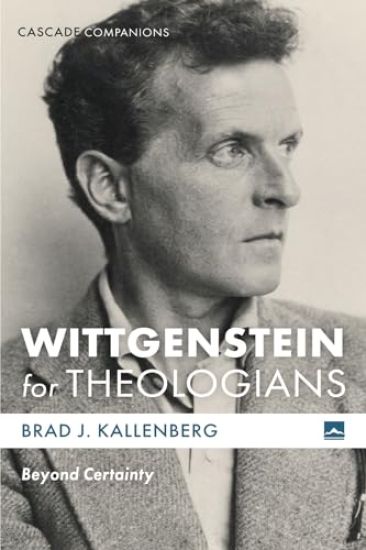
Wittgenstein for Theologians

Wittgenstein for Theologians

Brad J Kallenberg

Wipf Stock Publishers
2025
sidottu
It would be an unusual fish indeed that contemplated the nature of the very water in which it lives. Ironically, human beings do not fare much better than fish: we tend not to notice the way language permeates all our life and thought. Ludwig Wittgenstein (1889-1951) was one of a handful of recent thinkers who has shown just how important the nature of language is for the doing of theology. Not only do the workings of language outrank the authority of math and science, the very regularities by which we are able to communicate are inextricably tied to the bodily nature of our existence. (Of course, the bodily dimension of human language is why God's plan for reestablishing open communication with us required the incarnation of Jesus-the-Word rather than simply emailing to us a philosophical treatise.) Moreover, this bodily nature is irreducibly social by nature, and it is in the social "dance" with others that the world is brought into focus for a given individual. This present volume unpacks four of Wittgenstein's central concepts--language-games, grammar, form of life, and aspect-seeing--in order to explore their importance for doing the work of theology.