Kirjojen hintavertailu. Mukana 12 390 323 kirjaa ja 12 kauppaa.
Kirjailija
Bradford Jordan
Kirjat ja teokset yhdessä paikassa: 18 kirjaa, julkaisuja vuosilta 2011-2026, suosituimpien joukossa Fundamentals of Investments: Valuation and Management: 2026 Release ISE. Vertaile teosten hintoja ja tarkista saatavuus suomalaisista kirjakaupoista.
Fundamentals of Investments introduces students with little background to the essentials of investing in an accessible, student-friendly style. The text emphasizes intuition, basic principles, and real-world examples from familiar companies, making concepts easy to grasp and apply. Organized for both classroom and hands-on learning, it provides a strong foundation for portfolio practice, real-life decision-making, and future study toward credentials like the CFA.
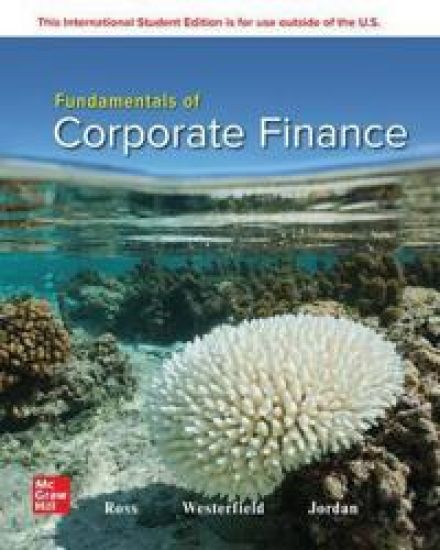
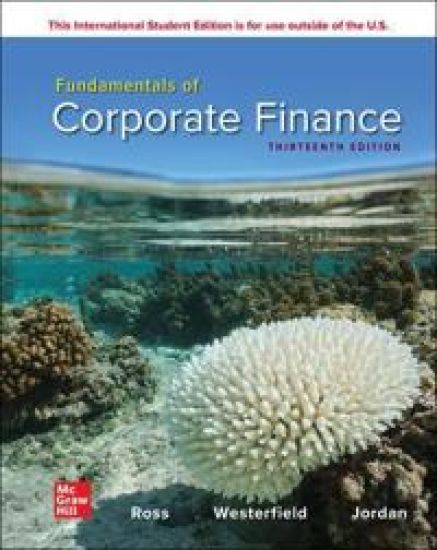
Fundamentals of Corporate Finance was designed and developed for a first course in business or corporate finance, for both finance majors and non-majors alike. The text is nearly self-contained in terms of background or prerequisites, assuming some familiarity with basic algebra and accounting concepts, while still reviewing important accounting principles very early on. The organization of this text has been developed to give instructors the flexibility they need. The best-selling text has three basic themes that are the central focus of the book: 1) An emphasis on intuition: the authors separate and explain the principles at work on a common sense, intuitive level before launching into any specifics. 2) A unified valuation approach: net present value (NPV) is treated as the basic concept underlying corporate finance. 3) A managerial focus: the authors emphasize the role of the financial manager as a decision maker, and they stress the need for managerial input and judgment. When paired with Connect, it has student success and career readiness resources that include Finance Prep Course, Algorithmic Integrated Excel, Application-Based Activities, Tableau Dashboard Activities, multiple video types, Guided Examples, and SmartBook, an adaptive reading and practice tool for students.
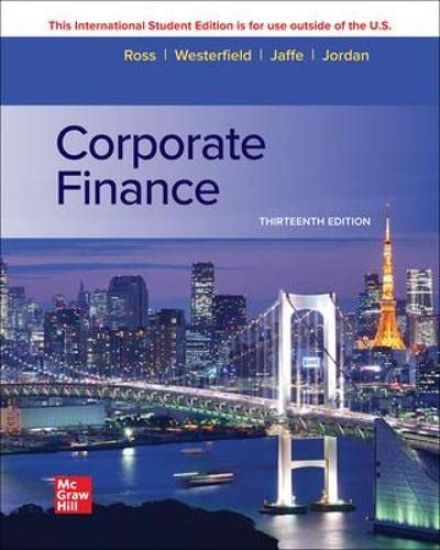
Corporate Finance, by Ross, Westerfield, Jaffe, and Jordan, was written for the corporate finance course at the MBA level and the intermediate course in many undergraduate programs. The text emphasizes the modern fundamentals of the theory of finance while providing contemporary examples to make the theory come to life. The authors aim to present corporate finance as the working of a small number of integrated and powerful intuitions rather than a collection of unrelated topics. They develop the central concepts of modern finance: arbitrage, net present value, efficient markets, agency theory, options, and the trade-off between risk and return, and use them to explain corporate finance with a balance of theory and application. The 13th edition also welcomes a special contributor, Professor Kelly Shue of Yale University.
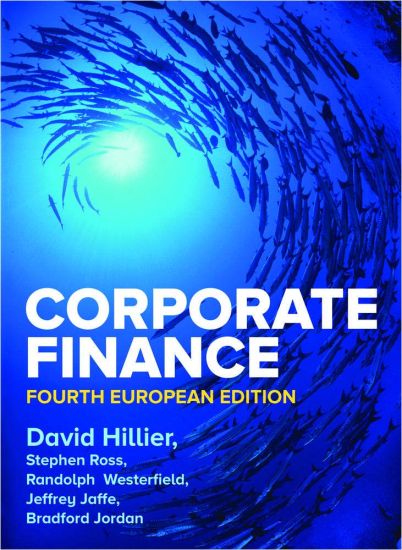
The fourth edition of Corporate Finance takes an applied approach to cover all the latest research and topic areas important to students taking Finance courses. The new edition provides an international perspective on all areas of corporate finance and has been updated to include discussion on current trends such as the rise of populism and trade barriers on international finance, the advent of Financial Technology, and key regulatory changes impacting the sector. Understanding and Application•Clear, user-friendly style•Example boxes in every chapter provide hypothetical examples to illustrate theoretical concepts such as cash flow timing, dividend smoothing and differential growth.•Real World Insight boxes use real companies like Siemens, Avast and Adidas to show how they have applied corporate finance theories and concepts to their businesses and business decisions.•Chapter links in the margin provide quick cross-referencing to show students the connections between topics.Practice and Proficiency•Mini and Practical cases present scenarios and questions to practice applying what you have learnt. •Rigorous testing: between 30 and 40 Questions and Problems per chapter are categorised by topic and level of difficulty.•Numbered maths equations and key notation boxes listing the variables and acronyms that will be encountered in each chapter, designed to encourage mastery of Maths.•Exam Questions designed to take 45 minutes and test you on material learned in a more formal exam style.•Connect® resources include algorithmic questions designed to ensure equations and calculations are not learned by rote but by thorough understanding and practice New to This Edition•Updated discussions on peer-to-peer trading, cash flow forecasting methods, import/export partners and additional investment appraisal methods•Updated chapters on corporate governance to reflect global changes, efficient markets and mergers and acquisition to reflect new research, financial distress to reflect new data with discussion on trends and insolvencies and fully updated chapter on Leasing to reflect new IFRS standards•New section on Modified Internal Rate of Return and Margin of Safety in Investment Appraisal, Net Asset Value, Islamic Financing, and alternatives to CAPM to reflect research developments• NEW: This edition has now been updated with 8 new videos that covers a worked example from the text and each video has associated concept check questions. The videos are now available on Connect® and cover:• Chapter 1 & 2: Introduction to Finance and Corporate Governance • Chapter 5: Long-Term Financing• Chapter 6: Investment Appraisal• Chapter 9 & 10: Risk and Return• Chapter 15 and 16: Equity and Debt Valuation • Chapter 20: Advanced Capital Budgeting• Chapter 21: Dividends• Chapter 22: OptionsDavid Hillier is Associate Principal and Executive Dean of the University of Strathclyde Business School. A Professor of Finance, David was recognized as being in the top 3 per cent of the most prolific finance researchers in the world over the past 50 years (Heck and Cooley, 2009) and appears regularly in the media as a business commentator.
Abstract: Over the last two decades, the Capital Asset Pricing Model (CAPM) has emerged as the dominant theoretical basis for much of the research in financial economics. Because direct observation of the market portfolio is a pre-requisite for any valid application of the CAPM, it cannot serve as a theoretical basis for empirical research in securities markets. The Arbitrage Pricing Theory (APT) is a theoretical alternative to the CAPM in which the market portfolio plays no particular role. The purpose of this research is to develop and test a model of the security return generating process based on the APT. Particular emphasis is placed on two facets of the proposed arbitrage model. First, the central prediction of the APT is an absence of arbitrage opportunities, the empirical identification of which would lead to a rejection of the theory. Thus, the first use to which the model is put is the examination of abnormal performance for the securities individually and jointly. The second application involves an event study comparison of the arbitrage model and a popular variant of the market model. The objective of this comparison is to establish the stability and usefulness of the arbitrage model against a known benchmark. In light of the growing list of empirical anomalies associated with the market model and the difficulties in application of the CAPM, an empirically tractable and theoretically sound model of security returns would be a significant step forward in financial research. The data used in the study are daily returns for individual securities from the CRSP file and cover the period 1962 through 1979. The results indicate substantial support for the APT and the arbitrage model. Significant arbitrage opportunities are found to occur in less than 1% of the individual cases, and the hypothesis of jointly zero abnormal performance cannot be rejected in any case. In the event study comparison, the arbitrage model was found to work at least as well as the market model in all cases and was markedly superior in accounting for the January effect. Dissertation Discovery Company and University of Florida are dedicated to making scholarly works more discoverable and accessible throughout the world. This dissertation, "The Arbitrage Model of Security Returns" by Bradford Dunson. Jordan, was obtained from University of Florida and is being sold with permission from the author. A digital copy of this work may also be found in the university's institutional repository, IR@UF. The content of this dissertation has not been altered in any way. We have altered the formatting in order to facilitate the ease of printing and reading of the dissertation.
Abstract: Over the last two decades, the Capital Asset Pricing Model (CAPM) has emerged as the dominant theoretical basis for much of the research in financial economics. Because direct observation of the market portfolio is a pre-requisite for any valid application of the CAPM, it cannot serve as a theoretical basis for empirical research in securities markets. The Arbitrage Pricing Theory (APT) is a theoretical alternative to the CAPM in which the market portfolio plays no particular role. The purpose of this research is to develop and test a model of the security return generating process based on the APT. Particular emphasis is placed on two facets of the proposed arbitrage model. First, the central prediction of the APT is an absence of arbitrage opportunities, the empirical identification of which would lead to a rejection of the theory. Thus, the first use to which the model is put is the examination of abnormal performance for the securities individually and jointly. The second application involves an event study comparison of the arbitrage model and a popular variant of the market model. The objective of this comparison is to establish the stability and usefulness of the arbitrage model against a known benchmark. In light of the growing list of empirical anomalies associated with the market model and the difficulties in application of the CAPM, an empirically tractable and theoretically sound model of security returns would be a significant step forward in financial research. The data used in the study are daily returns for individual securities from the CRSP file and cover the period 1962 through 1979. The results indicate substantial support for the APT and the arbitrage model. Significant arbitrage opportunities are found to occur in less than 1% of the individual cases, and the hypothesis of jointly zero abnormal performance cannot be rejected in any case. In the event study comparison, the arbitrage model was found to work at least as well as the market model in all cases and was markedly superior in accounting for the January effect. Dissertation Discovery Company and University of Florida are dedicated to making scholarly works more discoverable and accessible throughout the world. This dissertation, "The Arbitrage Model of Security Returns" by Bradford Dunson. Jordan, was obtained from University of Florida and is being sold with permission from the author. A digital copy of this work may also be found in the university's institutional repository, IR@UF. The content of this dissertation has not been altered in any way. We have altered the formatting in order to facilitate the ease of printing and reading of the dissertation.
Corporate Finance, by Ross, Westerfield, Jaffe, and Jordan emphasizes the modern fundamentals of the theory of finance, while providing contemporary examples to make the theory come to life. The authors aim to present corporate finance as the working of a small number of integrated and powerful intuitions, rather than a collection of unrelated topics. They develop the central concepts of modern finance: arbitrage, net present value, efficient markets, agency theory, options, and the trade-off between risk and return, and use them to explain corporate finance with a balance of theory and application. The Twelfth Edition includes many exciting new research findings as well as the incorporation of the Tax Cuts and Jobs Act (TCJA) throughout the text.Connect is proven to deliver better results for students and instructors. Proven content integrates seamlessly with enhanced digital tools to create a personalized learning experience that provides students with precisely what they need, when they need it. With Connect, the educational possibilities are limitless.
Fundamentals of Investments focuses on students as investment managers, giving them information to act on by placing theory and research in the proper context. The text offers a balanced, unified treatment of the four main types of financial investments—stocks, bonds, options, and futures. Topics are organized in a way that makes them easy to apply—whether to a portfolio simulation or to real life—and supported with hands-on activities. Then, resources within Connect help students solve financial problems and apply what they’ve learned. Jordan’s managerial perspective and superior pedagogy combine with a complete digital solution to help students achieve higher outcomes in the course.Connect is the only integrated learning system that empowers students by continuously adapting to deliver precisely what they need, when they need it, and how they need it, so that your class time is more engaging and effective.
Ross/Westerfield/Jaffe/Jordan's Corporate Finance: Core Principles and Applications was written to convey the most important corporate finance concepts and applications at a level that is approachable to the widest possible audience. The concise format, managerial context and design, and student-friendly writing style are key attributes to this text. The well-respected author team is known for the clear, accessible presentation of material that makes this text an excellent teaching tool. And with the Fifth Edition, McGraw-Hill’s Connect® empowers students by continually adapting to deliver precisely what they need, when they need it, and how they need it, so your class time is more engaging and effective.
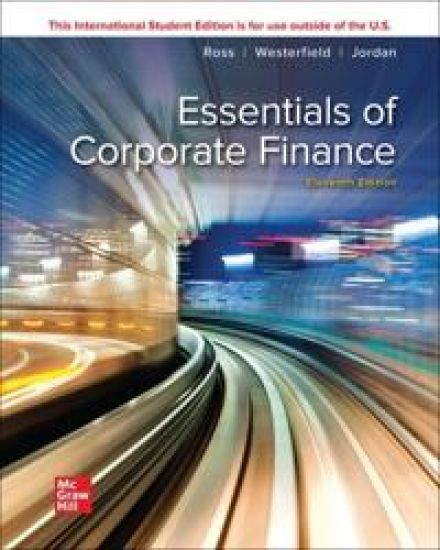
The integrated solutions for Ross's Essentials of Corporate Finance have been specifically designed to help improve student performance, meaning that students are prepared for and engaged in class, and they can successfully solve problems and analyse the results. McGraw-Hill's adaptive learning component, LearnSmart, provides assignable modules that help students master chapter core concepts and come to class more prepared. In addition, resources within Connect help students solve financial problems and apply what they've learned. Ross Essentials' succinct coverage, managerial focus, and strong end-of-chapter content combine with a complete digital solution to help your students achieve higher outcomes in the course.Connect is the only integrated learning system that empowers students by continuously adapting to deliver precisely what they need, when they need it, and how they need it, so that your class time is more engaging and effective.
Corporate Finance, by Ross, Westerfield, Jaffe, and Jordan emphasizes the modern fundamentals of the theory of finance, while providing contemporary examples to make the theory come to life. The authors aim to present corporate finance as the working of a small number of integrated and powerful intuitions, rather than a collection of unrelated topics. They develop the central concepts of modern finance: arbitrage, net present value, efficient markets, agency theory, options, and the trade-off between risk and return, and use them to explain corporate finance with a balance of theory and application. The Eleventh Edition includes many exciting new research findings as well as an enhanced Connect Finance, now with even more student learning resources.Connect is proven to deliver better results for students and instructors. Proven content integrates seamlessly with enhanced digital tools to create a personalized learning experience that provides students with precisely what they need, when they need it. With Connect, the educational possibilities are limitless.
The best-selling Fundamentals of Corporate Finance (FCF) has three basic themes that are the central focus of the book: 1) An emphasis on intuition—the authors separate and explain the principles at work on a common sense, intuitive level before launching into any specifics. 2) A unified valuation approach—net present value (NPV) is treated as the basic concept underlying corporate finance. 3) A managerial focus—the authors emphasize the role of the financial manager as decision maker, and they stress the need for managerial input and judgment.The Eleventh Edition continues the tradition of excellence that has earned Fundamentals of Corporate Finance its status as market leader. McGraw-Hill’s adaptive learning component, LearnSmart, provides assignable modules that help students master chapter core concepts and come to class more prepared. In addition, resources within Connect help students solve financial problems and apply what they’ve learned. Ross Fundamentals’ intuitive approach, managerial focus, and strong end-of-chapter content combine with a complete digital solution to help your students achieve higher outcomes in the course.
This South African edition of Fundamentals of Corporate Finance provides a modern, unified treatment of corporate financial management. Its managerial focus prepares students for the pragmatic decision making and judgement needed as a financial manager – establishing a sound understanding of how to maximise the value of an organisation and avoid possible pitfalls.