Kirjojen hintavertailu. Mukana 12 390 323 kirjaa ja 12 kauppaa.

Kirjailija

Bradley Parks

Kirjat ja teokset yhdessä paikassa: 3 kirjaa, julkaisuja vuosilta 2006-2022, suosituimpien joukossa A Climate of Injustice. Vertaile teosten hintoja ja tarkista saatavuus suomalaisista kirjakaupoista.

3 kirjaa

Kirjojen julkaisuhaarukka 2006-2022.

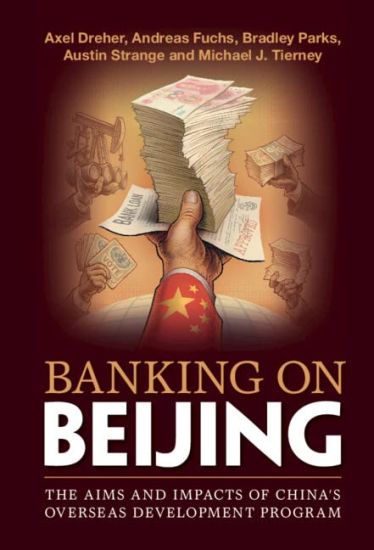
Banking on Beijing

Banking on Beijing

Axel Dreher; Andreas Fuchs; Bradley Parks; Austin Strange; Michael J. Tierney

Cambridge University Press
2022
sidottu
China is now the lender of first resort for much of the developing world, but Beijing has fueled speculation among policymakers, scholars, and journalists by shrouding its grant-giving and lending activities in secrecy. Introducing a systematic and transparent method of tracking Chinese development projects around the world, this book explains Beijing's motives and analyzes the intended and unintended effects of its overseas investments. Whereas China almost exclusively provided aid during the twentieth century, its twenty-first century transition from 'benefactor' to 'banker' has had far-reaching impacts in low-income and middle-income countries that are not widely understood. Its use of debt rather than aid to bankroll big-ticket infrastructure projects creates new opportunities for developing countries to achieve rapid socio-economic gains, but it has also introduced major risks, such as corruption, political capture, and conflict. This book will be of interest to policymakers, students and scholars of international political economy, Chinese politics and foreign policy, economic development, and international relations.
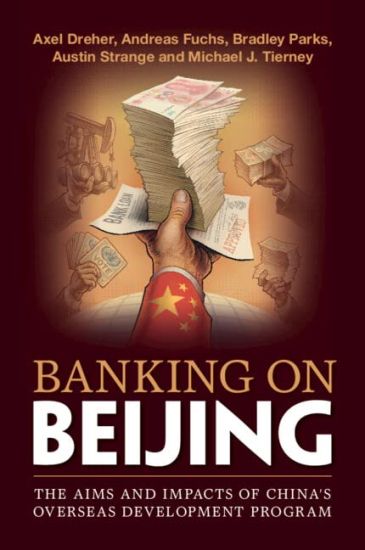
Banking on Beijing

Banking on Beijing

Axel Dreher; Andreas Fuchs; Bradley Parks; Austin Strange; Michael J. Tierney

Cambridge University Press
2022
pokkari
China is now the lender of first resort for much of the developing world, but Beijing has fueled speculation among policymakers, scholars, and journalists by shrouding its grant-giving and lending activities in secrecy. Introducing a systematic and transparent method of tracking Chinese development projects around the world, this book explains Beijing's motives and analyzes the intended and unintended effects of its overseas investments. Whereas China almost exclusively provided aid during the twentieth century, its twenty-first century transition from 'benefactor' to 'banker' has had far-reaching impacts in low-income and middle-income countries that are not widely understood. Its use of debt rather than aid to bankroll big-ticket infrastructure projects creates new opportunities for developing countries to achieve rapid socio-economic gains, but it has also introduced major risks, such as corruption, political capture, and conflict. This book will be of interest to policymakers, students and scholars of international political economy, Chinese politics and foreign policy, economic development, and international relations.
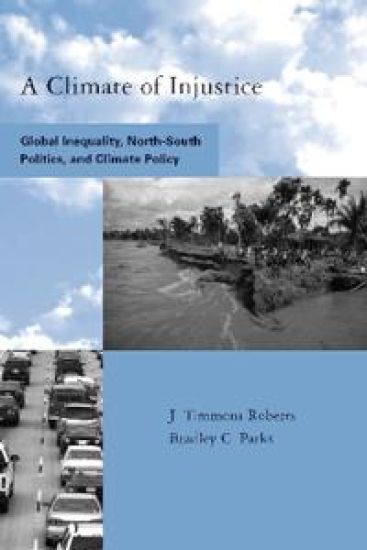
A Climate of Injustice

A Climate of Injustice

J. Timmons Roberts; Bradley Parks

MIT Press
2006
pokkari
The global debate over who should take action to address climate change is extremely precarious, as diametrically opposed perceptions of climate justice threaten the prospects for any long-term agreement. Poor nations fear limits on their efforts to grow economically and meet the needs of their own people, while powerful industrial nations, including the United States, refuse to curtail their own excesses unless developing countries make similar sacrifices. Meanwhile, although industrialized countries are responsible for 60 percent of the greenhouse gas emissions that contribute to climate change, developing countries suffer the "worst and first" effects of climate-related disasters, including droughts, floods, and storms, because of their geographical locations. In A Climate of Injustice, J. Timmons Roberts and Bradley Parks analyze the role that inequality between rich and poor nations plays in the negotiation of global climate agreements. Roberts and Parks argue that global inequality dampens cooperative efforts by reinforcing the "structuralist" worldviews and causal beliefs of many poor nations, eroding conditions of generalized trust, and promoting particularistic notions of "fair" solutions. They develop new measures of climate-related inequality, analyzing fatality and homelessness rates from hydrometeorological disasters, patterns of "emissions inequality," and participation in international environmental regimes. Until we recognize that reaching a North-South global climate pact requires addressing larger issues of inequality and striking a global bargain on environment and development, Roberts and Parks argue, the current policy gridlock will remain unresolved.