Kirjojen hintavertailu. Mukana 12 308 425 kirjaa ja 12 kauppaa.

Kirjailija

Branden W. Joseph

Kirjat ja teokset yhdessä paikassa: 7 kirjaa, julkaisuja vuosilta 2007-2023, suosituimpien joukossa Max Neuhaus. Vertaile teosten hintoja ja tarkista saatavuus suomalaisista kirjakaupoista.

7 kirjaa

Kirjojen julkaisuhaarukka 2007-2023.

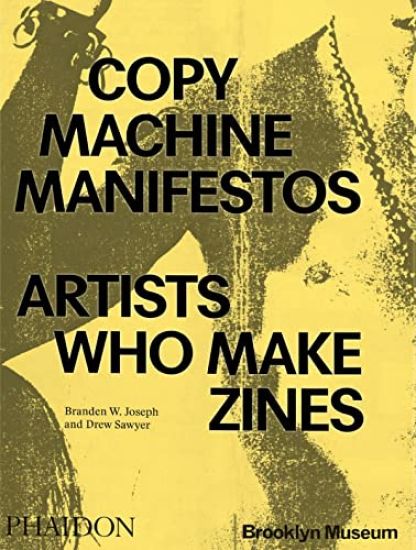
Copy Machine Manifestos

Copy Machine Manifestos

Branden W. Joseph; Drew Sawyer

PHAIDON PRESS LTD
2023
nidottu
‘Excellent.’ – The New Yorker The first publication dedicated to artists' zines in North America, a revelatory exploration of an unexamined but thriving aesthetic practice Copy Machine Manifestos captures the rich history of artists' zines as never before, placing them in the lineage of the visual arts and exploring their vibrant growth over the past five decades. Fully illustrated with hundreds of zine covers and interiors, alongside work in other media, such as painting, photography, film, video, and performance, the book also features brief biographies for more than 100 zine-makers including Beverly Buchanan, Mark Gonzales, G.B. Jones, Miranda July, Bruce LaBruce, Terence Koh, LTTR, Ari Marcopoulos, Mark Morrisroe, Raymond Pettibon, Brontez Purnell, Paul Mpagi Sepuya, and Kandis Williams. Accompanying a major exhibition at the Brooklyn Museum, this expansive book, bound as a paperback with a separate jacket, focuses on zines from North America, celebrating how artists have harnessed the medium's essential role in community building and transforming material and conceptual approaches to making art across all media since 1970.
Is It My Body? – Selected Texts

Is It My Body? – Selected Texts

Kim Gordon; Branden W. Joseph

Sternberg Press
2020
nidottu
Throughout the 1980s and early '90s, Kim Gordon--widely known as a founding member of the influential band Sonic Youth--produced a series of writings on art and music. Ranging from neo-Conceptual artworks to broader forms of cultural criticism, these rare texts are brought together in this volume for the first time, placing Gordon's writing within the context of the artist-critics of her generation, including Mike Kelley, John Miller, and Dan Graham. In addressing key stakes within contemporary art, architecture, music, and the performance of male and female gender roles, Gordon provides a prescient analysis of such figures as Kelley, Glenn Branca, Rhys Chatham, Tony Oursler, and Raymond Pettibon, in addition to reflecting on her own position as a woman on stage. The result--Is It My Body?--is a collection that feels as timely now as when it was written. This volume additionally features a conversation between Gordon and Jutta Koether, in which they discuss their collaborations in art, music, and performance.Institut f r Kunstkritik Series
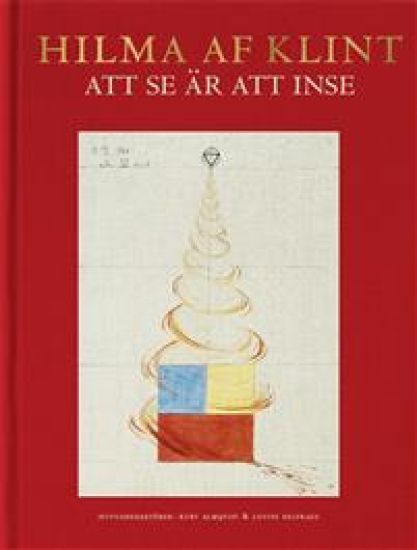
Hilma af Klint : att se är att inse

Hilma af Klint : att se är att inse

Hans Ulrich Obrist; Briony Fer; David Lomas; Branden W. Joseph; Daniel Birnbaum

Bokförlaget Stolpe
2020
sidottu
Volymen Att se är att inse presenterar sju serier av verk av den framstående konstnären Hilma af Klint. Dessa verk skapades under den första halvan av år 1920 och är de sista målningar af Klint gjorde innan hon övergick till akvarell och började måla i den säregna stil som lärdes ut av Rudolf Steiner och hans lärjungar. Denna antologi baseras på seminariet som hölls vid Goethe-Institut London i samband med utställningen Hilma af Klint: Painting the Unseen, som ägde rum på Serpentine Galleries under våren 2016.
Beyond the Dream Syndicate

Beyond the Dream Syndicate

Branden W. Joseph

Zone Books
2011
pokkari
Examining Tony Conrad's collaborative interactions as a guiding thread by which to investigate the contiguous networks and discursive interconnections in 1960s art.Tony Conrad has significantly influenced cultural developments from minimalism to underground film, "concept art," postmodern appropriation, and the most sophisticated rock and roll. Creator of the "structural" film, The Flicker, collaborator on Jack Smith's Flaming Creatures and Normal Love, follower of Henry Flynt's radical anti-art, member of the Theatre of Eternal Music and the first incarnation of The Velvet Underground, and early associate of Mike Kelley, Tony Oursler, and Cindy Sherman, Conrad has eluded canonic histories. Yet Beyond the Dream Syndicate does not claim Conrad as a major but under-recognized figure. Neither monograph nor social history, the book takes Conrad's collaborative interactions as a guiding thread by which to investigate the contiguous networks and discursive interconnections in 1960s art. Such an approach simultaneously illuminates and estranges current understandings of the period, redrawing the map across medium and stylistic boundaries to reveal a constitutive hybridization at the base of the decade's artistic development. This exploration of Conrad and his milieu goes beyond the presentation of a relatively overlooked oeuvre to chart multiple, contestatory regimes of power simultaneously in play during the pivotal moment of the 1960s. From the sovereign authority invoked by Young's music, to the "paranoiac" politics of Flynt, to the immanent control modeled by Conrad's films, each avant-garde project examined reveals an investment within a particular structure of power and resistance, providing a glimpse into the diversity of the artistic and political stakes that continue to define our time.
Max Neuhaus

Max Neuhaus

Max Neuhaus; Christoph Cox; Branden W. Joseph; Liz Kotz; Ulrich Loock; Peter Pakesch; Alex Potts

Yale University Press
2010
sidottu
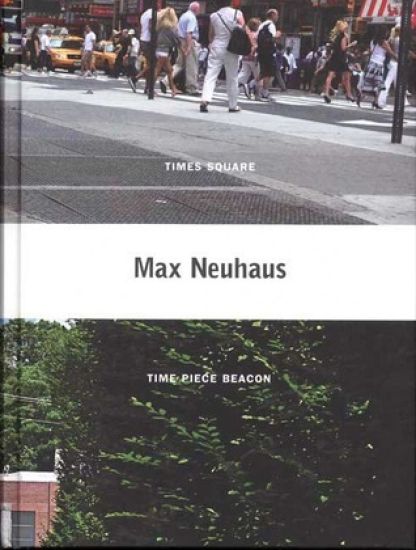
In 1977, Max Neuhaus turned a triangle of pedestrian space between 45th and 46th Streets in Times Square into an island of harmonic sound. The rich textures of that sound continue today, emanating from beneath the sidewalk grating, to anonymously reach an individual’s ears as if one has stumbled upon a secret. Known as Times Square, the celebrated installation was restored in 2002 with support from Dia Art Foundation, which further commissioned a site-specific piece, Time Piece Beacon, from Neuhaus in 2006 for its museum in Beacon, New York. This stunning book—the only volume in print dedicated solely to the work of Neuhaus—takes these two projects as a point of departure from which to consider the singular impact this artist has had in establishing sound as a medium in contemporary art. An interview with Neuhaus is complemented with essays by multidisciplinary scholars who investigate and situate his work within a historical context. Distributed for Dia Art Foundation
Beyond the Dream Syndicate

Beyond the Dream Syndicate

Branden W. Joseph

Zone Books
2008
sidottu
Examining Tony Conrad's collaborative interactions as a guiding thread by which to investigate the contiguous networks and discursive interconnections in 1960s art.Tony Conrad has significantly influenced cultural developments from minimalism to underground film, "concept art," postmodern appropriation, and the most sophisticated rock and roll. Creator of the "structural" film, The Flicker, collaborator on Jack Smith's Flaming Creatures and Normal Love, follower of Henry Flynt's radical anti-art, member of the Theatre of Eternal Music and the first incarnation of The Velvet Underground, and early associate of Mike Kelley, Tony Oursler, and Cindy Sherman, Conrad has eluded canonic histories. Yet Beyond the Dream Syndicate does not claim Conrad as a major but under-recognized figure. Neither monograph nor social history, the book takes Conrad's collaborative interactions as a guiding thread by which to investigate the contiguous networks and discursive interconnections in 1960s art. Such an approach simultaneously illuminates and estranges current understandings of the period, redrawing the map across medium and stylistic boundaries to reveal a constitutive hybridization at the base of the decade's artistic development. This exploration of Conrad and his milieu goes beyond the presentation of a relatively overlooked oeuvre to chart multiple, contestatory regimes of power simultaneously in play during the pivotal moment of the 1960s. From the sovereign authority invoked by Young's music, to the "paranoiac" politics of Flynt, to the immanent control modeled by Conrad's films, each avant-garde project examined reveals an investment within a particular structure of power and resistance, providing a glimpse into the diversity of the artistic and political stakes that continue to define our time.
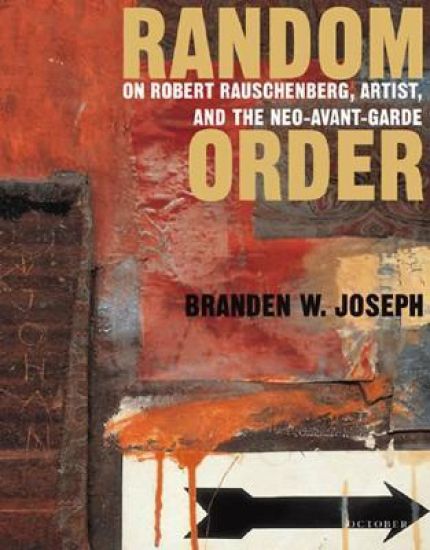
Random Order

Random Order

Branden W. Joseph

MIT Press
2007
pokkari
An examination of the artistic development of Robert Rauschenberg, focusing on his relationship with John Cage and his role in the making of the American neo-avant-garde.Robert Rauschenberg is one of the most important visual artists of the second half of the twentieth century. In Random Order, Branden Joseph examines Rauschenberg's work in the context of the American neo-avant-garde. One of the foundations of his study is Rauschenberg's professional relationship with experimental composer John Cage. From the moment of their encounter at Black Mountain College in 1952, Joseph argues, Rauschenberg and Cage initiated a new avant-garde project, one that approached the idea of difference not in terms of negation but as a positive force. Claiming that Rauschenberg's work cannot be understood solely from the standpoint of the Frankfurt School-whose theories have dominated discussions of avant-garde and neo-avant-garde aesthetics-Joseph turns to the theoretical positions of Gilles Deleuze and Jacques Derrida. Rauschenberg's neo-avant-garde was not a simple repetition of earlier avant-garde movements, Joseph shows, but a series of practices that opposed the rise of postwar spectacle, commodification, and mass conformity.Beginning with the White Paintings, Joseph examines Rauschenberg's artistic development from 1951 to 1971. He looks at the black paintings, Red Paintings, Elemental Paintings and Elemental Sculptures, Combines and Combine paintings, transfer drawings and silkscreens, performances, and explorations in art and technology. Joseph's study not only offers new interpretations of Rauschenberg's work, but also deepens our understanding of the entire neo-avant-garde project.