Kirjojen hintavertailu. Mukana 12 390 323 kirjaa ja 12 kauppaa.

Kirjailija

Brannon Costello

Kirjat ja teokset yhdessä paikassa: 4 kirjaa, julkaisuja vuosilta 2007-2017, suosituimpien joukossa Jujitsu for Christ. Vertaile teosten hintoja ja tarkista saatavuus suomalaisista kirjakaupoista.

4 kirjaa

Kirjojen julkaisuhaarukka 2007-2017.

Neon Visions

Neon Visions

Brannon Costello

Louisiana State University Press
2017
nidottu
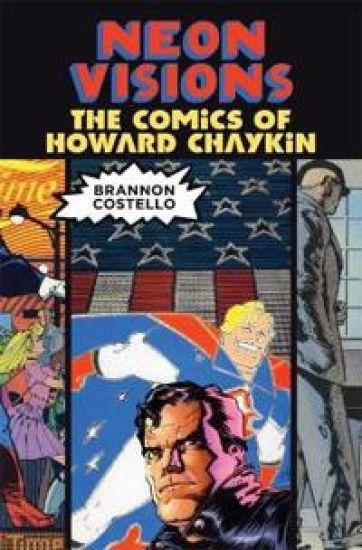
In the 1980s, Howard Chaykin broke new ground in American comic books with a series of formally innovative, iconoclastic works that turned the traditional action-adventure tales of mainstream comics into a platform for personal expression, political engagement, and aesthetic experimentation. His original creations American Flagg!, Time², and the notorious Black Kiss, along with his reshaping of familiar titles like The Shadow and Blackhawk, generated acclaim and often controversy as they challenged expectations of the visual design and subject matter permissible in popular comics. Today, Chaykin remains a vital and prolific artist, but despite the original and influential nature of his work, he receives scant critical attention.In Neon Visions, Brannon Costello offers the first book-length critical evaluation of Chaykin's work and confronts the blind spots in comics scholarship that consign this seminal artist to the margins. He argues that Chaykin's contributions are often overlooked because his comics eschew any pretensions to serious literature. Instead, Chaykin's work revels in the cliffhanger thrills of heroic-adventure genres and courts outrage with transgressive depictions of violence and sexuality. Examining Chaykin's career from his early successes to compelling contemporary series such as City of Tomorrow, Dominic Fortune, and the controversial Black Kiss 2, Costello explores how this inventive body of work, through its evolving treatment of the theme of authenticity, incisively investigates popular culture's capacity to foster or constrain individual identity and political agency. Challenging prevailing assumptions about the types of comics deemed worthy of scholarly attention, Costello reveals that the work of an artist as distinctive as Howard Chaykin demands a nuanced reading- one that confronts his unique approach to the comics medium, his blending of autobiographical themes and genre trademarks, and his engagement with comic books as artifacts of consumer culture.
Neon Visions

Neon Visions

Brannon Costello

Louisiana State University Press
2017
sidottu
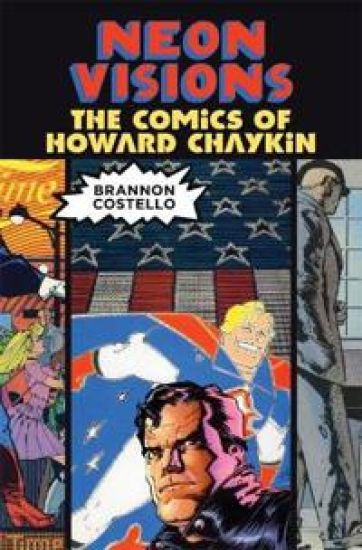
In the 1980s, Howard Chaykin broke new ground in American comic books with a series of formally innovative, iconoclastic works that turned the traditional action-adventure tales of mainstream comics into a platform for personal expression, political engagement, and aesthetic experimentation. His original creations American Flagg!, Time², and the notorious Black Kiss, along with his reshaping of familiar titles like The Shadow and Blackhawk, generated acclaim and often controversy as they challenged expectations of the visual design and subject matter permissible in popular comics. Today, Chaykin remains a vital and prolific artist, but despite the original and influential nature of his work, he receives scant critical attention.In Neon Visions, Brannon Costello offers the first book-length critical evaluation of Chaykin's work and confronts the blind spots in comics scholarship that consign this seminal artist to the margins. He argues that Chaykin's contributions are often overlooked because his comics eschew any pretensions to serious literature. Instead, Chaykin's work revels in the cliffhanger thrills of heroic-adventure genres and courts outrage with transgressive depictions of violence and sexuality. Examining Chaykin's career from his early successes to compelling contemporary series such as City of Tomorrow, Dominic Fortune, and the controversial Black Kiss 2, Costello explores how this inventive body of work, through its evolving treatment of the theme of authenticity, incisively investigates popular culture's capacity to foster or constrain individual identity and political agency. Challenging prevailing assumptions about the types of comics deemed worthy of scholarly attention, Costello reveals that the work of an artist as distinctive as Howard Chaykin demands a nuanced reading- one that confronts his unique approach to the comics medium, his blending of autobiographical themes and genre trademarks, and his engagement with comic books as artifacts of consumer culture.
Jujitsu for Christ

Jujitsu for Christ

Jack Butler; Brannon Costello

University Press of Mississippi
2013
nidottu
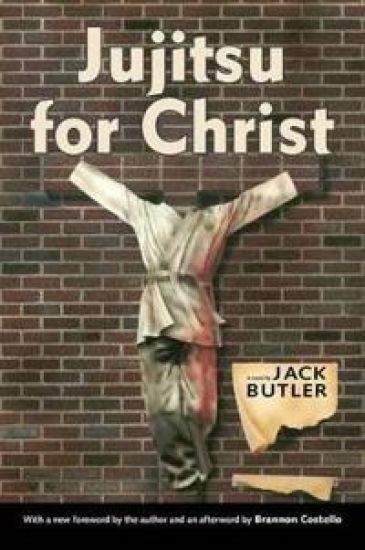
Jack Butler's Jujitsu for Christ--originally published in 1986--follows the adventures of Roger Wing, a white born-again Christian and karate instructor who opens a martial arts studio in downtown Jackson, Mississippi, during the tensest years of the Civil Rights era. Ambivalent about his religion and his region, he befriends the Gandys, an African-American family--parents A. L. and Snower Mae, teenaged son T. J., daughter Eleanor Roosevelt, and youngest son Marcus--who has moved to Jackson from the Delta in hopes of greater opportunity for their children.As the political heat rises, Roger and the Gandys find their lives intersecting in unexpected ways. Their often-hilarious interactions are told against the backdrop of Mississippi's racial trauma--Governor Ross Barnett's ""I Love Mississippi"" speech at the 1962 Ole Miss-Kentucky football game in Jackson; the riots at the University of Mississippi over James Meredith's admission; the fieldwork of Medgar Evers, the NAACP, and various activist organizations; and the lingering aura of Emmett Till's lynching.Drawing not only on William Faulkner's gothic-modernist Yoknapatawpha County but also on Edgar Rice Burroughs's high-adventure Martian pulps, Jujitsu for Christ powerfully illuminates vexed questions of racial identity and American history, revealing complexities and subtleties too often overlooked. It is a remarkable novel about the civil rights era, and how our memories of that era continue to shape our political landscape and to resonate in contemporary conversations about southern identity. But, mostly, it's very funny, in a mode that's experimental, playful, sexy, and disturbing all at once.Butler offers a new foreword to the novel. Brannon Costello, a scholar of contemporary southern literature and fan of Butler's work, writes an afterword that situates the novel in its historical context and in the southern literary canon.
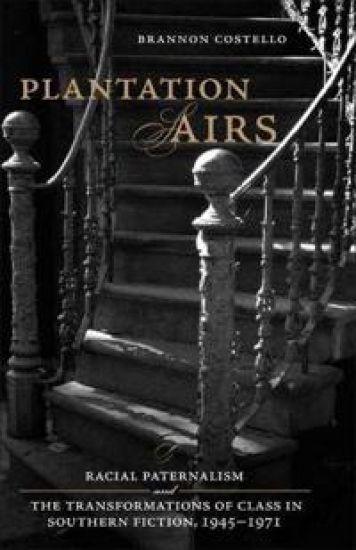
Plantation Airs

Plantation Airs

Brannon Costello

Louisiana State University Press
2007
sidottu
In Plantation Airs, Brannon Costello argues persuasively for new attention to the often neglected issue of class in southern literary studies. Focusing on the relationship between racial paternalism and social class in American novels written after World War II, Costello asserts that well into the twentieth century, attitudes and behaviors associated with an idealized version of agrarian antebellum aristocracy - especially, those of racial paternalism - were believed to be essential for white southerners. The wealthy employed them to validate their identities as ""aristocrats,"" while less-affluent whites used them to separate themselves from ""white trash"" in the social hierarchy. Even those who were not legitimate heirs of plantation-owning families found that ""putting on airs"" associated with the legacy of the plantation could align them with the forces of power and privilege and offer them a measure of authority in the public arena that they might otherwise lack.Fiction by Zora Neale Hurston, Eudora Welty, William Faulkner, Ernest Gaines, Walker Percy, and others reveals, however, that the racial paternalism central to class formation and mobility in the South was unraveling in the years after World War II, when the civil rights movement and the South's increasing industrialization dramatically altered southern life. Costello demonstrates that these writers were keenly aware of the ways in which the changes sweeping the South complicated the deeply embedded structures that governed the relationship between race and class. He further contends that the collapse of racial paternalism as a means of organizing class lies at the heart of their most important works - including Hurston's Seraph on the Suwanee and her essay ""The 'Pet Negro' System,"" Welty's Delta Wedding and The Ponder Heart, Faulkner's The Mansion and The Reivers, Gaines's Of Love and Dust and his story ""Bloodline,"" and Percy's The Last Gentleman and Love in the Ruins.By examining ways in which these works depict and critique the fall of the plantation ideal and its aftermath, Plantation Airs indicates the richness and complexity of the literary responses to this intersection of race and class. Understanding how many of the modern South's best writers imagined and engaged the various facets of racial paternalism in their fiction, Costello confirms, helps readers construct a more comprehensive picture of the complications and contradictions of class in the South.