Kirjojen hintavertailu. Mukana 12 264 765 kirjaa ja 12 kauppaa.

Kirjailija

Brendan Gleeson

Kirjat ja teokset yhdessä paikassa: 16 kirjaa, julkaisuja vuosilta 1998-2023, suosituimpien joukossa New Developments in Urban Governance. Vertaile teosten hintoja ja tarkista saatavuus suomalaisista kirjakaupoista.

16 kirjaa

Kirjojen julkaisuhaarukka 1998-2023.

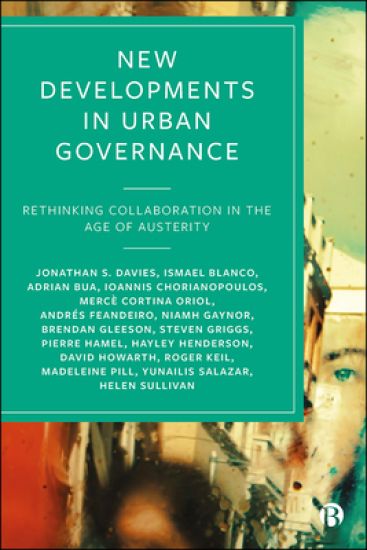
New Developments in Urban Governance

New Developments in Urban Governance

Jonathan S. Davies; Ismael Blanco; Adrian Bua; Ioannis Chorianopoulos; Mercè Cortina-Oriol; Andrés Feandeiro; Niamh Gaynor; Brendan Gleeson; Steven Griggs; Pierre Hamel; Hayley Henderson; David Howarth; Roger Keil; Madeleine Pill; Yunailis Salazar; Helen Sullivan

Bristol University Press
2023
nidottu
This book presents the findings of a major Economic and Social Research Council (ESRC) project into urban austerity governance in eight cities across the world (Athens, Baltimore, Barcelona, Melbourne, Dublin, Leicester, Montréal and Nantes). It offers comparative reflections on the myriad experiences of collaborative governance and its limitations. An international collaborative from across the social sciences, the book discusses ways that citizens, activists and local states collaborate and come into conflict in attempting to build just cities. It examines the development of egalitarian collaborative governance strategies, provides innovative ideas and tools to extend emancipatory governance practices and shows hopeful possibilities for cities beyond austerity and neoliberalism.
New Developments in Urban Governance

New Developments in Urban Governance

Jonathan S. Davies; Ismael Blanco; Adrian Bua; Ioannis Chorianopoulos; Mercè Cortina-Oriol; Andrés Feandeiro; Niamh Gaynor; Brendan Gleeson; Steven Griggs; Pierre Hamel; Hayley Henderson; David Howarth; Roger Keil; Madeleine Pill; Yunailis Salazar; Helen Sullivan

Bristol University Press
2022
sidottu
This book presents the findings of a major Economic and Social Research Council (ESRC) project into urban austerity governance in eight cities across the world (Athens, Baltimore, Barcelona, Melbourne, Dublin, Leicester, Montréal and Nantes). It offers comparative reflections on the myriad experiences of collaborative governance and its limitations. An international collaborative from across the social sciences, the book discusses ways that citizens, activists and local states collaborate and come into conflict in attempting to build just cities. It examines the development of egalitarian collaborative governance strategies, provides innovative ideas and tools to extend emancipatory governance practices and shows hopeful possibilities for cities beyond austerity and neoliberalism.
Urban Awakenings

Urban Awakenings

Samuel Alexander; Brendan Gleeson

Springer Verlag, Singapore
2020
nidottu
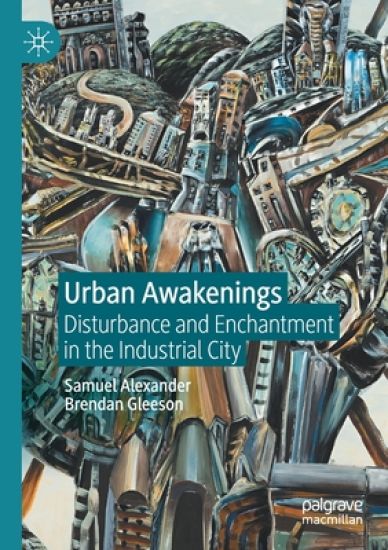
This book presents a series of urban investigations undertaken in the metropolis of Melbourne. It is based on the idea that ‘enchantment’ as an affective state is important to ethical and political engagement. Alexander and Gleeson argue that a sense of enchantment can give people the impulse to care and engage in an increasingly troubled world, whereas disenchantment can lead to resignation. Applying and extending this theory to the urban landscape, the authors walk their home city with eyes open to the possibility of seeing and experiencing the industrial city in different ways. This unique methodology, described as ‘urban tramping’, positions the authors as freethinking freewalkers of the city, encumbered only with the duty to look through the delusions of industrial capitalism towards its troubled, contradictory soul. These urban investigations were disrupted midway by COVID-19, a plague that ended up confirming the book’s central thesis of a fractured modernity vulnerable to various internal contradictions.
Degrowth in the Suburbs

Degrowth in the Suburbs

Samuel Alexander; Brendan Gleeson

Springer Verlag, Singapore
2018
nidottu
This book addresses a central dilemma of the urban age: how to make the vast suburban landscapes that ring the globe safe and sustainable in the face of planetary ecological crisis. The authors argue that degrowth, a planned contraction of economic overshoot, is the only feasible principle for suburban renewal. They depart from the anti-suburban sentiment of much environmentalism to show that existing suburbia can be the centre-ground of transition to a new social dispensation based on the principle of self-limitation. The book offers a radical new urban imaginary, that of degrowth suburbia, which can arise Phoenix like from the increasingly stressed cities of the affluent Global North and guide urbanisation in a world at risk. This means dispensing with much contemporary green thinking, including blind faith in electric vehicles and high-density urbanism, and accepting the inevitability and the benefits of planned energy descent. A radical but necessary vision for the times.
Degrowth in the Suburbs

Degrowth in the Suburbs

Samuel Alexander; Brendan Gleeson

Springer Verlag, Singapore
2018
sidottu
This book addresses a central dilemma of the urban age: how to make the vast suburban landscapes that ring the globe safe and sustainable in the face of planetary ecological crisis. The authors argue that degrowth, a planned contraction of economic overshoot, is the only feasible principle for suburban renewal. They depart from the anti-suburban sentiment of much environmentalism to show that existing suburbia can be the centre-ground of transition to a new social dispensation based on the principle of self-limitation. The book offers a radical new urban imaginary, that of degrowth suburbia, which can arise Phoenix like from the increasingly stressed cities of the affluent Global North and guide urbanisation in a world at risk. This means dispensing with much contemporary green thinking, including blind faith in electric vehicles and high-density urbanism, and accepting the inevitability and the benefits of planned energy descent. A radical but necessary vision for the times.
The Urban Condition

The Urban Condition

Brendan Gleeson

Routledge
2015
nidottu
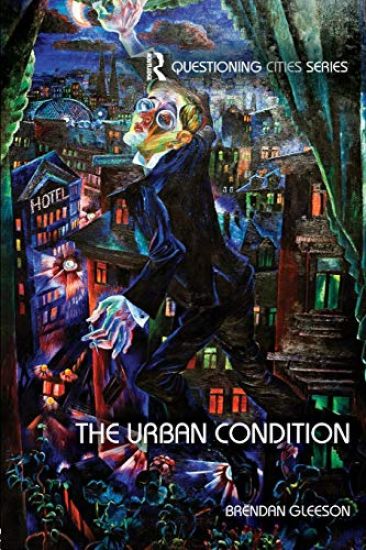
This book will speak to the new human epoch, the Urban Age. A majority of humanity now lives for the first time in cities. The city, the highest invention of the modern age, is now the human heartland. And yet the same process that brought us the city and its wonders, modernisation, has also thrown up challenges and threats, especially climate change, resource depletion, social division and economic insecurity. This book considers how these threats are encountered and countered in the urban age, focusing on the issue of human knowledge and self-awareness, just as Hannah Arendt’s influential The Human Condition did half a century ago. The Human Condition is now The Urban Condition. And it is this condition that will define human prospects in an age of default and risk. Gleeson expertly explores the concept through three main themes. The first is an exploration of what defines the current human condition, especially the expanding cities that are at the heart of an over-consumptive world economic order. The second exposes and reviews the reawakening of forms of knowledge (‘naturalism’) that are likely to worsen not improve our comprehension of the crisis. The new ‘science of urbanism’ in popular new literature exemplifies this dangerous trend. The third and last part of the book considers prospects for a new urban, and therefore human, dispensation, ‘The Good City’. We must first journey in our urban vessels through troubled times. But can we now start to plot the way to new shores, to a safer, more resilient city that provides for human flourishing? The Urban Condition attempts this ideal, conceiving a new urbanism based on the old idea of self-limitation.The Urban Condition is an original, timely book that reconsiders and redeploys Arendt’s famous notion of The Human Condition in an age of cities and risk. It brings together several important strands of human consideration, urbanisation, climate threat, resource depletion, economic default and critical knowledge and weaves them into a new analysis of the times. It also looks to a future that is nearly with us—of changed climate, resource scarcity and economic stress. The book journeys into these troubled times, proposing the idea of Lifeboat Cities as a way of thinking about the human journey to come
The Public City

The Public City

Brendan Gleeson; Beau B Beza

MELBOURNE UNIVERSITY PRESS
2014
nidottu
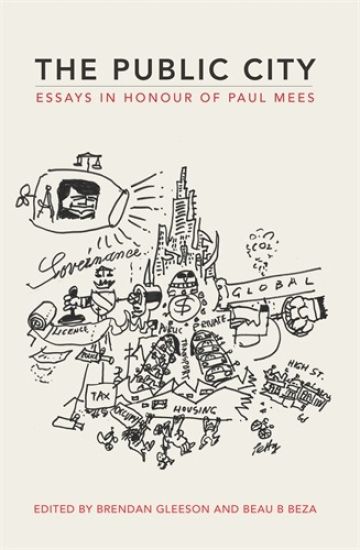
Paul Mees' urban ideal counted on watchful, confident and well-informed citizenry to work collectively in a quest for fair and just cities. As such, The Public City is largely a critique of neo-liberalism and its arguably negative influence on urban prospects. As Mees explained it, neo-liberal urbanism was much more than a political aberration; it was a threat that imposed many costly failures in an age overshadowed by grave ecological challenges.Fifteen of Australia and New Zealand's leading urban scholars, including Professor Emeritus Jean Hillier and Professor Brendan Gleeson, have contributed to this collection.The Public City includes a foreword by the late Professor Sir Peter Hall, a world leader in urban planning from Britain. Kenneth Davidson, one of Australia's top economic columnists, has also contributed a chapter. The collective works in this book extend beyond an analysis of urban patterns to provide a blueprint for the improvement of civic and institutional purpose in the creation of the public city.
The Urban Condition

The Urban Condition

Brendan Gleeson

Routledge
2014
sidottu
This book will speak to the new human epoch, the Urban Age. A majority of humanity now lives for the first time in cities. The city, the highest invention of the modern age, is now the human heartland. And yet the same process that brought us the city and its wonders, modernisation, has also thrown up challenges and threats, especially climate change, resource depletion, social division and economic insecurity. This book considers how these threats are encountered and countered in the urban age, focusing on the issue of human knowledge and self-awareness, just as Hannah Arendt’s influential The Human Condition did half a century ago. The Human Condition is now The Urban Condition. And it is this condition that will define human prospects in an age of default and risk. Gleeson expertly explores the concept through three main themes. The first is an exploration of what defines the current human condition, especially the expanding cities that are at the heart of an over-consumptive world economic order. The second exposes and reviews the reawakening of forms of knowledge (‘naturalism’) that are likely to worsen not improve our comprehension of the crisis. The new ‘science of urbanism’ in popular new literature exemplifies this dangerous trend. The third and last part of the book considers prospects for a new urban, and therefore human, dispensation, ‘The Good City’. We must first journey in our urban vessels through troubled times. But can we now start to plot the way to new shores, to a safer, more resilient city that provides for human flourishing? The Urban Condition attempts this ideal, conceiving a new urbanism based on the old idea of self-limitation.The Urban Condition is an original, timely book that reconsiders and redeploys Arendt’s famous notion of The Human Condition in an age of cities and risk. It brings together several important strands of human consideration, urbanisation, climate threat, resource depletion, economic default and critical knowledge and weaves them into a new analysis of the times. It also looks to a future that is nearly with us—of changed climate, resource scarcity and economic stress. The book journeys into these troubled times, proposing the idea of Lifeboat Cities as a way of thinking about the human journey to come
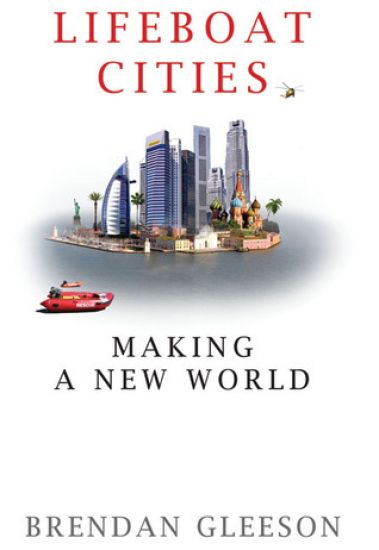
Lifeboat Cities

Lifeboat Cities

Brendan Gleeson

NewSouth Publishing
2010
nidottu
Hopeful and provocative, this account considers the principle social and ecological threats facing Australia and outlines the ways in which these crises need to be confronted and addressed. Taking a radical approach to climate change prevention, this bold manifesto claims that Australia’s current focus on over-consumption and “greener lifestyles” are ineffective. Rather, this opinionated record argues that society must instead make more dramatic changes and stop over-production. Thought-provoking and dynamic, this exploration is a must-read for people interested in climate change.
Consuming Cities

Consuming Cities

Ingemar Elander; Brendan Gleeson; Rolf Lidskog; Nicholas Low

Routledge
1999
sidottu
This book is about cities as engines of consumption of the world's environment, and the spread of policies to reduce their impact. It looks at these issues by examining the impact of the Rio Declaration and assesses the extent to which it has made a difference.Consuming Cities examines this impact using case studies from around the world including: the USA, Japan, Germany, the UK, China, India, Sweden, Poland, Australia and Indonesia The contributors all have direct experience of the urban environment and urban policies in the countries on which they write and offer an authoritative commentary which brings the urban 'consumption' dimension of sustainable development into focus.
Consuming Cities

Consuming Cities

Ingemar Elander; Brendan Gleeson; Rolf Lidskog; Nicholas Low

Routledge
1999
nidottu
This book is about cities as engines of consumption of the world's environment, and the spread of policies to reduce their impact. It looks at these issues by examining the impact of the Rio Declaration and assesses the extent to which it has made a difference.Consuming Cities examines this impact using case studies from around the world including: the USA, Japan, Germany, the UK, China, India, Sweden, Poland, Australia and Indonesia The contributors all have direct experience of the urban environment and urban policies in the countries on which they write and offer an authoritative commentary which brings the urban 'consumption' dimension of sustainable development into focus.
Geographies of Disability

Geographies of Disability

Brendan Gleeson

Routledge
1998
nidottu
This book explains how space, place and mobility have shaped the experiences of disabled people both in the past and in contemporary societies. The key features of this insightful study include:* a critical appraisal of theories of disability and a new disability model* case studies to explore how the transition to capitalism disadvantaged disabled people* an exploration of the Western city and the policies of community care and accessibility regulation.Brendan Gleeson presents an important contribution to the major policy debates on disability in Western societies and offers new considerations for the broader debates on embodiment and space within Geography.
Geographies of Disability

Geographies of Disability

Brendan Gleeson

Routledge
1998
sidottu
This book explains how space, place and mobility have shaped the experiences of disabled people both in the past and in contemporary societies. The key features of this insightful study include:* a critical appraisal of theories of disability and a new disability model* case studies to explore how the transition to capitalism disadvantaged disabled people* an exploration of the Western city and the policies of community care and accessibility regulation.Brendan Gleeson presents an important contribution to the major policy debates on disability in Western societies and offers new considerations for the broader debates on embodiment and space within Geography.
Justice, Society and Nature

Justice, Society and Nature

Brendan Gleeson; Nicholas Low

Routledge
1998
nidottu
Justice, Society and Nature examines the moral response which the world must make to the ecological crisis if there is to be real change in the global society and economy to favour ecological integrity. From its base in the idea of the self, through principles of political justice, to the justice of global institutions, the authors trace the layered structure of the philosophy of justice as it applies to environmental and ecological issues. Philosophical ideas are treated in a straightforward and easily understandable way with reference to practical examples. Moving straight to the heart of pressing international and national concerns, the authors explore the issues of environment and development, fair treatment of humans and non-humans, and the justice of the social and economic systems which affect the health and safety of the peoples of the world. Current grass-roots concerns such as the environmental justice movement in the USA, and the ethics of the international regulation of development are examined in depth. The authors take debates beyond mere complaint about the injustice of the world economy, and suggest what should now be done to do justice to nature.
Justice, Society and Nature

Justice, Society and Nature

Brendan Gleeson; Nicholas Low

Routledge
1998
sidottu
Justice, Society and Nature examines the moral response which the world must make to the ecological crisis if there is to be real change in the global society and economy to favour ecological integrity. From its base in the idea of the self, through principles of political justice, to the justice of global institutions, the authors trace the layered structure of the philosophy of justice as it applies to environmental and ecological issues. Philosophical ideas are treated in a straightforward and easily understandable way with reference to practical examples. Moving straight to the heart of pressing international and national concerns, the authors explore the issues of environment and development, fair treatment of humans and non-humans, and the justice of the social and economic systems which affect the health and safety of the peoples of the world. Current grass-roots concerns such as the environmental justice movement in the USA, and the ethics of the international regulation of development are examined in depth. The authors take debates beyond mere complaint about the injustice of the world economy, and suggest what should now be done to do justice to nature.