Kirjojen hintavertailu. Mukana 12 468 976 kirjaa ja 12 kauppaa.

Kirjailija

Brent J. Steele

Kirjat ja teokset yhdessä paikassa: 8 kirjaa, julkaisuja vuosilta 2007-2021, suosituimpien joukossa Ontological Security in International Relations. Vertaile teosten hintoja ja tarkista saatavuus suomalaisista kirjakaupoista.

Mukana myös kirjoitusasut: Brent J Steele

8 kirjaa

Kirjojen julkaisuhaarukka 2007-2021.

Vicarious Identity in International Relations

Vicarious Identity in International Relations

Christopher S. Browning; Pertti Joenniemi; Brent J. Steele

Oxford University Press Inc
2021
sidottu
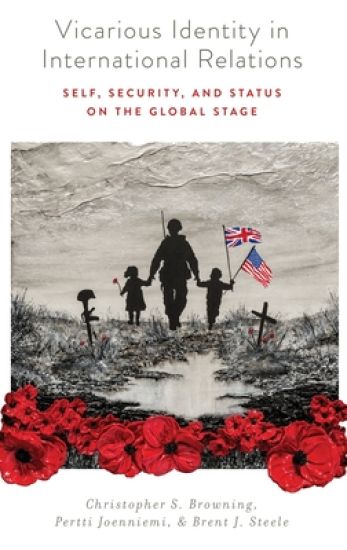
Vicarious identification, or "living through another" is a familiar social-psychological concept. Shaped by insecurity and a lack of self-fulfilment, it refers to the processes by which actors gain a sense of self-identity, purpose, and self-esteem through appropriating the achievements and experiences of others. As this book argues, it is also an under-appreciated and increasingly relevant strategy of international relations. According to this theory, states identify and establish special relationships with other nations (often in an aspirational way) in order to strengthen their sense of self, security, and status on the global stage. This identification is also central to the politics of citizenship and can be manipulated by states to justify their global ambitions. For example, why might the United States look at Israel as a model for its own foreign policies? What shaped the politics of Brexit and why is the United Kingdom so attached to its transatlantic "special relationship" with the United States? And, why did Denmark so enthusiastically ally with the United States during the global War on Terror? Vicarious identity, as the authors argue, is at the core of these international dynamics. Vicarious Identity in International Relations examines the ways in which vicarious identity is relevant to global politics: across individuals; between citizens and states; and across states, regional communities, or civilizations. It looks at a range of cases (the United States, the United Kingdom, and Denmark), which illustrate that vicarious political identity is dynamic and emerges in different contexts, but particularly when nations face crisis, both internally and externally. In addition, the book outlines a qualitative methodology for analyzing vicarious identity at the collective level.
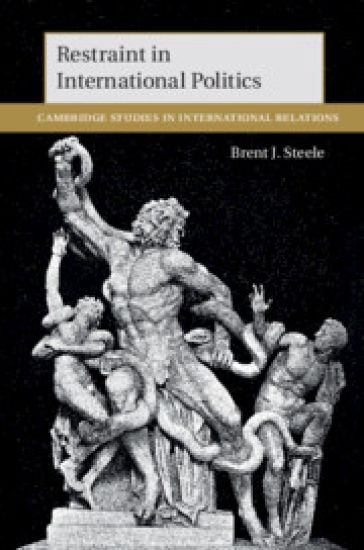
Restraint in International Politics

Restraint in International Politics

Brent J. Steele

Cambridge University Press
2019
sidottu
The first comprehensive examination of restraint in international politics, considered across a range of psychological, social, political, and institutional contexts as a political process, device, and strategy. Surveying how restraint has been understood in international relations and political theory, with focus given to Aristotle and Machiavelli, Steele utilises Carl Jung's theories of complexes and the libido to broaden the conceptual definition of restraint as a phenomenon that is not only individual and inward-looking, but also relational and societal. Exploring its development, uses, expressions and challenges through history and in contemporary times, this book analyses the politics of restraint in processes of security, political economy, foreign policy and global public health. Situating restraint alongside similar concepts such as moderation, containment, and constraint, Steele asks against what, and from what, are we restraining ourselves, who authorizes restraint, and what are the risks and rewards (both ethical and practical). Steele concludes with a balanced political and normative argument for restraint going forward.
Ontological Security in International Relations
The central assertion of this book is that states pursue social actions to serve self-identity needs, even when these actions compromise their physical existence. Three forms of social action, sometimes referred to as ‘motives’ of state behaviour (moral, humanitarian, and honour-driven) are analyzed here through an ontological security approach.Brent J. Steele develops an account of social action which interprets these behaviours as fulfilling a nation-state's drive to secure self-identity through time. The anxiety which consumes all social agents motivates them to secure their sense of being, and thus he posits that transformational possibilities exist in the ‘Self’ of a nation-state. The volume consequently both challenges and complements realist, liberal, constructivist and post-structural accounts to international politics.Using ontological security to interpret three cases - British neutrality during the American Civil War (1861-1865), Belgium’s decision to fight Germany in 1914, and NATO’s (1999) Kosovo intervention - the book concludes by discussing the importance for self-interrogation in both the study and practice of international relations.Ontological Security in International Relations will be of particular interest to students and researchers of international politics, international ethics, international relations and security studies.
Alternative Accountabilities in Global Politics
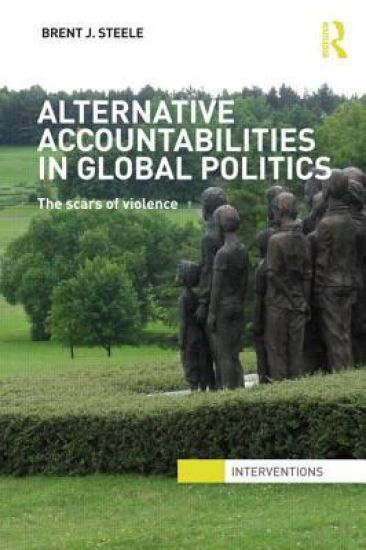
In fields such as politics, international relations, public administration and international law, there is a rapidly growing interest in the topic of ‘accountability’. In this innovative new work, Steele shows how we might recognize how an alternative form of accountability in global politics has been present for some time, and that, furthermore, this form’s continued presence remains one of the most politically powerful, if not endurable, possibilities for resistance in the near future. This book argues that the physical and visually shocking outcomes of violence found on the bodies of humans, as well as the buildings and landscapes which surround us, specifically the scars they leave behind, remain one of our most compelling forms of accountability. Steele develops the theoretical argument on scars and exteriority utilizing insights from several philosophical and theoretical resources including Hannah Arendt, Erving Goffmann, and Richard Rorty. The work examines scars and their effects through several illustrations, including the accounts of Emmett Till, Iranian protestor Neda Agha-Soltan, the Syrian boy Hamza al-Khateeb, the massacre in WWII and then memorializing throughout the 20th century of the Lidice children in the modern-day Czech Republic, the particular architecturally destructive outcomes of the 2008-9 Gaza War, the loss of the Twin Towers in New York, as well as a variety of violent scars found on the landscapes of Europe and Southeast Asia. Emphasizing the importance of the space and ‘time’ of scars, the book illustrates how an alternative form of accountability in the scar can be a useful, disruptive, spontaneous, but also creative practice to challenge the discourses of violence which remain with us today.
Alternative Accountabilities in Global Politics
In fields such as politics, international relations, public administration and international law, there is a rapidly growing interest in the topic of ‘accountability’. In this innovative new work, Steele shows how we might recognize how an alternative form of accountability in global politics has been present for some time, and that, furthermore, this form’s continued presence remains one of the most politically powerful, if not endurable, possibilities for resistance in the near future. This book argues that the physical and visually shocking outcomes of violence found on the bodies of humans, as well as the buildings and landscapes which surround us, specifically the scars they leave behind, remain one of our most compelling forms of accountability. Steele develops the theoretical argument on scars and exteriority utilizing insights from several philosophical and theoretical resources including Hannah Arendt, Erving Goffmann, and Richard Rorty. The work examines scars and their effects through several illustrations, including the accounts of Emmett Till, Iranian protestor Neda Agha-Soltan, the Syrian boy Hamza al-Khateeb, the massacre in WWII and then memorializing throughout the 20th century of the Lidice children in the modern-day Czech Republic, the particular architecturally destructive outcomes of the 2008-9 Gaza War, the loss of the Twin Towers in New York, as well as a variety of violent scars found on the landscapes of Europe and Southeast Asia. Emphasizing the importance of the space and ‘time’ of scars, the book illustrates how an alternative form of accountability in the scar can be a useful, disruptive, spontaneous, but also creative practice to challenge the discourses of violence which remain with us today.
Defacing Power

Defacing Power

Brent J Steele

The University of Michigan Press
2012
nidottu
"Combining a rich and varied set of theoretical insights with a subtle analysis of the politics of American foreign policy, Defacing Power marks an important contribution toward understanding the power of identity in world politics. Engagingly written and rigorously argued, Steele's challenging analysis is incisive, important, and rewarding."---Michael C. Williams, Graduate School of Public and International Affairs, University of Ottawa"Brent Steele's marvelous excavation of the aesthetic dimensions of power is strikingly irreverent, inasmuch as he displays no commitment to ex ante disciplinary or substantive constraints in his quest to disclose those moments of creative action so often overlooked by theories and theorists wedded to the grandiose and the transhistorical. Steele samples and remixes a myriad of sources, arranging them so as to produce a transgressively insightful account of how 'work on the Self,' often condemned as self-indulgent by prior generations of intellectuals, might just point in the direction of a more sustainably secure world."---Patrick Thaddeus Jackson, School of International Service, American University"Defacing Power successfully integrates work from Dewey to Morgenthau to Foucault, as well as a wide range of contemporary international relations scholars, in its genealogy of power conceptualizations and characteristics. This book is theoretically sophisticated and serious. It should be of interest to students of international politics, international theory, social theory, and foreign policy."---Cecelia Lynch, Center for Global Peace and Conflict Studies, University of California, IrvineDefacing Power investigates how nation-states create self-images in part through aesthetics and how these images can be manipulated to challenge those states' power. Although states have long employed media, such as radio, television, and film, for their own image-making purposes, counterpower agents have also seized upon new telecommunications technologies. Most recently, the Internet has emerged as contested territory where states and other actors wage a battle of words and images.Moving beyond theory, Brent Steele illustrates his provocative argument about the vulnerability of power with examples from recent history: the My Lai Massacre and the Tet Offensive, September 11 and the al-Qaeda communiqués, the atrocities at Fallujah and Abu Ghraib, and the U.S. response to the Asian tsunami of December 2004. He demonstrates how a nation-state---even one as powerful as the United States---comes to feel threatened not only by other nation-states or terrorist organizations but also by unexpected events that challenge its self-constructed image of security. At the same time, Steele shows that as each generation uses available media to create and re-create a national identity, technological innovations allow for the shifting, upheaval, and expansion of the cultural structure of a nation.Brent J. Steele is Associate Professor of Political Science at the University of Kansas.
Defacing Power

Defacing Power

Brent J Steele

The University of Michigan Press
2010
sidottu
"Combining a rich and varied set of theoretical insights with a subtle analysis of the politics of American foreign policy, Defacing Power marks an important contribution toward understanding the power of identity in world politics. Engagingly written and rigorously argued, Steele's challenging analysis is incisive, important, and rewarding."---Michael C. Williams, Graduate School of Public and International Affairs, University of Ottawa"Brent Steele's marvelous excavation of the aesthetic dimensions of power is strikingly irreverent, inasmuch as he displays no commitment to ex ante disciplinary or substantive constraints in his quest to disclose those moments of creative action so often overlooked by theories and theorists wedded to the grandiose and the transhistorical. Steele samples and remixes a myriad of sources, arranging them so as to produce a transgressively insightful account of how 'work on the Self,' often condemned as self-indulgent by prior generations of intellectuals, might just point in the direction of a more sustainably secure world."---Patrick Thaddeus Jackson, School of International Service, American University"Defacing Power successfully integrates work from Dewey to Morgenthau to Foucault, as well as a wide range of contemporary international relations scholars, in its genealogy of power conceptualizations and characteristics. This book is theoretically sophisticated and serious. It should be of interest to students of international politics, international theory, social theory, and foreign policy."---Cecelia Lynch, Center for Global Peace and Conflict Studies, University of California, IrvineDefacing Power investigates how nation-states create self-images in part through aesthetics and how these images can be manipulated to challenge those states' power. Although states have long employed media, such as radio, television, and film, for their own image-making purposes, counterpower agents have also seized upon new telecommunications technologies. Most recently, the Internet has emerged as contested territory where states and other actors wage a battle of words and images.Moving beyond theory, Brent Steele illustrates his provocative argument about the vulnerability of power with examples from recent history: the My Lai Massacre and the Tet Offensive, September 11 and the al-Qaeda communiqués, the atrocities at Fallujah and Abu Ghraib, and the U.S. response to the Asian tsunami of December 2004. He demonstrates how a nation-state---even one as powerful as the United States---comes to feel threatened not only by other nation-states or terrorist organizations but also by unexpected events that challenge its self-constructed image of security. At the same time, Steele shows that as each generation uses available media to create and re-create a national identity, technological innovations allow for the shifting, upheaval, and expansion of the cultural structure of a nation.Brent J. Steele is Associate Professor of Political Science at the University of Kansas.
Ontological Security in International Relations
The central assertion of this book is that states pursue social actions to serve self-identity needs, even when these actions compromise their physical existence. Three forms of social action, sometimes referred to as ‘motives’ of state behaviour (moral, humanitarian, and honour-driven) are analyzed here through an ontological security approach.Brent J. Steele develops an account of social action which interprets these behaviours as fulfilling a nation-state's drive to secure self-identity through time. The anxiety which consumes all social agents motivates them to secure their sense of being, and thus he posits that transformational possibilities exist in the ‘Self’ of a nation-state. The volume consequently both challenges and complements realist, liberal, constructivist and post-structural accounts to international politics.Using ontological security to interpret three cases - British neutrality during the American Civil War (1861-1865), Belgium’s decision to fight Germany in 1914, and NATO’s (1999) Kosovo intervention - the book concludes by discussing the importance for self-interrogation in both the study and practice of international relations.Ontological Security in International Relations will be of particular interest to students and researchers of international politics, international ethics, international relations and security studies.