Kirjojen hintavertailu. Mukana 12 385 961 kirjaa ja 12 kauppaa.

Kirjailija

Brent M. Rogers

Kirjat ja teokset yhdessä paikassa: 3 kirjaa, julkaisuja vuosilta 2017-2024, suosituimpien joukossa Buffalo Bill and the Mormons. Vertaile teosten hintoja ja tarkista saatavuus suomalaisista kirjakaupoista.

3 kirjaa

Kirjojen julkaisuhaarukka 2017-2024.

Buffalo Bill and the Mormons

Buffalo Bill and the Mormons

Brent M. Rogers

University of Nebraska Press
2024
pokkari
In this never-before-told history of Buffalo Bill and the Mormons, Brent M. Rogers presents the intersections in the epic histories of William F. “Buffalo Bill” Cody and the Latter-day Saints from 1846 through 1917. In Cody’s autobiography he claimed to have been a member of the U.S. Army wagon train that was burned by the Saints during the Utah War of 1857–58. Less than twenty years later he began his stage career and gained notoriety by performing anti-Mormon dramas. By early 1900 he actively recruited Latter-day Saints to help build infrastructure and encourage growth in the region surrounding his town of Cody, Wyoming. In Buffalo Bill and the Mormons Rogers unravels this history and the fascinating trajectory that took America’s most famous celebrity from foe to friend of the Latter-day Saints. In doing so, the book demonstrates how the evolving relationship between Cody and the Latter-day Saints can help readers better understand the political and cultural perceptions of Mormons and the American West.
Unpopular Sovereignty

Unpopular Sovereignty

Brent M. Rogers

University of Nebraska Press
2017
pokkari
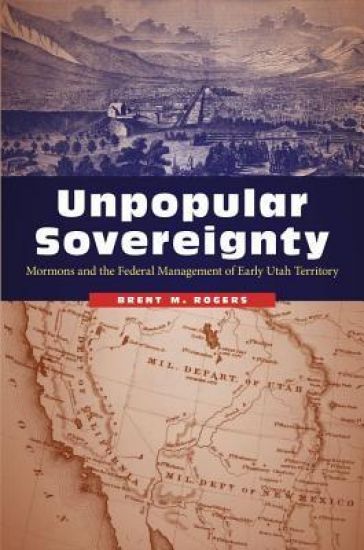
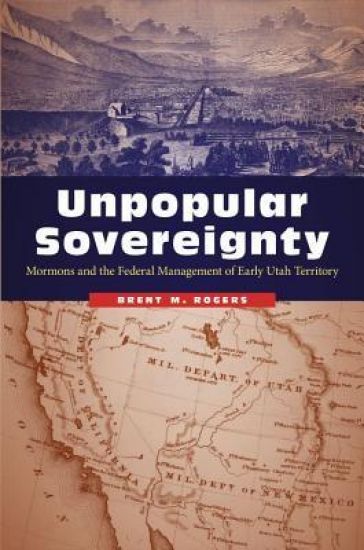
Charles Redd Center Phi Alpha Theta Book Award for the Best Book on the American West 2018 Francis Armstrong Madsen Best Book Award from the Utah State Historical Society 2018 Best First Book Award from the Mormon History Association Newly created territories in antebellum America were designed to be extensions of national sovereignty and jurisdiction. Utah Territory, however, was a deeply contested space in which a cohesive settler group-the Mormons-sought to establish their own “popular sovereignty,” raising the question of who possessed and could exercise governing, legal, social, and even cultural power in a newly acquired territory. In Unpopular Sovereignty, Brent M. Rogers invokes the case of popular sovereignty in Utah as an important contrast to the better-known slavery question in Kansas. Rogers examines the complex relationship between sovereignty and territory along three main lines of inquiry: the implementation of a republican form of government, the administration of Indian policy and Native American affairs, and gender and familial relations-all of which played an important role in the national perception of the Mormons’ ability to self-govern. Utah’s status as a federal territory drew it into larger conversations about popular sovereignty and the expansion of federal power in the West. Ultimately, Rogers argues, managing sovereignty in Utah proved to have explosive and far-reaching consequences for the nation as a whole as it teetered on the brink of disunion and civil war.
Unpopular Sovereignty

Unpopular Sovereignty

Brent M. Rogers

University of Nebraska Press
2017
sidottu
Charles Redd Center Phi Alpha Theta Book Award for the Best Book on the American West 2018 Francis Armstrong Madsen Best Book Award from the Utah State Historical Society 2018 Best First Book Award from the Mormon History Association Newly created territories in antebellum America were designed to be extensions of national sovereignty and jurisdiction. Utah Territory, however, was a deeply contested space in which a cohesive settler group-the Mormons-sought to establish their own “popular sovereignty,” raising the question of who possessed and could exercise governing, legal, social, and even cultural power in a newly acquired territory. In Unpopular Sovereignty, Brent M. Rogers invokes the case of popular sovereignty in Utah as an important contrast to the better-known slavery question in Kansas. Rogers examines the complex relationship between sovereignty and territory along three main lines of inquiry: the implementation of a republican form of government, the administration of Indian policy and Native American affairs, and gender and familial relations-all of which played an important role in the national perception of the Mormons’ ability to self-govern. Utah’s status as a federal territory drew it into larger conversations about popular sovereignty and the expansion of federal power in the West. Ultimately, Rogers argues, managing sovereignty in Utah proved to have explosive and far-reaching consequences for the nation as a whole as it teetered on the brink of disunion and civil war.