Kirjojen hintavertailu. Mukana 12 390 323 kirjaa ja 12 kauppaa.

Kirjailija

Brett Bowden

Kirjat ja teokset yhdessä paikassa: 8 kirjaa, julkaisuja vuosilta 2009-2024, suosituimpien joukossa Sailing to Win. Vertaile teosten hintoja ja tarkista saatavuus suomalaisista kirjakaupoista.

8 kirjaa

Kirjojen julkaisuhaarukka 2009-2024.

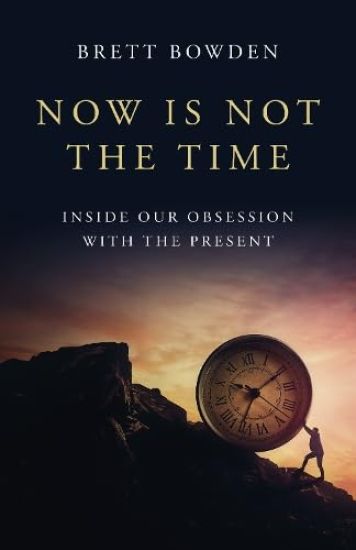
Now Is Not the Time

Now Is Not the Time

Brett Bowden

Collective Ink
2024
nidottu
Human beings have an overwhelming tendency to overemphasize the significance of the present without considering context or historical perspective. For many, here and now is as good as it gets -?we have steadily progressed from a savage past, and all we have to look forward to is the great unknown. But if our literature and cinema are anything to go by, many are convinced that the future will indeed be dystopian. At the same time, arguments abound that living in the moment is a key to happiness and success. However, to privilege the present over the past or future, Brett Bowden argues, is to engage in tempocentrism. More than a mere preoccupation with the present, tempocentrism involves comparing and judging the past in relation to the present, with the tendency to assume that the present isn?t only materially and qualitatively different from the past but also superior to it, often morally so. Yet tempocentrism, a mistaken belief in the unprecedented nature of events going on around us, brings with it a skewed perspective loaded with bias and prejudice. Requiring just as much ignorance and arrogance as Eurocentrism -?tempocentrism implies that the present is somehow superior to the past because we live in it now. The point, however, is not to suggest that there is not?something special about the present -?there might well be -?but now is not the time to decide whether it is more significant than previous moments, or those still to come. Depending on the issue or event in question, the time for that is later ? possibly hundreds or thousands of years later.
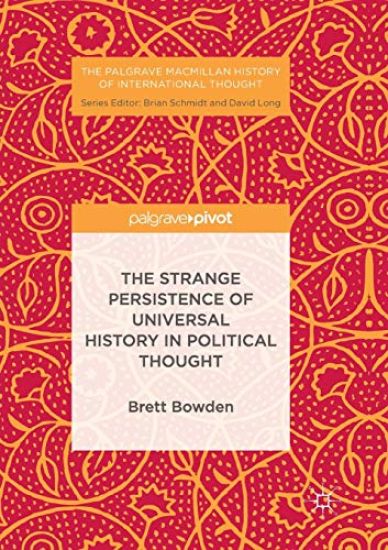
The Strange Persistence of Universal History in Political Thought

The Strange Persistence of Universal History in Political Thought

Brett Bowden

Springer International Publishing AG
2018
nidottu
This book explores and explains the reasons why the idea of universal history, a form of teleological history which holds that all peoples are travelling along the same path and destined to end at the same point, persists in political thought. Prominent in Western political thought since the middle of the eighteenth century, the idea of universal history holds that all peoples can be situated in the narrative of history on a continuum between a start and an end point, between the savage state of nature and civilized modernity. Despite various critiques, the underlying teleological principle still prevails in much contemporary thinking and policy planning, including post-conflict peace-building and development theory and practice. Anathema to contemporary ideals of pluralism and multiculturalism, universal history means that not everyone gets to write their own story, only a privileged few. For the rest, history and future are taken out of their hands, subsumed and assimilated intoother people’s narrative.
The Strange Persistence of Universal History in Political Thought

The Strange Persistence of Universal History in Political Thought

Brett Bowden

Springer International Publishing AG
2017
sidottu
This book explores and explains the reasons why the idea of universal history, a form of teleological history which holds that all peoples are travelling along the same path and destined to end at the same point, persists in political thought. Prominent in Western political thought since the middle of the eighteenth century, the idea of universal history holds that all peoples can be situated in the narrative of history on a continuum between a start and an end point, between the savage state of nature and civilized modernity. Despite various critiques, the underlying teleological principle still prevails in much contemporary thinking and policy planning, including post-conflict peace-building and development theory and practice. Anathema to contemporary ideals of pluralism and multiculturalism, universal history means that not everyone gets to write their own story, only a privileged few. For the rest, history and future are taken out of their hands, subsumed and assimilated intoother people’s narrative.
Civilization and War

Civilization and War

Brett Bowden

Edward Elgar Publishing Ltd
2014
nidottu
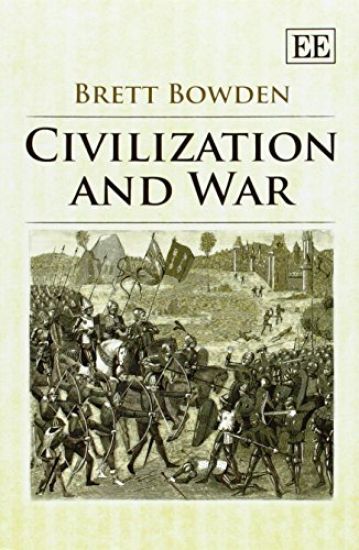
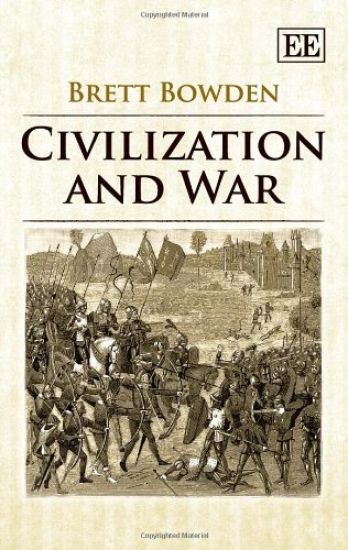
Civilization and war were born around the same time in roughly the same place they have effectively grown up together. This challenges the belief that the more civilized we become, the less likely the resort to war in order to resolve differences and disputes. The related assumption that civilized societies are more likely to abide by the rules of war is also in dispute. Where does terrorism fit into debates about civilized and savage war? What are we to make of talk about an impending 'clash of civilizations'? In a succinct yet wide ranging survey of history and of ideas that calls in to question a number of conventional wisdoms, Civilization and War explores these issues and more whilst outlining the two-way relationship between civilization and war.Providing an alternative perspective to conventional thinking, this book will appeal to a wide interdisciplinary audience across all regions of the globe. The material is both original and highly topical and is written in a sharp, snappy style that makes it accessible to a wide readership, including upper-level undergraduates, postgraduates, academic specialists and informed general readers. Civilization and War makes important contributions to the fields of international relations, peace and conflict studies, political theory and the history of ideas, and will be of interest to people with a curiosity about world history and current affairs.
The Empire of Civilization

The Empire of Civilization

Brett Bowden

University of Chicago Press
2014
nidottu
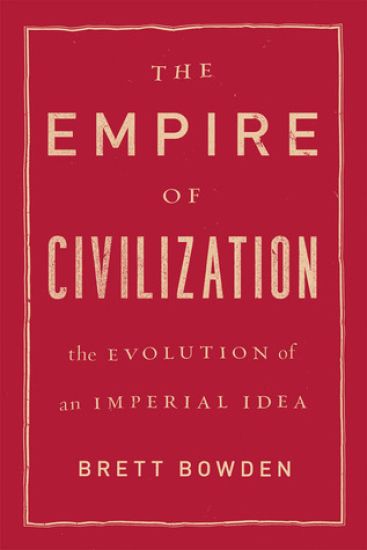
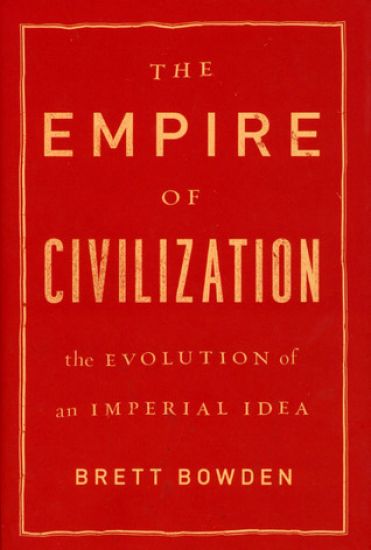
The term "civilization" comes with considerable baggage, setting up a dichotomy wherein people, cultures, and histories are "civilized" - or not. While the idea of civilization has been deployed throughout history to justify all manner of interventions and socio political engineering, relatively few scholars have stopped to consider what the concept actually means. Here, Brett Bowden examines how the idea of civilization has informed our thinking about international relations over the course of ten centuries. From the Crusades to the colonial era to the global war on terror, this sweeping volume exposes civilization as a stage-managed account of history that legitimizes imperialism, uniformity, and conformity to Western standards, culminating in a liberal-democratic global order. Along the way, Bowden explores the variety of confrontations and conquests - as well as those peoples and places excluded or swept aside - undertaken in the name of civilization. Concluding that "the West and the rest" have more commonalities than differences, this provocative and engaging book ultimately points the way toward an authentic inter civilizational dialogue that emphasizes cooperation over clashes.
Civilization and War

Civilization and War

Brett Bowden

Edward Elgar Publishing Ltd
2013
sidottu
Civilization and war were born around the same time in roughly the same place they have effectively grown up together. This challenges the belief that the more civilized we become, the less likely the resort to war in order to resolve differences and disputes. The related assumption that civilized societies are more likely to abide by the rules of war is also in dispute. Where does terrorism fit into debates about civilized and savage war? What are we to make of talk about an impending 'clash of civilizations'? In a succinct yet wide ranging survey of history and of ideas that calls in to question a number of conventional wisdoms, Civilization and War explores these issues and more whilst outlining the two-way relationship between civilization and war.Providing an alternative perspective to conventional thinking, this book will appeal to a wide interdisciplinary audience across all regions of the globe. The material is both original and highly topical and is written in a sharp, snappy style that makes it accessible to a wide readership, including upper-level undergraduates, postgraduates, academic specialists and informed general readers. Civilization and War makes important contributions to the fields of international relations, peace and conflict studies, political theory and the history of ideas, and will be of interest to people with a curiosity about world history and current affairs.
The Empire of Civilization

The Empire of Civilization

Brett Bowden

University of Chicago Press
2009
sidottu
The term civilization comes with considerable baggage, dichotomizing people, cultures, and histories as civilized - or not. While the idea of civilization has been deployed throughout history to justify all manner of interventions and sociopolitical engineering, few scholars have stopped to consider what the concept actually means. Here, Brett Bowden examines how the idea of civilization has informed our thinking about international relations over the course of ten centuries. From the Crusades to the colonial era to the global war on terror, this sweeping volume exposes civilization as a stage-managed account of history that legitimizes imperialism, uniformity, and conformity to Western standards, culminating in a liberal-democratic global order. Along the way, Bowden explores the variety of confrontations and conquests - as well as those peoples and places excluded or swept aside - undertaken in the name of civilization. Concluding that the 'West and the rest' have more commonalities than differences, this provocative and engaging book ultimately points the way toward an authentic intercivilizational dialogue that emphasizes cooperation over clashes.