Kirjojen hintavertailu. Mukana 12 537 542 kirjaa ja 12 kauppaa.
Kirjailija
Brett Clark
Kirjat ja teokset yhdessä paikassa: 8 kirjaa, julkaisuja vuosilta 2010-2020, suosituimpien joukossa The Robbery of Nature. Vertaile teosten hintoja ja tarkista saatavuus suomalaisista kirjakaupoista.
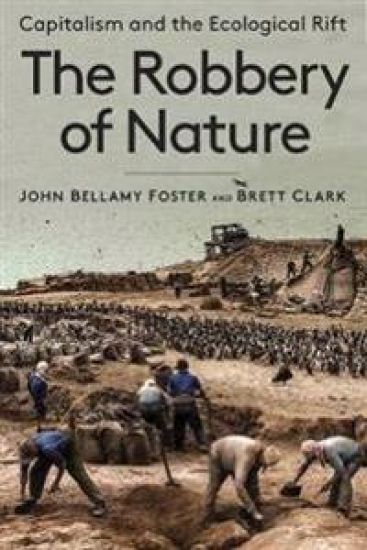
Bridges the gap between social and environmental critiques of capitalism In the nineteenth century, Karl Marx, inspired by the German chemist Justus von Liebig, argued that capitalism's relation to its natural environment was that of a robbery system, leading to an irreparable rift in the metabolism between humanity and nature. In the twenty-first century, these classical insights into capitalism's degradation of the earth have become the basis of extraordinary advances in critical theory and practice associated with contemporary ecosocialism. In The Robbery of Nature, John Bellamy Foster and Brett Clark, working within this historical tradition, examine capitalism's plundering of nature via commodity production, and how it has led to the current anthropogenic rift in the Earth System.
Bridges the gap between social and environmental critiques of capitalism In the nineteenth century, Karl Marx, inspired by the German chemist Justus von Liebig, argued that capitalism's relation to its natural environment was that of a robbery system, leading to an irreparable rift in the metabolism between humanity and nature. In the twenty-first century, these classical insights into capitalism's degradation of the earth have become the basis of extraordinary advances in critical theory and practice associated with contemporary ecosocialism. In The Robbery of Nature, John Bellamy Foster and Brett Clark, working within this historical tradition, examine capitalism's plundering of nature via commodity production, and how it has led to the current anthropogenic rift in the Earth System.
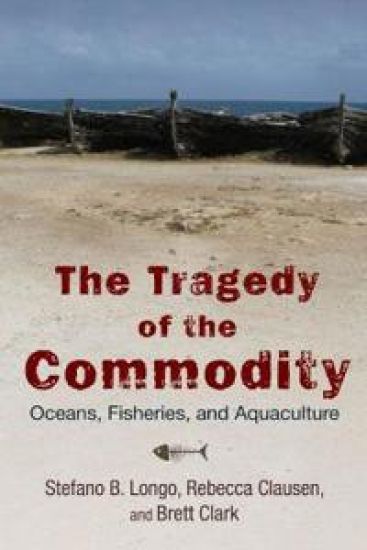
Winner of the 2017 Paul Sweezy Marxist Sociology Book Award from the American Sociological Association Although humans have long depended on oceans and aquatic ecosystems for sustenance and trade, only recently has human influence on these resources dramatically increased, transforming and undermining oceanic environments throughout the world. Marine ecosystems are in a crisis that is global in scope, rapid in pace, and colossal in scale. In The Tragedy of the Commodity, sociologists Stefano B. Longo, Rebecca Clausen, and Brett Clark explore the role human influence plays in this crisis, highlighting the social and economic forces that are at the heart of this looming ecological problem. In a critique of the classic theory “the tragedy of the commons” by ecologist Garrett Hardin, the authors move beyond simplistic explanations—such as unrestrained self-interest or population growth—to argue that it is the commodification of aquatic resources that leads to the depletion of fisheries and the development of environmentally suspect means of aquaculture. To illustrate this argument, the book features two fascinating case studies—the thousand-year history of the bluefin tuna fishery in the Mediterranean and the massive Pacific salmon fishery. Longo, Clausen, and Clark describe how new fishing technologies, transformations in ships and storage capacities, and the expansion of seafood markets combined to alter radically and permanently these crucial ecosystems. In doing so, the authors underscore how the particular organization of social production contributes to ecological degradation and an increase in the pressures placed upon the ocean. The authors highlight the historical, political, economic, and cultural forces that shape how we interact with the larger biophysical world. A path-breaking analysis of overfishing, The Tragedy of the Commodity yields insight into issues such as deforestation, biodiversity loss, pollution, and climate change.
Winner of the 2017 Paul Sweezy Marxist Sociology Book Award from the American Sociological Association Although humans have long depended on oceans and aquatic ecosystems for sustenance and trade, only recently has human influence on these resources dramatically increased, transforming and undermining oceanic environments throughout the world. Marine ecosystems are in a crisis that is global in scope, rapid in pace, and colossal in scale. In The Tragedy of the Commodity, sociologists Stefano B. Longo, Rebecca Clausen, and Brett Clark explore the role human influence plays in this crisis, highlighting the social and economic forces that are at the heart of this looming ecological problem. In a critique of the classic theory “the tragedy of the commons” by ecologist Garrett Hardin, the authors move beyond simplistic explanations—such as unrestrained self-interest or population growth—to argue that it is the commodification of aquatic resources that leads to the depletion of fisheries and the development of environmentally suspect means of aquaculture. To illustrate this argument, the book features two fascinating case studies—the thousand-year history of the bluefin tuna fishery in the Mediterranean and the massive Pacific salmon fishery. Longo, Clausen, and Clark describe how new fishing technologies, transformations in ships and storage capacities, and the expansion of seafood markets combined to alter radically and permanently these crucial ecosystems. In doing so, the authors underscore how the particular organization of social production contributes to ecological degradation and an increase in the pressures placed upon the ocean. The authors highlight the historical, political, economic, and cultural forces that shape how we interact with the larger biophysical world. A path-breaking analysis of overfishing, The Tragedy of the Commodity yields insight into issues such as deforestation, biodiversity loss, pollution, and climate change.
Under senare år har marxismen berikats med ekologiska tankegods, samtidigt som en bortglömd ekologisk sida hos Marx, Engels och den första generationens marxister har avtäckts. I denna volym publiceras sex av den ekologiska marxismens grundtexter[, skrivna av James O'Connor, Ted Benton, Kate Soper, Paul Burkett, John Bellamy Foster, Brett Clark och Richard York]. De sätts även i ett vidare ideologiskt och politiskt sammanhang i en utförlig introduktion. ”Samtidigt som den ekologiska marxismen delar den radikala miljörörelsens analys av ekonomisk tillväxt som i grunden ohållbar, anser den, till skillnad från exempelvis ekologiska ekonomer, inte att en stillastående eller rent av krympande kapitalistiskt ekonomi är möjlig. Strikt logiskt utmynnar därmed en ekomarxistisk analys i att en hållbar kapitalism är en självmotsägelse.” Ur Rikard Warlenius inledning
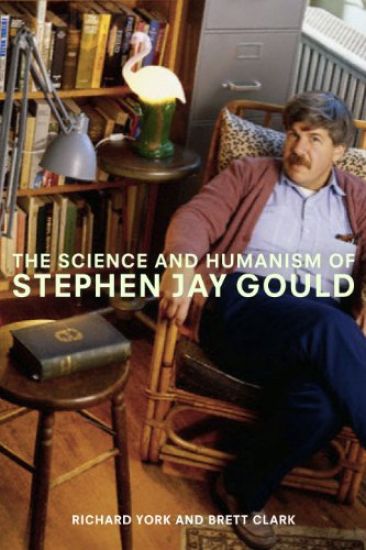
Stephen Jay Gould was not only a leading paleontologist and evolutionary theorist, he was also a humanist with an enduring interest in the history and philosophy of science. The extraordinary range of Gould's work was underpinned by a richly nuanced and deeply insightful worldview.Richard York and Brett Clark engage Gould's science and humanism to illustrate and develop the intellectual power of Gould's worldview, particularly with regard to the philosophy of science. They demonstrate how the Gouldian perspective sheds light on many of the key debates occurring not only in the natural sciences, but in the social sciences as well. They engage the themes that unified Gould's work and drove his inquires throughout his intellectual career, such as the nature of history, both natural and social, particularly the profound importance of contingency and the uneven tempo of change. They also assess Gould's views on structuralism, highlighting the importance of the dialectical interaction of structural forces with everyday demands for function, and his views on the hierarchical ordering of causal forces, with some forces operating at large scales and/or over long spans of time, while others are operating on small scales and/or occur frequently or rapidly.York and Clark also address Gould's application of these principals to understanding humanity's place in nature, including discussions of human evolution, sociobiology, and the role of art in human life. Taken together, this book illuminates Gould's dynamic understanding of the world and his celebration of both science and humanism.
Stephen Jay Gould was not only a leading paleontologist and evolutionary theorist, he was also a humanist with an enduring interest in the history and philosophy of science. The extraordinary range of Gould's work was underpinned by a richly nuanced and deeply insightful worldview.Richard York and Brett Clark engage Gould's science and humanism to illustrate and develop the intellectual power of Gould's worldview, particularly with regard to the philosophy of science. They demonstrate how the Gouldian perspective sheds light on many of the key debates occurring not only in the natural sciences, but in the social sciences as well. They engage the themes that unified Gould's work and drove his inquires throughout his intellectual career, such as the nature of history, both natural and social, particularly the profound importance of contingency and the uneven tempo of change. They also assess Gould's views on structuralism, highlighting the importance of the dialectical interaction of structural forces with everyday demands for function, and his views on the hierarchical ordering of causal forces, with some forces operating at large scales and/or over long spans of time, while others are operating on small scales and/or occur frequently or rapidly.York and Clark also address Gould's application of these principals to understanding humanity's place in nature, including discussions of human evolution, sociobiology, and the role of art in human life. Taken together, this book illuminates Gould's dynamic understanding of the world and his celebration of both science and humanism.
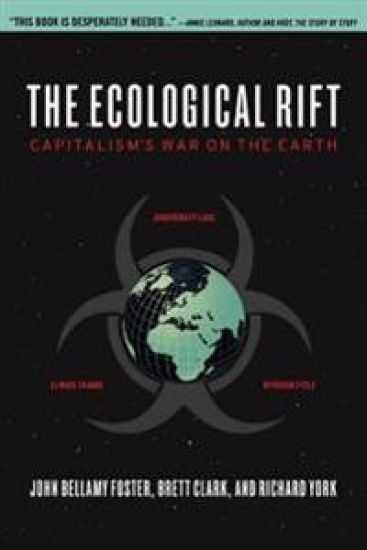
Humanity in the twenty-first century is facing what might be described as its ultimate environmental catastrophe: the destruction of the climate that has nurtured human civilization and with it the basis of life on earth as we know it. All ecosystems on the planet are now in decline. Enormous rifts have been driven through the delicate fabric of the biosphere. The economy and the earth are headed for a fateful collision--if we don't alter course.In The Ecological Rift: Capitalism's War on the Earth environmental sociologists John Bellamy Foster, Brett Clark, and Richard York offer a radical assessment of both the problem and the solution. They argue that the source of our ecological crisis lies in the paradox of wealth in capitalist society, which expands individual riches at the expense of public wealth, including the wealth of nature. In the process, a huge ecological rift is driven between human beings and nature, undermining the conditions of sustainable existence: a rift in the metabolic relation between humanity and nature that is irreparable within capitalist society, since integral to its very laws of motion.Critically examining the sanguine arguments of mainstream economists and technologists, Foster, Clark, and York insist instead that fundamental changes in social relations must occur if the ecological (and social) problems presently facing us are to be transcended. Their analysis relies on the development of a deep dialectical naturalism concerned with issues of ecology and evolution and their interaction with the economy. Importantly, they offer reasons for revolutionary hope in moving beyond the regime of capital and toward a society of sustainable human development.