Kirjojen hintavertailu. Mukana 12 136 430 kirjaa ja 12 kauppaa.

Kirjailija

Brian A Jackson

Kirjat ja teokset yhdessä paikassa: 29 kirjaa, julkaisuja vuosilta 2001-2025, suosituimpien joukossa Emergency Responder Injuries and Fatalities. Vertaile teosten hintoja ja tarkista saatavuus suomalaisista kirjakaupoista.

Mukana myös kirjoitusasut: Brian A. Jackson

29 kirjaa

Kirjojen julkaisuhaarukka 2001-2025.

Emergency Responder Injuries and Fatalities

Emergency Responder Injuries and Fatalities

Ari N. Houser; Brian A. Jackson; James T. Bartis; D.J. Peterson

RAND
2004
pokkari
Summarizes the results of an analysis of available data sources concerning the hazards facing firefighters, police, and emergency medical responders. Collects and synthesizes available data on casualties experienced by the emergency responder population. The authors examined data separately for firefighters, police officers, and emergency medical technicians. These data can provide a route for identifying combinations of kinds and causes of injury, body parts involved, and types of responder activity where injury reduction efforts might be most effectively applied.

The Role of Technology in Improving K-12 School Safety

The Role of Technology in Improving K-12 School Safety

Heather L. Schwartz; Rajeev Ramchand; Dionne Barnes-Proby; Sean Grant; Brian A. Jackson; Kristin J. Leuschner; Mauri Matsuda; Jessica Saunders

RAND
2016
pokkari
The report categorizes school safety technologies, noting the lack of research about school safety technology and summarizing the existing research on school violence; presents six case studies of innovative technologies used in schools; and summarizes experts views of technologies and safety problems, determined through interviews; and presents experts rankings of technology needs to improve school safety, produced during two day-long panels."
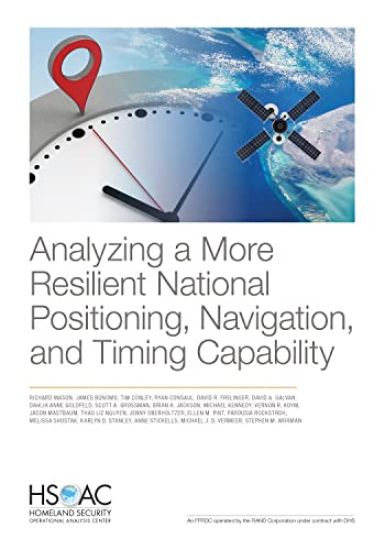
Analyzing a More Resilient National Positioning, Navigation, and Timing Capability

Analyzing a More Resilient National Positioning, Navigation, and Timing Capability

Richard Mason; James Bonomo; Tim Conley; Ryan Consaul; David R Frelinger; David A Galvan; Dahlia Anne Goldfeld; Scott A Grossman; Brian A Jackson; Michael Kennedy; V Ray Koym; Jason Mastbaum; Jenny Oberholtzer; Ellen M Pint; Parousia Rockstroh; Melissa Corinne Shostak; Karlyn D Stanley; Anne Stickells; Michael J D Vermeer; Stephen M Worman

RAND
2021
nidottu
Because of the widespread use of the Global Positioning System (GPS) for positioning, navigation, and timing (PNT), concerns have been expressed that a disruption of GPS might require a national investment in backup capabilities. The authors assess the costs associated with realistic threats to domestic, nonmilitary uses of GPS, and review possible additions to the PNT ecosystem in light of those costs.
Efficient Aviation Security

Efficient Aviation Security

Brian A. Jackson; Tom LaTourrette; Edward W. Chan; Russell Lundberg; Andrew R. Morral; David R. Frelinger

RAND
2012
pokkari
Making aviation security more cost-effective is hampered by a lack of understanding of the costs and benefits of security interventions. Moreover, there will always be considerable uncertainty about terrorists' capabilities and decision making, security system performance, and the tangible and intangible costs of security measures. This volume focuses on exploring ways to use cost-benefit and other types of analysis to improve aviation security decision making in spite of such uncertainties. The authors present a set of analyses that discuss how historical data on aviation security can inform security planning; examine ways to address uncertainty about the costs of security measures; discuss the ways in which different layers of a security system interact; offer a method for incorporating deterrence into the assessment of security measures via the concept of a risk-reduction threshold, using the Federal Air Marshal Service as an example; examine tradeoffs between intended and unintended consequences of security measures, using a trusted traveler program as an example; and discuss the merits of high- versus low-resolution models of aviation terrorism for informing policy.These analyses contribute to filling some of the current gaps in the assessment of the costs, benefits, and efficiency of aviation security measures and strategies.
Understanding the Role of Deterrence in Counterterrorism Security
Deterrence a central feature of counterterrorism security systems and a major factor in the cost-effectiveness of many security programs is not well understood or measured. This paper offers a framework for understanding how security systems may deter or displace attacks and how to measure the relative deterrent value of alternative systems. This framework may aid in attempts to achieve increased security benefits with limited resources.
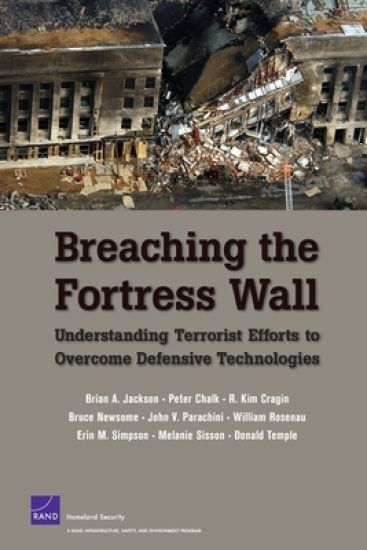
Breaching the Fortress Wall

Breaching the Fortress Wall

Brian A. Jackson; Peter Chalk; Kim Cragin; Bruce Newsome; John V. Parachini; William Rosenau; Erin M. Simpson; Melanie Sisson; Donald Temple

RAND
2006
pokkari
Technology systems play a key role within a larger, integrated strategy to target groups' efforts and protect the public from the threat of terrorist violence. This study draws on relevant data from the history of a variety of terrorist conflicts to understand terrorists' counter-technology efforts. Fully exploring adversaries' counter-technology behaviors can help make the best choices to protect the nation from the threat of terrorism.
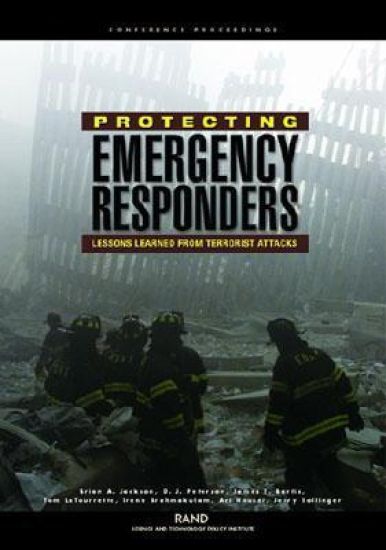
Protecting Emergency Responders

Protecting Emergency Responders

Brian A. Jackson; D.J. Peterson; James T. Bartis

RAND
2002
pokkari
Protecting emergency-response workers following large-scale terrorist attacks In December 2001, a conference held in New York City brought together individuals with firsthand knowledge of emergency responses to terrorist attacks to discuss ways to improve the health and safety of emergency workers who respond to large-scale disasters. The meeting considered the responses to the September 11, 2001 attacks at the World Trade Center and the Pentagon and the 1995 attack at the Alfred P. Murrah Federal Building in Oklahoma City, Oklahoma, as well as the emergency responses to the anthrax incidents that occurred through Autumn 2001. This book is intended to help managers and decisiomakers understand the unique working and safety environment associated with terrorist incidents, understand the equipment needs of emergency workers, and improve education and training programs and activities directed at the health and safety of emergency responders.
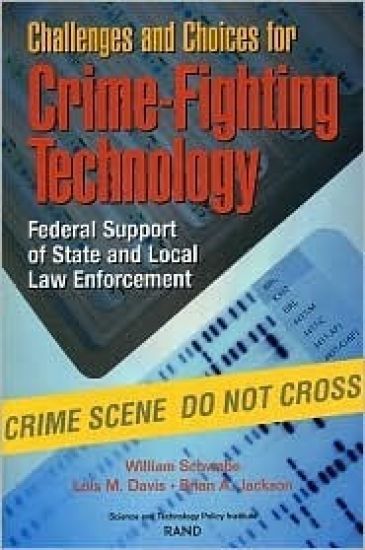
Challenges and Choices for Crime-fighting Technology

Challenges and Choices for Crime-fighting Technology

William Schwabe; Lois M. Davis; Brian A. Jackson

RAND
2001
pokkari
Under the American federal system, most law is cast as state statutes and local ordinances; accordingly, most law enforcement is the responsibility of state and local agencies. Federal law and federal law enforcement come into play only where there is rationale for it, consistent with the Constitution. Within this framework, a clear role has been identified for federal support of state and local agencies. This report provides findings of a study of technology in use or needed by law enforcement agencies at the state and local level, for the purpose of informing federal policymakers as they consider technology-related support for these agencies. In addition, it seeks to characterize the obstacles that exist to technology adoption by law enforcement agencies and to characterize the perceived effects of federal assistance programs intended to facilitate the process. The study findings are based on a nationwide Law Enforcement Technology Survey and a similar Forensics Technology Survey (FTS) conducted in late spring and early summer 2000, interviews conducted throughout the year, focus groups conducted in autumn 2000, and review of an extensive, largely nonacademic literature.Companion reports: Schwabe, William, Needs and Prospects for Crime-Fighting Technology: The Federal Role in Assisting State and Local Law Enforcement, Santa Monica, Calif.: RAND, 1999. Davis, Lois M., William Schwabe, and Ronald Fricker, Challenges and Choices for Crime-Fighting Technology: Results from Two Nationwide Surveys, Santa Monica, Calif.: RAND, 2001. cp
Strengthening School Violence Prevention

Strengthening School Violence Prevention

Brian A Jackson; Pauline Moore; Jennifer T Leschitz

RAND Corporation
2025
pokkari
Behavioral threat assessment and management as a practice is widespread in K 12 schools to respond to concerning and potentially violent student behaviors. In this report, the authors build on existing research to guide the management phase of the behavioral threat assessment and management process, responding to the shortfall in resources and tools for this critical part of efforts to prevent targeted violence and keep school communities safe.
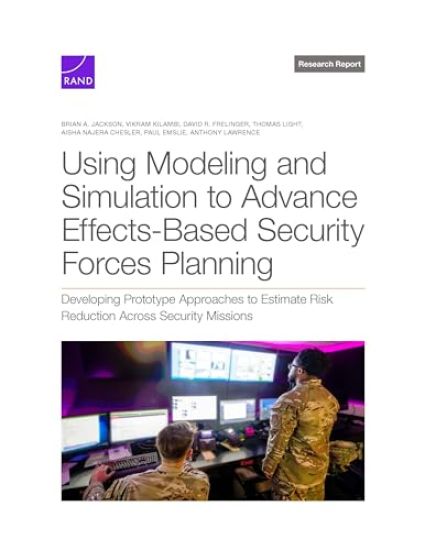
Using Modeling and Simulation to Advance Effects-Based Security Forces Planning

Using Modeling and Simulation to Advance Effects-Based Security Forces Planning

Brian A Jackson; Vikram Kilambi; David R Frelinger; Thomas Light; Aisha Najera Chesler; Paul Emslie; Anthony Lawrence

RAND Corporation
2024
pokkari
This report summarizes research on how top-down risk analysis models could help inform the staffing, systems, and strategies for the U.S. Air Force Security Forces. Although existing security planning supports bottom-up, asset-based security planning, such processes do not fully explore the risk trade-offs, nor do they identify opportunities for SF strategies to manage multiple risks simultaneously.
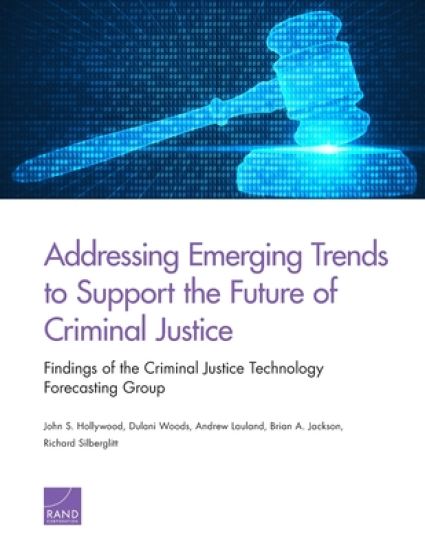
Addressing Emerging Trends to Support the Future of Criminal Justice

Addressing Emerging Trends to Support the Future of Criminal Justice

John S Hollywood; Dulani Woods; Andrew Lauland; Brian A Jackson; Richard Silberglitt

RAND
2021
nidottu
The Criminal Justice Technology Forecasting Group (CJTFG) deliberated on the effects that major technology and social trends could have on criminal justice in the next two to five years and identified potential responses. This report captures the results of the group's meetings and initiatives, presents the emerging trends and highlights of the group's discussion, and presents the results of analyses to assess connections between the trends.
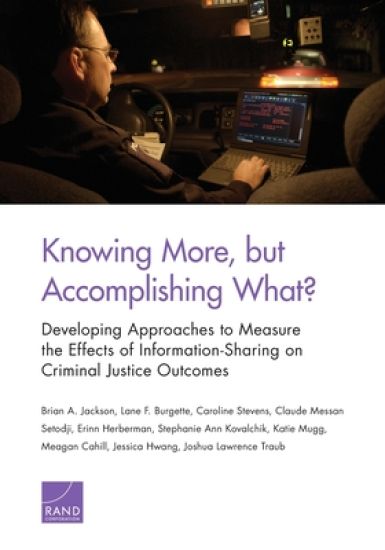
Knowing More, But Accomplishing What?

Knowing More, But Accomplishing What?

Brian A Jackson; Lane F Burgette; Caroline Stevens; Claude Messan Setodji; Erinn Herberman; Stephanie Ann Kovalchik; Katie Mugg; Meagan Cahill; Jessica Hwang; Joshua Lawrence Traub

RAND
2021
nidottu
In this report, researchers explore measurement methods to assess how information-sharing affects criminal justice outcomes and how the practicalities of law enforcement work practices can affect measurement. In addition, the authors offer lessons for future policy evaluation and information system design.
Fostering Innovation in U.S. Law Enforcement

Fostering Innovation in U.S. Law Enforcement

John S Hollywood; Dulani Woods; Sean E Goodison; Andrew Lauland; Lisa Wagner; Thomas J Wilson; Brian A Jackson

RAND
2017
nidottu
This report presents the results a 2016 workshop in which a panel of law enforcement experts identifies high-priority needs for innovation in law enforcement, covering advances in technology, policy, and practice. The needs discussed in this report can help prioritize research, development, and dissemination efforts in ways that will provide the greatest value to law enforcement practitioners.
Fostering Innovation in the U.S. Court System

Fostering Innovation in the U.S. Court System

Brian A. Jackson; Duren Banks; John S. Hollywood; Dulani Woods; Amanda Royal; Patrick W. Woodson; Nicole J. Johnson

RAND
2016
pokkari
Given the challenges posed to the U.S. courts sector, such as high caseloads and resource constraints, it is valuable to identify opportunities where changes in technology, policy, or practice could improve performance. In this report, RAND researchers, with the help of a practitioner Courts Advisory Panel, seek to map out an innovation agenda for the sector.
What Should be Classified?

What Should be Classified?

Martin C. Libicki; Brian A. Jackson; David R. Frelinger; Beth E. Lachman; Cesse Ip

RAND
2011
pokkari
The Global Force Management Data Initiative was launched to improve aggregation of unclassified force-structure data. Aggregation, though, raised concerns about classification because the system might be attractive to a potential adversary. The authors develop a framework for evaluating classification decisions to determine that, while overall classification is not indicated, the inclusion of some data will require careful consideration.