Kirjojen hintavertailu. Mukana 12 595 353 kirjaa ja 12 kauppaa.
Kirjailija
Brian Barry
Kirjat ja teokset yhdessä paikassa: 12 kirjaa, julkaisuja vuosilta 1988-2024, suosituimpien joukossa Lonely Planet Experience Ireland. Vertaile teosten hintoja ja tarkista saatavuus suomalaisista kirjakaupoista.
Isabel Albiston; Neil Arthurs; Brian Barry; Yvonne Gordon; Una-Minh Kavanagh; Noelle Kelly; Catherine Le Nevez; Fionan McGrath; Orla Smith; Neil Wilson
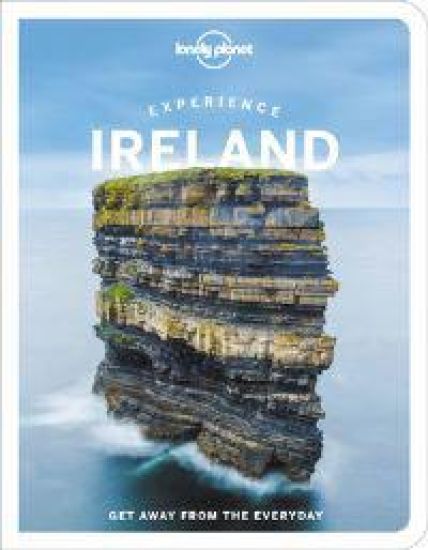
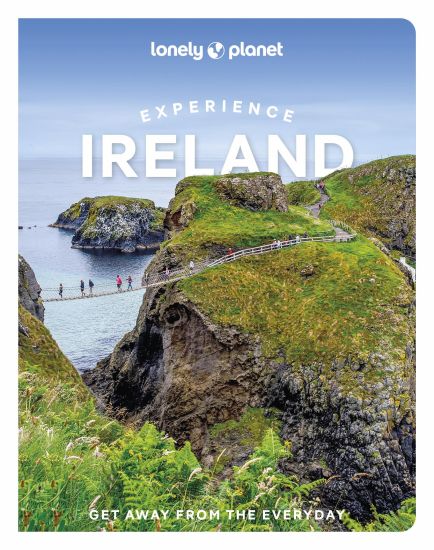
Lonely Planet's Experience Ireland is your guide to unforgettable experiences and local surprises. - all guided by local experts with fresh perspectives. Drive the Wild Atlantic Way, sip stout in a charming pub and cruise down the Shannon. Uncover Ireland's best experiences and get away from the everyday! Inside Lonely Planet's Experience Ireland: Unique experiences to string together an unforgettable trip Inspiring full-colour travel photography and maps throughout Highlights and trip builders to help tailor a trip to your personal needs and interests Fresh perspectives to surprise you with things you hadn't thought of, as well as fresh takes on the well-known sights Insider tips help you discover hidden gems and get around like a local Practical info and tips on money, getting around, unique and local ways to stay, and responsible travel Covers Dublin, Wicklow, The Southeast, Cork, Kerry, West of Ireland, Ulster The Perfect Choice: Lonely Planet's Experience Ireland, our inspiring guide, filled with local tips and fresh perspectives focuses on Ireland's best experiences to string together for an unforgettable trip. Looking for a comprehensive guide that recommends both popular and offbeat experiences, and extensively covers all the country has to offer? Check out Lonely Planet's Ireland guide. Looking for a guide for Dublin? Check out Lonely Planet's Dublin guides for a comprehensive look at all these cities have to offer, or Pocket Dublin, a handy-sized guide focused on the can't-miss experiences for a quick trip. About Lonely Planet: Lonely Planet is a leading travel media company, providing both inspiring and trustworthy information for every kind of traveller since 1973. Over the past four decades, we've printed over 145 million guidebooks and phrasebooks for 120 languages, and grown a dedicated, passionate global community of travellers. You'll also find our content online, and in mobile apps, videos, 14 languages, armchair and lifestyle books, ebooks, and more, enabling you to explore every day. 'Lonely Planet guides are, quite simply, like no other.' New York Times
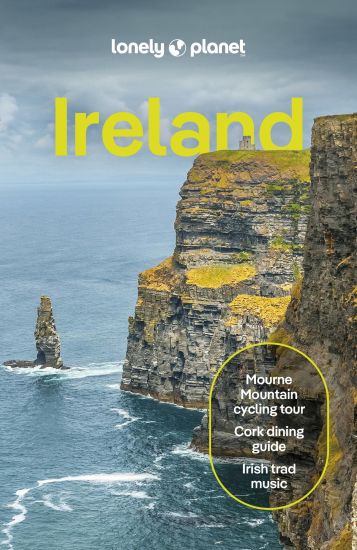
Lonely Planet's local travel experts reveal all you need to know to plan the trip of a lifetime to Ireland.Discover popular and off the beaten track experiences from tapping your toes to trad music in Dublin's world-famous Temple Bar to hiking the trails that traverse the spine of the Wicklow Mountains, and taking a surf lesson on Tramore Beach.Build a trip to remember with Lonely Planet's Ireland Travel Guide:Our classic guidebook format provides you with the most comprehensive level of information for planning multi-week tripsUpdated with an all new structure and design so you can navigate Ireland and connect experiences together with easeCreate your perfect trip with exciting itineraries for extended journeys combined with suggested day trips, walking tours, and activities to match your passionsGet fresh takes on must-visit sights and explore haunting Glendalough, see the dramatic beauty of the Skelligs, visit the Rock of Cashel Special features on Irish trad music, Cork dining guide, Mourne Mountain cycling tourExpert local recommendations on when to go, eating, drinking, nightlife, shopping, accommodation, adventure activities, festivals, and moreEssential information toolkit containing tips on arriving; transport; making the most of your time and money; LGBTIQ+ travel advice; useful words and phrases; accessibility; and responsible travelConnect with Irish culture through stories that delve deep into local life, history, and traditions Inspiring full-colour travel photography and maps including a pull out map of DublinCovers Dublin, Wicklow & Kildare, Wexford, Waterford, Carlow, Kilkenny, Cork, Kerry, Limerick & Tipperary, Clare, Galway, Mayo & Sligo, Donegal, The Midlands, Meath, Lough, Monaghan & Cavan, Belfast, Down & Armagh, Derry & Antrim, Fermanagh & Tyrone Create a trip that's uniquely yours and get to the heart of this extraordinary country with Lonely Planet's Ireland.
Lonely Planet's Experience Ireland travel guide reveals exciting new ways to explore this iconic country with insider tips from our local experts and handy planning tools so you can create your own unique trip.Discover amazing local experiences from searching for the perfect pint in Dublin, to surfing the wild Atlantic waves off the coast of County Sligo, and listening to some of the country's best trad musicians in Galway.Build a one-of-a-kind trip with Lonely Planet's Experience Ireland travel guide:Our Experience guidebook format reveals exciting new ways to explore epic destinations and plan the ultimate 1-2 week adventureLocal experts share their love for the real Ireland, offering fresh perspectives into the country's traditions, values, and modern trendsTrip planning tools help you create your own regional and activity-based itineraries so you can navigate Ireland and connect experiences together with easeIn the know tips help you discover even more local experiences when visiting well-known sights and landmarksFun insights will pique your curiosity and take you to the heart of the place - learn about Gaelic myths and legends, explore Belfast's history with the Titanic, get to know Grace O'Malley: The Pirate QueenInsider scoop on the best festivals, secret hangouts, hidden locations, tantalising local food scene, and photo-worthy viewsHandy seasonal planning calendar guides you on where to go, when to travel, and what to packQR codes unlock extra digital content, know-how, and travel secrets Practical information on money, getting around, unique and local ways to stay, and responsible travelInspiring full-colour photography and maps including a pull out planning map of IrelandCovers: Dublin, Day Trip to Bru? na Bo?inne, Wicklow, The Southeast, Cork, Kerry, Meander Along the Shannon, West of Ireland, Day Trip to the Rock of Cashel, Ulster Create your own dream travel itinerary and get away from the everyday with Lonely Planet's Experience Ireland.
Since its publication in 1965, Brian Barry's seminal work has occupied an important role in the revival of Anglo-American political philosophy. A number of ideas and terms in it have become part of the standard vocabulary, such as the distinction between "ideal-regarding" and "want-regarding" principles and the division of principles into aggregative and distributive. The book provided the first precise analysis of the concept of political values having trade-off relations and its analysis of the notion of the public interest has also been significant.
In the past twenty years, social injustice has increased enormously in Britain and the United States, regardless of the party in power. At the same time, the idea of social justice itself has been subverted, as the mantras of personal responsibility and equal opportunity have been employed as an excuse for doing nothing about the enrichment of the few at the expense of the many and for making ever harsher demands on the poor and vulnerable. With grace and wit, Brian Barry exposes the shoddy logic and distortion of reality that underpins this ideology. Once we understand the role of the social structure in limiting options, we have to recognize that really putting into practice ideas such as equal opportunity and personal responsibility would require a fundamental transformation of almost all existing institutions. Barry argues that only if inequalities of wealth and income are kept within a narrow range can equal prospects for education, health and autonomy be realized. He proposes a number of policies to achieve a more equal society and argues that they are economically feasible. But are they politically possible? The apparent stability of the status quo is delusory, he responds: radical changes in our way of life are unavoidable. Whether these changes are for better or for worse depends partly on the availability of a coherent set of principles and a programme flowing from them that is capable of mobilizing the growing discontent with business as usual. That is, ultimately, why social justice matters.
All major western countries at the beginning of the 21st century contain groups that differ in their religious beliefs or customary practices. How should public policy respond to this diversity? In this work, the author develops a restatement of an egalitarian liberalism for the century.
Almost every country today contains adherents of different religions and different secular conceptions of the good life. Is there any alternative to a power struggle among them, leading most probably to either civil war or oppression? The argument of this book is that justice as impartiality offers a solution. According to the theory of justice as impartiality, principles of justice are those principles that provide a reasonable basis for the unforced assent of those subject to them. The object of this book is to set out the theory, explain its rationale, and respond to the variety of criticisms that have been made of it. This is the second volume of A Treatise on Social Justice. The first, Theories of Justice, explored alternative theories and concluded by asserting the superiority of justice as impartiality. This conclusion is built on in Justoce as Impartiality, but it does not presuppose acquaintance with Theories of Justice.
Almost every country today contains adherents of different religions and different secular conceptions of the good life. Is there any alternative to a power struggle among them, leading most probably to either civil war or repression? In this important new work of political philosophy, Brian Barry argues that justice as impartiality offers a solution. The follow-up to his prize-winning book Theories of Justice, it offers a contemporary restatement of the Enlightenment idea that certain basic principles can validly claim the allegiance of every reasonable human being.
What is social justice? In Theories of Justice Brian Barry provides a systematic and detailed analysis of two kinds of answers. One is that justice arises from a sense of the advantage to everyone of having constraints on the pursuit of self-interest. The other answer connects the idea of justice with that of impartiality. Though the first book of a trilogy, Theories of Justice stands alone and constitutes a major contribution to the debate about social justice that began in 1971 with Rawls's A Theory of Justice.
"Rationalist theories of political behavior have recently risen in status to that of a new—or, more accurately, rediscovered—paradigm in the systematic study of politics. Brian Barry's short, provocative book played no small part in the debate that precipitated this shift. . . . Without reservation, Barry's treatise is the most lucid and most influential critique of two important, competing perspectives in political analysis: the 'sociological' school of Talcott Parsons, Gabriel Almond, and other so-called functionalists; and the 'economic' school of Anthony Downs and Mancur Olson, among others."—Dennis J. Encarnation, American Journal of Sociology