Kirjojen hintavertailu. Mukana 12 390 323 kirjaa ja 12 kauppaa.

Kirjailija

Brian Best

Kirjat ja teokset yhdessä paikassa: 5 kirjaa, julkaisuja vuosilta 2020-2025, suosituimpien joukossa The Secret War Against Red Russia. Vertaile teosten hintoja ja tarkista saatavuus suomalaisista kirjakaupoista.

5 kirjaa

Kirjojen julkaisuhaarukka 2020-2025.

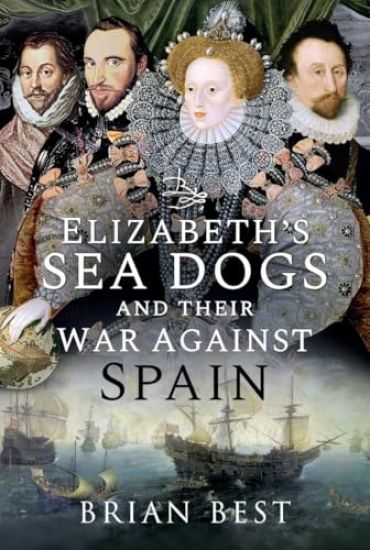
Elizabeth’s Sea Dogs and their War Against Spain
The Sea Dogs were seafaring merchantmen who originally traded mainly with Holland and France. During Queen Elizabeth’s reign, however, they began to spread their reach, sailing further and further afield exploring and plundering. The main source of wealth quickly became the Caribbean, which, until then, had been predominantly the domain of wealthy Catholic Spain. The first man to trade with the Spanish Main was John Hawkins, who travelled to West Africa, captured the natives and transported them to the Caribbean. There he sold them to plantation owners in exchange for goods such as pearls, hides and spices. He made three voyages and on the disastrous last he took his cousin, Francis Drake. The backers, including the Queen, were satisfied with the bounty but encouraged the Sea Dogs to seek greater riches. England at that time was a relatively impoverished country compared with Spain. Elizabeth had inherited a high cost of inflation, poor harvests and a legacy of poverty from Edward VI and Mary Tudor. This was a time of religious tension with King Philip of Spain, whose marriage to Mary Tudor gave him the right to rule England. The rift between the Catholics and Protestants was cooled somewhat by Elizabeth’s keeping the peace between the two countries, despite the continuing campaigns of the privateers crewed by the Sea Dogs. The main thorn in the Spanish side was Francis Drake. Despite efforts to kill or capture him, he continued to plunder the high seas, bringing back Spanish riches to England. This allowed the Queen to flourish. It was thanks in main to the privateering exploits of the Sea Dogs that England became so wealthy, paving the way for the Renaissance that followed.
The Secret War Against Red Russia

The Secret War Against Red Russia

Brian Best

PEN SWORD BOOKS LTD
2022
sidottu
The Armistice of November 1918 ended four years of slaughter that left armies exhausted and populations weary of war - but the fighting was not over. In Russia, civil war and revolution had divided the nation and the Allies sought to intervene on behalf of the White' Russians against the Bolsheviks and this conflict continued long after the war had finished elsewhere in Europe. A vital source of information from inside the Bolshevik-held territory came from British secret agents in Petrograd, the main one being Paul Dukes. Known as the Man of a Hundred Faces', Dukes had managed to infiltrate both the Communist Party and the political police. The problem which faced the head of the British Secret Intelligence Service, Maurice Smith-Cummings, was getting Dukes' information back to London. Carrying information overland was proving far too problematical, so Smith-Cummings hit upon the idea of using one of the Royal Navy's new fast Coastal Motor Boat which was revealed just before the end of the war. He recruited Lieutenant Augustus Agar and through him he found five men, all unmarried, who could handle the two CMBs. Using an inlet on the Finnish coast as a base, Agar slipped past a series of forts, submerged breakwaters and the Russian Baltic Fleet to reach Petrograd and made contact with Dukes. A frequent courier service was soon established, with Agar carrying couriers in and out of Petrograd under the very noses of the Russians. So confident did Agar become, he even torpedoed the Russian cruiser Oleg. He followed this with support from Admiral Sir Walter Cowan in an all-out raid upon the Russian ships with eight larger CMBs and a bombing raid by the RAF. The raid resulted in the sinking of two battleships and the submarine depot ship Pamiet Azova. Agar was quietly given the Victoria Cross but told not to publish his memoirs until 1963. As for Paul Dukes, his cover was eventually blown, and he had to escape via Latvia in a number of hair-raising escapades. In 1920 he was knighted by King George V, who called Dukes the greatest of all soldiers'. To this day, Dukes is the only person knighted based entirely on his exploits in espionage. This is their remarkable story.
William of Orange and the Fight for the Crown of England
In 1688, a vast fleet of 463 ships, twice the size of the Spanish Armada, put to sea from Holland. On board was William of Orange with 40,000 soldiers - their objective, England. The Protestant William had been encouraged by a group of Church of England bishops to risk everything and oust the Catholic King James. He landed at Tor Bay in Devon and soon gathered enough support, including that of John Churchill, the future Duke of Marlborough, to cause King James to flee to France. It had been seen, in the eyes of most in England and Scotland as a 'Glorious' Revolution. William ascended the throne along with his wife Mary, the daughter of England's Charles II, who had preceded James. Though the revolution had been virtually bloodless, William had to fight to keep his crown. Most Irish were Catholics and King William's armies met stiff opposition there. In this, James saw a chance to regain his crown. Sailing to Ireland, he led his Jacobite troops against William at the Battle of the Boyne on 1 July 1690\. James was defeated, ending his hopes of ousting William. There were also large numbers of Catholics in Scotland, but they too were defeated by William's army at the Battle of Killiecrankie. This, in turn, led to the infamous Massacre of Glencoe. The accession of William and Mary to the throne was a landmark moment in British history, one which saw Parliament emerge into the modern state. In January 1689, two months after the Glorious Revolution, Parliament met and in February a Declaration of Rights was incorporated into the Bill of Rights. This included the measure that the crown could not tax without Parliament's consent or interfere in elections. William, therefore, is not only known both for being one of England's most revolutionary kings, but also one of the least remembered.
Elizabeth's Sea Dogs and their War Against Spain
The Sea Dogs were seafaring merchantmen who originally traded mainly with Holland and France. During Queen Elizabeth's reign, however, they began to spread their reach, sailing further and further afield exploring and plundering. The main source of wealth quickly became the Caribbean, which, until then, had been predominantly the domain of wealthy Catholic Spain. The first man to trade with the Spanish Main was John Hawkins, who travelled to West Africa, captured the natives and transported them to the Caribbean. There he sold them to plantation owners in exchange for goods such as pearls, hides and spices. He made three voyages and on the disastrous last he took his cousin, Francis Drake. The backers, including the Queen, were satisfied with the bounty but encouraged the Sea Dogs to seek greater riches. England at that time was a relatively impoverished country compared with Spain. Elizabeth had inherited a high cost of inflation, poor harvests and a legacy of poverty from Edward VI and Mary Tudor. This was a time of religious tension with King Philip of Spain, whose marriage to Mary Tudor gave him the right to rule England. The rift between the Catholics and Protestants was cooled somewhat by Elizabeth's keeping the peace between the two countries, despite the continuing campaigns of the privateers crewed by the Sea Dogs. The main thorn in the Spanish side was Francis Drake. Despite efforts to kill or capture him, he continued to plunder the high seas, bringing back Spanish riches to England. This allowed the Queen to flourish. It was thanks in main to the privateering exploits of the Sea Dogs that England became so wealthy, paving the way for the Renaissance that followed.
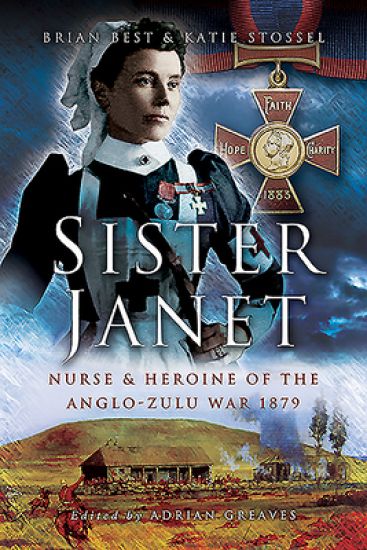
Sister Janet

Sister Janet

Brian Best; Katie Stossel

Pen Sword Military
2020
nidottu
Janet Wells achievements make for fascinating reading. She was only 18 when decorated for her nursing service to the Russians in the 1878 Balkan War. The following year she became the only nurse to serve at the Front in the Anglo Zulu War. After a period in Northern Zululand she was sent to the garrison at Rorkes Drift very soon after the legendary action. Revered by the soldiers, she had to make do in appalling conditions with scant supplies. She overcame extreme difficulties and prejudice despite her youth. After returning to England in time for her 20th birthday, her achievements were recognized by the award of the Royal Red Cross the highest accolade and the equivalent of the Victoria Cross. This is a gripping tale of a true heroine who refused to accept the conventions of the age and in so doing made a huge contribution to the welfare of the British Army.