Kirjojen hintavertailu. Mukana 12 390 323 kirjaa ja 12 kauppaa.

Kirjailija

Brian C. O'Connor

Kirjat ja teokset yhdessä paikassa: 7 kirjaa, julkaisuja vuosilta 1996-2023, suosituimpien joukossa Doing Things with Information. Vertaile teosten hintoja ja tarkista saatavuus suomalaisista kirjakaupoista.

Mukana myös kirjoitusasut: Brian C O'Connor

7 kirjaa

Kirjojen julkaisuhaarukka 1996-2023.

Proximity and Epidata

Proximity and Epidata

Laurie J. Bonnici; Brian C. O'Connor

Springer International Publishing AG
2023
nidottu
This book provides a new model to explore discoverability and enhance the meaning of information. The authors have coined the term epidata, which includes items and circumstances that impact the expression of the data in a document, but are not part of the ordinary process of retrieval systems. Epidata affords pathways and points to details that cast light on proximities that might otherwise go unknown. In addition, epidata are clues to mis-and dis-information discernment. There are many ways to find needed information; however, finding the most useable information is not an easy task. The book explores the uses of proximity and the concept of epidata that increases the probability of finding functional information. The authors sketch a constellation of proximities, present examples of attempts to accomplish proximity, and provoke a discussion of the role of proximity in the field. In addition, the authors suggest that proximity is a thread between retrieval constructs based on known topics, predictable relations, and types of information seeking that lie outside constructs such as browsing, stumbling, encountering, detective work, art making, and translation.
Proximity and Epidata

Proximity and Epidata

Laurie J. Bonnici; Brian C. O'Connor

Springer International Publishing AG
2022
sidottu
This book provides a new model to explore discoverability and enhance the meaning of information. The authors have coined the term epidata, which includes items and circumstances that impact the expression of the data in a document, but are not part of the ordinary process of retrieval systems. Epidata affords pathways and points to details that cast light on proximities that might otherwise go unknown. In addition, epidata are clues to mis-and dis-information discernment. There are many ways to find needed information; however, finding the most useable information is not an easy task. The book explores the uses of proximity and the concept of epidata that increases the probability of finding functional information. The authors sketch a constellation of proximities, present examples of attempts to accomplish proximity, and provoke a discussion of the role of proximity in the field. In addition, the authors suggest that proximity is a thread between retrieval constructs based on known topics, predictable relations, and types of information seeking that lie outside constructs such as browsing, stumbling, encountering, detective work, art making, and translation.
Video Structure Meaning

Video Structure Meaning

Brian C O'Connor; Richard L. Anderson

Springer International Publishing AG
2019
nidottu
For over a century, motion pictures have entertained us, occasionally educated us, and even served a few specialized fields of study. Now, however, with the precipitous drop in prices and increase in image quality, motion pictures are as widespread as paperback books and postcards once were. Yet, theories and practices of analysis for particular genres and analytical stances, definitions, concepts, and tools that span platforms have been wanting. Therefore, we developed a suite of tools to enable close structural analysis of the time-varying signal set of a movie. We take an information-theoretic approach (message is a signal set) generated (coded) under various antecedents (sent over some channel) decoded under some other set of antecedents. Cultural, technical, and personal antecedents might favor certain message-making systems over others. The same holds true at the recipient end-yet, the signal set remains the signal set. In order to discover how movies work-their structure and meaning-we honed ways to provide pixel level analysis, forms of clustering, and precise descriptions of what parts of a signal influence viewer behavior. We assert that analysis of the signal set across the evolution of film—from Edison to Hollywood to Brakhage to cats on social media—yields a common ontology with instantiations (responses to changes in coding and decoding antecedents).
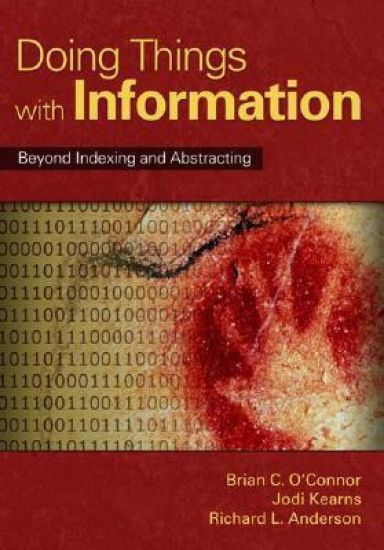
Doing Things with Information

Doing Things with Information

Richard L. Anderson; Brian C. O'Connor; Jodi Kearns

Libraries Unlimited Inc
2008
nidottu
The relationship between a person with a question and a source of information is complex. Indexing and abstracting often fail because too much emphasis is put on the mechanics of description and too little on what ought to be represented. Research literature suggests that inappropriate representation results in failed searches a significant number of times, perhaps even in a majority of cases. Doing Things with Information seeks to rectify this unfortunate situation by emphasizing methods of modeling and constructing appropriate representations of such questions and documents. Students in programs of information studies will find focal points for discussion about system design and refinement of existing systems. Librarians, scholars, and those who work within large document collections, whether paper or electronic, will find insights into the strengths and weaknesses of the access systems they use.
Structures of Image Collections

Structures of Image Collections

Howard F. Greisdorf; Brian C. O'Connor

Libraries Unlimited Inc
2007
nidottu
Human beings have always had a penchant for collecting images. The challenge today is that almost anything and everything in the world is available as a viewable image. Consequently, say O'Connor and Greisdorf, image collections can no longer be the result of ad hoc processes rooted in antiquated methodologies. To this end, they present the reader with an interdisciplinary approach to the principles, practices and belief systems underlying categorization and image management. The book is divided into three parts: defining the nature of images; describing how images are used; and explaining how and why images are collected (including the mechanics of storage and accessibility). Individual chapters contain a historical perspective on the subject matter and supporting research. Liberally enhanced with illustrations from the authors' own collections. For anyone who cognitively engages with image collections either vocationally or avocationally.
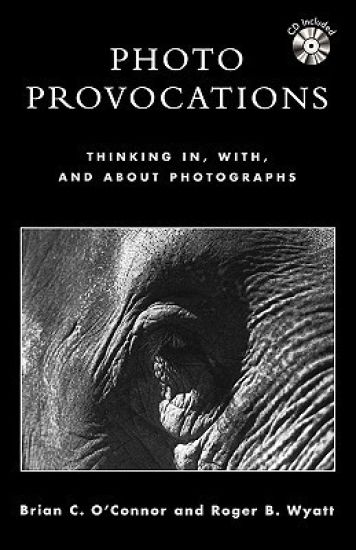
Photo Provocations

Photo Provocations

Brian C. O'Connor; Roger B. Wyatt

Scarecrow Press
2004
muu
Compared to verbal print media, the mechanisms for making, disseminating, and managing photographs are all quite new. At the same time, there is little precedent for how to think about pictures as items to be managed for the use of others. In Photo Provocations, O'Connor and Wyatt provide us with "threads of thought" from which can be woven into more effective systems of access and use. While some of the essays in the text are aimed directly at librarians, archivists, and those whose professional work hinges directly on deep understanding of photographs, the majority is aimed at all who want to make better use of images: whether in shooting photographs, using photographs to tell stories or make presentations, depending on photographs for evidence in numerous academic arenas, or using family photo albums to help make sense out of being human.
Explorations in Indexing and Abstracting

Explorations in Indexing and Abstracting

Brian C. O'Connor

Libraries Unlimited Inc
1996
sidottu
Indexing and abstracting often fail because too much emphasis is given to the mechanics of description and too little is given to what ought to be described. This text focuses on how people seek information. Drawing on a delightfully broad base of intellectual resources—from information theory and classic literature to Beethoven and MTV—the author considers the basic question of how we can index and abstract our information so that the user can actually find it. He also addresses the challenges and opportunities resulting from the information and technology explosion. O'Connor discusses the shortcomings of traditional indexing and abstracting systems and then presents essays, exercises, and case studies that foster consideration of the elements of a successful search in a variety of settings. Useful as a companion volume for reference, cataloging, and indexing and abstracting classes, this book is also of interest to professional librarians, information brokers, and online searchers.