Kirjojen hintavertailu. Mukana 12 390 323 kirjaa ja 12 kauppaa.

Kirjailija

Brian Cafarella

Kirjat ja teokset yhdessä paikassa: 5 kirjaa, julkaisuja vuosilta 2021-2025, suosituimpien joukossa Math Anxiety—How to Beat It!. Vertaile teosten hintoja ja tarkista saatavuus suomalaisista kirjakaupoista.

5 kirjaa

Kirjojen julkaisuhaarukka 2021-2025.

Math Anxiety—How to Beat It!

Math Anxiety—How to Beat It!

Brian Cafarella

TAYLOR FRANCIS LTD
2025
sidottu
How do we conquer uncertainty, insecurity, and anxiety over college mathematics? You can do it, and this book can help.The author provides various techniques, learning options, and pathways. Students can overcome the barriers that thwart success in mathematics when they prepare for a positive start in college and lay the foundation for success.Based on interviews with over 50 students, the book develops approaches to address the struggles and success these students shared. Then the author took these ideas and experiences and built a process for overcoming and achieving when studying not only the mathematics many colleges and universities require as a minimum for graduation, but more to encourage reluctant students to look forward to their mathematics courses and even learn to embrace additional ones.Success breeds interest, and interest breeds success. Math anxiety is based on test anxiety. The book provides proven strategies for conquering test anxiety. It will help find ways to interest students in succeeding in mathematics and assist instructors on pathways to promote student interest, while helping them to overcome the psychological barriers they face. Finally, the author shares how math is employed in the “real world,” examining how both STEM and non- STEM students can employ math in their lives and careers. Ultimately, both students and teachers of mathematics will better understand and appreciate the difficulties and how to attack these difficulties to achieve success in college mathematics.
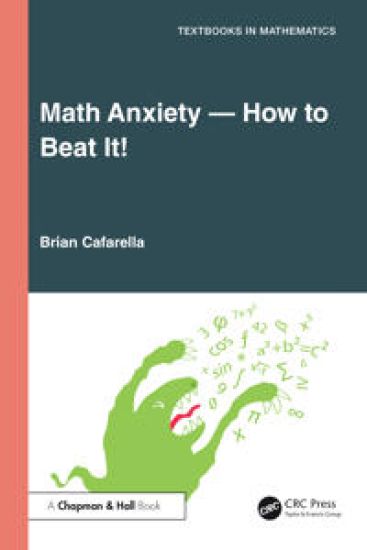
Math Anxiety—How to Beat It!

Math Anxiety—How to Beat It!

Brian Cafarella

TAYLOR FRANCIS LTD
2025
nidottu
How do we conquer uncertainty, insecurity, and anxiety over college mathematics? You can do it, and this book can help.The author provides various techniques, learning options, and pathways. Students can overcome the barriers that thwart success in mathematics when they prepare for a positive start in college and lay the foundation for success.Based on interviews with over 50 students, the book develops approaches to address the struggles and success these students shared. Then the author took these ideas and experiences and built a process for overcoming and achieving when studying not only the mathematics many colleges and universities require as a minimum for graduation, but more to encourage reluctant students to look forward to their mathematics courses and even learn to embrace additional ones.Success breeds interest, and interest breeds success. Math anxiety is based on test anxiety. The book provides proven strategies for conquering test anxiety. It will help find ways to interest students in succeeding in mathematics and assist instructors on pathways to promote student interest, while helping them to overcome the psychological barriers they face. Finally, the author shares how math is employed in the “real world,” examining how both STEM and non- STEM students can employ math in their lives and careers. Ultimately, both students and teachers of mathematics will better understand and appreciate the difficulties and how to attack these difficulties to achieve success in college mathematics.
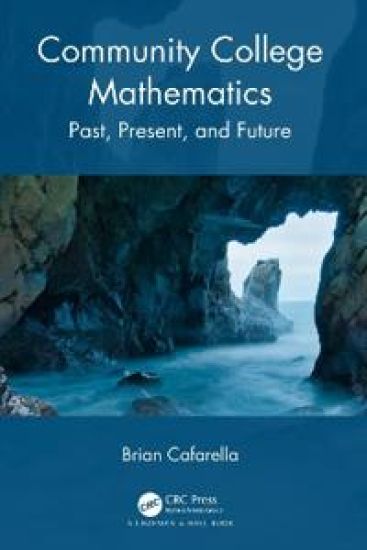
Community College Mathematics

Community College Mathematics

Brian Cafarella

TAYLOR FRANCIS LTD
2022
sidottu
This book explores the rich history of community college math with a specific focus on gatekeeper math classes. Gatekeeper math classes include courses such as college algebra, introduction to statistics, and all developmental math classes. For community colleges, successful completion of these classes is imperative for student retention. This book presents a decade-by-decade analysis of the history of community college mathematics. The author employs a mix of conceptual, empirical, and quantitative research. The empirical research stems from interviews with 30 community college faculty members from seven community colleges.From the 1970s to the pandemic in the early 2020s, the book explores math curricula as well as trends, initiatives, teaching practices, and mandates that have impacted community college math. The positives and negatives of such trends, initiatives, and mandates are presented along with suggestions on how to apply such knowledge going forward.The author addresses the key questions: How can we build a future model for community college gatekeeper math classes that is both successful and sustainable? Additionally, how can we learn from the past and the present to build such a model?This book will be ideal for students in graduate programs focusing on community college leadership or developmental education leadership as well as all those hoping to improve success rates in community college mathematics programs.
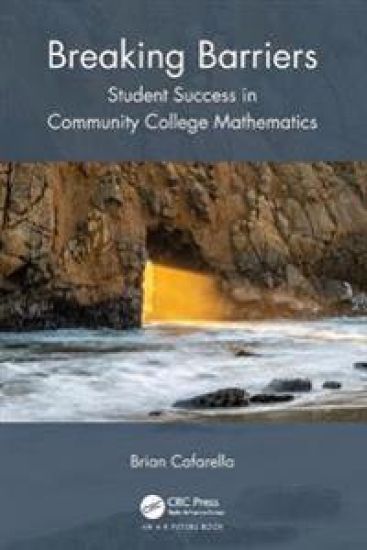
Breaking Barriers

Breaking Barriers

Brian Cafarella

Taylor Francis Ltd
2021
nidottu
The fact college students often struggle in mathematics is not new. They exhibit a great deal of anxiety, dislike, and overall disinterest. Quantitative data displaying abysmal student success rates are widely available and shared. This book explores the complexity surrounding the issue of student difficulties in community college math. Though much quantitative research focuses on the faculty experiences and perspectives regarding methods and practices, the author puts the focus on students’ experiences. The book presents the results of a study focused on students who struggled in mathematics. Though their experiences varied, they all entered community college with a great deal of disgust and anxiety toward mathematics courses and requirements. These impressions and attitudes create barriers to success. However, all the students eventually succeeded in fulfilling their college-level mathematics requirement. The author presents these students’ experiences prior to entering community college, what led to both success and failure in their math courses, and the common themes leading to success and failure. Through these student responses, the author assists readers in gaining a better understanding of the community college student who struggles in math and how to break students’ community college math barriers to success. TABLE OF CONTENTSPreface1. Math is a Four-Letter Word 2. The Framework for Developmental and Introductory College-Level Math3.The Study, Settings, and the Participants4. Prior Experiences in Math5. Attempting Math and Community College6. Navigating the First Developmental Math Course7. Math Pathways and Completing Developmental Math 8. The End of the Rainbow9 I Need More Math…Now What?10. Lessons Learned in the AftermathAppendix A: Analyzing the Results and Ensuring AccuracyAppendix B: Pre-Algebra and Introduction to Algebra Course ContentAppendix C: Stand-Alone Quantway 1 and Statway 1 Course ContentAppendix D: Elementary Algebra (all half semester) ContentAppendix E: Intermediate Algebra ContentAppendix F: Lead Questions for Student ParticipantsAppendix G: Lead Questions for the Lester Community College FacultyIndexBIOGRAPHYWith 21 years of experience in mathematics education and 17 years as a community college math professor, the author has instructed courses from developmental math through calculus. He has served as Chair of the Developmental Math Department and Assistant Chair of the Mathematics Department at Sinclair College, Dayton, Ohio. He received the Jon and Suanne Roueche Award for Teaching Excellence and the Ohio Magazine Excellence in Education Award. His published research focuses on faculty viewpoints regarding pedagogical practices as well as conceptual research concentrating on developmental math. His article, "Acceleration and Compression in Developmental Math: Faculty Viewpoints," was awarded Article of the Year by the Journal of Developmental Education.
Breaking Barriers

Breaking Barriers

Brian Cafarella

Taylor Francis Ltd
2021
sidottu
The fact college students often struggle in mathematics is not new. They exhibit a great deal of anxiety, dislike, and overall disinterest. Quantitative data displaying abysmal student success rates are widely available and shared. This book explores the complexity surrounding the issue of student difficulties in community college math. Though much quantitative research focuses on the faculty experiences and perspectives regarding methods and practices, the author puts the focus on students’ experiences. The book presents the results of a study focused on students who struggled in mathematics. Though their experiences varied, they all entered community college with a great deal of disgust and anxiety toward mathematics courses and requirements. These impressions and attitudes create barriers to success. However, all the students eventually succeeded in fulfilling their college-level mathematics requirement. The author presents these students’ experiences prior to entering community college, what led to both success and failure in their math courses, and the common themes leading to success and failure. Through these student responses, the author assists readers in gaining a better understanding of the community college student who struggles in math and how to break students’ community college math barriers to success. TABLE OF CONTENTSPreface1. Math is a Four-Letter Word 2. The Framework for Developmental and Introductory College-Level Math3.The Study, Settings, and the Participants4. Prior Experiences in Math5. Attempting Math and Community College6. Navigating the First Developmental Math Course7. Math Pathways and Completing Developmental Math 8. The End of the Rainbow9 I Need More Math…Now What?10. Lessons Learned in the AftermathAppendix A: Analyzing the Results and Ensuring AccuracyAppendix B: Pre-Algebra and Introduction to Algebra Course ContentAppendix C: Stand-Alone Quantway 1 and Statway 1 Course ContentAppendix D: Elementary Algebra (all half semester) ContentAppendix E: Intermediate Algebra ContentAppendix F: Lead Questions for Student ParticipantsAppendix G: Lead Questions for the Lester Community College FacultyIndexBIOGRAPHYWith 21 years of experience in mathematics education and 17 years as a community college math professor, the author has instructed courses from developmental math through calculus. He has served as Chair of the Developmental Math Department and Assistant Chair of the Mathematics Department at Sinclair College, Dayton, Ohio. He received the Jon and Suanne Roueche Award for Teaching Excellence and the Ohio Magazine Excellence in Education Award. His published research focuses on faculty viewpoints regarding pedagogical practices as well as conceptual research concentrating on developmental math. His article, "Acceleration and Compression in Developmental Math: Faculty Viewpoints," was awarded Article of the Year by the Journal of Developmental Education.