Kirjojen hintavertailu. Mukana 12 595 353 kirjaa ja 12 kauppaa.

Kirjailija

Brian D. Joseph

Kirjat ja teokset yhdessä paikassa: 7 kirjaa, julkaisuja vuosilta 2009-2025, suosituimpien joukossa Language History, Language Change, and Language Relationship. Vertaile teosten hintoja ja tarkista saatavuus suomalaisista kirjakaupoista.

7 kirjaa

Kirjojen julkaisuhaarukka 2009-2025.

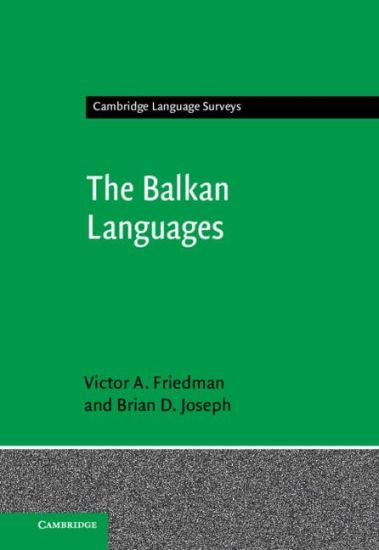
The Balkan Languages

The Balkan Languages

Victor A. Friedman; Brian D. Joseph

Cambridge University Press
2025
sidottu
Southeast Europe's Balkan peninsula is home to numerous languages that have come to converge structurally and lexically, due to complex social factors involving contact among speakers of these languages, constituting a 'sprachbund'. This volume provides the first comprehensive, book-length survey of the Balkan languages in English. It covers the full range of languages involved in the Balkan convergence zone, including Albanian, Aromanian, Bulgarian, Gagauz, Greek, Judezmo, Macedonian, Meglenoromanian, Romani, Romanian, Torlak, and West Rumelian Turkish. Balkan convergences - 'Balkanisms' - are presented, considering the grammatical domains of phonetics, phonology, morphology, morphosyntax, syntax, semantics, pragmatics, and lexicon. It gives attention to relevant notions of contact linguistics and to the history of the field, while also introducing key conceptual innovations. Providing fresh data and perspectives on the most studied intense contact situation, this work is essential reading for anyone interested in Balkan languages. This title is also available as open access on Cambridge Core.
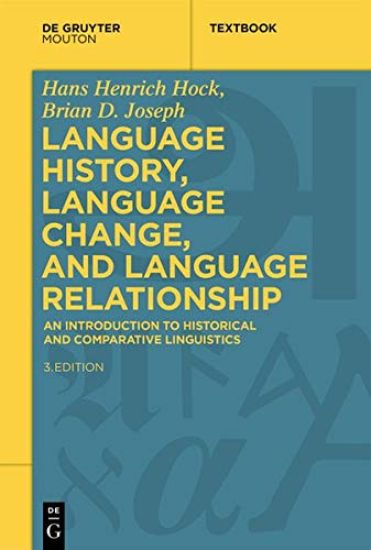
Language History, Language Change, and Language Relationship

Language History, Language Change, and Language Relationship

Hans Henrich Hock; Brian D. Joseph

De Gruyter Mouton
2019
isokokoinen pokkari
Why does language change? Why can we speak to and understand our parents but have trouble reading Shakespeare? Why is Chaucer's English of the fourteenth century so different from Modern English of the late twentieth century that the two are essentially different languages? Why are Americans and English 'one people divided by a common language'? And how can the language of Chaucer and Modern English - or Modern British and American English - still be called the same language? The present book provides answers to questions like these in a straightforward way, aimed at the non-specialist, with ample illustrations from both familiar and more exotic languages. Most chapters in this new edition have been reworked, with some difficult passages removed, other passages thoroughly rewritten, and several new sections added, e.g. on the regularity of sound change and its importance for general historical-comparative linguistics. Further, the chapter notes and bibliography have all been updated. The content is engaging, focusing on topics and issues that spark student interest. Its goals are broadly pedagogical and the level and presentation are appropriate for interested beginners with little or no background in linguistics. The language coverage for examples goes well beyond what is usual for books of this kind, with a considerable amount of data from various languages of India.
Morphology and Universals in Syntactic Change
This book, first published in 1990, is a study of both the specific syntactic changes in the more recent stages of Greek and of the nature of syntactic change in general. Guided by the constraints and principles of Universal Grammar, this hypothesis of this study allows for an understanding of how these changes in Greek syntax occurred and so provides insight into the mechanism of syntactic change. This title will be of interest to students of language and linguistics.
Morphology and Universals in Syntactic Change
This book, first published in 1990, is a study of both the specific syntactic changes in the more recent stages of Greek and of the nature of syntactic change in general. Guided by the constraints and principles of Universal Grammar, this hypothesis of this study allows for an understanding of how these changes in Greek syntax occurred and so provides insight into the mechanism of syntactic change. This title will be of interest to students of language and linguistics.
Language History, Language Change, and Language Relationship

Language History, Language Change, and Language Relationship

Hans Henrich Hock; Brian D. Joseph

De Gruyter Mouton
2009
isokokoinen pokkari
Why does language change? Why can we speak to and understand our parents but have trouble reading Shakespeare? Why is Chaucer's English of the fourteenth century so different from Modern English of the late twentieth century that the two are essentially different languages? Why are Americans and English 'one people divided by a common language'? And how can the language of Chaucer and Modern English - or Modern British and American English - still be called the same language? The present book provides answers to questions like these in a straightforward way, aimed at the non-specialist, with ample illustrations from both familiar and more exotic languages. Most chapters in this new edition have been reworked, with some difficult passages removed, other passages thoroughly rewritten, and several new sections added, e.g. on language and race and on Indian writing systems. Further, the chapter notes and bibliography have all been updated. The content is engaging, focusing on topics and issues that spark student interest. Its goals are broadly pedagogical and the level and presentation are appropriate for interested beginners with little or no background in linguistics. The language coverage for examples goes well beyond what is usual for books of this kind, with a considerable amount of data from various languages of India.
Language History, Language Change, and Language Relationship

Language History, Language Change, and Language Relationship

Hans Henrich Hock; Brian D. Joseph

De Gruyter Mouton
2009
sidottu
Why does language change? Why can we speak to and understand our parents but have trouble reading Shakespeare? Why is Chaucer's English of the fourteenth century so different from Modern English of the late twentieth century that the two are essentially different languages? Why are Americans and English 'one people divided by a common language'? And how can the language of Chaucer and Modern English - or Modern British and American English - still be called the same language? The present book provides answers to questions like these in a straightforward way, aimed at the non-specialist, with ample illustrations from both familiar and more exotic languages. Most chapters in this new edition have been reworked, with some difficult passages removed, other passages thoroughly rewritten, and several new sections added, e.g. on language and race and on Indian writing systems. Further, the chapter notes and bibliography have all been updated. The content is engaging, focusing on topics and issues that spark student interest. Its goals are broadly pedagogical and the level and presentation are appropriate for interested beginners with little or no background in linguistics. The language coverage for examples goes well beyond what is usual for books of this kind, with a considerable amount of data from various languages of India.
The Synchrony and Diachrony of the Balkan Infinitive

The Synchrony and Diachrony of the Balkan Infinitive

Brian D. Joseph

Cambridge University Press
2009
pokkari
This study offers a comprehensive and illuminating account of one of the characteristics shared to some degree by the languages of the Balkan peninsula - Greek, Albanian, Macedonian, Bulgarian, Serbo-Croatian and Romanian - namely the loss of the infinitive and its replacement by finite verb forms. Dr Joseph meticulously examines the documentary evidence for this loss and, in the light of his findings, many of the oversimplifications, misinterpretations and omissions in earlier accounts are rectified. Many of the issues raised in his discussion, for example how 'infinitive' or 'finiteness' should be defined, have important implications for synchronic syntactic theory and description. In addition, the study is of significance for diachronic linguistics, for it makes a valuable contribution to the debate on constraining possible syntactic changes and syntactic borrowing. This study will also offer insights to linguistics interested in areal typology, since it is one of the fullest accounts available.