

Kirjailija
Brian D. Mclaren
Kirjat ja teokset yhdessä paikassa: 76 kirjaa, julkaisuja vuosilta 2002-2027, suosituimpien joukossa Cory and the Seventh Story. Vertaile teosten hintoja ja tarkista saatavuus suomalaisista kirjakaupoista.
Mukana myös kirjoitusasut: Brian D McLaren
76 kirjaa
Kirjojen julkaisuhaarukka 2002-2027.
Cancer & Theology is an anthology of sixteen essays addressing the difficult questions of faith raised by illness and death. The essays, penned by a diverse collection of Christian thinkers, are often raw and always honest. Cancer & Theology provides unique insights about the presence of God and the importance of community in the midst of grief and uncertainty. List of contributors Paul Amlin, Kester Brewin, Adam Walker Cleaveland, Adam J. Copeland, Abigail Rian Evans, David Fitch, Nate Frambach, Greg Garrett, Tony Jones, Joshua Longbrake, Brian McLaren, Carol Howard Merritt, Brandon Lyman Mick, Andy Root, Mike Stavlund, and Greg Syler A portion of all proceeds from the sale of this book will be donated to the Leukemia & Lymphoma Society.
Why Did Jesus, Moses, the Buddha and Mohammed Cross the Road?
Brian D. McLaren
Hodder Stoughton
2013
pokkari
Christians and Muslims together make up about 57% of the world's population today, and by the end of the century they will constitute about 66% of the world's population. More than any other single factor, the wellbeing of our children and grandchildren may depend on how well Christians learn to relate to Muslims - and Hindus, the next largest faith, not to mention Buddhists, Jews, people of indigenous faiths, and the nonreligious. We know how to have a strong Christian identity that is intolerant of or belligerent towards other faiths, and we know how to have a weak Christian identity that is tolerant and benevolent. But is there a third alternative? How do we discover, live, teach, and practise a Christian identity that is both strong and benevolent towards other faiths?In this provocative and inspiring book, author Brian McLaren tackles some of the hardest questions around the issue of interfaith relations, and shares a hopeful vision of the reconciliation that Jesus offers to our multi-faith world.
Why Did Jesus, Moses, the Buddha, and Mohammed Cross the Road?: Christian Identity in a Multi-Faith World
Brian D. McLaren
Jericho Books
2013
nidottu
When four religious leaders walk across the road, it's not the beginning of a joke. It's the start of one of the most important conversations in today's world. Can you be a committed Christian without having to condemn or convert people of other faiths? Is it possible to affirm other religious traditions without watering down your own? In his most important book yet, widely acclaimed author and speaker Brian McLaren proposes a new faith alternative, one built on "benevolence and solidarity rather than rivalry and hostility." This way of being Christian is strong but doesn't strong-arm anyone, going beyond mere tolerance to vigorous hospitality toward, interest in, and collaboration with the other. Blending history, narrative, and brilliant insight, McLaren shows readers step-by-step how to reclaim this strong-benevolent faith, challenging us to stop creating barriers in the name of God and learn how affirming other religions can strengthen our commitment to our own. And in doing so, he invites Christians to become more Christ-like than ever before.
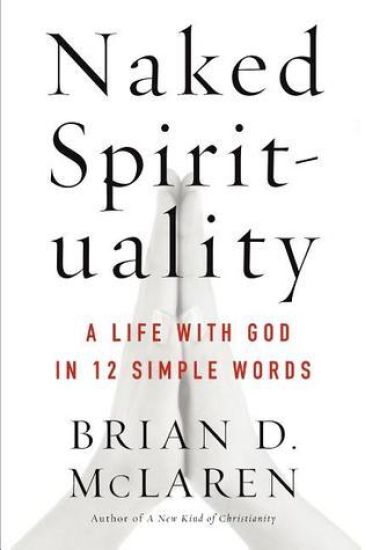
"A rich, brilliant and important book: wonderfully readable and personal, filled with insight and wisdom, it invites us into practices that can transform our lives." --Marcus J. Borg, author of Speaking Christian"Brian McLaren is a bridge builder. In these simple yet profound spiritual practices he perfectly marries his evangelical heart and contemplative soul, and we are all richer for the union." --Cynthia Bourgeault, author of Centering Prayer and The Wisdom JesusIn the same way he revitalized our faith in A New Kind of Christianity, church leader Brian McLaren reinvigorates our approach to spiritual fulfillment in Naked Spirituality--by tearing down the old dogmatic practices that hamper our spiritual growth, and leading us toward the meaningful spiritual practices that can help transform our lives.


Description: Why did Jesus have to die? Was it to appease a wrathful God's demand for punishment? Does that mean Jesus died to save us from God? How could someone ever truly love or trust a God like that? How can that ever be called "Good News"? It's questions like these that make so many people want to have nothing to do with Christianity. Healing the Gospel challenges the assumption that the Christian understanding of justice is rooted in a demand for violent punishment, and instead offers a radically different understanding of the gospel based on God's restorative justice. Connecting our own experiences of faith with the New Testament narrative, author Derek Flood shows us an understanding of the cross that not only reveals God's heart of grace, but also models our own way of Christ-like love. It's a vision of the gospel that exposes violence, rather than supporting it--a gospel rooted in love of enemies, rather than retribution. The result is a nonviolent understanding of the atonement that is not only thoroughly biblical, but will help people struggling with their faith to encounter grace. Endorsements: "In this readable and balanced book, Flood gently--yet firmly and provocatively--challenges and enriches our understanding of the cross. He shows how the New Testament writers (and their earliest interpreters) present saving death as God's act of restorative rather than retributive justice, as an act of nonviolent, enemy-loving, reconciling, and healing love. Such amazing love beckons us to follow in the way of Jesus and justice. It is a book to read, mark, and digest." --Michael J. Gorman, author of Apostle of the Crucified Lord "Quietly, deftly, brilliantly, Flood takes on the story of the Christian doctrine of atonement, turns that story on its end, and then lays out before us a beauty almost beyond theology. Read it for yourself and see." --Phyllis Tickle, author of The Great Emergence "There has been a spate of books on atonement this past decade. None of them treat the salvific healing of Jesus's death better than this one. It is well-researched yet easy to read, full of insight, and sure to be a go-to book on the subject." --Michael Hardin, author of The Jesus Driven Life "Healing the Gospel brings the latest insights in biblical scholarship to the ongoing and lively atonement debate. Flood's work is biblical, straightforward, and accessible for the lay reader. He surveys the restorative justice of the wondrous cross with fresh eyes, engaging many head-scratching texts with utmost clarity. A great contribution " --Brad Jersak, author of Stricken by God? "In this provocative book, Flood exposes the grave deficiencies of the penal substitution model of atonement, pinpointing its shallow treatment of the depth and the gravity of sin . . . Armed with astute interpretations of Scripture, he focuses on the love of God and reinterprets justice as restorative . . . Finally, after centuries of suffering under a legal perception of atonement, Flood has shown us that the good news is truly good news " --Sharon L. Baker, author of Razing Hell "On a cresting wave of reaction against violent atonement theory, Healing the Gospel charts a sea-change course back to Jesus's ministry as a model of gracious restoration, moving far beyond the traditional, abusive contours of penal substitution as explanation of Christ's death . . . Jesus dies to show us God's enemy-love, which changes everything. A splendid, stirring, and essential book " --Anthony Bartlett, author of Cross Purposes "Anyone concerned about the connection between theology and violence in American society will welcome Flood's Healing the Gospel. In a readable format, he explains why we should abandon violence-accommodating, penal substitutionary atonement, and replace it with atonement imagery that reflects the restorative justice Jesus lived." --J. Denny Weaver, author of The Nonviolent Atonement. About the Contributor(s): Derek Flood is a write
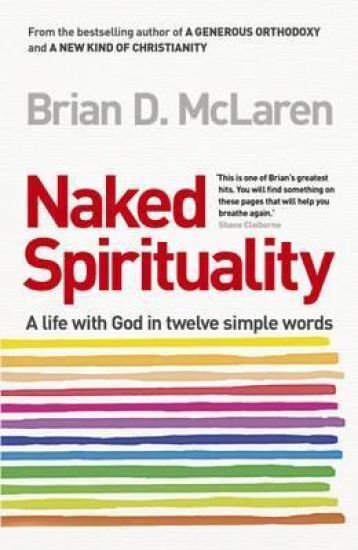
I've had my fill of superficial religiosity. But deep religion, authentic, naked spirituality - that's what I'm thirsty for, and so, I think, are you.In our busy lives we often sideline prayer and spiritual practice, or wrap the subject up in a tangle of guilt-driven showmanship and 'self-motivation'. Stripping away the jargon that we can often get caught up in, NAKED SPIRITUALITY presents the core concepts of prayer in a fresh and accessible way.Brian D. McLaren has spent years working with these concepts in his own life and shares candidly his own experiences and insights as well as challenge in this very applicable book. Using twelve words as a structure, he shows how we can connect with God in practical, doable and durable ways, and use that connection to serve others.
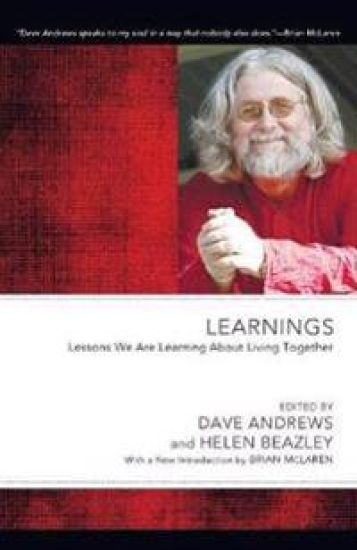
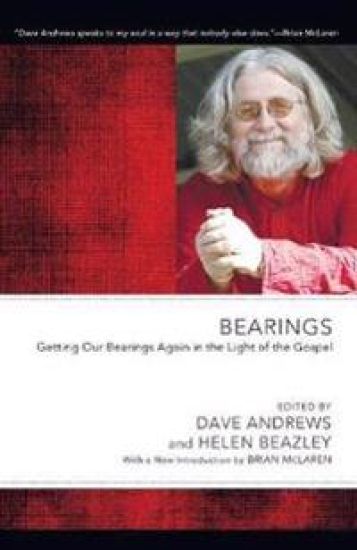
Synopsis: How does Jesus, and the ancient Scriptures he held sacred, help us get our bearings in this multifarious, complicated, conflicted, and increasingly endangered planet? First, seek theological insight that can guide our practice. In "Navigating the Meanings of Being a Christian," Mark Deleaney invites us on his journey of theological reflection twenty years after his certainties were shaken by a life-changing encounter in an Indian slum. In "Evangelism in a Pluralist Society," Ross Farley applies his experience of evangelism in sensitive contexts to a careful review of evangelism in the New Testament and finds that what we call evangelism bears little relationship to the Gospel and Acts. On the subject of HIV epidemics, Greg Manning and Dave Andrews have joined the struggle to reduce HIV infection rates and witnessed the stigmatization of vulnerable people based on misapplied Christian moral teaching. In "Supporting HIV Prevention as People of Faith," they consider the Sermon on the Mount as a valuable framework for dealing sensitively and effectively with people vulnerable to HIV infection. Second, critically reflect on possible distortions that come from our own perspectives. In his essay "Liberation Theologians Speak to Evangelicals," Charles Ringma shows how Liberation Theologians can shed light on the inadequacies of the evangelical movement in its perspective on God's love for the poor. Helen Beazley's essay "Antidote for a Poisoned Planet?" examines whether stewardship--the dominant framework informing evangelical perspectives on the environment--can alone radically reorient Christians in their relationship to creation so necessary for its renewal. Third, look for the challenges in the Bible that critique our current orientations and call us to be reconverted. In "An Evangelical Approach to Interfaith Engagement," Dave Andrews takes one of our most precious articles of exclusive faith, "Jesus is the Way," and makes it a framework for inclusive interfaith dialogue by exploring the "Way" that Jesus in the Gospels advocated engaging with people from other traditions and religions. In "Australia--Whose Land?" Peter Adams allows himself to be utterly transformed by the Bible's clear ethical teaching, which, he convincingly argues, must be applied in all its fullness to the injustice of Europeans towards indigenous Australians. Author Biography: Dave Andrews is an Australian Christian anarchist author, speaker, social activist, and community worker who, along with his wife, Ange, and their family have lived and worked in intentional communities with marginalized groups of people in Australia, Afghanistan, Pakistan and India for over forty years. Along with friends, Dave and Ange started Aashiana, Sahara, and Sharan--three Christian community organizations working with slum dwellers, sex workers, and people with HIV/AIDS in India. He is also a part of Waiters Union, an inner-city Christian community network working with Indigenous Australians, refugees and people with disabilities in Australia. Dave is also an Elder for Servants to Asia's Urban Poor, an educator for TEAR Australia, a Christian international aid and development agency, and a lecturer at the University of Queensland and Christian Heritage College.
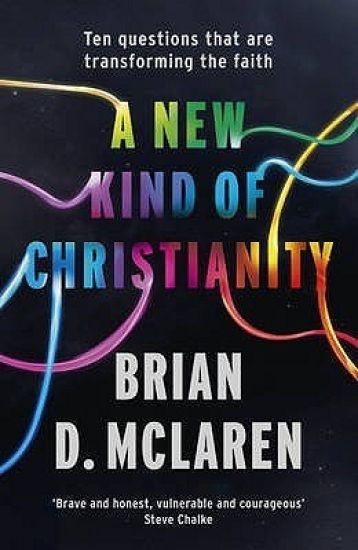
What is the overarching storyline of the Bible?Is God violent? What is the Gospel?Can we find a way to address sexuality without fighting about it? At the opening of the twenty-first century, Christianity in the West is more fractured and beleaguered than ever. Groundbreaking author Brian McLaren suggests that if we are to get beyond doctrinal statements towards the life to the full that Jesus promised us, we need new paradigms for thinking and believing - and he invites us on a radical quest for a new kind of faith. Using ten key questions, McLaren boldly proposes what a future Christianity could look like. Radical yet orthodox, outspoken yet generous. This is a wise, compassionate book for all who are looking for an authentic, loving faith.

A New Kind of Christianity: Ten Questions That Are Transforming the Faith
Brian D. McLaren
HarperOne
2011
nidottu
We are in the midst of a paradigm shift in the church. Not since the Reformation five centuries ago have so many Christians come together to ask whether the church is in sync with their deepest beliefs and commitments. These believers range from evangelicals to mainline Protestants to Catholics, and the person who best represents them is author and pastor Brian McLaren.In this much anticipated book, McLaren examines ten questions facing today's church--questions about how to articulate the faith itself, the nature of its authority, who God is, whether we have to understand Jesus through only an ancient Greco-Roman lens, what exactly the good news is that the gospel proclaims, how we understand the church and all its varieties, why we are so preoccupied with sex, how we should think of the future and people from other faiths, and the most intimidating question of all: what do we do next? Here you will find a provocative and enticing introduction to the Christian faith of tomorrow.
Children's Ministry That Fits
David M Csinos; Joyce E Bellous; Brian D McLaren
Wipf Stock Publishers
2011
pokkari
Children's Ministry That Fits
David M Csinos; Joyce E Bellous; Brian D McLaren
Wipf Stock Publishers
2011
sidottu
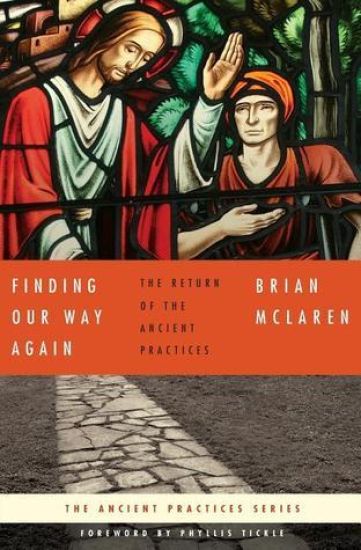
Why have certain spiritual disciplines been in use for centuries, and why are they so important?It is questionable if one can ever be exactly the same person waking up on two consecutive days. How are spiritual sojourners to cope with the constant change? Many are beginning to explore the ancient Christian spiritual practices, such as fixed-hour prayer, fasting and sincere observance of the Sabbath. What is causing this hunger for deeper spirituality?Brian McLaren guides us on this quest for an explanation of these spiritual practices, many of which go all the way back to Abraham and the establishment of Israel. In the midst of contemporary Christianity, we discover the beauty of these disciplines and the transformation through Christ that each can provide.Includes foreword by Phyllis Tickle and leads into seven additional titles, The Ancient Practices, a classic series featuring some of the leading writers on spirituality in the world today.


Hvad nu, hvis Jesus ikke kom til jorden for at stifte en ny religion – men for at opvække en politisk, social, religiøs, økonomisk og åndelig revolution, med det formål at skabe en ny tidsalder?Hvad nu, hvis Jesus med vilje skjulte sit budskab som en skat, man må søge for at finde? Hvis det er tilfældet, hvorfor skulle Jesus gøre sådan? Og hvordan skal vi så kunne finde hans budskab i dag?Det er nogle helt grundlæggende spørgsmål, Brian D. McLaren tager fat på i denne bog. Han har sat sig for at udforske, hvad Jesus fra Nazaret egentlig ville – og han undrer sig over, at Jesus’ gentagne budskab om, at ”Guds rige er kommet nær” i mange kirker er blevet erstattet af budskabet om, at ”du kan komme i himlen, når du dør.”Forfatterens svar på disse spørgsmål er ikke luftige spekulationer, men bygger på et grundigt studium af både de bibelske skrifter og den tid, som Jesus fremstod i. Hans anliggende er at forsøge at lytte sig ind til Jesus’ budskab, som hans samtidige må have hørt det – og udforske, hvilke konsekvenser dette budskab må have for os i dag.