Kirjailija
Brian Davies
Kirjat ja teokset yhdessä paikassa: 40 kirjaa, julkaisuja vuosilta 1993-2026, suosituimpien joukossa Thomas Aquinas's Philosophy of God. Vertaile teosten hintoja ja tarkista saatavuus suomalaisista kirjakaupoista.
40 kirjaa
Kirjojen julkaisuhaarukka 1993-2026.
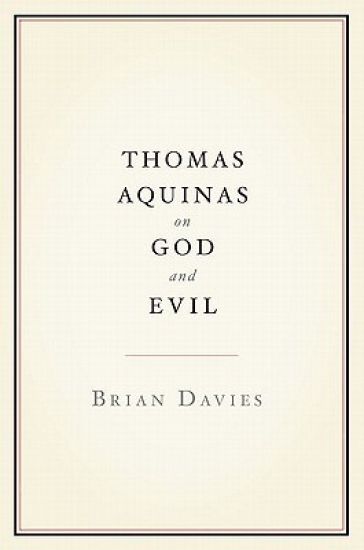
Brian Davies offers the first in-depth study of Saint Thomas Aquinas's thoughts on God and evil, revealing that Aquinas's thinking about God and evil can be traced through his metaphysical philosophy, his thoughts on God and creation, and his writings about Christian revelation and the doctrines of the Trinity and the Incarnation. Davies first gives an introduction to Aquinas's philosophical theology, as well as a nuanced analysis of the ways in which Aquinas's writings have been considered over time. For hundreds of years scholars have argued that Aquinas's views on God and evil were original and different from those of his contemporaries. Davies shows that Aquinas's views were by modern standards very original, but that in their historical context they were more traditional than many scholars since have realized. Davies also provides insight into what we can learn from Aquinas's philosophy. Thomas Aquinas on God and Evil is a clear and engaging guide for anyone who struggles with the relation of God and theology to the problem of evil.
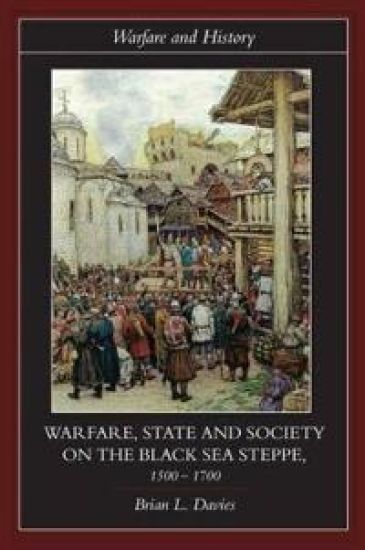
Empire and Military Revolution in Eastern Europe
Brian Davies
Continuum Publishing Corporation
2011
sidottu
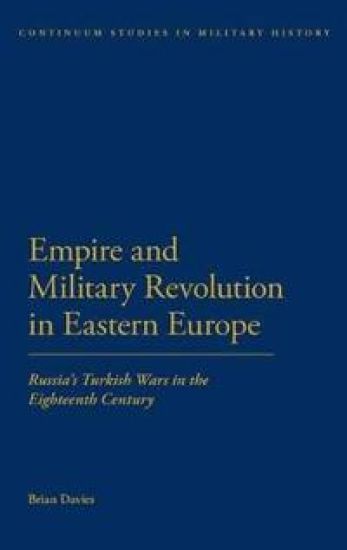
" In terms of resource mobilization and devastation the wars between Russia, the Crimean Khanate and the Ottoman Empire were some of the largest of the eighteenth century, and had enormous consequences for the balance of power in Eastern Europe. Davies examines how these conflicts characterized the course of Russian military development in response to Ottoman and Crimean Tatar threats and to determine under what circumstances and in what ways Russian military power experienced a "revolution" awarding it clear preponderance over the Ottoman-Crimean system. A central part of this Davies' argument is that identifying and explaining a Military Revolution must involve examining the role of factors not purely military. One must look not only at new military technology, new force and command structure, new tactical thinking, and new recruitment and military finance practices but also consider the impact of larger demographic, economic, and sociopolitical changes."
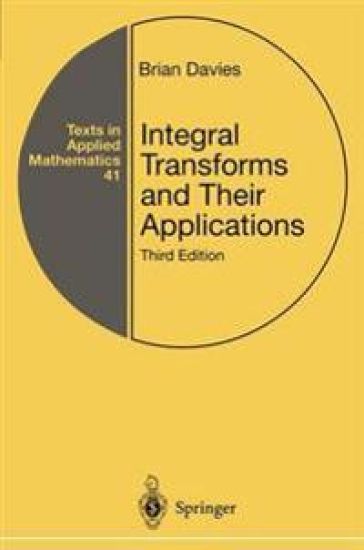
Mathematics is playing an ever more important role in the physical and biological sciences, provoking a blurring of boundaries between scientific disciplines and a resurgence of interest in the modern as well as the classical techniques of applied mathematics. This renewal of interest, both in re search and teaching, has led to the establishment of the series Texts in Applied Mathematics (TAM). The development of new courses is a natural consequence of a high level of excitement on the research frontier as newer techniques, such as numeri cal and symbolic computer systems, dynamical systems, and chaos, mix with and reinforce the traditional methods of applied mathematics. Thus, the purpose of this textbook series is to meet the current and future needs of these advances and to encourage the teaching of new courses. TAM will publish textbooks suitable for use in advanced undergraduate and beginning graduate courses, and will complement the Applied Mathe matical Sciences (AMS) series, which will focus on advanced textbooks and research-level monographs. Pasadena, California J.E. Marsden Providence, Rhode Island L. Sirovich Houston, Texas M. Golubitsky College Park, Maryland S.S. Antman Preface to the Third Edition It is more than 25 years since I finished the manuscript of the first edition of this volume, and it is indeed gratifying that the book has been in use over such a long period and that the publishers have requested a third edition.
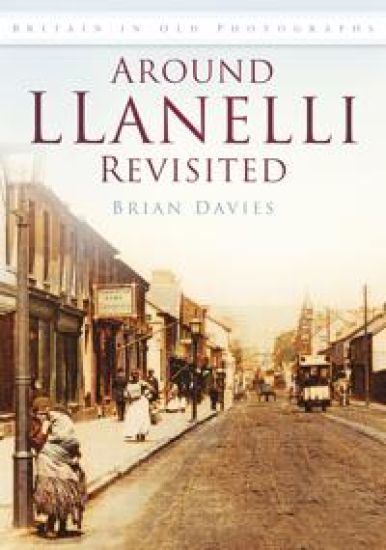
This captivating book is the second volume illustrating Llanelli, containing over 200 entirely new images that explore the social history of the town. This wonderful set of rare photographs recalls the people and places that have shaped Llanelli's past. Around Llanelli Revisited illustrated various aspects of the town's life, from work and industry to religion and art. Documenting its evolution throughout the nineteenth century and the continuing development right up to the present day, this collection contains pictures of Llanelli's most important landmarks, many of which will be instantly recognisable to those who are familiar with the region. The book was produced by the author of Around Lanelli, Brian Davies, who was born and raised in the town, and retains strong connections to the area. A nostalgic reminder of Llanelli's past, this collection will delight those who know Llanelli, as well as people interested in the history of this fascinating town.
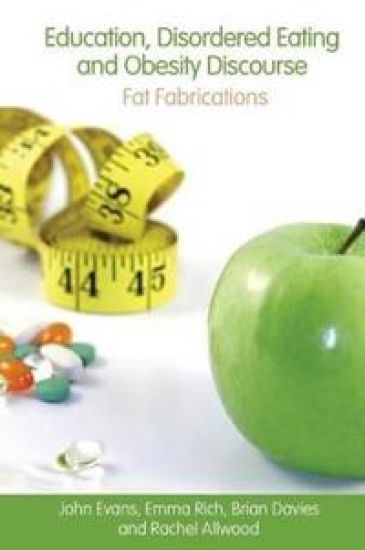
Education, Disordered Eating and Obesity Discourse
John Evans; Emma Rich; Brian Davies; Rachel Allwood
Routledge
2008
sidottu
Eating less, exercising more and losing weight seem the obvious solution for the oncoming 'obesity epidemic'. Rarely, however, is thought given to how these messages are interpreted and whether they are in fact inherently healthy. Education, Disordered Eating and Obesity Discourse investigates how 'body centred talk' about weight, fat, food and exercise is recycled in schools, enters educational processes, and impacts on the identities and health of young people. Drawing on the experiences of young women who have developed eating disorders and research on international school curricula and the media, the authors challenge the veracity, substance and merits of contemporary 'obesity discourse'. By concentrating on previously unexplored aspects of the debate around weight and health, it is revealed how well-meaning advice can propel some children toward behaviour that seriously damages their health. This book is not only about 'eating disorders' and the people affected, but the effects of obesity discourse on everyone’s health as it enters public policy, educational practice and the cultural fabric of our lives. It will interest students, teachers, doctors, health professionals and researchers concerned with obesity and weight issues.
Education, Disordered Eating and Obesity Discourse
John Evans; Emma Rich; Brian Davies; Rachel Allwood
Routledge
2008
nidottu
Eating less, exercising more and losing weight seem the obvious solution for the oncoming 'obesity epidemic'. Rarely, however, is thought given to how these messages are interpreted and whether they are in fact inherently healthy. Education, Disordered Eating and Obesity Discourse investigates how 'body centred talk' about weight, fat, food and exercise is recycled in schools, enters educational processes, and impacts on the identities and health of young people. Drawing on the experiences of young women who have developed eating disorders and research on international school curricula and the media, the authors challenge the veracity, substance and merits of contemporary 'obesity discourse'. By concentrating on previously unexplored aspects of the debate around weight and health, it is revealed how well-meaning advice can propel some children toward behaviour that seriously damages their health. This book is not only about 'eating disorders' and the people affected, but the effects of obesity discourse on everyone’s health as it enters public policy, educational practice and the cultural fabric of our lives. It will interest students, teachers, doctors, health professionals and researchers concerned with obesity and weight issues.
This crucial period in Russia's history has, up until now, been neglected by historians, but here Brian L. Davies' study provides an essential insight into the emergence of Russia as a great power.For nearly three centuries, Russia vied with the Crimean Khanate, the Polish-Lithuanian Commonwealth and the Ottoman Empire for mastery of the Ukraine and the fertile steppes above the Black Sea, a region of great strategic and economic importance – arguably the pivot of Eurasia at the time.The long campaign took a great toll upon Russia's population, economy and institutions, and repeatedly frustrated or redefined Russian military and diplomatic projects in the West. The struggle was every bit as important as Russia's wars in northern and central Europe for driving the Russian state-building process, forcing military reform and shaping Russia's visions of Empire.
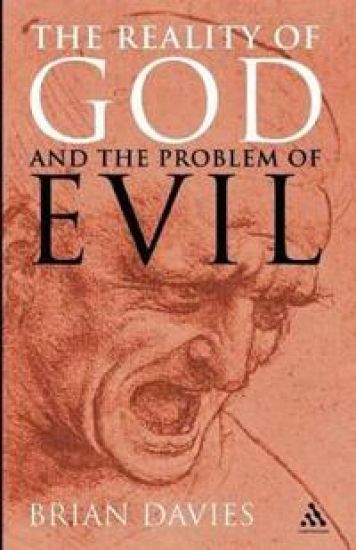
The Reality of God and the Problem of Evil
Brian Davies
Continuum International Publishing Group Ltd.
2006
nidottu
This is an important new book on how we can still believe in a God of love and confront the problem of evil in the world. Probably the most important book on the subject since John Hick's book "Evil and the God of Love". Evil is a strong word that people now employ fairly rarely. Many people believe these days that God is omnipotent, omniscient and good and that what we deem to be bad or evil in the world is no reason for abandoning belief in God. It is an intellectual or theoretical problem not one where the focus is on how one might bring about some desirable goal (a practical matter). Professor Davies says we should tackle this problem by attending to the basics, by asking whether there is a God and then What is God? He starts by summarizing the arguments so far (from Seneca to the present day). He then moves to what he describes as the basics (see above) and demonstrates that much of what has been written about on the topic of evil is in fact irrelevant or just plain wrong. Finally, though many theologians argue that evil is a mystery, Davies argues that this too is wrong and a cop out. We should rather be concerned with the problem (or mystery) of good. The real issue is 'Why is there not more good than there is'. From the discussion Aquinas emerges as a hero (as filtered through analytical philosophy) but many moderns thinkers do not emerge so well. Davies effectively picks holes in the arguments of Peter Geach, Paul Helm, Richard Swinburne and even Mary Baker Eddy. This is a lively book on a tricky subject, written at all times with humour and much practical example.
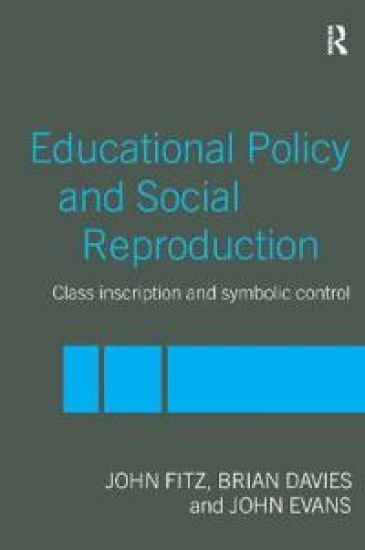
This book takes a theoretically informed look at British education policy over the last sixty years when secondary schooling for all children became an established fact for the first time. Comprehensive schools largely replaced a system based on academic selection. Now, under choice and competition policies, all schools are subject to the rigours of local education markets. What impact did each of these successive policy frameworks have on structures of opportunities for families and their children? How and to what extent was the experience of secondary school students shaped and what influenced the qualifications they obtained and their life chances after schooling?The authors locate their work within two broad strands in the sociology of education. Basil Bernstein’s work on the realisation of power and control in and through pedagogic discourse and social reproduction provides a theoretical framework for exploring the character of and continuities and change in education and training policies. The book is an important contribution to debates about the extent to which education is a force for change in class divided societies. The authors also set out to re-establish social class at the centre of educational analysis at a time when emphasis has been on identity and identity formation, arguing for their interdependence. This book will be an important resource for students, policy analysts and policymakers wishing to think through and understand the longer term impact of programmes that have shaped secondary schooling in Britain and elsewhere.
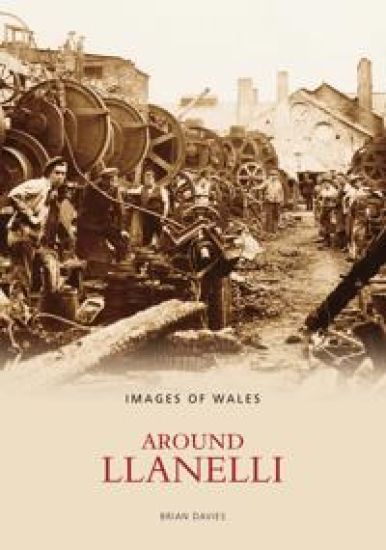
Using over 200 images this book illustrates what life was like for the many varied workers who populated the area during the heyday of Welsh industrialism as well as the history of shops and social events.
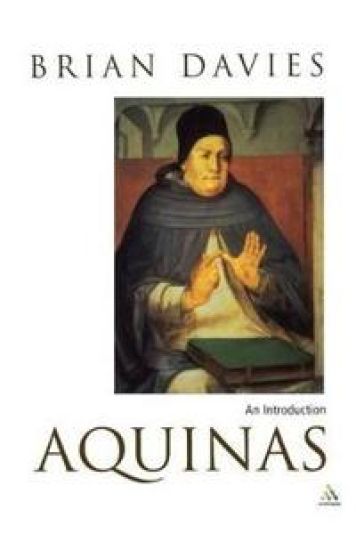
St. Thomas Aquinas (c. 1225-1274) is widely viewed as one of the greatest Christian thinkers of all time. Aquinas was the ultimate combination of theologian and philosopher; and his influence on Christian life and thought reaches from the Council of Trent to the Second Vatican Council and through to today. Brian Davies shows that Aquinas's approach to the common questions of faith and existence is just as pressing and significant in our time. Here, the latest scholarship is incorporated with a clear and indispensable guide to Aquinas's thought.
What does belief in God amount to? Can we reasonably believe in God's existence without argument or evidence? Can God's existence be proved? Can we believe in miracles? Is there life after death? In this book, Brian Davies provides a critical examination of some fundamental questions posed by religious belief.
This book presents elements of the theory of chaos in dynamical systems in a framework of theoretical understanding coupled with numerical and graphical experimentation. It describes the theory of fractals, focusing on the importance of scaling and ordinary differential equations.
Mathematics is playing an ever more important role in the physical and biological sciences, provoking a blurring of boundaries between scientific disciplines and a resurgence of interest in the modern as well as the classical techniques of applied mathematics. This renewal of interest, both in re search and teaching, has led to the establishment of the series Texts in Applied Mathematics (TAM). The development of new courses is a natural consequence of a high level of excitement on the research frontier as newer techniques, such as numeri cal and symbolic computer systems, dynamical systems, and chaos, mix with and reinforce the traditional methods of applied mathematics. Thus, the purpose of this textbook series is to meet the current and future needs of these advances and to encourage the teaching of new courses. TAM will publish textbooks suitable for use in advanced undergraduate and beginning graduate courses, and will complement the Applied Mathe matical Sciences (AMS) series, which will focus on advanced textbooks and research-level monographs. Pasadena, California J.E. Marsden Providence, Rhode Island L. Sirovich Houston, Texas M. Golubitsky College Park, Maryland S.S. Antman Preface to the Third Edition It is more than 25 years since I finished the manuscript of the first edition of this volume, and it is indeed gratifying that the book has been in use over such a long period and that the publishers have requested a third edition.
Discourse and Reproduction
Basil B. (EDT) Bernstein; Brian Davies; Sara (EDT) Delamont
Hampton Pr
1995
sidottu
Discourse and Reproduction
Basil B. (EDT) Bernstein; Brian Davies; Sara Delamont
Hampton Pr
1994
pokkari
Thomas Aquinas was one of the greatest Western philosphers and one of the greatest theologians of the Christian church. In this book we at last have a modern, comprehensive presentation of the total thought of Aquinas. Books on Aquinas invariably deal with either his philosophy or his theology. But Aquinas himself made no arbitrary division between his philosophical and his theological thought, and this book allows readers to see him as a whole. It introduces the full range of Aquinas' thinking; and it relates his thinking to writers both earlier and later than Aquinas himself.