Kirjojen hintavertailu. Mukana 12 657 676 kirjaa ja 12 kauppaa.

Kirjailija

Brian Dumaine

Kirjat ja teokset yhdessä paikassa: 5 kirjaa, julkaisuja vuosilta 2018-2021, suosituimpien joukossa Go Long. Vertaile teosten hintoja ja tarkista saatavuus suomalaisista kirjakaupoista.

5 kirjaa

Kirjojen julkaisuhaarukka 2018-2021.

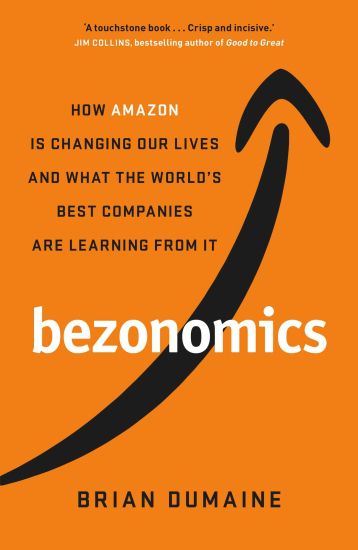
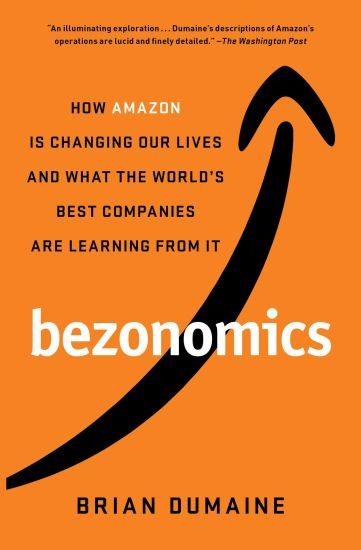
Bezonomics: How Amazon Is Changing Our Lives and What the World's Best Companies Are Learning from It
An "illuminating, lucid, and finely detailed" (The Washington Post) look at Amazon's world-dominating business model, the current competitors either imitating or trying to outfox Amazon, and "how Jeff Bezos turned Amazon into the world's lockdown necessity" (The Times, UK)--from an award-winning Fortune magazine writer.Like Henry Ford, Sam Walton, or Steve Jobs in the early years of Ford, Walmart, and Apple, Jeff Bezos is the business story of the decade. Bezos, the richest man on the planet, has built one of the most efficient wealth-creation machines in history with more than 2% of US household income being spent on nearly 500 million products shipped from warehouses in seventeen countries. Amazon's business model has not only turned the retail industry and cloud computing inside out, but now its tentacles are squeezing media and advertising, and disrupting the state of technology, the economy, job creation, and society at large. Amazon's impact is so pervasive that business leaders in nearly every sector around the world need to understand how this force of nature operates. Based on unprecedented behind-the-scenes reporting from 150 sources inside and outside of Amazon, Bezonomics unveils the underlying principles Jeff Bezos uses to achieve his dominance--customer obsession, extreme innovation, and long-term management, all supported by artificial intelligence--and shows how these are being borrowed and replicated by companies across the United States, in China, and elsewhere. Including tips for Amazon-proofing your business, Bezonomics answers the fundamental question: How are Amazon and its imitators affecting the way we live, and what can we learn from them? A goldmine for some, and a threat for others, "Bezonomics" has proven to be a life-shaping force in our lives both now and in the foreseeable future.
Bezonomics

Bezonomics

Brian Dumaine

Simon Schuster UK
2020
nidottu
Amazon is the business story of the decade. Jeff Bezos, the richest man on the planet, has built one of the most efficient wealth-creation machines in history. Like a giant squid, Amazon's tentacles are squeezing industry after industry and, in the process, upsetting the state of technology, the economy, job creation and society at large. So pervasive is Amazon's impact that business leaders in almost every sector need to understand how this force of nature operates and how they can respond to it. Saying you can ignore Jeff Bezos is equivalent to saying you could ignore Henry Ford or Steve Jobs in the early years of Ford and Apple. These titans monumentally changed how we do business, redefining the rules on a global scale. Amazon founder Jeff Bezos is the new disruptor on the block. He has created a 21st century algorithm for business and societal disruption. He has turned the retail industry inside out, is swiftly dominating cloud computing, media and advertising, and now has his sights trained on every other domain where money changes hands and business is transacted. But the principles by which Bezos has achieved his dominance - customer obsession, extreme innovation and long-term management, all supported by artificial intelligence turning a virtuous-cycle 'flywheel' - are now being borrowed and replicated. 'Bezonomics' is for some a goldmine, for others a threat, for still others a life-shaping force, whether they're in business or not. Brian Dumaine's Bezonomics answers the fundamental question: how are Amazon and its imitators affecting the way we live, and what can we learn from them?
Go Long

Go Long

Dennis Carey; Brian Dumaine; Michael Useem; Rodney Zemmel

Wharton School Press
2018
pokkari
800-CEO-READ BESTSELLER Featured in Fortune, Harvard Business Review, and Entrepreneur, Go Long is "mandatory reading for the CEOs and boards of all public companies," according to David M. Rubenstein, co-founder and co-executive chairman of The Carlyle Group. The lifespans of companies are growing shorter each day. Why do some companies thrive and grow, while others fail? Inspired by the CEO Academy, the annual off-the-record gathering of chief executives organized by the authors, reveals how some of the world's most prominent business leaders resisted short-term pressures to successfully manage their organizations for the long term, and in turn, aim to create more jobs, more satisfied customers, and more shareholder wealth. In Go Long, authors Dennis Carey, Brian Dumaine, Michael Useem, and Rodney Zemmel take you behind the scenes to witness the business decisions that are enabling leading organizations to outsmart and outlast the competition. Why did CEO Larry Merlo allow CVS to take a $2 billion hit-on purpose? How did former CEO Alan Mulally maneuver Ford's $48 billion turnaround? How did director Maggie Wilderotter and her fellow board members engage top management to embark on an unusual exercise to help Hewlett Packard Enterprise build a long-term strategy? Why did former CEO Paul Polman turn back to Unilever's original mission of leading with a purpose to fuel profits? How did former Verizon CEO Ivan Seidenberg convince his investors and board to allow him to make a $150 billion bet? How did former CEO George Buckley find a way to address investor calls for 3M to spend less on research and development while still finding a way to innovate? These leaders argue that a short-term mindset might satisfy investors for this quarter or next, but there's a heavy price to be paid. Instead, they argue, long-term thinking is your best short-term strategy. "Considering the enormous harm that short-term investing has done not only to companies, but to countries as well, this book should be required reading in boardrooms everywhere. A concise, powerful call for responsible, long-term business practices."-Kirkus Reviews "A must-read. If you're looking to build or lead a company that grows consistently not just from quarter to quarter, but year to year … this book is for you."-Indra Nooyi, Board of Directors, Amazon; former Chairman and CEO, PepsiCo, Inc.
Go Long

Go Long

Dennis Carey; Brian Dumaine; Michael Useem; Rodney Zemmel

Wharton Digital Press
2018
sidottu
800-CEO-READ BESTSELLER Featured in Fortune, Harvard Business Review, and Entrepreneur, Go Long is "mandatory reading for the CEOs and boards of all public companies," according to David M. Rubenstein, co-founder and co-executive chairman of The Carlyle Group. The lifespans of companies are growing shorter each day. Why do some companies thrive and grow, while others fail? Inspired by the CEO Academy, the annual off-the-record gathering of chief executives organized by the authors, reveals how some of the world's most prominent business leaders resisted short-term pressures to successfully manage their organizations for the long term, and in turn, aim to create more jobs, more satisfied customers, and more shareholder wealth. In Go Long, authors Dennis Carey, Brian Dumaine, Michael Useem, and Rodney Zemmel take you behind the scenes to witness the business decisions that are enabling leading organizations to outsmart and outlast the competition. Why did CEO Larry Merlo allow CVS to take a $2 billion hit-on purpose? How did former CEO Alan Mulally maneuver Ford's $48 billion turnaround? How did director Maggie Wilderotter and her fellow board members engage top management to embark on an unusual exercise to help Hewlett Packard Enterprise build a long-term strategy? Why did former CEO Paul Polman turn back to Unilever's original mission of leading with a purpose to fuel profits? How did former Verizon CEO Ivan Seidenberg convince his investors and board to allow him to make a $150 billion bet? How did former CEO George Buckley find a way to address investor calls for 3M to spend less on research and development while still finding a way to innovate? These leaders argue that a short-term mindset might satisfy investors for this quarter or next, but there's a heavy price to be paid. Instead, they argue, long-term thinking is your best short-term strategy. "Considering the enormous harm that short-term investing has done not only to companies, but to countries as well, this book should be required reading in boardrooms everywhere. A concise, powerful call for responsible, long-term business practices."-Kirkus Reviews "A must-read. If you're looking to build or lead a company that grows consistently not just from quarter to quarter, but year to year … this book is for you."-Indra Nooyi, Board of Directors, Amazon; former Chairman and CEO, PepsiCo, Inc.