Kirjojen hintavertailu. Mukana 12 152 606 kirjaa ja 12 kauppaa.

Kirjailija

Brian G. Henning

Kirjat ja teokset yhdessä paikassa: 4 kirjaa, julkaisuja vuosilta 2013-2024, suosituimpien joukossa Value, Beauty, and Nature. Vertaile teosten hintoja ja tarkista saatavuus suomalaisista kirjakaupoista.

4 kirjaa

Kirjojen julkaisuhaarukka 2013-2024.

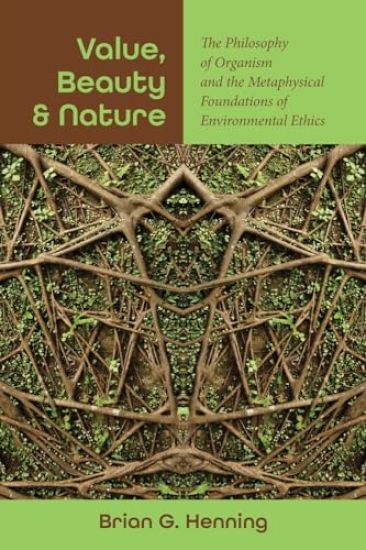
Value, Beauty, and Nature

Value, Beauty, and Nature

Brian G. Henning

STATE UNIVERSITY OF NEW YORK PRESS
2024
pokkari
Argues that, to make progress within environmental ethics, philosophers must explicitly engage in environmental metaphysics.Much of early environmental ethics was born out of the belief that the ecological crisis can only truly be solved by overcoming a pernicious worldview that limits all intrinsic value to human beings. Returning to this originating impulse, Value, Beauty, and Nature contends that, to make progress within environmental ethics, philosophers must explicitly engage in environmental metaphysics. Grounded in an organicist process worldview, Brian G. Henning shows that it is possible to make progress in key debates within environmental philosophy, including those concerning the nature of intrinsic value; anthropocentrism; hierarchy; the moral significance of beauty; the nature of individuality; teleology and the naturalistic fallacy; and worldview reconstruction. A Whiteheadian fallibilistic, naturalistic, event ontology allows for the recovery of systematic, speculative metaphysical thought without a revanchist movement toward a necessitarian philosophia perennis. Thus, in contrast to the claims of environmental pragmatists, Value, Beauty, and Nature demonstrates that environmental ethics would greatly benefit from an adequate metaphysical foundation and, of the candidate metaphysical systems, Alfred North Whitehead's philosophy of organism is the most adequate.
Value, Beauty, and Nature

Value, Beauty, and Nature

Brian G. Henning

STATE UNIVERSITY OF NEW YORK PRESS
2023
sidottu
Argues that, to make progress within environmental ethics, philosophers must explicitly engage in environmental metaphysics.Much of early environmental ethics was born out of the belief that the ecological crisis can only truly be solved by overcoming a pernicious worldview that limits all intrinsic value to human beings. Returning to this originating impulse, Value, Beauty, and Nature contends that, to make progress within environmental ethics, philosophers must explicitly engage in environmental metaphysics. Grounded in an organicist process worldview, Brian G. Henning shows that it is possible to make progress in key debates within environmental philosophy, including those concerning the nature of intrinsic value; anthropocentrism; hierarchy; the moral significance of beauty; the nature of individuality; teleology and the naturalistic fallacy; and worldview reconstruction. A Whiteheadian fallibilistic, naturalistic, event ontology allows for the recovery of systematic, speculative metaphysical thought without a revanchist movement toward a necessitarian philosophia perennis. Thus, in contrast to the claims of environmental pragmatists, Value, Beauty, and Nature demonstrates that environmental ethics would greatly benefit from an adequate metaphysical foundation and, of the candidate metaphysical systems, Alfred North Whitehead's philosophy of organism is the most adequate.
Beyond Mechanism

Beyond Mechanism

Brian G. Henning; Adam Scarfe

Lexington Books
2015
nidottu
It has been said that new discoveries and developments in the human, social, and natural sciences hang “in the air” (Bowler, 1983; 2008) prior to their consummation. While neo-Darwinist biology has been powerfully served by its mechanistic metaphysic and a reductionist methodology in which living organisms are considered machines, many of the chapters in this volume place this paradigm into question. Pairing scientists and philosophers together, this volume explores what might be termed “the New Frontiers” of biology, namely contemporary areas of research that appear to call an updating, a supplementation, or a relaxation of some of the main tenets of the Modern Synthesis. Such areas of investigation include: Emergence Theory, Systems Biology, Biosemiotics, Homeostasis, Symbiogenesis, Niche Construction, the Theory of Organic Selection (also known as “the Baldwin Effect”), Self-Organization and Teleodynamics, as well as Epigenetics. Most of the chapters in this book offer critical reflections on the neo-Darwinist outlook and work to promote a novel synthesis that is open to a greater degree of inclusivity as well as to a more holistic orientation in the biological sciences.
Beyond Mechanism

Beyond Mechanism

Brian G. Henning; Adam Scarfe

Lexington Books
2013
sidottu
It has been said that new discoveries and developments in the human, social, and natural sciences hang “in the air” (Bowler, 1983; 2008) prior to their consummation. While neo-Darwinist biology has been powerfully served by its mechanistic metaphysic and a reductionist methodology in which living organisms are considered machines, many of the chapters in this volume place this paradigm into question. Pairing scientists and philosophers together, this volume explores what might be termed “the New Frontiers” of biology, namely contemporary areas of research that appear to call an updating, a supplementation, or a relaxation of some of the main tenets of the Modern Synthesis. Such areas of investigation include: Emergence Theory, Systems Biology, Biosemiotics, Homeostasis, Symbiogenesis, Niche Construction, the Theory of Organic Selection (also known as “the Baldwin Effect”), Self-Organization and Teleodynamics, as well as Epigenetics. Most of the chapters in this book offer critical reflections on the neo-Darwinist outlook and work to promote a novel synthesis that is open to a greater degree of inclusivity as well as to a more holistic orientation in the biological sciences.