Kirjojen hintavertailu. Mukana 12 390 323 kirjaa ja 12 kauppaa.

Kirjailija

Brian Harvey

Kirjat ja teokset yhdessä paikassa: 26 kirjaa, julkaisuja vuosilta 1984-2023, suosituimpien joukossa Blue Genes. Vertaile teosten hintoja ja tarkista saatavuus suomalaisista kirjakaupoista.

26 kirjaa

Kirjojen julkaisuhaarukka 1984-2023.

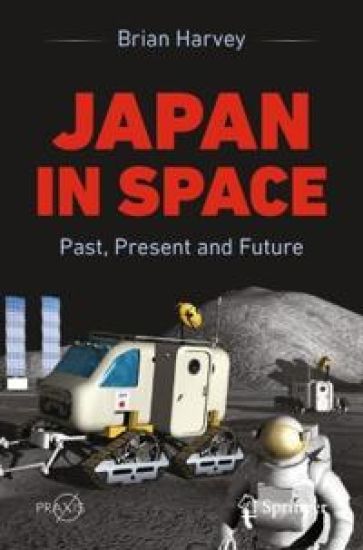
Japan In Space

Japan In Space

Brian Harvey

Springer International Publishing AG
2023
nidottu
Guided by genius engineer Hideo Itokawa, Japan’s space program began with small scientific satellites more than 50 years ago. Since then, its space probes have travelled to the Moon, Venus, the asteroids and even a comet. The country launched weather satellites to warn of typhoons, communications satellites to connect the Japanese archipelago and remote sensing technology to observe the Earth and warn of climate change. Engineering technology satellites became the basis of Japan’s electronic industry as Japanese astronauts flew into space, working on their Kibo module on the International Space Station.Now, Japan is one of Asia’s leading space powers, alongside China and India, vying for influence in the region. Its solid and liquid-fueled rockets are estimated to be among the most advanced and reliable in the world, its technology among the best. This book examines the history of Japan’s space program, the country’s current state of development and its future. It describes the extensive infrastructure that has gone into the forging of Japan’s picturesque oceanside launch sites, training centers, testing facilities and tracking stations. This book also outlines the politics of space in Japan, financial difficulties, its space industry, the symbiotic relationship with the United States and the recent sharp change-of-course to invest in military satellites.From the role of influential personalities, such as Hideo Shima and Shinichi Nakasuka, to political leaders, such as Yasuhiro Nakasone and Takeo Kawamura, you will read about how Japan has paved its own star-lit path to space. The future may expect to send Japanese probes to Mercury and the moons of Mars, all while the first Japanese astronauts set foot on our own Moon and drive innovative rovers across its surface.
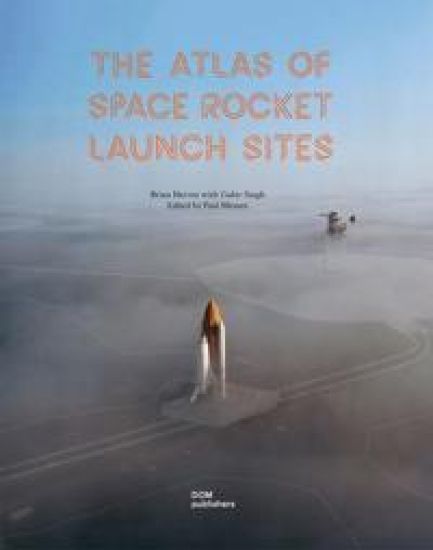
The Atlas of Space Rocket Launch Sites

The Atlas of Space Rocket Launch Sites

Brian Harvey

DOM PUBLISHERS
2023
sidottu
The machines that orbit our planet live in a void environment – however, space travel itself does not exist in a vacuum. Travelling to space is an immense effort of humans and machines, taking not just ‘a small step for a man’ but leaving a huge carbon footprint in the process. We are in the midst of a paradigm shift in which private companies and leadership figures in the form of billionaires are re-popularising space travel to an extent not seen since the space race between the USSR and USA. Space exists isolated from the place that births its mechanical and a few select human inhabitants. Thus, we tend to forget that every single thing that exits our atmosphere takes with it more than just its own weight of materials when it departs our fragile blue marble. This title is the first of its kind: An atlas of all major sites where space rockets have been launched since the World’s first Sputnik in 1958. On 272 pages, the author Brian Harvey and his co-author Gurbir Singh showcase the steps of space travel as they have never been presented before. Detailed maps allow deep insights to places which are restricted to the public. This book offers a unique look at the physical footprints of Earth’s launch sites. With most places hidden away in jungles, deserts, or amid the Central Asian steppes, these places exist for the most part out of the eye of the general public. With satellites facilitating our modern society and a modern space age ever-present in today’s news cycle, it is now more important than ever to think about the imprint these undertakings leave on Earth. To begin to answer the new socio-economic questions raised by our rapid expansion into the void, we need to look no further than the cracks in the concrete of our planetary launch sites. The rusty train tracks leading to the pads break the pristine and sterile look of space and reopen our eyes to the realities of space exploration.
Ensam i Tokyo

Ensam i Tokyo

Brian Harvey

Vilja förlag
2022
kartonkisidos
Frank Ryan har tvingats lämna sitt liv i Nanaimo där han jobbat som pianotekniker och jazzpianist. Han har tagit sig till Tokyo, där han hankar sig fram som pianolärare för uttråkade hemmafruar. Men en av eleverna sticker ut, och visar sig ha kopplingar till den japanska maffian. Via maffian får Frank plötsligt ett nytt jobb som jazzpianist på en bar. Men kvinnan som han blir förälskad i på tåget kan väl inte ha något med maffian att göra?I den första boken om Frank Ryan, Beethovens tia, kastades han mot sin vilja in i rollen som detektiv. I den här boken fortsätter mystiska händelser att ske i Frank Ryans närhet fast nu i en annan miljö. De två böckerna vävs också samman på ett oväntat vis, även om de går bra att läsa fristående.Den kanadensiska författaren Brian Harvey är utbildad marinbiolog. Förutom deckarna om Frank Ryan har han skrivit böcker om biologisk mångfald i haven och om segling. Han bor i Nanaimo, British Columbia. Harvey har också studerat musik och spelar piano.Om Beethovens tia stod det så här i BTJ:s häfte nr 6/22:”Berättelsen utspelar sig i nutid och är mycket spännande och det hinns med både försök till stöld, oväntad död och svek. […] Språket flyter lätt genom romanen. Meningarna är lagom korta […] och översättningen är bra med enkel språkdräkt.”
Beethovens tia

Beethovens tia

Brian Harvey

Vilja förlag
2022
kartonkisidos
Frank Ryan lever ett lugnt liv som pianotekniker och jazzpianist. Men plötsligt förändras allt. En äldre dam ger Frank ett häfte med noter. Dagen därpå är hon död, och mystiska personer söker upp Frank. Det måste vara något speciellt med de där noterna … Frank dras in i ett äventyr som han aldrig hade kunnat drömma om.Pianotekniker, jazzpianist och detektiv!Frank Ryan kastas mot sin vilja in i rollen som detektiv. Uppdraget är helt enkelt för viktigt för att han inte ska engagera sig. På vägen upptäcker han nya sidor av sig själv, men också av personer i sin närhet.Detta är den första boken i serien Ett fall för Frank Ryan. Det är en spännande men också humoristisk bok med flera oväntade vändningar.Den kanadensiska författaren Brian Harvey är utbildad marinbiolog. Förutom deckarna om Frank Ryan har han skrivit böcker om biologisk mångfald i haven och om segling. Han bor i Nanaimo, British Columbia, liksom sin fiktiva hjälte Frank Ryan. Harvey har också studerat musik och spelar piano.
European-Russian Space Cooperation

European-Russian Space Cooperation

Brian Harvey

Springer Nature Switzerland AG
2021
nidottu
The story of European-Russian collaboration in space is little known and its importance all too often understated. Because France was the principal interlocutor between these nations, such cooperation did not receive the attention it deserved in English-language literature. This book rectifies that history, showing how Russia and Europe forged a successful partnership that has continued to the present day.Space writer Brian Harvey provides an in-depth picture of how this European-Russian relationship evolved and what factors—scientific, political and industrial—propelled it over the decades. The history begins in the cold war period with the first collaborative ventures between the Soviet Union and European countries, primarily France, followed later by Germany and other European countries. Next, the chapters turn to the missions when European astronauts flew to Russian space stations, the Soyuz rocket made a new home in European territory in the South American jungle and science missions were flown to study deep space. Their climax is the joint mission to explore Mars, called ExoMars, which has already sent a mission to Mars.Through this close examination of these European-Russian efforts, readers will appreciate an altogether new perspective on the history of space exploration, no longer defined by competition, but rather by collaboration and cooperation.
why do WE cheat?

why do WE cheat?

Myesha Harvey; Brian Harvey

Dorrance Publishing Co.
2020
nidottu
why do WE cheat? is a helpful yet entertaining look into the lives of adulterers. Myesha and Brian Harvey chose this topic to expose the truth behind a topic commonly swept under the rug. Their experiences in their relationship lead them to a breaking point and prompted them to write this book. They hope readers will take their experiences and re-evaluate their own relationships. About the AuthorsMyesha Harvey is 33-years-old and mom of three. She and her husband and co-author, Brian, have been married for five years. She loves helping people in any way she can and loves spending time with her family. Brian Harvey is also 33-years-old and a father to three. He is a proud family-man and has a love for cars.
China in Space

China in Space

Brian Harvey

Springer Nature Switzerland AG
2019
nidottu
In 2019, China astonished the world by landing a spacecraft and rover on the far side of the Moon, something never achieved by any country before. China had already become the world’s leading spacefaring nation by rockets launched, sending more into orbit than any other. China is now a great space superpower alongside the United States and Russia, sending men and women into orbit, building a space laboratory (Tiangong) and sending probes to the Moon and asteroids. Roadmap 2050 promises that China will set up bases on the Moon and Mars and lead the world in science and technology by mid-century.China’s space programme is one of the least well-known, but this book will bring the reader up to date with its mysteries, achievements and exciting plans. China has built a fleet of new, powerful Long March rockets, four launch bases, tracking stations at home and abroad, with gleaming new design and production facilities. China is poised to build a large, permanent space station, bring back lunar rocks, assemble constellations of communications satellites and send spaceships to Mars, the moons of Jupiter and beyond. A self-sustaining lunar base, Yuegong, has already been simulated. In space, China is the country to watch.
Discovering the Cosmos with Small Spacecraft

Discovering the Cosmos with Small Spacecraft

Brian Harvey

Springer International Publishing AG
2017
nidottu
Explorer was the original American space program and Explorer 1 its first satellite, launched in 1958. Sixty years later, it is the longest continuously running space program in the world, demonstrating to the world how we can explore the cosmos with small spacecraft. Almost a hundred Explorers have already been launched. Explorers have made some of the fundamental discoveries of the Space Age. Explorer 1 discovered Earth’s radiation belts. Later Explorers surveyed the Sun, the X-ray and ultraviolet universes, black holes, magnetars and gamma ray bursts. An Explorer found the remnant of the Big Bang. One Explorer chased and was the first to intercept a comet.The program went through a period of few launches during the crisis of funding for space science in the 1980s. However, with the era of ‘faster, cheaper, better,’ the program was reinvented, and new exiting missions began to take shape, like Swift and the asteroid hunter WISE. Discovering the Cosmos with Small Spacecraft gives an account of each mission and its discoveries. It breaks down the program into its main periods of activity and examines the politics and debate on the role of small spacecraft in space science. It introduces the launchers (Juno, Thor, etc.), the launch centers, the ground centers and key personalities like James Van Allen who helped develop and run the spacecraft’s exciting programs.
Space Exploration 2007

Space Exploration 2007

Brian Harvey

Springer-Verlag New York Inc.
2016
nidottu
The aim of the Space Exploration - 2007 is to provide an annual update on recent space launches, missions and results, to be published every year in September. The annual will cover space exploration from a variety of angles: looking back at past missions, reviewing those currently under way and looking to those planned for the future. The ten invited contributions each year will cover a variety of topics within these areas, to appeal to a wide readership. The regular set features, which will appear every year, will include records noting satellite and rocket launches in the previous year and satellite recoveries; analysis of developments and emerging trends in space exploration; notes on records and main feats during the year; basic data on all launchers currently in operation; schedules of upcoming missions; anniversaries and landmarks.
Russian Space Probes

Russian Space Probes

Brian Harvey; Olga Zakutnyaya

Praxis
2011
nidottu
Brian Harvey recounts for the first time the definitive history of scientific Russian space probes and the knowledge they acquired of the Earth, its environment, the Moon, Mars and Venus. He examines what Russian Space Science has actually achieved in furthering our knowledge of the Solar System, focusing on the instrumentation and scientific objectives and outcomes, the information gained and lessons learnt. Boxes and charts are used extensively in order to convey in an easily understandable manner for the non-scientific reader the problems and issues addressed and solved by Soviet space science. The book opens with the story of early space science in Russia, which started when the first Russian rockets were fired into the high atmosphere from Kapustin Yar in the late 1940s. Instruments were carried to measure and map the atmosphere and later rockets carried dogs to test their reactions to weightlessness. In order to beat America into Earth orbit, two simpler satellites than originally planned were launched, Sputnik and Sputnik 2, which provided some initial information on atmospheric density, while the following Sputnik 3 carried twelve instruments to measure radiation belts, solar radiation, the density of the atmosphere and the Earth’s magnetic field. The author recounts how, by the 1960s, the Soviet Union had developed a program of investigation of near-Earth space using satellites within the Cosmos program, in particular the DS (Dnepropetrovsky Sputnik), small satellites developed to investigate meteoroids, radiation, the magnetic fields, the upper atmosphere, solar activity, ionosphere, charged particles, cosmic rays and geophysics. Brian Harvey then gives the scientific results from Russian lunar exploration, starting with the discovery of the solar wind by the First Cosmic Ship and the initial mapping of the lunar far side by the Automatic Interplanetary Station. He describes Luna 10, which made the first full study of the lunar environment, Luna 16 which brought soil back to Earth and the two Moon rovers which travelled 50 kms across the lunar surface taking thousands of measurements, soil analyses and photographs, as well as profiles of discrete areas. Chapters 4 and 5 describe in detail the scientific outcomes of the missions to Venus and Mars, before considering the orbiting space stations in Chapter 6. Space science formed an important part of the early manned space program, the prime focus being the human reaction to weightlessness, how long people could stay in orbit and the effects on the body, as well as radiation exposure. Chapter 7 looks at the later stage of Soviet and Russian space science, including Astron and Granat, the two observatories of the 1980s, and Bion, the space biology program which flew monkeys and other animals into orbit. The final chapter looks forward to a new period of Russian space science with the Spektr series of observatories and a range smaller science satellites under the Federal Space Plan 2006-2015.
Emerging Space Powers

Emerging Space Powers

Brian Harvey; Henk H. F. Smid; Theo Pirard

Praxis
2010
nidottu
This work introduces the important emerging space powers of the world. Brian Harvey describes the origins of the Japanese space program, from rocket designs based on WW II German U-boats to tiny solid fuel 'pencil' rockets, which led to the launch of the first Japanese satellite in 1970. The next two chapters relate how Japan expanded its space program, developing small satellites into astronomical observatories and sending missions to the Moon, Mars, comet Halley, and asteroids. Chapter 4 describes how India's Vikram Sarabhai developed a sounding rocket program in the 1960s. The following chapter describes the expansion of the Indian space program. Chapter 6 relates how the Indian space program is looking ahead to the success of the moon probe Chandrayan, due to launch in 2008, and its first manned launching in 2014. Chapters 7, 8, and 9 demonstrate how, in Iran, communications and remote sensing drive space technology. Chapter 10 outlines Brazil's road to space, begun in the mid-1960's with the launch of the Sonda sounding rockets. The following two chapters describe Brazil's satellites and space launch systems and plans for the future. Chapters 13 and 14 study Israel's space industry. The next chapters look at the burgeoning space programs of North and South Korea. The book ends by contrasting and comparing all the space programs and speculating how they may evolve in the future. An appendix lists all launches and launch attempts to date of the emerging space powers.
Space Exploration 2008

Space Exploration 2008

David M. Harland; Brian Harvey

Springer-Verlag New York Inc.
2007
nidottu
The aim of the Space Exploration annuals is to provide a yearly update on recent space launches, missions and results, to be published every September. The annual will cover space exploration from a variety of angles, looking back at past missions, reviewing those currently under way and detailing those planned for the future, and encompassing both manned and unmanned spaceflight. The invited contributions, authored by leading figures in astronomy and space exploration and which make up the bulk of the annual each year, will cover a variety of topics and are written to appeal to a wide readership. One feature introduced in the first volume ‘Solar System Log’ featuring the very latest in the exploration of the planets, their moons and small Solar System bodies, will be retained for Space Exploration 2008, and will comprise seven chapters. In addition, there will be a special additional section entitled, ‘Return to the Moon’ containing three chapters.
The Rebirth of the Russian Space Program

The Rebirth of the Russian Space Program

Brian Harvey

Springer-Verlag New York Inc.
2007
nidottu
The rebirth of the Russian space program marks an important event: 50 years since the first Sputnik was launched on 4th October 1957. At that time, few could have imagined the dramatic events that lay head. The Soviet Union achieved all the great firsts in cosmonautics—the first satellite in orbit, the first animal in orbit, the first laboratory in orbit, the first probe to the Moon, the first probe to photograph its far side, the first soft landing on the moon, the first man in space, the first woman in space, the first spacewalk. Except one, the first human landing on the Moon. In 1964, the Soviet Union decided to contest the decision of the United States to put the first person on the Moon. The Soviet Union engaged in that race far too late, with divided organization, and made a gallant but doomed challenge to Apollo. Undaunted, the Soviet Union rebuilt its space program around orbiting stations, building the first one, Salyut, and then the first permanent home in space, Mir. The Soviet Union still achieved many more firsts: the first lunar rover, the first soft landing on Venus, the first soft landing on Mars, the first recovery of samples from the Moon by automatic spacecraft.
Russian Planetary Exploration

Russian Planetary Exploration

Brian Harvey

Springer-Verlag New York Inc.
2007
nidottu
Russia’s accomplishments in planetary space exploration were not achieved easily. Formerly, the USSR experienced frustration in trying to tame unreliable Molniya and Proton upper stages and in tracking spacecraft over long distances. This book will assess the scientific haul of data from the Venus and Mars missions and look at the engineering approaches. The USSR developed several generations of planetary probes: from MV and Zond to the Phobos type. The engineering techniques used and the science packages are examined, as well as the nature of the difficulties encountered which ruined several missions. The programme’s scientific and engineering legacy is also addressed, as well as its role within the Soviet space programme as a whole. Brian Harvey concludes by looking forward to future Russian planetary exploration (e.g Phobos Grunt sample return mission). Several plans have been considered and may, with a restoration of funding, come to fruition. Soviet studies of deep space and Mars missions (e.g. TMK, Aelita) have much to offer contemporary planners in Europe and the United States. Long-duration ISS and Mir missions provide a medical record of considerable value in constructing human exploration of Mars. Illustrated with the photographs taken by Soviet Venus and Mars probes, pictures of the spacecraft, diagrams of the flight paths and landing techniques and maps of the landing sites, the book will build on the published scientific papers from the programme, archived material and memoirs and other material coming to light in recent years.
Soviet and Russian Lunar Exploration

Soviet and Russian Lunar Exploration

Brian Harvey

Springer-Verlag New York Inc.
2006
nidottu
When, in July 1969, the Americans decisively beat the Soviet Union in the race to put an astronaut on the moon, this event had profound historical, scientific and political implications. This book tells the story of the Soviet and Russian lunar programme, from its origins to the reconsideration of a lunar programme in the present-day federal Russian space programme. Following Sputnik, the first Soviet lunar flights achieved the key goals of hitting, circling and photographing the moon in 1959. The Soviet Union planned to achieve the biggest prize of them all –the first person to land on the moon – and built all the key spaceships required to do so, such as a lunar orbiter and lander. Brian Harvey describes the techniques devised by the USSR for lunar landing, from the LK lunar module to the LOK lunar orbiter and tested versions in Earth orbit. He asks whether these systems would have worked and, examining how well they were tested, concludes that they would have: the Soviet Union lost the moon race for political, not technical reasons. Designs for moon bases were even drawn up. In the end, the Soviet Union ran an impressive series of robotic missions from 1968 to 1976 to circle the moon, map the far side, conduct scientific observations from orbit, recover samples and rove over the surface. The scientific haul from these missions is surveyed: what was actually learned about the moon, its rocks and the lunar environment, that will be useful for the present plans by the United States to return to the moon and for other countries, such as India and China, to conduct their own lunar exploration. The book opens in Surgut, Siberia, in August 1976, with a largely forgotten event: the return to Earth after a three-day journey from the moon, under a single parachute, of the tiny Luna 24 cabin, with a core sample drilled deep into the Sea of Crises, a remarkable scientific and engineering achievement. It ends with an examination of projected missions, fromplans to explore the far side and set up lunar observatories to the Luna Glob explorer of the 1990s. There is also discussion of lunar tourism, using a modernized version of the Zond spacecraft which flew around the moon from1968 to 1970.
Auctions Law and Practice

Auctions Law and Practice

Brian Harvey; Franklin Meisel

Oxford University Press
2006
sidottu
This is the new edition of the leading work on the law and practice of auctions. The book looks at every aspect of auction practice from the economics of auction sales and restrictions on trading to criminal and other liabilities of the auctioneer. There is also a chapter on VAT. There have been important recent developments in the field of consumer protection and the book has been substantially revised to reflect these. In addition to general updating the new edition considers the practice of online auctions for the first time. There is also a section on looted art . The book continues to draw on case law from other common law jurisdictions.
Blue Genes

Blue Genes

David Greer; Brian Harvey

Earthscan Ltd
2004
nidottu
The advance of genetic sciences has led to a 'blue revolution' in the way we use aquatic biodiversity. By 2020, the world will be eating almost as much farmed as wild fish, marine bacteria could yield the cure for cancer and deep-sea bacteria may be exploited to gobble up oil spills. Science is moving ahead at a staggering speed, and the demand for genetic resources is growing rapidly - yet governance and policy lag far behind. This groundbreaking work is the first to look at the ownership, governance and trade in aquatic genetic resources. Blue Genes describes the growing demand for aquatic genetic resources and the desperate need to fill the policy vacuum about the management and conservation of aquatic biodiversity, which would help create a foundation for rules dictating access to, and use of, aquatic genetic resources. Special attention is paid to indigenous and local people having the right to access these resources and their role in managing and conserving aquatic biodiversity. The book concludes with policy recommendations specifically tailored to aquatic resources, with the use of six case studies from four continents to illustrate key issues.
Blue Genes

Blue Genes

David Greer; Brian Harvey

Earthscan Ltd
2004
sidottu
The advance of genetic sciences has led to a 'blue revolution' in the way we use aquatic biodiversity. By 2020, the world will be eating almost as much farmed as wild fish, marine bacteria could yield the cure for cancer and deep-sea bacteria may be exploited to gobble up oil spills. Science is moving ahead at a staggering speed, and the demand for genetic resources is growing rapidly - yet governance and policy lag far behind. This groundbreaking work is the first to look at the ownership, governance and trade in aquatic genetic resources. Blue Genes describes the growing demand for aquatic genetic resources and the desperate need to fill the policy vacuum about the management and conservation of aquatic biodiversity, which would help create a foundation for rules dictating access to, and use of, aquatic genetic resources. Special attention is paid to indigenous and local people having the right to access these resources and their role in managing and conserving aquatic biodiversity. The book concludes with policy recommendations specifically tailored to aquatic resources, with the use of six case studies from four continents to illustrate key issues.
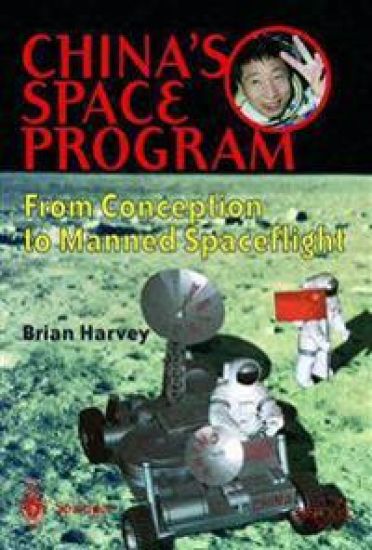
China's Space Program - From Conception to Manned Spaceflight
In October 2003 Yang Liwei made history as the first Chinese citizen in space, orbiting the globe 14 times in the Shenzhou 5. The Chinese space program has sometimes been called the last of the secret space programs. Although it is far less secretive now than formerly, fascinating revelations are still being made. Brian Harvey examines the history of the Chinese space program, from it's earliest times to the historic breakthrough of manned flight.