Kirjojen hintavertailu. Mukana 12 390 323 kirjaa ja 12 kauppaa.

Kirjailija

Brian Henderson

Kirjat ja teokset yhdessä paikassa: 14 kirjaa, julkaisuja vuosilta 1999-2022, suosituimpien joukossa A New Beginning. Vertaile teosten hintoja ja tarkista saatavuus suomalaisista kirjakaupoista.

14 kirjaa

Kirjojen julkaisuhaarukka 1999-2022.

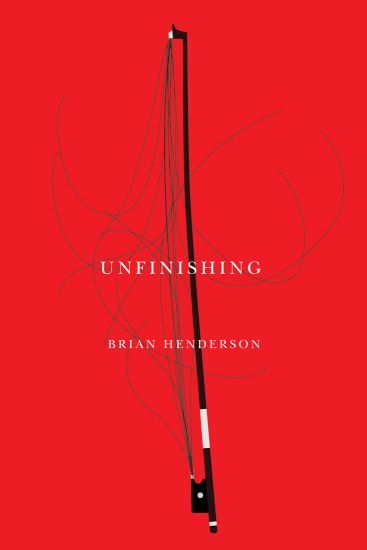
unfinishing

unfinishing

Brian Henderson

MCGILL-QUEEN'S UNIVERSITY PRESS
2022
nidottu
they come flying out from under your expectations / and once opened it is rain / and thinking a sandbar / always inventing a different script / never where you left itThis dream book of kaleidoscopic, holographic, mutagenic poems is haunted by the loops, aporias, and entanglements of time – memory, forgetting, oblivion, fortune telling, eternal (or not) returns, timelessness (however that may manifest), beginnings and endings (if indeed there are such things), and other spectral speculations where the intimate and the outward might exchange places.With imagery both striking and nuanced, and language rich and strange, Brian Henderson encounters a hummingbird, a barred owl, a flood, a trapdoor, a table of contents, an empty rowboat, a nonexistent river, a room made of crystal, a heap of broken furniture, ecocatastrophe, and political debacle in mesmerizing poems that celebrate the strange and vertiginous musics of a kind of memory-ness invoked by the irretrievable.These poems ask how the future can exist in the now, the now in the past. What is a future? How might we recognize one? And although the now may be completely empty, what are the selves we seem to become? In the archeology of now, unfinishing asks who we might have been – and who we might yet be.
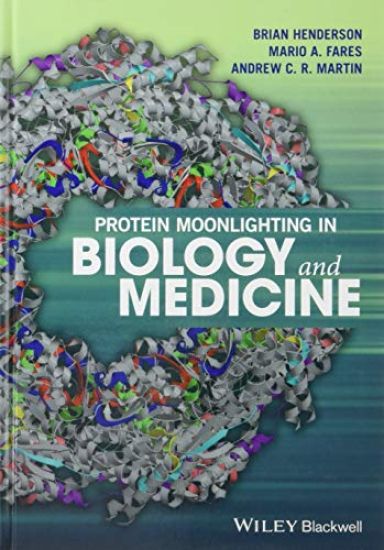
Protein Moonlighting in Biology and Medicine

Protein Moonlighting in Biology and Medicine

Brian Henderson; Mario A. Fares; Andrew C. R. Martin

John Wiley Sons Inc
2016
sidottu
The past 25 years has seen the emergence of a wealth of data suggesting that novel biological functions of known proteins play important roles in biology and medicine. This ability of proteins to exhibit more than one unique biological activity is known as protein moonlighting. Moonlighting proteins can exhibit novel biological functions, thus extending the function of the proteome, and are also implicated in the pathology of a growing number of idiopathic and infectious diseases. This book, written by a cell biologist, protein evolutionary biologist and protein bioinformatician, brings together the latest information on the structure, evolution and biological function of the growing numbers of moonlighting proteins that have been identified, and their roles in human health and disease. This information is revealing the enormous importance protein moonlighting plays in the maintenance of human health and in the induction of disease pathology. Protein Moonlighting in Biology and Medicine will be of interest to a general readership in the biological and biomedical research community.
[OR]

[OR]

Brian Henderson

Talonbooks
2015
pokkari
[OR] might be a collection of cipher poems. Or not. The tension of appearance inheres in it, and ciphertexts seem to abound. As the poems take up their concealing/revealing, coded/decoded, intelligence/counter-intelligence themes, borders and borderlands appear, are crossed, or are closed. Many of the borderlands turn out to be their own interiors -- "secret" workings of the codes ghosting through them. Are they abject castoffs, lost possibilities, proscribed mutations, or future events? Codes are hidden everywhere, sliding through the atmosphere, slipping into microwave towers, handheld devices, nervous systems, brains, retinas, bar codes, antimissile systems, the antennae of DNA, the traces of virtual particles, the Chauvet Cave drawings, your Twitter account. Each broaches a transformative version of its own transduction. The buck never stops. And since it's been documented that perception happens before we know it (Benjamin Libet), and the future might already have happened, these poems ask what this might mean -- especially in an accelerated, "semio-inflated" world of signs, words, and information.Maybe it's no wonder that the poems use tropes from spy thrillers and code breakers. In them a character may have been murdered, or moved to another dimension. Along the way strange perturbations occur to narrative and its others: memory, (prosthetic memory), dream, reportage, code, a little history of the future, deja vu, paramnesia, the virtual -- versions, evasions, and alternatives. Each poem gets read a few times, its code deciphered or ciphered back up. Some of the poems decay. Each reader reads his or her own poem and encodes it for another. What communication crosses out, these poems try to find. They might ask "What is reading?" while at the same time "Who are you?" In asking they acknowledge fragility, and in fragility, suggests William E. Connolly, lies the beginning of freedom.
Public Procurement of Energy Efficiency Services

Public Procurement of Energy Efficiency Services

Jas Singh; Dilip R. Limaye; Brian Henderson; Xiaoyu Shi

World Bank Publications
2009
nidottu
This book looks at a largely untapped energy efficiency market, the public sector. Efficiency potential in this sector is substantial, but implementing energy savings programs have been complicated by a number of factors, including limited incentives to lower energy costs, rigid budgeting and procurement procedures, and limited access to financing. This book looks at energy savings performance contracts (ESPCs) as a means of overcoming some of these barriers in public facilities, since they can outsource the full project cycle to a commercial service provider. ESPCs allow public agencies to solicit various technical solutions, mobilize commercial financing, and assign performance risk to third parties, allowing them to pay from a project s actual energy savings. The findings stem from case studies that identified approaches, models and specific solutions to ESPC procurement, including budgeting, energy audits, and bid evaluation. Such an approach also offers enormous potential to bundle, finance and implement energy efficiency projects on a larger scale in the public sector, which can yield further economies of scale. ESPCs can also serve as an attractive element for fiscal stimulus packages and efforts by governments to green their infrastructure, which can create local jobs, reduce future operating costs, and mitigate their carbon footprint. Lower energy bills, in turn, helps to create fiscal space in future years to meet other critical investment priorities. And, this can help stimulate local markets for energy efficiency goods and services and lead by example, demonstrating good practices and providing models to the private sector.
Biology of Cell Stress Proteins

Biology of Cell Stress Proteins

A. Graham Pockley; Brian Henderson; Michael Cheetham

JOHN WILEY AND SONS LTD
2008
nidottu
The topic of cell stress proteins or molecular chaperones/heat shock proteins now pervades many branches of the biological science and biomedicine. These proteins interest biochemists, biophysicists and structural biologists because of the complexity of their structures and of their functions. They intrigue molecular and cellular biologists who are trying to ascertain how their synthesis is controlled and what their overall role in the normal and stressed cell. Immunologists have been trying to determine their role in immune regulation for three decades as have virologists, bacteriologists and parasitologists their role in infection. Indeed, the latest infecting agent, the prion, turns out to be a rogue molecular chaperone. In the medical profession, molecular chaperones have been invoked in the pathology of just about every human disease. This has interested the pharmacologists who are now seeking ways of modulating molecular chaperones for therapeutic purposes. In the last decade or so it has become clear that molecular chaperones are secreted proteins with a range of intercellular signalling functions. This is exciting interest from the whole biomedical community including physiologists, psychologists and systems biologists. This short introduction, with its mention of most of the biological and biomedical specialities, shows that cell stress proteins are a very important topic in modern biology. Unfortunately, the literature on these proteins is: (i) voluminous; (ii) scattered throughout the biological and biomedical literature and (iii) because of terminology and the diversity of techniques used - very complex. The aim of the proposed volume is to cover the entire field of cell stress proteins - from their molecular structure to their epidemiology in human diseases - in a relatively short and easy-to-read textbook. This will be written for 3rd year undergraduates and for postgraduate scientists. It is proposed that if marketed at a reasonable price the proposed text will sell well simply because every biological scientist has to have some knowledge of these proteins and there is no textbook available. The authors of this book cover the three main areas of molecular chaperone biology: (i) biochemistry and cell biology of molecular chaperones; (ii) immunology and immunomodulation and (iii) extracellular signalling and systems biology.
Optical Spectroscopy of Inorganic Solids

Optical Spectroscopy of Inorganic Solids

Brian Henderson; George Francis Imbusch

Oxford University Press
2006
nidottu
The beautiful colours of many inorganic compounds, including minerals and gemstones, as well as the mysterious cold light of luminescence emitted by these materials, have attracted the inquisitiveness of natural philosophers for centuries. The scientific study of such phenomena - the optical spectroscopy of solids - has paid rich dividends in technological advances such as lasers and other optronic devices. This is a book on the art of optical spectroscopy of solids, establishing a theoretical and experimental framework for the subject, which is well illustrated with relevant spectra and experimental data. Chapters 1 to 5 set down the quantum description of atoms, ions and defects in solids, and the interaction of such centres with electromagnetic radiation. Considerations of symmetry and the effects of lattice vibrations on the spectroscopic properties are treated in detail . The physical bases of prominent experimental techniques are presented in Chapter 6 and their application to colour centres, dopant rare-earth and transition-metal ions are described in Chapters 7 -9. The spectroscopic behaviours of magnetic ions at high concentration are detailed in Chapter 10, followed by a brief review of the operational features of solid state lasers that rely on the foregoing discussion of their optical characteristics. Finally, Chapter 12 describes the application of magneto-optical double resonance techniques to the elucidation of the optical properties of insulating and semi-conducting materials. The authors emphasize that their own interests have guided the selection of topics from the panoply of available choices. They have written the book with senior undergraduates and postgraduates in mind: it is expected also to be useful to seasoned investigators from solid state physics and engineering from inorganic chemistry, and from materials and geological sciences.
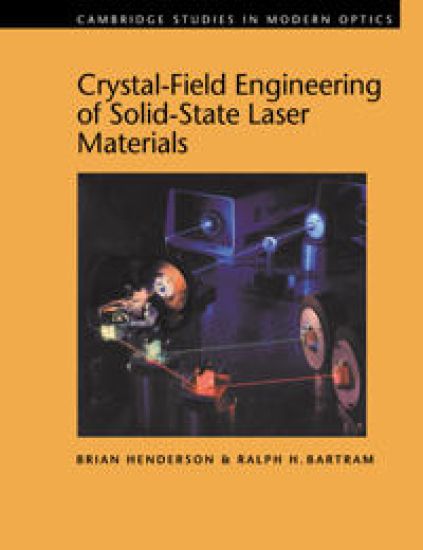
Crystal-Field Engineering of Solid-State Laser Materials

Crystal-Field Engineering of Solid-State Laser Materials

Brian Henderson; Ralph H. Bartram

Cambridge University Press
2005
pokkari
This book is concerned with the underlying science and design of laser materials. It emphasizes the principles of crystal–field engineering and discusses the basic physical concepts that determine laser gain and nonlinear frequency conversion in optical crystals. A concise review of the essential underlying science is presented, and the predictive capabilities of crystal-field engineering are developed to show how modification of the symmetry and composition of optical centres can improve laser performance. Applications of the principles of crystal-field engineering to a variety of optical crystals are also discussed in relation to the performances of laser devices. This book will be of considerable interest to physical, chemical and material scientists and to engineers involved in the science and technology of solid state lasers. It will be used by senior undergraduate and postgraduate students as well as by established scientists.
Crystal-Field Engineering of Solid-State Laser Materials

Crystal-Field Engineering of Solid-State Laser Materials

Brian Henderson; Ralph H. Bartram

Cambridge University Press
2000
sidottu
This book is concerned with the underlying science and design of laser materials. It emphasizes the principles of crystal–field engineering and discusses the basic physical concepts that determine laser gain and nonlinear frequency conversion in optical crystals. A concise review of the essential underlying science is presented, and the predictive capabilities of crystal-field engineering are developed to show how modification of the symmetry and composition of optical centres can improve laser performance. Applications of the principles of crystal-field engineering to a variety of optical crystals are also discussed in relation to the performances of laser devices. This book will be of considerable interest to physical, chemical and material scientists and to engineers involved in the science and technology of solid state lasers. It will be used by senior undergraduate and postgraduate students as well as by established scientists.
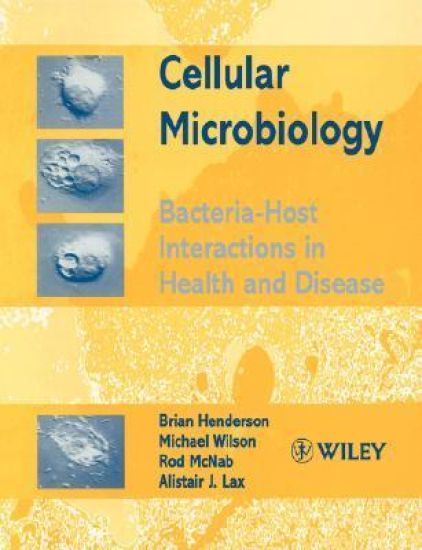
Cellular Microbiology

Cellular Microbiology

Brian Henderson; Michael Wilson; Rod McNab; Alistair J. Lax

John Wiley Sons Inc
1999
nidottu
Cellular microbiology is an exciting new area of microbiology research which bridges the gap between microbiology and cell biology. Drawing on their own teaching and research experience, the authors have provided a timely and comprehensive introduction to the molecular and cellular biology of bacterial interactions with host cells, and their relevance to human diseases. Cellular Microbiology introduces the key concepts of prokaryotic and eukaryotic cell biology, cell signalling mechanisms and current molecular biological techniques used in cellular microbiology before describing how bacteria interact with host eukaryotic cells during infections and health, and explaining the interactions with the immune system which enable an individual to recover from infections. This book will be invaluable to advanced undergraduate and postgraduate students studying microbiology, virology, pathology, pharmacology and cell biology. It will also be useful for those researchers interested in bacterial infection.
Cellular Microbiology

Cellular Microbiology

Brian Henderson; Michael Wilson; Rod McNab; Alistair J. Lax

John Wiley Sons Inc
1999
sidottu
Cellular microbiology is an exciting new area of microbiology research which bridges the gap between microbiology and cell biology. Drawing on their own teaching and research experience, the authors have provided a timely and comprehensive introduction to the molecular and cellular biology of bacterial interactions with host cells, and their relevance to human diseases. Cellular Microbiology introduces the key concepts of prokaryotic and eukaryotic cell biology, cell signalling mechanisms and current molecular biological techniques used in cellular microbiology before describing how bacteria interact with host eukaryotic cells during infections and health, and explaining the interactions with the immune system which enable an individual to recover from infections. This book will be invaluable to advanced undergraduate and postgraduate students studying microbiology, virology, pathology, pharmacology and cell biology. It will also be useful for those researchers interested in bacterial infection.