Kirjojen hintavertailu. Mukana 12 595 353 kirjaa ja 12 kauppaa.

Kirjailija

Brian Holmes

Kirjat ja teokset yhdessä paikassa: 11 kirjaa, julkaisuja vuosilta 1995-2021, suosituimpien joukossa Celestial Angel Messages. Vertaile teosten hintoja ja tarkista saatavuus suomalaisista kirjakaupoista.

11 kirjaa

Kirjojen julkaisuhaarukka 1995-2021.

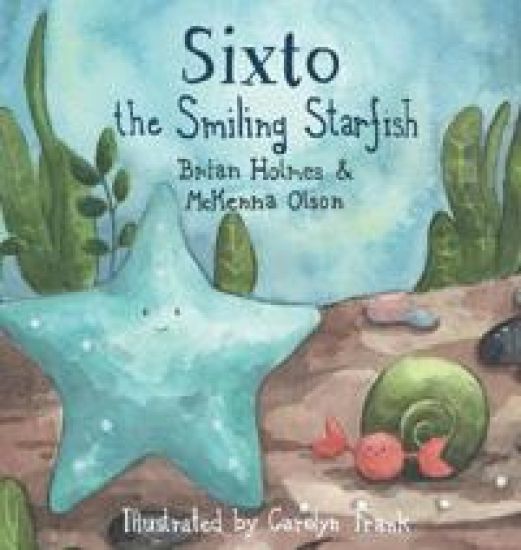
Sixto the Smiling Starfish

Sixto the Smiling Starfish

Brian Holmes; McKenna Olson

Myrtlewood Press
2021
sidottu
A grandfather's story comes alive through the adventures of a young starfish who finds courage as he remembers the lessons his mother taught him. Inspired by the beautiful Pacific Northwest coastline, "Sixto the Smiling Starfish" is a beautifully illustrated children's book written by a father and daughter duo. This heartwarming story will spark discussions about bravery through the challenges of life, new experiences, positive attitudes, and even the importance of caring for the world around us.Sixto is a young starfish who leaves his tide pool searching for adventure. He encounters hungry seagulls, sneaker waves, and other dangers along his way. Sixto's experiences offer a glimpse into the abundance of teeming sea life within rocky tide pools. The bright illustrations and playful prose will put the reader in the moment, hearing the crashing waves and catching the scent of the salty sea spray. Readers will smile as they hear the grizzled old starfish yelling out, "Wave Wave "A great read that can bring young children and families together, encouraging them to create stories and memories of their own. A generous portion of the proceeds of this book are donated to Spice Isle Smiles- a nonprofit organization dedicated to providing charitable dental care to children in Grenada. For more information, visit www.spiceislesmiles.org.
Celestial Angel Messages

Celestial Angel Messages

Brian Holmes

Lulu.com
2021
pokkari
Celestial Angel Messages: From Jesus and Other Spirits of Light is a collection of messages which I have sought and received from Celestial Angels, friends and guides in spirit, and spirit family members. The messages speak at great length about the Divine Love, what it is and how to get it, and about important topics which will be of interest to those people who are spiritually minded, are concerned with their soul, think about the afterlife and the spirit world, or would like to know more about God, Jesus or other Celestial Angels and spirits.
The Curriculum

The Curriculum

Brian Holmes; Martin McLean

Routledge
2020
nidottu
Originally published in 1989. What should be taught in schools? This book explores the differing curriculum traditions in Britain, Europe, the USA, Latin America, India and the Far East and the possibilities for change. For the practising teacher and the educationalist it opens up the debates about ‘quality’ in education which have been intense in many countries throughout the 1980s and focuses on how different countries are trying to change the curriculum to achieve higher standards and greater relevance. Considering the age-old questions "Who shall be educated?" and "What knowledge is of most worth?", four major curriculum traditions are examined in an historical context. The authors show how some European and American practices were freely incorporated into emerging systems in other parts of the world while elsewhere curricula were transferred by imperialists to their colonies and then modified. In the first part of the book the difficulties of curriculum change are explored within the contexts of countries where the curricula are rooted in indigenous models. The second part examines countries where curricula have been transferred from other parts of the world and how this affects curriculum change. In each case the politics of educational change since 1945, when compulsory education was introduced in many countries, has been analysed.The book will help students of education to understand the issues of curriculum reform and the transfer of curriculum models and places the problems in an international perspective with case studies.
Comparative Education

Comparative Education

Brian Holmes

Routledge
2019
nidottu
Originally published in 1981. Presented here is a coherent theory of Comparative Education research, based on the traditions and innovations established by such pioneers as Joseph Lauwerys and Nicholas Hans. From the author’s substantive studies emerges a taxonomy for education based on Popper’s critical dualism, and a way of analysing problems based on Dewey's reflective thinking and the social change theories of people such as Marx, Ogben and Pareto. Models of formal organisations drawn from Talcott Parsons show how systems analyses can be made in comparative perspective and how the processes of policy formulation, adoption and implementation can be studied. The use of ideal typical normative models illustrates how comparative educationists can penetrate aspects of man's socially created worlds. These techniques are exemplified in succinct models against which debates about education in Western Europe (Plato), the USA (Dewey) and the USSR (Marx, Engels and Lenin) can be analysed. Against the crude use of comparative arguments and transplantation of foreign practices, Dr Holmes suggests that problems should be analysed and the outcomes of hypothetical solutions or policies should be tested under identified national circumstances. The distinctive feature of this book is that it takes account of the debate among social scientists, rejects both induction and ethnomethodology as adequate in themselves and brings together the problem-solving approach favoured by American research workers and the hypothetico-deductive method of enquiry advocated by natural scientists such as Sir Peter Medawar and Sir John Eccles.
The Curriculum

The Curriculum

Brian Holmes; Martin McLean

Routledge
2018
sidottu
Originally published in 1989. What should be taught in schools? This book explores the differing curriculum traditions in Britain, Europe, the USA, Latin America, India and the Far East and the possibilities for change. For the practising teacher and the educationalist it opens up the debates about ‘quality’ in education which have been intense in many countries throughout the 1980s and focuses on how different countries are trying to change the curriculum to achieve higher standards and greater relevance. Considering the age-old questions "Who shall be educated?" and "What knowledge is of most worth?", four major curriculum traditions are examined in an historical context. The authors show how some European and American practices were freely incorporated into emerging systems in other parts of the world while elsewhere curricula were transferred by imperialists to their colonies and then modified. In the first part of the book the difficulties of curriculum change are explored within the contexts of countries where the curricula are rooted in indigenous models. The second part examines countries where curricula have been transferred from other parts of the world and how this affects curriculum change. In each case the politics of educational change since 1945, when compulsory education was introduced in many countries, has been analysed.The book will help students of education to understand the issues of curriculum reform and the transfer of curriculum models and places the problems in an international perspective with case studies.
Comparative Education

Comparative Education

Brian Holmes

Routledge
2018
sidottu
Originally published in 1981. Presented here is a coherent theory of Comparative Education research, based on the traditions and innovations established by such pioneers as Joseph Lauwerys and Nicholas Hans. From the author’s substantive studies emerges a taxonomy for education based on Popper’s critical dualism, and a way of analysing problems based on Dewey's reflective thinking and the social change theories of people such as Marx, Ogben and Pareto. Models of formal organisations drawn from Talcott Parsons show how systems analyses can be made in comparative perspective and how the processes of policy formulation, adoption and implementation can be studied. The use of ideal typical normative models illustrates how comparative educationists can penetrate aspects of man's socially created worlds. These techniques are exemplified in succinct models against which debates about education in Western Europe (Plato), the USA (Dewey) and the USSR (Marx, Engels and Lenin) can be analysed. Against the crude use of comparative arguments and transplantation of foreign practices, Dr Holmes suggests that problems should be analysed and the outcomes of hypothetical solutions or policies should be tested under identified national circumstances. The distinctive feature of this book is that it takes account of the debate among social scientists, rejects both induction and ethnomethodology as adequate in themselves and brings together the problem-solving approach favoured by American research workers and the hypothetico-deductive method of enquiry advocated by natural scientists such as Sir Peter Medawar and Sir John Eccles.
Derrote Su Dolor

Derrote Su Dolor

Brian Holmes

Lulu.com
2015
sidottu
Por miles de anos, se le ha dicho a la humanidad que el dolor es una parte necesaria de la vida, y que el profundo dolor despues del fallecimiento de nuestros seres queridos es esperado y un proceso natural. Brian Holmes dice enfaticamente que no, !no lo es! Puedes, y deberias estar emocionalmente estable y espiritualmente contento despues de la muerte de un ser querido. La gente a veces pasa meses o anos sumidos en el dolor paralizante, lo cual los aparta de muchos esfuerzos fructiferos. El dolor sabotea las vidas felices y productivas. Algunas veces la gente que trata con dolor extremo o perdidas, se convierten en personas enojadas, abusan de las drogas y alcohol o incluso de quitan sus propias vidas. No debe ser de esta manera. La tristeza, cuando alguien se va de nuestras vidas, es normal. No es necesario el dolor intenso. Si crees que el dolor no es para ti - la paz emocional y la felicidad si lo son. Vence tu dolor ahora.
What are You Crying About?

What are You Crying About?

Brian Holmes

Lulu.com
2014
sidottu
For thousands of years, humanity has been told that grief is a necessary part of life, that deep sorrow over the passing of our loved ones is expected and a natural process. Brian Holmes says emphatically that, no, it is not! You can, and ought to be emotionally stable and spiritually content after the death of a loved one. People sometimes spend months or years of their lives mired in crippling grief which sidetracks them from many fruitful endeavors. Grief sabotages happy, productive lives. Sometimes people dealing with extreme grief and loss become angry, abuse drugs and alcohol, or even take their own lives. It doesn't have to be this way. Sadness when someone leaves our lives is normal. Intense grief need not be. If you Believe, grief is not for you - emotional peace and happiness is. Defeat your grief now.
Russian Education

Russian Education

Brian Holmes; Gerald H. Read; Natalya Voskresenskaya

CRC Press Inc
1995
sidottu
In his address to the Communist Party in 1986, Mikhail Gorbachev blamed the Party for the disastrous state of his country. Within five years, the Party had been outlawed, he had been deposed, the Soviet Union had disintegrated, and its economy was in chaos. It is within this framework that the freely debated proposals to change a system of education inherited in 1917 from Czarist Russia are re-examined. During the Communist regime ideology had prevented realistic reform to the system. Under glasnost, open debate was encouraged for the first time. This book reveals the course taken by these debates and the conflicts between the personalities involved. Competing groups formulated new concepts of education. New child-centered aims were to replace those associated with the creation of a New Soviet Man. New school types and curriculums would allow pupils to specialize in either the sciences or the humanities. History teaching was to be liberalized, religious studies allowed and scientific materialism downgraded. Private and religious schools could be set up for the first time since 1917. Educational institutions could charge for a range of services, and major educational changes were agreed upon. The authors analyze these changes in light of an enormous amount of literature. In discussions with leading members of the Party (before its demise); educationalists, principals and teachers, and local authorities, the authors gained a comprehensive view of the policies before the collapse of the Soviet Union and after. But has the system changed? The authors, who have been visiting Soviet and Russian schools for more than 30 years, examine substantive changes in schools that previously had seemed old-fashioned and analyze Gorbachev's educational legacy.