Kirjojen hintavertailu. Mukana 12 390 323 kirjaa ja 12 kauppaa.

Kirjailija

Brian James Baer

Kirjat ja teokset yhdessä paikassa: 8 kirjaa, julkaisuja vuosilta 2011-2026, suosituimpien joukossa Academic Translation. Vertaile teosten hintoja ja tarkista saatavuus suomalaisista kirjakaupoista.

8 kirjaa

Kirjojen julkaisuhaarukka 2011-2026.

Academic Translation

Academic Translation

Brian James Baer

TAYLOR FRANCIS LTD
2026
sidottu
Scholarly writings in translation have contributed enormously to intellectual life throughout the world but there has been little written on the practice of academic translation. Leading translation scholar, translator and translator educator Brian James Baer discusses the specific challenges involved with academic translation and sets out ways of addressing them as a necessary first step in developing best practices for the field. Ranging from terminological issues, citational practices and conceptual networks to scholarly annotation, all chapters include activities and exercises in the form of sample texts and case studies. This is the ideal course book for a semester-long course on Academic Translation in an MA program and will also be of interest to translators and scholars undertaking academic translations, as well as anyone interested in translation's role in the circulation of knowledge.
Academic Translation

Academic Translation

Brian James Baer

TAYLOR FRANCIS LTD
2026
nidottu
Scholarly writings in translation have contributed enormously to intellectual life throughout the world but there has been little written on the practice of academic translation. Leading translation scholar, translator and translator educator Brian James Baer discusses the specific challenges involved with academic translation and sets out ways of addressing them as a necessary first step in developing best practices for the field. Ranging from terminological issues, citational practices and conceptual networks to scholarly annotation, all chapters include activities and exercises in the form of sample texts and case studies. This is the ideal course book for a semester-long course on Academic Translation in an MA program and will also be of interest to translators and scholars undertaking academic translations, as well as anyone interested in translation's role in the circulation of knowledge.

Manfred Macmillan

Manfred Macmillan

Carleton Bulkin; Brian James Baer; Jirí Karásek Ze Lvovic

Michigan Publishing Services
2024
nidottu
Decadence meets gothic in Manfred Macmillan (1907), a carefully constructed tale of doppelgangers, magical intrigue, and the rootless scion of a noble house. This annotated, first-ever English translation presents an early queer novel long unavailable except in the original Czech. Author Jirí Karásek ze Lvovic (1871–1951) was a major cultural figure in his native Bohemia and cultivated ties with fellow artists from across Central Europe. In their extensive scholarly introduction, translator Carleton Bulkin and translation scholar Brian James Baer situate the novel within longer histories of gay literature, fascinations with the occult, and the cultural and linguistic politics of so-called peripheral European nations. They persuasively frame Karásek as a queer author and cultural disruptor in the fin de siècle Habsburg space. Karasék rejected Czech translations of ancient Greek writers that bowdlerized gay themes, and he personally and vigorously defended Oscar Wilde in print, both on the grounds of artistic freedom and of private morality. He also published a cycle of homoerotic poems under the title Sodom, confiscated by the Austrian authorities but republished in 1905 and repeatedly afterward. A colonized subject, a literary decadent, and a sexual outlaw, Karasék’s complex responses to his own marginalization can be traced through his fantastically strange novel trilogy Three Magicians. As the first volume in that series, Manfred Macmillan is a gorgeous, compelling, and important addition to expanding canons of LGBTQI+ literature.
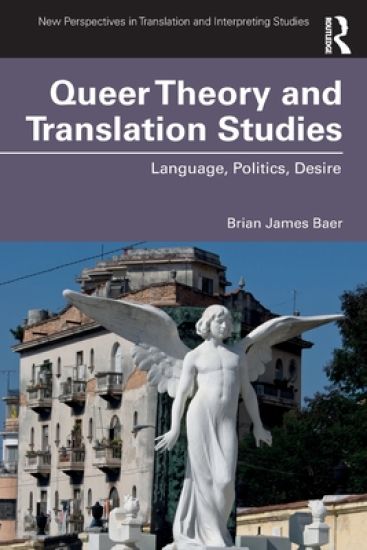
Queer Theory and Translation Studies

Queer Theory and Translation Studies

Brian James Baer

Routledge
2020
nidottu
This groundbreaking book explores the relevance of queer theory to Translation Studies and of translation to Global Sexuality Studies. Beginning with a comprehensive overview of the origins and evolution of queer theory, this book places queer theory and Translation Studies in a productive and mutually interrogating relationship.After framing the discussion of actual and potential interfaces between queer sexuality and queer textuality, the chapters trace the transnational circulation of queer texts, focusing on the place of translation in "gay" anthologies, the packaging of queer life writing for global audiences, and the translation of lyric poetry as a distinct site of queer performativity. Baer analyzes fictional translators in literature and film, the treatment of translation in historical and ethnographic studies of sexual and linguistic others, the work of queer translators, and the reception of queer texts in translation. Including a range of case studies to exemplify key ethical issues relevant to all scholars of global sexuality and postcolonial studies, this book is essential reading for advanced students, scholars, and researchers in Translation Studies, gender and sexuality studies, and related areas.
Queer Theory and Translation Studies

Queer Theory and Translation Studies

Brian James Baer

Routledge
2020
sidottu
This groundbreaking book explores the relevance of queer theory to Translation Studies and of translation to Global Sexuality Studies. Beginning with a comprehensive overview of the origins and evolution of queer theory, this book places queer theory and Translation Studies in a productive and mutually interrogating relationship.After framing the discussion of actual and potential interfaces between queer sexuality and queer textuality, the chapters trace the transnational circulation of queer texts, focusing on the place of translation in "gay" anthologies, the packaging of queer life writing for global audiences, and the translation of lyric poetry as a distinct site of queer performativity. Baer analyzes fictional translators in literature and film, the treatment of translation in historical and ethnographic studies of sexual and linguistic others, the work of queer translators, and the reception of queer texts in translation. Including a range of case studies to exemplify key ethical issues relevant to all scholars of global sexuality and postcolonial studies, this book is essential reading for advanced students, scholars, and researchers in Translation Studies, gender and sexuality studies, and related areas.
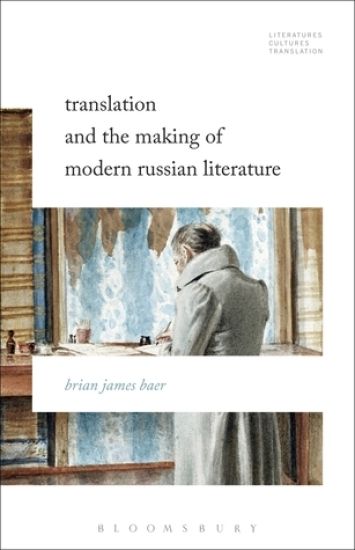
Translation and the Making of Modern Russian Literature

Translation and the Making of Modern Russian Literature

Brian James Baer

Bloomsbury Academic USA
2015
sidottu
Brian James Baer explores the central role played by translation in the construction of modern Russian literature. Peter I’s policy of forced Westernization resulted in translation becoming a widely discussed and highly visible practice in Russia, a multi-lingual empire with a polyglot elite. Yet Russia’s accumulation of cultural capital through translation occurred at a time when the Romantic obsession with originality was marginalizing translation as mere imitation. The awareness on the part of Russian writers that their literature and, by extension, their cultural identity were “born in translation” produced a sustained and sophisticated critique of Romantic authorship and national identity that has long been obscured by the nationalist focus of traditional literary studies. By offering a re-reading of seminal works of the Russian literary canon that thematize translation, alongside studies of the circulation and reception of specific translated texts, Translation and the Making of Modern Russian Literature models the long overdue integration of translation into literary and cultural studies.
Translation and the Making of Modern Russian Literature

Translation and the Making of Modern Russian Literature

Brian James Baer

Bloomsbury Academic USA
2015
nidottu
Brian James Baer explores the central role played by translation in the construction of modern Russian literature. Peter I’s policy of forced Westernization resulted in translation becoming a widely discussed and highly visible practice in Russia, a multi-lingual empire with a polyglot elite. Yet Russia’s accumulation of cultural capital through translation occurred at a time when the Romantic obsession with originality was marginalizing translation as mere imitation. The awareness on the part of Russian writers that their literature and, by extension, their cultural identity were born in translation produced a sustained and sophisticated critique of Romantic authorship and national identity that has long been obscured by the nationalist focus of traditional literary studies. Modeling the long overdue integration of translation into literary and cultural studies, Translation and the Making of Modern Russian Literature studies the circulation and reception of specific translated texts alongside re-readings of seminal works of the Russian literary canon.
No Good without Reward – Selected Writings: A Bilingual Edition

No Good without Reward – Selected Writings: A Bilingual Edition

Liubov Krichevskaya; Brian James Baer

University of Toronto Press
2011
nidottu
A female contemporary of Alexander Pushkin, Liubov Krichevskaya makes her Anglophone debut in an excellent translation of her fiction, drama, and poetry, which deftly capture women’s estate in the early nineteenth century. Krichevskaya intriguingly combines Sentimentalist preoccupations—sensibility, virtue, and men’s moral reformation through confrontation with exemplary women’s passive piety—with the uncontrollable passions and volatile hero popularized by the Byronic strain of Romanticism. Her gynocentric texts poignantly convey the stringent limitations imposed upon women’s agency by a society that paradoxically credited them with the seemingly limitless capacity to exert a civilizing influence as icons of probity. Readers acquainted with Rousseau, Richardson, and Goethe will discover familiar feminized turf, but cultivated in a Russian vein.—Helena GosciloChair and Professor of Slavic, The Ohio State University