Kirjojen hintavertailu. Mukana 12 390 323 kirjaa ja 12 kauppaa.

Kirjailija

Brian K. Hall

Kirjat ja teokset yhdessä paikassa: 10 kirjaa, julkaisuja vuosilta 1998-2024, suosituimpien joukossa Bones and Cartilage. Vertaile teosten hintoja ja tarkista saatavuus suomalaisista kirjakaupoista.

Mukana myös kirjoitusasut: Brian K Hall

10 kirjaa

Kirjojen julkaisuhaarukka 1998-2024.

Bones and Cartilage

Bones and Cartilage

Brian K. Hall

Academic Press Inc
2015
sidottu
Bones and Cartilage provides the most in-depth review and synthesis assembled on the topic, across all vertebrates. It examines the function, development and evolution of bone and cartilage as tissues, organs and skeletal systems. It describes how bone and cartilage develop in embryos and are maintained in adults, how bone is repaired when we break a leg, or regenerates when a newt grows a new limb, or a lizard a new tail. The second edition of Bones and Cartilage includes the most recent knowledge of molecular, cellular, developmental and evolutionary processes, which are integrated to outline a unified discipline of developmental and evolutionary skeletal biology. Additionally, coverage includes how the molecular and cellular aspects of bones and cartilage differ in different skeletal systems and across species, along with the latest studies and hypotheses of relationships between skeletal cells and the most recent information on coupling between osteocytes and osteoclasts All chapters have been revised and updated to include the latest research.
The Neural Crest and Neural Crest Cells in Vertebrate Development and Evolution
A presentation of all aspects of neural crest cell origins (embryological and evolutionary) development and evolution; neural crest cell behavior (migration) and anomalies (neurocristopathies and birth defects) that arise from defective neural crest development. The treatment of development will include discussions of cellular, molecular and genetic aspects of the differentiation and morphogenesis of neural crest cells and structures derived from neural crest cells. The origins of the neural crest in embryology will be discussed using the recent information on the molecular basis of the specification of the neural crest. Also presented are the advances in our understanding of the evolution of jaws from studies on lampreys and of the neural crest from studies on ascidians and amphioxus.
Evolutionary Developmental Biology

Evolutionary Developmental Biology

Brian K. Hall

Chapman and Hall
1998
sidottu
Although evolutionary developmental biology is a new field, its origins lie in the last century; the search for connections between embryonic development (ontogeny) and evolutionary change (phylogeny) has been a long one. Evolutionary developmental biology is however more than just a fusion of the fields of developmental and evolutionary biology. It forges a unification of genomic, developmental, organismal, population and natural selection approaches to evolutionary change. It is concerned with how developmental processes evolve; how evolution produces novel structures, functions and behaviours; and how development, evolution and ecology are integrated to bring about and stabilize evolutionary change. The previous edition of this title, published in 1992, defined the terms and laid out the field for evolutionary developmental biology. This field is now one of the most active and fast growing within biology and this is reflected in this second edition, which is more than twice the length of the original and brought completely up to date. There are new chapters on major transitions in animal evolution, expanded coverage of comparative embryonic development and the inclusion of recent advances in genetics and molecular biology. The book is divided into eight parts which: place evolutionary developmental biology in the historical context of the search for relationships between development and evolution; detail the historical background leading to evolutionary embryology; explore embryos in development and embryos in evolution; discuss the relationship between embryos, evolution, environment and ecology; discuss the dilemma for homology of the fact that development evolves; deal with the importance of understanding how embryos measure time and place both through development and evolutionarily through heterochrony and heterotrophy; and set out the principles andprocesses that underlie evolutionary developmental biology. With over one hundred illustrations and photographs, extensive cross-referencing between chapters and boxes for ancillary material, this latest edition will be of immense interest to graduate and advanced undergraduate students in cell, developmental and molecular biology, and in zoology, evolution, ecology and entomology; in fact anyone with an interest in this new and increasingly important and interdisciplinary field which unifies biology.
The Notochord

The Notochord

P. Eckhard Witten; Brian K. Hall

TAYLOR FRANCIS LTD
2024
nidottu
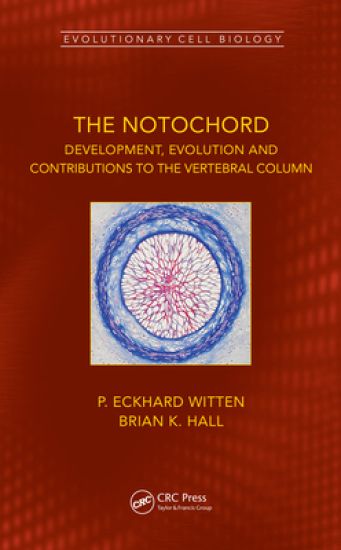
Although it is the defining organ of the Chordata, the notochord and its cells are one of the least understood vertebrate organs. This may be because large parts of the notochord are often replaced with cartilaginous or bony vertebral bodies. The presence of cartilage in the notochord raises questions about the evolutionary relationships between notochord cells and cartilage cells. This book integrates classical analytical studies with recent palaeontological, experimental, and molecular studies in both developmental and evolutionary contexts. For example, although the early signaling function of the notochord is conserved across the vertebrates, many will be surprised to find that the role of the notochord in vertebral body development in tetrapods is not the blueprint for all vertebrates. Recent studies on zebrafish and medaka embryos have uncovered the molecular mechanisms of a somite-independent notochord-driven segmentation process that establishes vertebral centra and intervertebral spaces. As this process is not restricted to teleosts, the authors have written a general discussion about the role of the notochord in vertebral formation. Modularity and segmentation of the vertebral column are related topics. Further overarching themes are the structure, function and fate of the notochord in adult vertebrates and notochord–cartilage relationships.Key Features The first book devoted to notochord development, function and evolution Includes and integrates information on the notochord from studies going back 169 years Integrates developmental, molecular, functional, experimental and palaeontological studies Documents the fate of the notochord across the vertebrates Extensively illustrated with classical and new imagesRelated TitlesBard, J. Evolution: The Origins and Mechanisms of Diversity (ISNB 978-0-3673-5701-6)Leys, S. and Hejnol. A. Origin and Evolution of Metazoan Cell Types (ISBN 978-1-1380-3269-9)
The Notochord

The Notochord

P. Eckhard Witten; Brian K. Hall

Productivity Press
2022
sidottu
Although it is the defining organ of the Chordata, the notochord and its cells are one of the least understood vertebrate organs. This may be because large parts of the notochord are often replaced with cartilaginous or bony vertebral bodies. The presence of cartilage in the notochord raises questions about the evolutionary relationships between notochord cells and cartilage cells. This book integrates classical analytical studies with recent palaeontological, experimental, and molecular studies in both developmental and evolutionary contexts. For example, although the early signaling function of the notochord is conserved across the vertebrates, many will be surprised to find that the role of the notochord in vertebral body development in tetrapods is not the blueprint for all vertebrates. Recent studies on zebrafish and medaka embryos have uncovered the molecular mechanisms of a somite-independent notochord-driven segmentation process that establishes vertebral centra and intervertebral spaces. As this process is not restricted to teleosts, the authors have written a general discussion about the role of the notochord in vertebral formation. Modularity and segmentation of the vertebral column are related topics. Further overarching themes are the structure, function and fate of the notochord in adult vertebrates and notochord–cartilage relationships.Key Features The first book devoted to notochord development, function and evolution Includes and integrates information on the notochord from studies going back 169 years Integrates developmental, molecular, functional, experimental and palaeontological studies Documents the fate of the notochord across the vertebrates Extensively illustrated with classical and new imagesRelated TitlesBard, J. Evolution: The Origins and Mechanisms of Diversity (ISNB 978-0-3673-5701-6)Leys, S. and Hejnol. A. Origin and Evolution of Metazoan Cell Types (ISBN 978-1-1380-3269-9)
Strickberger's Evolution

Strickberger's Evolution

Brian K. Hall; Benedikt Hallgrímsson

Jones and Bartlett Publishers, Inc
2013
nidottu
Now with a new full color design and art program, the Fifth Edition of Strickberger's Evolution is updated with the latest data and updates from the field. It continues to present an overview of prevailing evidence and theories about evolution by discussing how the world and its organisms arose and changed over time.
Evolution: Principles And Processes

Evolution: Principles And Processes

Brian K. Hall

Jones and Bartlett Publishers, Inc
2010
nidottu
If you want to know whether evolution is a science, how life began, what Charles Darwin really said about evolution, why a fungus is more closely related to humans than to a plant, how experiments in evolution can be carried out, why birds are flying dinosaurs, how we manipulate the evolution of other species, and if you want a clear treatment of the processes that result in evolution, then this is the book for you! Written for those with a minimal science background, Evolution: Principles and Processes provides a concise introduction of evolutionary topics for the one-term course. Using an engaging writing style and a wealth of full-color illustrations, Hall covers all topics from the origin of universe, Earth, the origin of life, and on to how humans influence the evolution of other species. He brings together the principles and processes that explain evolutionary change and discusses the patterns of life that have resulted from the operation of evolution over the past 3.5 billion years. This overview, coupled with numerous case studies and examples, helps readers understand and truly appreciate the origin and diversity of life.
The Neural Crest and Neural Crest Cells in Vertebrate Development and Evolution
A presentation of all aspects of neural crest cell origins (embryological and evolutionary) development and evolution; neural crest cell behavior (migration) and anomalies (neurocristopathies and birth defects) that arise from defective neural crest development. The treatment of development will include discussions of cellular, molecular and genetic aspects of the differentiation and morphogenesis of neural crest cells and structures derived from neural crest cells. The origins of the neural crest in embryology will be discussed using the recent information on the molecular basis of the specification of the neural crest. Also presented are the advances in our understanding of the evolution of jaws from studies on lampreys and of the neural crest from studies on ascidians and amphioxus.
Evolutionary Developmental Biology

Evolutionary Developmental Biology

Brian K. Hall

Chapman and Hall
1999
nidottu
Although evolutionary developmental biology is a new field, its origins lie in the last century; the search for connections between embryonic development (ontogeny) and evolutionary change (phylogeny) has been a long one. Evolutionary developmental biology is however more than just a fusion of the fields of developmental and evolutionary biology. It forges a unification of genomic, developmental, organismal, population and natural selection approaches to evolutionary change. It is concerned with how developmental processes evolve; how evolution produces novel structures, functions and behaviours; and how development, evolution and ecology are integrated to bring about and stabilize evolutionary change. The previous edition of this title, published in 1992, defined the terms and laid out the field for evolutionary developmental biology. This field is now one of the most active and fast growing within biology and this is reflected in this second edition, which is more than twice the length of the original and brought completely up to date. There are new chapters on major transitions in animal evolution, expanded coverage of comparative embryonic development and the inclusion of recent advances in genetics and molecular biology. The book is divided into eight parts which: place evolutionary developmental biology in the historical context of the search for relationships between development and evolution; detail the historical background leading to evolutionary embryology; explore embryos in development and embryos in evolution; discuss the relationship between embryos, evolution, environment and ecology; discuss the dilemma for homology of the fact that development evolves; deal with the importance of understanding how embryos measure time and place both through development and evolutionarily through heterochrony and heterotrophy; and set out the principles andprocesses that underlie evolutionary developmental biology. With over one hundred illustrations and photographs, extensive cross-referencing between chapters and boxes for ancillary material, this latest edition will be of immense interest to graduate and advanced undergraduate students in cell, developmental and molecular biology, and in zoology, evolution, ecology and entomology; in fact anyone with an interest in this new and increasingly important and interdisciplinary field which unifies biology.