Kirjojen hintavertailu. Mukana 12 595 353 kirjaa ja 12 kauppaa.

Kirjailija

Brian Kernighan

Kirjat ja teokset yhdessä paikassa: 4 kirjaa, julkaisuja vuosilta 1988-2023, suosituimpien joukossa Go Programming Language, The. Vertaile teosten hintoja ja tarkista saatavuus suomalaisista kirjakaupoista.

4 kirjaa

Kirjojen julkaisuhaarukka 1988-2023.

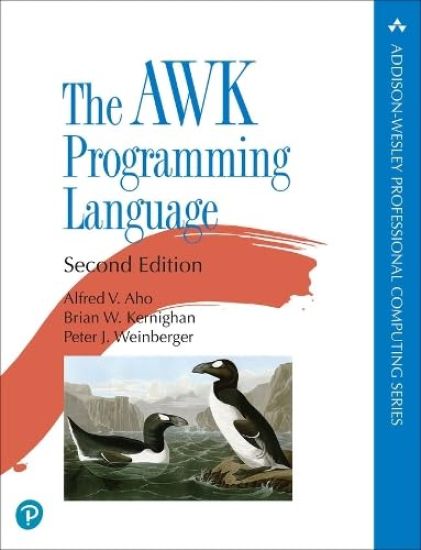
The AWK Programming Language

The AWK Programming Language

Alfred Aho; Brian Kernighan; Peter Weinberger

PEARSON EDUCATION (US)
2023
nidottu
Awk was developed in 1977 at Bell Labs, and it's still a remarkably useful tool for solving a wide variety of problems quickly and efficiently. In this update of the classic Awk book, the creators of the language show you what Awk can do and teach you how to use it effectively. Here's what programmers today are saying: "I love Awk." "Awk is amazing." "It is just so damn good." "Awk is just right." "Awk is awesome." "Awk has always been a language that I loved." It's easy: "Simple, fast and lightweight." "Absolutely efficient to learn because there isn't much to learn." "3-4 hours to learn the language from start to finish." "I can teach it to new engineers in less than 2 hours." It's productive: "Whenever I need to do a complex analysis of a semi-structured text file in less than a minute, Awk is my tool." "Learning Awk was the best bang for buck investment of time in my entire career." "Designed to chew through lines of text files with ease, with great defaults that minimize the amount of code you actually have to write to do anything." It's always available: "AWK runs everywhere." "A reliable Swiss Army knife that is always there when you need it." "Many systems lack Perl or Python, but include Awk." Register your book for convenient access to downloads, updates, and/or corrections as they become available. See inside book for details.
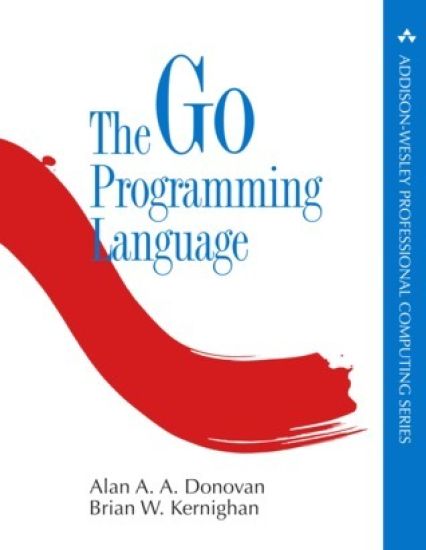
Go Programming Language, The

Go Programming Language, The

Alan Donovan; Brian Kernighan

Addison Wesley
2015
nidottu
The authoritative resource to writing clear and idiomatic Go to solve real-world problems Google’s Go team member Alan A. A. Donovan and Brian Kernighan, co-author of The C Programming Language, provide hundreds of interesting and practical examples of well-written Go code to help programmers learn this flexible, and fast, language. It is designed to get you started programming with Go right away and then to progress on to more advanced topics. Basic components : an opening tutorial provides information and examples to get you off the ground and doing useful things as quickly as possible. This includes: command-line argumentsgifsURLsweb serversProgram structure : simple examples cover the basic structural elements of a Go program without getting sidetracked by complicated algorithms or data structures.Data types: Go offers a variety of ways to organize data, with a spectrum of data types that at one end match the features of the hardware and at the other end provide what programmers need to conveniently represent complicated data structures.Composite types : arraysslicesmapsstructsJSONtest and HTML templatesFunctions : break a big job into smaller pieces that might well be written by different people separated by both time and space.Methods : declarationswith a pointer receiverstruct embeddingvalues and expressionsInterfaces : write functions that are more flexible and adaptable because they are not tied to the details of one particular implementation.Concurrent programming : Goroutines, channels, and with shared variables.Packages : use existing packages and create new ones.Automated testing : write small programs that check the code.Reflection features : update variables and inspect their values at run time.Low-level programming : step outside the usual rules to achieve the highest possible performance, interoperate with libraries written in other languages, or implement a function that cannot be expressed in pure Go. Each chapter has exercises to test your understanding and explore extensions and alternatives. Source code is freely available for download and may be conveniently fetched, built, and installed using the go get command.
Practice of Programming, The

Practice of Programming, The

Brian Kernighan

Addison Wesley
1999
nidottu
With the same insight and authority that made their book The Unix Programming Environment a classic, Brian Kernighan and Rob Pike have written The Practice of Programming to help make individual programmers more effective and productive. The practice of programming is more than just writing code. Programmers must also assess tradeoffs, choose among design alternatives, debug and test, improve performance, and maintain software written by themselves and others. At the same time, they must be concerned with issues like compatibility, robustness, and reliability, while meeting specifications. The Practice of Programming covers all these topics, and more. This book is full of practical advice and real-world examples in C, C++, Java, and a variety of special-purpose languages. It includes chapters on: debugging: finding bugs quickly and methodically testing: guaranteeing that software works correctly and reliably performance: making programs faster and more compact portability: ensuring that programs run everywhere without change design: balancing goals and constraints to decide which algorithms and data structures are best interfaces: using abstraction and information hiding to control the interactions between components style: writing code that works well and is a pleasure to read notation: choosing languages and tools that let the machine do more of the work Kernighan and Pike have distilled years of experience writing programs, teaching, and working with other programmers to create this book. Anyone who writes software will profit from the principles and guidance in The Practice of Programming.
C Programming Language

C Programming Language

Brian Kernighan; Dennis Ritchie

Pearson
1988
nidottu
Introduces the features of the C programming language, discusses data types, variables, operators, control flow, functions, pointers, arrays, and structures, and looks at the UNIX system interface