

Kirjailija
Brian Martin
Kirjat ja teokset yhdessä paikassa: 37 kirjaa, julkaisuja vuosilta 1990-2026, suosituimpien joukossa Scientific Knowledge in Controversy. Vertaile teosten hintoja ja tarkista saatavuus suomalaisista kirjakaupoista.
37 kirjaa
Kirjojen julkaisuhaarukka 1990-2026.


Probability and Statistics for Physical Sciences
Brian Martin; Mark Hurwitz
ELSEVIER SCIENCE PUBLISHING CO INC
2023
nidottu
Probability and Statistics for Physical Sciences, Second Edition is an accessible guide to commonly used concepts and methods in statistical analysis used in the physical sciences. This brief yet systematic introduction explains the origin of key techniques, providing mathematical background and useful formulas. The text does not assume any background in statistics and is appropriate for a wide-variety of readers, from first-year undergraduate students to working scientists across many disciplines.
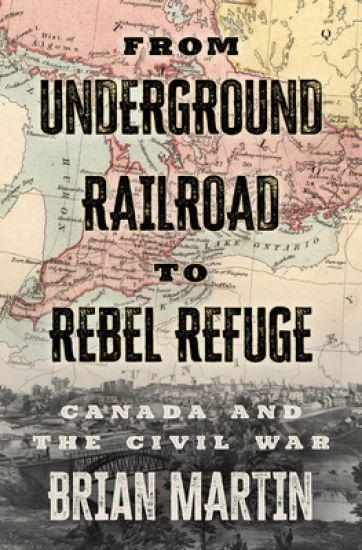
From Underground Railroad to Rebel Refuge: Canada and the Civil War
Brian Martin
ECW PRESS
2022
nidottu
Filled with engaging stories and astonishing facts, From Underground Railroad to Rebel Refuge examines the role of Canadians in the American Civil War Despite all we know about the Civil War, its causes, battles, characters, issues, impacts, and legacy, few books have explored Canada's role in the bloody conflict that claimed more than 600,000 lives. A surprising 20,000 Canadians went south to take up arms on both sides of the conflict, while thousands of enslaved people, draft dodgers, deserters, recruiters, plotters, and spies fled northward to take shelter in the attic that is Canada. Though many escaped slavery and found safety through the Underground Railroad, they were later joined by KKK members wanted for murder. Confederate President Jefferson Davis along with several of his emissaries and generals found refuge on Canadian soil, and many plantation owners moved north of the border. Award-winning journalist Brian Martin will open eyes in both Canada and the United States to how the two countries and their citizens interacted during the Civil War and the troubled times that surrounded it.

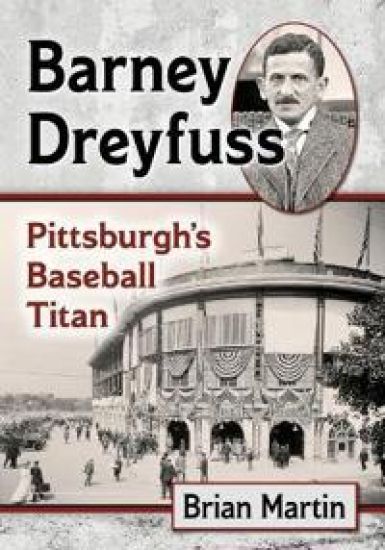
A young German immigrant, Barney Dreyfuss was an American success story in business and in baseball. He fell in love with the game after settling in Paducah, Kentucky, where he discovered he had a knack for assembling good players on the diamond. Relocating to Louisville, he became involved in the professional game with the Colonels. Faced with ouster from the National League, he took his players to Pittsburgh, where he became owner of the Pirates and forged a winning tradition, leading the club to six pennants and two World Series. This first biography of Dreyfuss chronicles the innovative career of the Hall of Famer executive who built Forbes Field--the National League's first concrete-and-steel ballpark, into which he put $1 million of his own money--pushed for creation of the office of commissioner to govern the game and helped initiate the modern World Series.

You're searching for the truth. What sources of information should you use and trust? Brian Martin recommends reflecting on a topic that you know a lot about and taking note of which information sources were useful or misleading. To illustrate this process of reflection, he tells of his own experiences learning about the effects of nuclear war, the origin-of-AIDS debate and the sources of talent, in each case commenting on different sources of information that influenced him.Truth Tacticsis an encouragement to learn from your own learning about how best to pursue the truths that matter to you.

Official channels are things like grievance procedures, ombudsmen and courts. They are supposed to resolve problems and provide justice. However, trust in official channels can be misplaced: in many cases they may give only an illusion of a solution. In Official Channels, Brian Martin tells what he has learned about formal procedures set up to deal with problems associated with whistleblowing, sexual harassment, plagiarism, Wikipedia and other issues. He says it is unwise to put too much reliance on official channels and that more emphasis should be put on developing skills, changing cultures and exploring alternatives.
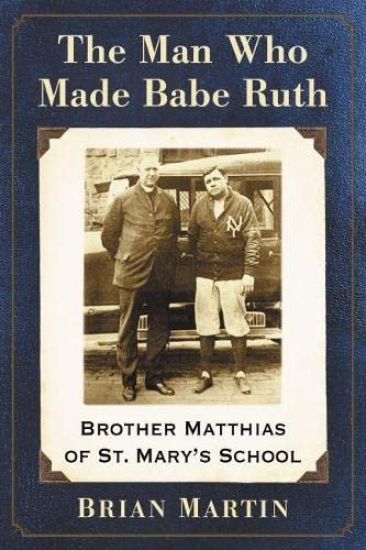
At six-feet-six, the hulking Martin Leo Boutilier (1872-1944) was hard to miss. Yet the many books written about Babe Ruth relegate the soft-spoken teacher and coach to the shadows. Ruth credited Boutilier--known as Brother Matthias in the Congregation of St. Francis Xavier--with making him the man and the baseball player he became. Matthias saw something in the troubled seven-year old and nurtured his athletic ability. Spending many extra hours on the ballfield with him over a dozen years, he taught Ruth how to hit and converted the young left-handed catcher into a formidable pitcher. Overshadowed by a fellow Xavierian brother who was given the credit for discovering the baseball prodigy, Matthias never received his due from the public but didn't complain. Ruth never forgot the father figure who continued to provide valuable counsel in later life. This is the first telling of the full story of the man who gave the world its most famous baseball star.

Social defence is nonviolent community resistance to aggression and repression, as an alternative to military forces. Given the enormous damage caused by military systems, social defence is an alternative worth investigating and pursuing. Since the 1980s, J?rgen Johansen and Brian Martin have been involved in promoting social defence. In this book, they provide an up-to-date treatment of the issues. They address the downsides of military systems, historical examples of nonviolent resistance to invasions and coups, key ideas about social defence, important developments since the end of the Cold War, and the role of social movements. Social defence challenges deeply embedded assumptions about violence and defence. It is also a challenge to powerful groups with vested interests in systems of organised violence, especially militaries and governments. Popular action against aggression and repression is a radical alternative ? and a logical one.

Narrated by Johnny James, a young Oxford fellow, HOLT COLLEGE tells the story of the Principal of Holt College, Dr Willoughby Morris. Morris's increasingly autocratic rule of the college brings him into conflict with many of the college fellows who begin to manoeuvre for his removal but when there is a leak from the college finance committee to the undergraduate newspaper about an expenses scandal and the news is picked up by the national press that Morris' dictatorship is rocked to the core. A haunting portrait of one man's life, HOLT COLLEGE shows the inner political workings of one of the country's oldest institutions and the perils that come when such a world is made public.

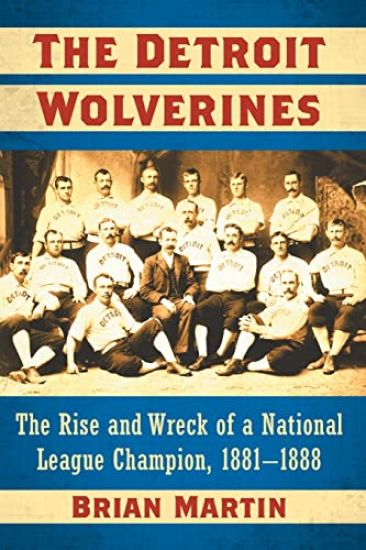
The Detroit Tigers were founding members of the American League and have been the Motor City's team for more than a century. But the Wolverines were the city's first major league club, playing in the National League beginning in 1881 and capturing the pennant in 1887. Playing in what was then one of the best ballparks in America, during an era when Detroit was known as the "Paris of the West," the team battled hostile National League owners and struggled with a fickle fan base to become world champions, before financial woes led to their being disbanded in 1888. This first-ever history of the Wolverines covers the team's rise and abrupt fall and the powerful men behind it.

In your action group, is it ever beneficial to lie to other members? When is it wise to lie to authorities? If a member of your group has done something wrong, is it better to be open about it now or keep it hidden in the hope that outsiders will never know? What are the pros and cons of infiltrating opposition groups to collect information about harmful activities? Should we wear masks at rallies? Theres lots of research showing that lying is an everyday occurrence in most peoples lives, and furthermore that lies can be beneficial in some circumstances. But they can also be very damaging, especially lies by authorities.

Most people think of the world as divided into countries, and many people identify with their own country. Because theres nothing natural in this, governments and others need to continually encourage identification with the nation. This serves those with power and wealth. Ruling Tactics outlines the methods commonly used to foster everyday nationalism and how they can be countered. These methods are described in a range of areas, including crime, sport, language, economics, terrorism and war. Ruling Tactics can serve as a practical manual for recognising how thinking is oriented towards the state, and how this sort of thinking can be changed.
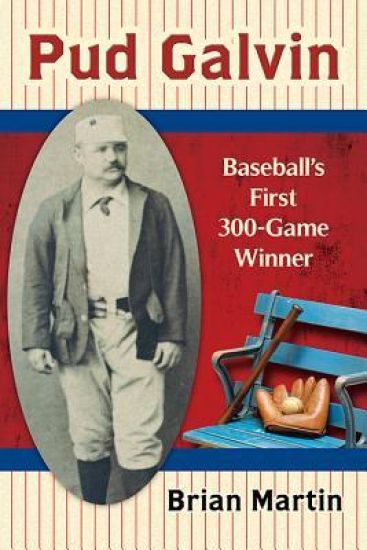
Despite his outstanding pitching record, James Francis "Pud" Galvin (1856-1902) was largely forgotten after his premature death. During his 18-year career with Pittsburgh, Buffalo and St. Louis, he was one of the best-paid players in the game--but died penniless. The diminutive hurler was the first to reach 300 wins (and only four pitchers have amassed more). A determined researcher documented Galvin's record decades after his death and he was enshrined in the Hall of Fame in 1965 with 365 wins. This book is the first comprehensive biography of Galvin and his use of a testosterone-based concoction--with eye-popping results--which earned him newfound attention as a pioneer of performance enhancing drugs.

Rallies, strikes, boycotts, sit-ins - these and other methods of nonviolent action can be used to bring down dictators. Nonviolence Unbound shows how insights into what makes nonviolent action effective can be applied to four completely different arenas: defending against verbal abuse, responding to online defamatory pictures, and engaging in the struggles over euthanasia and vaccation. This investigation shows how to analyse options for opposing injustice. The author Brian Martin is professor of social sciences at the University of Wollongong, Australia. He is the author of numerous books and articles on nonviolence, dissent, scientific controversies, democracy and other topics.
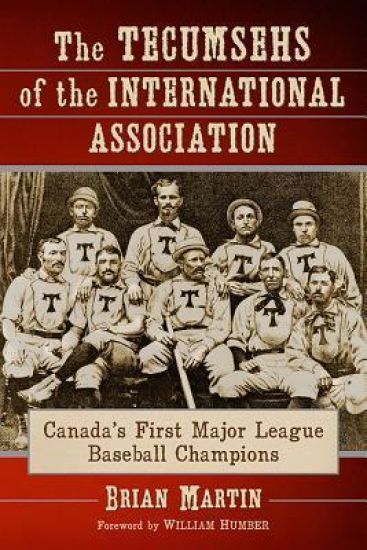
This is the previously untold story of the London Tecumsehs, an 1870s baseball team that rose to the top ranks of pro ball. The Tecumsehs of London, Ontario, were among the founding members of the International Association in 1877, the first league established to challenge the struggling National League, formed a year earlier. The team played against the top competition of the day and defeated nines from Chicago, St. Louis and elsewhere. They became the first champions of the International Association when they defeated Pittsburgh with the arm of Fred Goldsmith, one of the first curveball pitchers. This is also the story of the International Association, the only one of the six leagues challenging the primacy of the National League that has never been accorded major league status. To this day it has been relegated to minor league status to the detriment of some of the pioneer players in the game.
But two of his parishioners have other ideas. Noleen, a blind woman who knows more than she lets on, wants him to hear her confession. Jacinta, an unmarried mother and recent convert to Islam, needs proof that she has left the church. And then Henry arrives - twelve years old and on a quest of his own. Will Father Patrick ever find peace?