

Kirjailija
Brian Massumi
Kirjat ja teokset yhdessä paikassa: 31 kirjaa, julkaisuja vuosilta 1992-2026, suosituimpien joukossa Beyond Compare. Vertaile teosten hintoja ja tarkista saatavuus suomalaisista kirjakaupoista.
31 kirjaa
Kirjojen julkaisuhaarukka 1992-2026.

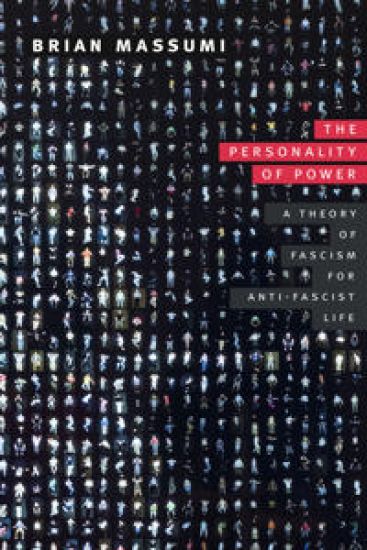
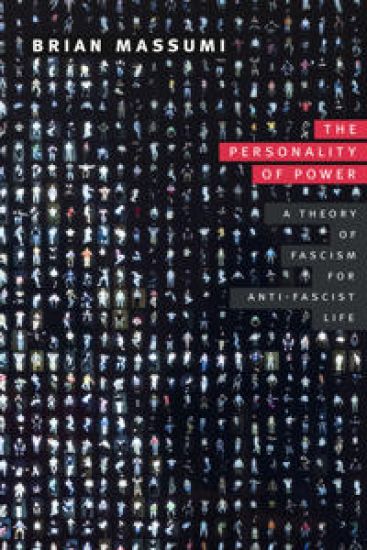
“I am the Chosen One!” With this exclamation Donald Trump crowns the national exceptionalism his base upholds with a claim of personal exceptionalism. He leaves no doubt as to the emotional note: “I am your vengeance!” He personifies reaction for the masses. Except, in today’s microsegmented social media environment the “masses” no longer exist. Fascism’s cultural conditions have shifted. In The Personality of Power, Brian Massumi retheorizes the conditions of contemporary fascism through the prism of Trump’s persona. Older theories based on identification of the masses with a charismatic leader no longer hold. Rather, an affective regime of reaction agitates bodies and orients lives at the molecular level. Massumi examines this agitation in relation to race, gender, personhood, and conspiracy thinking. The Personality of Power is a political treatise on fascism and its precursor movements, coupled with a philosophical inquiry into becoming reactionary as a collective process. Massumi calls the very concept of the person into question, asking what collective personhood means concretely. Nothing less than an alternative political logic is needed, turned to the task of thinking collective individuation.

“I am the Chosen One!” With this exclamation Donald Trump crowns the national exceptionalism his base upholds with a claim of personal exceptionalism. He leaves no doubt as to the emotional note: “I am your vengeance!” He personifies reaction for the masses. Except, in today’s microsegmented social media environment the “masses” no longer exist. Fascism’s cultural conditions have shifted. In The Personality of Power, Brian Massumi retheorizes the conditions of contemporary fascism through the prism of Trump’s persona. Older theories based on identification of the masses with a charismatic leader no longer hold. Rather, an affective regime of reaction agitates bodies and orients lives at the molecular level. Massumi examines this agitation in relation to race, gender, personhood, and conspiracy thinking. The Personality of Power is a political treatise on fascism and its precursor movements, coupled with a philosophical inquiry into becoming reactionary as a collective process. Massumi calls the very concept of the person into question, asking what collective personhood means concretely. Nothing less than an alternative political logic is needed, turned to the task of thinking collective individuation.

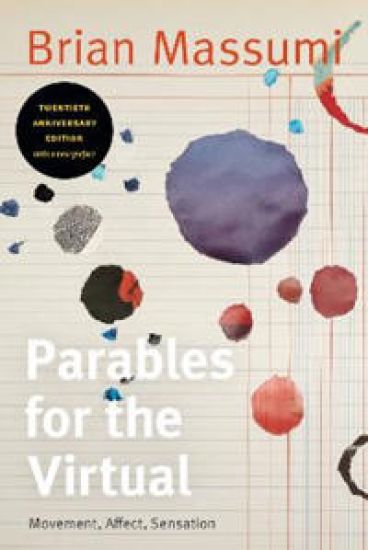
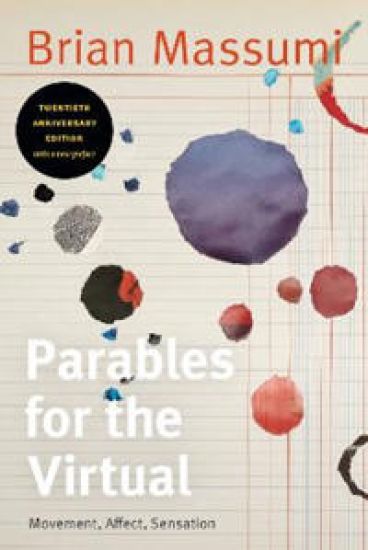
Since its publication twenty years ago, Brian Massumi's pioneering Parables for the Virtual has become an essential text for interdisciplinary scholars across the humanities. Massumi views the body and media such as television, film, and the internet as cultural formations that operate on multiple registers of sensation. Renewing and assessing William James's radical empiricism and Henri Bergson's philosophy of perception through the filter of the postwar French philosophy of Deleuze, Guattari, and Foucault, Massumi links a cultural logic of variation to questions of movement, affect, and sensation. Replacing the traditional opposition of literal and figural with distinctions between stasis and motion and between actual and virtual, Massumi tackles related theoretical issues by applying them to cultural mediums as diverse as architecture, body art, the digital art of Stelarc, and Ronald Reagan's acting career. The result is an intriguing combination of cultural theory, science, and philosophy that asserts itself in a crystalline and multifaceted argument. This twentieth anniversary edition includes a new preface in which Massumi situates the book in relation to developments since its publication and outlines the evolution of its main concepts. It also includes two short texts, “Keywords for Affect” and “Missed Conceptions about Affect,” in which Massumi explicates his approach to affect in ways that emphasize the book's political and philosophical stakes.
Since its publication twenty years ago, Brian Massumi's pioneering Parables for the Virtual has become an essential text for interdisciplinary scholars across the humanities. Massumi views the body and media such as television, film, and the internet as cultural formations that operate on multiple registers of sensation. Renewing and assessing William James's radical empiricism and Henri Bergson's philosophy of perception through the filter of the postwar French philosophy of Deleuze, Guattari, and Foucault, Massumi links a cultural logic of variation to questions of movement, affect, and sensation. Replacing the traditional opposition of literal and figural with distinctions between stasis and motion and between actual and virtual, Massumi tackles related theoretical issues by applying them to cultural mediums as diverse as architecture, body art, the digital art of Stelarc, and Ronald Reagan's acting career. The result is an intriguing combination of cultural theory, science, and philosophy that asserts itself in a crystalline and multifaceted argument. This twentieth anniversary edition includes a new preface in which Massumi situates the book in relation to developments since its publication and outlines the evolution of its main concepts. It also includes two short texts, “Keywords for Affect” and “Missed Conceptions about Affect,” in which Massumi explicates his approach to affect in ways that emphasize the book's political and philosophical stakes.
In Couplets, Brian Massumi presents twenty-four essays that represent the full spectrum of his work during the past thirty years. Conceived as a companion volume to Parables for the Virtual, Couplets addresses the key concepts of Parables from different angles and contextualizes them, allowing their stakes to be more fully felt. Rather than organizing the essays chronologically or by topic, Massumi pairs them into couplets to encourage readers to make connections across conventional subject matter categories, to encounter disjunctions, and to link different phases in the evolution of his work. In his analyses of topics ranging from art, affect, and architecture to media theory, political theory, and the philosophy of experience, Massumi charts a field on which a family of conceptual problems plays out in ways that bear on the potentials for acting and perceiving the world. As an essential guide to Massumi's oeuvre, Couplets is both a primer for his new readers and a supplemental resource for those already engaged with his thought.
In Couplets, Brian Massumi presents twenty-four essays that represent the full spectrum of his work during the past thirty years. Conceived as a companion volume to Parables for the Virtual, Couplets addresses the key concepts of Parables from different angles and contextualizes them, allowing their stakes to be more fully felt. Rather than organizing the essays chronologically or by topic, Massumi pairs them into couplets to encourage readers to make connections across conventional subject matter categories, to encounter disjunctions, and to link different phases in the evolution of his work. In his analyses of topics ranging from art, affect, and architecture to media theory, political theory, and the philosophy of experience, Massumi charts a field on which a family of conceptual problems plays out in ways that bear on the potentials for acting and perceiving the world. As an essential guide to Massumi's oeuvre, Couplets is both a primer for his new readers and a supplemental resource for those already engaged with his thought.


A beautifully written study of three pioneering artists, entwining their work and our understanding of creativity Bringing the creative process of three contemporary artists into conversation, Architectures of the Unforeseen stages an encounter between philosophy and art and design. Its gorgeous prose invites the reader to think along with Brian Massumi as he thoroughly embodies the work of these artists, walking the line that separates theory from art and providing equally nurturing sustenance for practicing artists and working philosophers.Based on Massumi’s lengthy-and in two cases decades-long-relationships with digital architect Greg Lynn, interactive media artist Rafael-Lozano Hemmer, and mixed-media installation creator Simryn Gill, Architectures of the Unforeseen delves into their processes of creating art. The book’s primary interest is in what motivates each artist’s practice-the generative knots that inspire creativity-and in how their pieces work to give off their unique effects. More than a series of profiles or critical pieces, Massumi’s essays are creative, developing new philosophical concepts and offering rigorous sentiments about art and creativity.Asking fundamental questions about nature, culture, and the emergence of the new, Architectures of the Unforeseen is important original research on artists that are pioneers in their field. Equally valuable to the everyday reader and those engaged in scholarly work, it is destined to become an important book not only for the fields of digital architecture, interactive media, and installation art, but also more basically for our knowledge of art and creativity.

A speculative exploration of value, emphasizing practical experimentation in its future forms How can we begin to envision a postcapitalist economy without first engineering a radically new concept of value? And with a renewed sense of how and what we collectively value, what would the transition to new social forms look like? According to Brian Massumi, it is time to reclaim value from the capitalist market and the neoliberal reduction of life to “human capital.” It is time to occupy surplus-value for a postcapitalist future.99 Theses on the Revaluation of Value is both a theoretical and practical manifesto. Massumi reexamines ideas about money, exchange, and finance, with special attention to how what we value in experience for quality is economically translated into quantity. He proposes new conceptual tools for understanding value in directly qualitative terms, speculating on how this revaluation of value might practically form the basis of an alter-economy. A promising path, he suggests, might involve emerging blockchain technologies beyond bitcoin. But these must be uprooted from their libertarian origins and redesigned to serve not individual choice but collective creativity, not calculations of self-interest but collaborative speculations on the future to be shared. It is necessary to grasp the specificity of our contemporary neoliberal condition and the ultimately destructive forms of power it mobilizes to better resist their claim on the future.99 Theses on the Revaluation of Value is written to galvanize a radical redefinition of value for a livable postcapitalist future.
Color coded terror alerts, invasion, drone war, rampant surveillance: all manifestations of the type of new power Brian Massumi theorizes in Ontopower. Through an in-depth examination of the War on Terror and the culture of crisis, Massumi identifies the emergence of preemption, which he characterizes as the operative logic of our time. Security threats, regardless of the existence of credible intelligence, are now felt into reality. Whereas nations once waited for a clear and present danger to emerge before using force, a threat's felt reality now demands launching a preemptive strike. Power refocuses on what may emerge, as that potential presents itself to feeling. This affective logic of potential washes back from the war front to become the dominant mode of power on the home front as well. This is ontopower-the mode of power embodying the logic of preemption across the full spectrum of force, from the “hard” (military intervention) to the "soft" (surveillance). With Ontopower, Massumi provides an original theory of power that explains not only current practices of war but the culture of insecurity permeating our contemporary neoliberal condition.
Color coded terror alerts, invasion, drone war, rampant surveillance: all manifestations of the type of new power Brian Massumi theorizes in Ontopower. Through an in-depth examination of the War on Terror and the culture of crisis, Massumi identifies the emergence of preemption, which he characterizes as the operative logic of our time. Security threats, regardless of the existence of credible intelligence, are now felt into reality. Whereas nations once waited for a clear and present danger to emerge before using force, a threat's felt reality now demands launching a preemptive strike. Power refocuses on what may emerge, as that potential presents itself to feeling. This affective logic of potential washes back from the war front to become the dominant mode of power on the home front as well. This is ontopower-the mode of power embodying the logic of preemption across the full spectrum of force, from the “hard” (military intervention) to the "soft" (surveillance). With Ontopower, Massumi provides an original theory of power that explains not only current practices of war but the culture of insecurity permeating our contemporary neoliberal condition.
'The capacity to affect and to be affected'. This simple definition opens a world of questions - by indicating an openness to the world. To affect and to be affected is to be in encounter, and to be in encounter is to have already ventured forth. Adventure: far from being enclosed in the interiority of a subject, affect concerns an immediate participation in the events of the world. It is about intensities of experience. What is politics made of, if not adventures of encounter? What are encounters, if not adventures of relation? The moment we begin to speak of affect, we are already venturing into the political dimension of relational encounter. This is the dimension of experience in-the-making. This is the level at which politics is emergent. In these wide-ranging interviews, Brian Massumi explores this emergent politics of affect, weaving between philosophy, political theory and everyday life. The discussions wend their way 'transversally': passing between the tired oppositions which too often encumber thought, such as subject/object, body/mind and nature/culture. New concepts are gradually introduced to remap the complexity of relation and encounter for a politics of emergence: 'differential affective attunement', 'collective individuation', 'micropolitics', 'thinking-feeling', 'ontopower', 'immanent critique'. These concepts are not offered as definitive solutions. Rather, they are designed to move the inquiry still further, for an ongoing exploration of the political problems posed by affect. Politics of Affect offers an accessible entry-point into the work of one of the defining figures of the last quarter century, as well as opening up new avenues for philosophical reflection and political engagement.
'The capacity to affect and to be affected'. This simple definition opens a world of questions - by indicating an openness to the world. To affect and to be affected is to be in encounter, and to be in encounter is to have already ventured forth. Adventure: far from being enclosed in the interiority of a subject, affect concerns an immediate participation in the events of the world. It is about intensities of experience. What is politics made of, if not adventures of encounter? What are encounters, if not adventures of relation? The moment we begin to speak of affect, we are already venturing into the political dimension of relational encounter. This is the dimension of experience in-the-making. This is the level at which politics is emergent. In these wide-ranging interviews, Brian Massumi explores this emergent politics of affect, weaving between philosophy, political theory and everyday life. The discussions wend their way 'transversally': passing between the tired oppositions which too often encumber thought, such as subject/object, body/mind and nature/culture. New concepts are gradually introduced to remap the complexity of relation and encounter for a politics of emergence: 'differential affective attunement', 'collective individuation', 'micropolitics', 'thinking-feeling', 'ontopower', 'immanent critique'. These concepts are not offered as definitive solutions. Rather, they are designed to move the inquiry still further, for an ongoing exploration of the political problems posed by affect. Politics of Affect offers an accessible entry-point into the work of one of the defining figures of the last quarter century, as well as opening up new avenues for philosophical reflection and political engagement.
Rational self-interest is often seen as being at the heart of liberal economic theory. In The Power at the End of the Economy Brian Massumi provides an alternative explanation, arguing that neoliberalism is grounded in complex interactions between the rational and the emotional. Offering a new theory of political economy that refuses the liberal prioritization of individual choice, Massumi emphasizes the means through which an individual’s affective tendencies resonate with those of others on infra-individual and transindividual levels. This nonconscious dimension of social and political events plays out in ways that defy the traditional equation between affect and the irrational. Massumi uses the Arab Spring and the Occupy Movement as examples to show how transformative action that exceeds self-interest takes place. Drawing from David Hume, Michel Foucault, Gilles Deleuze, Niklas Luhmann and the field of nonconsciousness studies, Massumi urges a rethinking of the relationship between rational choice and affect, arguing for a reassessment of the role of sympathy in political and economic affairs.