Kirjojen hintavertailu. Mukana 12 390 323 kirjaa ja 12 kauppaa.

Kirjailija

Brian McNair

Kirjat ja teokset yhdessä paikassa: 25 kirjaa, julkaisuja vuosilta 1991-2025, suosituimpien joukossa Communication and Political Crisis. Vertaile teosten hintoja ja tarkista saatavuus suomalaisista kirjakaupoista.

25 kirjaa

Kirjojen julkaisuhaarukka 1991-2025.

Images of the Enemy

Images of the Enemy

Brian McNair

TAYLOR FRANCIS LTD
2025
nidottu
Images of the Enemy (1985) discusses and decodes British television news coverage of the superpower disarmament talks and east–west crises such as the Korean airline incident. Through extensive interviews with journalists in London and Moscow, it examines the structures, organisations and political constraints that encouraged negative views of the USSR to flourish. Using Soviet and British reports of Chernobyl as a test case, it asks whether the impact of Gorbachev and glasnost improved conditions in coverage.
Images of the Enemy

Images of the Enemy

Brian McNair

TAYLOR FRANCIS LTD
2023
sidottu
Images of the Enemy (1985) discusses and decodes British television news coverage of the superpower disarmament talks and east–west crises such as the Korean airline incident. Through extensive interviews with journalists in London and Moscow, it examines the structures, organisations and political constraints that encouraged negative views of the USSR to flourish. Using Soviet and British reports of Chernobyl as a test case, it asks whether the impact of Gorbachev and glasnost improved conditions in coverage.
Fake News

Fake News

Brian McNair

TAYLOR FRANCIS LTD
2021
nidottu
Fake News: Falsehood, fabrication and fantasy in journalism examines the causes and consequences of the ‘fake news’ phenomenon now sweeping the world’s media and political debates. Drawing on three decades of research and writing on journalism and news media, the author engages with the fake news phenomenon in accessible, insightful language designed to bring clarity and context to a complex and fast-moving debate.The author presents fake news not as a cultural issue in isolation but rather as arising from, and contributing to, significant political and social trends in twenty-first century societies. Chapters identify the factors which have laid the groundwork for fake news’ explosive appearance at this moment in our globalised public sphere. These include the rise of relativism and the crisis of objectivity, the role of digital media platforms in the production and consumption of news, and the growing drive to produce online content which attracts users and generates revenue.
Fake News

Fake News

Brian McNair

Routledge
2017
sidottu
Fake News: Falsehood, fabrication and fantasy in journalism examines the causes and consequences of the ‘fake news’ phenomenon now sweeping the world’s media and political debates. Drawing on three decades of research and writing on journalism and news media, the author engages with the fake news phenomenon in accessible, insightful language designed to bring clarity and context to a complex and fast-moving debate.The author presents fake news not as a cultural issue in isolation but rather as arising from, and contributing to, significant political and social trends in twenty-first century societies. Chapters identify the factors which have laid the groundwork for fake news’ explosive appearance at this moment in our globalised public sphere. These include the rise of relativism and the crisis of objectivity, the role of digital media platforms in the production and consumption of news, and the growing drive to produce online content which attracts users and generates revenue.
An Introduction to Political Communication
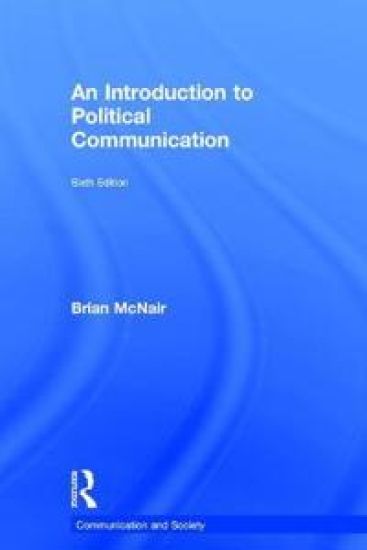
At a time of radical shifts in power across the globe, the sixth edition of An Introduction to Political Communication examines the role of the media in the political process. Brian McNair reflects on the role of communication in key events such as the referendum vote for the UK’s withdrawal from the European Union, the rise of nationalist populism in Europe, and the victory of Donald Trump in the 2016 US presidential election. He explores the use of communication as a weapon by Islamic State and other insurgent organisations, and by Putin’s Russia in its dealings with the West, including the hacking of Democratic Party emails in 2016. McNair argues that an expanding globalised public sphere and digital media network have transformed political communication, allowing political actors, from politicians and pressure groups to trade unions and terrorist organisations, to bypass traditional, established media in communicating their messages.This sixth edition of McNair’s classic text has been comprehensively revised and updated to include: the 2016 US presidential election and Donald Trump’s rise to power; the UK’s EU referendum of 2016, the Scottish independence referendum of 2014 and the ‘snap’ UK general election of June 2017; the growing role in political communication of the internet and social media platforms such as Twitter, Facebook and YouTube, and their destabilising impact on the management of political crises all over the world including the shooting down of Malaysian Airlines MH17 and the disappearance of MH370, the Tianjin disaster in China and the Russian intervention in Ukraine; Islamic State’s global jihad, and the use of social media as an instrument of terror;the growing capacity of WikiLeaks and other online sources, such as the International Consortium of Investigative Journalists, to challenge elite control of information.
An Introduction to Political Communication
At a time of radical shifts in power across the globe, the sixth edition of An Introduction to Political Communication examines the role of the media in the political process. Brian McNair reflects on the role of communication in key events such as the referendum vote for the UK’s withdrawal from the European Union, the rise of nationalist populism in Europe, and the victory of Donald Trump in the 2016 US presidential election. He explores the use of communication as a weapon by Islamic State and other insurgent organisations, and by Putin’s Russia in its dealings with the West, including the hacking of Democratic Party emails in 2016. McNair argues that an expanding globalised public sphere and digital media network have transformed political communication, allowing political actors, from politicians and pressure groups to trade unions and terrorist organisations, to bypass traditional, established media in communicating their messages.This sixth edition of McNair’s classic text has been comprehensively revised and updated to include: the 2016 US presidential election and Donald Trump’s rise to power; the UK’s EU referendum of 2016, the Scottish independence referendum of 2014 and the ‘snap’ UK general election of June 2017; the growing role in political communication of the internet and social media platforms such as Twitter, Facebook and YouTube, and their destabilising impact on the management of political crises all over the world including the shooting down of Malaysian Airlines MH17 and the disappearance of MH370, the Tianjin disaster in China and the Russian intervention in Ukraine; Islamic State’s global jihad, and the use of social media as an instrument of terror;the growing capacity of WikiLeaks and other online sources, such as the International Consortium of Investigative Journalists, to challenge elite control of information.
Politics, Media and Democracy in Australia

Politics, Media and Democracy in Australia

Brian McNair; Terry Flew; Stephen Harrington; Adam Swift

Routledge
2017
nidottu
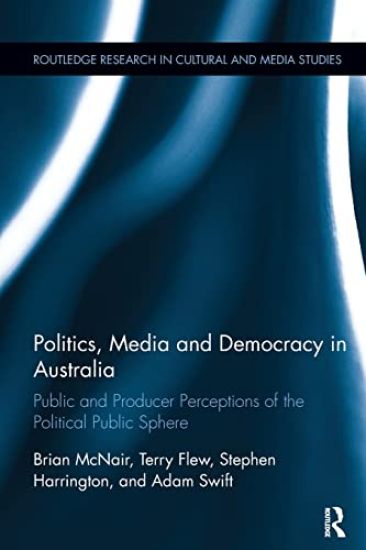
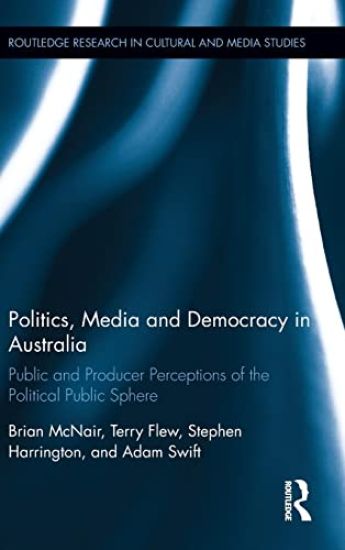
In Australia, as in many comparable democracies, the role of the media in the political process is high on the public agenda. There is a perception of widespread disillusionment with and disengagement from politics amongst voters, and criticism of the media for failing to fulfil their democratic responsibilities adequately. This book evaluates public perceptions of the performance of the political media in the context of the declared aims and objectives of media producers. From there the authors present findings for improving the capacity of political media to engage and inform their audiences in ways which enhance the quality and popular legitimacy of the democratic process. These conclusions are of import not only to Australians, but to observers of mediated politics in the UK, the US and other countries where similar debates around the ‘crisis of public communication’ are on-going.
Politics, Media and Democracy in Australia

Politics, Media and Democracy in Australia

Brian McNair; Terry Flew; Stephen Harrington; Adam Swift

Routledge
2017
sidottu
In Australia, as in many comparable democracies, the role of the media in the political process is high on the public agenda. There is a perception of widespread disillusionment with and disengagement from politics amongst voters, and criticism of the media for failing to fulfil their democratic responsibilities adequately. This book evaluates public perceptions of the performance of the political media in the context of the declared aims and objectives of media producers. From there the authors present findings for improving the capacity of political media to engage and inform their audiences in ways which enhance the quality and popular legitimacy of the democratic process. These conclusions are of import not only to Australians, but to observers of mediated politics in the UK, the US and other countries where similar debates around the ‘crisis of public communication’ are on-going.
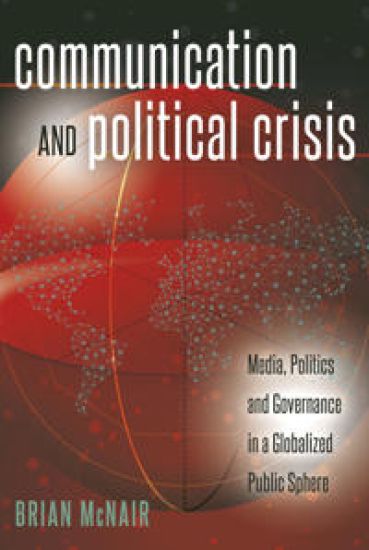
Communication and Political Crisis

Communication and Political Crisis

Brian McNair

Peter Lang Publishing Inc
2016
nidottu
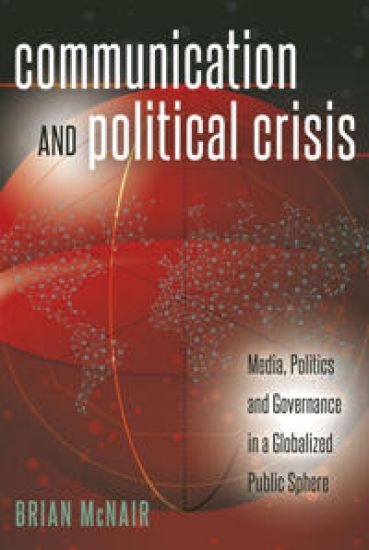
Communication and Political Crisis explores the role of the global media in a period of intensifying geopolitical conflict. Through case studies drawn from domestic and international political crises such as the conflicts in the Middle East and Ukraine, leading media scholar Brian McNair argues that the digitized, globalized public sphere now confronted by all political actors has produced new opportunities for social progress and democratic reform, as well as new channels for state propaganda and terrorist spectaculars such as those performed by the Islamic State and Al Qaeda. In this major work, McNair argues that the role of digital communication will be crucial in determining the outcome of pressing global issues such as the future of feminism and gay rights, freedom of speech and media, and democracy itself.
Communication and Political Crisis

Communication and Political Crisis

Brian McNair

Peter Lang Publishing Inc
2016
sidottu
Communication and Political Crisis explores the role of the global media in a period of intensifying geopolitical conflict. Through case studies drawn from domestic and international political crises such as the conflicts in the Middle East and Ukraine, leading media scholar Brian McNair argues that the digitized, globalized public sphere now confronted by all political actors has produced new opportunities for social progress and democratic reform, as well as new channels for state propaganda and terrorist spectaculars such as those performed by the Islamic State and Al Qaeda. In this major work, McNair argues that the role of digital communication will be crucial in determining the outcome of pressing global issues such as the future of feminism and gay rights, freedom of speech and media, and democracy itself.
Porno? Chic!

Porno? Chic!

Brian McNair

Routledge
2012
sidottu
Porno? Chic! examines the relationship between the proliferation of pornography and sexualised culture in the West and social and cultural trends which have advanced the rights of women and homosexuals.Brian McNair addresses this relationship with an analysis of trends in sexualised culture since 2002 linked to a transnational analysis of change in sexual politics and sex/gender relations in a range of societies, from the sexually liberalised societies of advanced capitalism to those in which women and homosexuals remain tightly controlled by authoritarian, patriarchal regimes. In this accessible, jargon-free book, Brian McNair examines why those societies in which sexualised culture is the most liberalised and pervasive are also those in which the socio-economic and political rights of women and homosexuals have advanced the most.
Porno? Chic!

Porno? Chic!

Brian McNair

Routledge
2012
nidottu
Porno? Chic! examines the relationship between the proliferation of pornography and sexualised culture in the West and social and cultural trends which have advanced the rights of women and homosexuals.Brian McNair addresses this relationship with an analysis of trends in sexualised culture since 2002 linked to a transnational analysis of change in sexual politics and sex/gender relations in a range of societies, from the sexually liberalised societies of advanced capitalism to those in which women and homosexuals remain tightly controlled by authoritarian, patriarchal regimes. In this accessible, jargon-free book, Brian McNair examines why those societies in which sexualised culture is the most liberalised and pervasive are also those in which the socio-economic and political rights of women and homosexuals have advanced the most.
Journalists in Film

Journalists in Film

Brian McNair

Edinburgh University Press
2010
sidottu
We both love and hate our journalists. They are perceived as sexy and glamorous on the one hand, despicable and sleazy on the other. Opinion polls regularly indicate that we experience a kind of cultural schizophrenia in our relationship to journalists and the news media: sometimes they are viewed as heroes, at other times villains. From Watergate to the fabrication scandals of the 2000s, journalists have risen and fallen in public esteem. In this book, leading journalism studies scholar Brian McNair explores how journalists have been represented through the prism of one of our key cultural forms, cinema. Drawing on the history of cinema since the 1930s, and with a focus on the period 1997-2008, McNair explores how journalists have been portrayed in film, and what these images tell us about the role of the journalist in liberal democratic societies. Separate chapters are devoted to the subject of female journalists in film, foreign correspondents, investigative reporters and other categories of news maker who have featured regularly in cinema. The book also discusses the representation of public relations professionals in film. Illustrated throughout and written in an accessible and lively style suitable for academic and lay readers alike, Journalists in Film will be essential reading for students and teachers of journalism, and for all those concerned about the role of the journalist in contemporary society, not least journalists themselves. An appendix contains mini-essays on every film about journalism released in the cinema between 1997 and 2008.
Journalists in Film

Journalists in Film

Brian McNair

Edinburgh University Press
2010
nidottu
We both love and hate our journalists. They are perceived as sexy and glamorous on the one hand, despicable and sleazy on the other. Opinion polls regularly indicate that we experience a kind of cultural schizophrenia in our relationship to journalists and the news media: sometimes they are viewed as heroes, at other times villains. From Watergate to the fabrication scandals of the 2000s, journalists have risen and fallen in public esteem. In this book, leading journalism studies scholar Brian McNair explores how journalists have been represented through the prism of one of our key cultural forms, cinema. Drawing on the history of cinema since the 1930s, and with a focus on the period 1997-2008, McNair explores how journalists have been portrayed in film, and what these images tell us about the role of the journalist in liberal democratic societies. Separate chapters are devoted to the subject of female journalists in film, foreign correspondents, investigative reporters and other categories of news maker who have featured regularly in cinema. The book also discusses the representation of public relations professionals in film. Illustrated throughout and written in an accessible and lively style suitable for academic and lay readers alike, Journalists in Film will be essential reading for students and teachers of journalism, and for all those concerned about the role of the journalist in contemporary society, not least journalists themselves. An appendix contains mini-essays on every film about journalism released in the cinema between 1997 and 2008.
News and Journalism in the UK

News and Journalism in the UK

Brian McNair

Routledge
2009
sidottu
News and Journalism in the UK is an accessible and comprehensive introduction to the political, economic and regulatory environments of press and broadcast journalism in Britain and Northern Ireland.Surveying the industry in a period of radical economic and technological change, Brian McNair examines the main trends in journalistic media in the last two decades and assesses the challenges and future of the industry in the new millennium.Integrating both academic and journalistic perspectives on journalism, topics addressed in this revised and updated edition include: the rise of online journalism and the impact of blogging on mainstream journalism the emergence of 24 hour news channels in the UK the role and impact of journalism, with reference to issues such as democracy, health scares and the war on terror trends in media ownership and editorial allegiances 'Tabloidisation', Americanisation and the supposed 'dumbing down' of journalistic standards the implications of devolution for regional journalists.
News and Journalism in the UK

News and Journalism in the UK

Brian McNair

Routledge
2009
nidottu
News and Journalism in the UK is an accessible and comprehensive introduction to the political, economic and regulatory environments of press and broadcast journalism in Britain and Northern Ireland.Surveying the industry in a period of radical economic and technological change, Brian McNair examines the main trends in journalistic media in the last two decades and assesses the challenges and future of the industry in the new millennium.Integrating both academic and journalistic perspectives on journalism, topics addressed in this revised and updated edition include: the rise of online journalism and the impact of blogging on mainstream journalism the emergence of 24 hour news channels in the UK the role and impact of journalism, with reference to issues such as democracy, health scares and the war on terror trends in media ownership and editorial allegiances 'Tabloidisation', Americanisation and the supposed 'dumbing down' of journalistic standards the implications of devolution for regional journalists.
Cultural Chaos

Cultural Chaos

Brian McNair

Routledge
2006
sidottu
With examples drawn from media coverage of the War on Terror, the 2003 invasion of Iraq, Hurricane Katrina and the London underground bombings, Cultural Chaos explores the changing relationship between journalism and power in an increasingly globalised news culture.In this new text, Brian McNair examines the processes of cultural, geographic and political dissolution in the post-Cold War era and the rapid evolution of information and communication technologies. He investigates the impact of these trends on domestic and international journalism and on political processes in democratic and authoritarian societies across the world.Written in a lively and accessible style, Cultural Chaos provides students with an overview of the evolution of the sociology of journalism, a critical review of current thinking within media studies and an argument for a revision and renewal of the paradigms that have dominated the field since the early twentieth century. Separate chapters are devoted to new developments such as the rise of the blogosphere and satellite television news and their impact on journalism more generally.Cultural Chaos will be essential reading for all those interested in the emerging globalised news culture of the twenty-first century.
Cultural Chaos

Cultural Chaos

Brian McNair

Routledge
2006
nidottu
With examples drawn from media coverage of the War on Terror, the 2003 invasion of Iraq, Hurricane Katrina and the London underground bombings, Cultural Chaos explores the changing relationship between journalism and power in an increasingly globalised news culture.In this new text, Brian McNair examines the processes of cultural, geographic and political dissolution in the post-Cold War era and the rapid evolution of information and communication technologies. He investigates the impact of these trends on domestic and international journalism and on political processes in democratic and authoritarian societies across the world.Written in a lively and accessible style, Cultural Chaos provides students with an overview of the evolution of the sociology of journalism, a critical review of current thinking within media studies and an argument for a revision and renewal of the paradigms that have dominated the field since the early twentieth century. Separate chapters are devoted to new developments such as the rise of the blogosphere and satellite television news and their impact on journalism more generally.Cultural Chaos will be essential reading for all those interested in the emerging globalised news culture of the twenty-first century.
An Introduction to Political Communication
An Introduction to Political Communication explores the relationship between politics, the media and democracy in the UK, the USA and other contemporary societies. Brian McNair examines how politicians, trade unions, pressure groups, non-governmental organizations and terrorist organizations make use of the media. Separate chapters look at political media and their effects, the work of political advertising, marketing and public relations and the communication practices of organizations at all levels, from grassroots campaigning through to governments and international bodies.Recent developments covered in the new edition include:* the re-election of New Labour in 2001* the changes in government information and communication policy introduced by the Blair administration since 1997* the 2000 election of George W. Bush in the United States* the NATO interventions in Kosovo and the former Yugoslavia* the implications for international political communication of September 11* the emergence of Al-Quaida and the war on terror.
Striptease Culture

Striptease Culture

Brian McNair

Routledge
2002
nidottu
From advertising to health education campaigns, sex and sexual imagery now permeate every aspect of culture. Striptease Culture explores the 'sexualization' of contemporary life, relating it to wider changes in post-war society.Striptease Culture is divided in to three sections:* Part one – traces the development of pornography, following its movement from elite to mass culture and the contemporary fascination with ‘porno-chic’* Part two – considers popular cultural forms of sexual representation in the media, moving from backlash elements in straight male culture and changing images of women, to the representation of gays in contemporary film and television* Part three – looks at the use of sexuality in contemporary art, examinging the artistic ‘striptease’ of Jeff Koons, and others who have used their own naked bodies in their work.Also considering how feminist and gay artists have employed sexuality in the critique and transformation of patriarchy, the high profile of sexuality as a key contributor to public health education in the era of HIV and AIDS, and the implications of the rise of striptease culture for the future of sexual poltics, Brian McNair has produced an excellent book in the study of gender, sexuality and contemporary culture.