Kirjojen hintavertailu. Mukana 12 390 323 kirjaa ja 12 kauppaa.

Kirjailija

Brian Mitchell Pete

Kirjat ja teokset yhdessä paikassa: 9 kirjaa, julkaisuja vuosilta 2007-2017, suosituimpien joukossa How to Differentiate Learning. Vertaile teosten hintoja ja tarkista saatavuus suomalaisista kirjakaupoista.

9 kirjaa

Kirjojen julkaisuhaarukka 2007-2017.

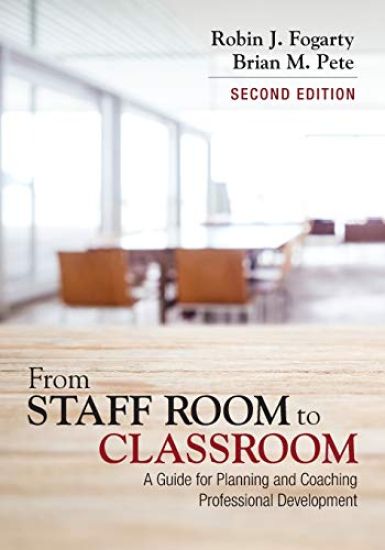
From Staff Room to Classroom

From Staff Room to Classroom

Fogarty Robin J.; Brian Mitchell Pete

Corwin Press Inc
2017
nidottu
The tips and tricks you need to know to make transfer happen! We know that the most expensive in-service is the one that teachers do not apply in the classroom. From Staff Room to Classroom offers district-level leaders, staff developers, and instructional coaches sure-fire tools and strategies for delivering professional learning that answers the question, "How can I use this in my classroom?" This resource provides comprehensive, indispensable guidance on: Effectively reaching and teaching adult learners by understanding their motivations, dispositions, and preferences The six levels of transfer and seven bridging strategies for supporting teachers as they apply content learned in PD to their classrooms and student interactionsUpdating professional learning to include technological developments and blended solutionsDifferentiating PD cross-generationally to promote reflective processing Instill effective professional development with this guide to raise the rigor of instruction in the classroom and change the culture of your building. "In From Staff Room to Classroom, Fogarty and Pete take us into their world of improving schools through professional development. The authors are very experienced and thoroughly grounded, high-level practitioners in their specialty." —Bruce Joyce, Author of Realizing the Promise of 21st-Century Education
How to Integrate the Curricula

How to Integrate the Curricula

Fogarty Robin J.; Brian Mitchell Pete

SAGE Publications Inc
2009
nidottu
"This book should make educators stop and consider exactly what they mean when they discuss curriculum integration" —Julie Prescott, Assessment Coordinator Vallivue High School, Caldwell, ID "The biggest strength of Fogarty's work is its clear, concise organization centered on the guiding questions of each chapter" —John C. Baker, Eighth-Grade Social Studies Teacher, Salem Middle School, Apex, NC For both students and teachers, the mission is essential: to connect ideas, discern themes, and thread skills of various content areas into a cohesive whole. Yet, the question remains: "What does integrating the curricula really mean?" The answers are provided in this updated resource that helps teachers create brain-compatible, learner-centered classrooms and better prepare students for lifelong learning. Based on a four-pronged rationale for using an integrated curriculum—including findings from brain-based research, parental concerns, practitioner challenges, and student perspectives—Robin Fogarty offers ten models that allow teams of teachers to work together to group elements from various content areas into a coherent curriculum that effectively meets standards. The discussion of each model includes: - A description of the model - How the model can be applied in the classroom - Benefits and challenges of the model for teaching and learning - Guidelines for when and how to implement the model in the classroom - A wealth of reproducibles to aid implementation How to Integrate the Curricula offers the support educators need to integrate concepts, skills, and attitudes and immerse students in content through self-selected, personally relevant learning experiences.
Data! Dialogue! Decisions!

Data! Dialogue! Decisions!

Brian Mitchell Pete; Catherine A. Duncan

Corwin Press Inc
2007
nidottu
The analysis of data for instructional decision making is a hallmark of the 21st century. Teachers and administrators alike need a process that links instant, consistent, and relevant data to instant, consistent, and relevant results. Data! Dialogue! Decisions! describes a simple process--selecting a piece of data, dialoging about the data, and making SMART goal decisions about how to increase student performance--that includes the critical elements for powerful school improvement: meaningful teams, managed data, and measurable goals. Using a collegial process, administrators and teachers choose their own school of class achievement data to analyze and interpret as they target 'breakthrough' instructional decisions that yield rapid and quantifiable results. Results have been staggeringly successful.