Kirjojen hintavertailu. Mukana 12 390 323 kirjaa ja 12 kauppaa.

Kirjailija

Brian Moeran

Kirjat ja teokset yhdessä paikassa: 26 kirjaa, julkaisuja vuosilta 1995-2024, suosituimpien joukossa The Business of Ethnography. Vertaile teosten hintoja ja tarkista saatavuus suomalaisista kirjakaupoista.

26 kirjaa

Kirjojen julkaisuhaarukka 1995-2024.

Ethnography in the Raw

Ethnography in the Raw

Brian Moeran

BERGHAHN BOOKS
2024
nidottu
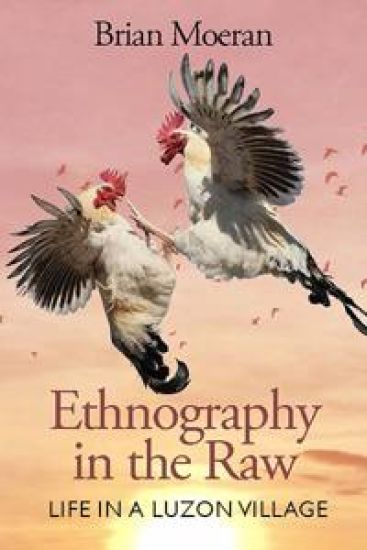
Ethnography in the Raw describes the author’s encounters with the Philippine family into which he has married, his wife’s friends and acquaintances, and their lives in a remote rural village in the rice basin of Luzon, about 130 miles northeast of Manila. The book links detailed descriptions of his Philippine family with cultural practices such as circumcision, marriage and cockfights combined with theoretical musings on the concepts of sacrifice, social exchange, patron-client relations, food, and religious symbolism. It is both anthropological fieldwork ‘in the raw,’ and an incisive analysis of contemporary Philippine society and culture.
Creative and Cultural Industries in East Asia

Creative and Cultural Industries in East Asia

Brian Moeran

Taylor Francis Ltd
2021
sidottu
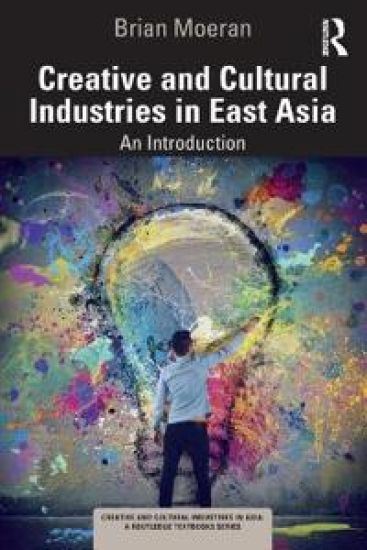
This book presents an introductory overview of the socio-economic organization of creative industries, focusing on the East Asian context. Establishing a theoretical framework founded on the work of Richard Caves, Howard Becker, and Pierre Bourdieu, this textbook is an accessible introduction to creative and cultural industries. Drawing on examples from Japan, South Korea, and China, it both examines what is unique about cultural production in these countries and places them in a global and intercultural context. Building on themes of uncertainty and networks of cooperation, Brian Moeran looks at the role of social ties in defining notions of quality. He then analyses the positioning of individual actors, organisations, and commodities in each field of cultural production and the exchanges of economic and symbolic capital that take place between them. Examples are taken from a range of cultural and creative industries, including film, music and fashion. Overall, Creative and Cultural Industries in East Asia serves as a foundational introduction to the study of creative and cultural production in East Asia.
Creative and Cultural Industries in East Asia

Creative and Cultural Industries in East Asia

Brian Moeran

Taylor Francis Ltd
2021
nidottu
This book presents an introductory overview of the socio-economic organization of creative industries, focusing on the East Asian context. Establishing a theoretical framework founded on the work of Richard Caves, Howard Becker, and Pierre Bourdieu, this textbook is an accessible introduction to creative and cultural industries. Drawing on examples from Japan, South Korea, and China, it both examines what is unique about cultural production in these countries and places them in a global and intercultural context. Building on themes of uncertainty and networks of cooperation, Brian Moeran looks at the role of social ties in defining notions of quality. He then analyses the positioning of individual actors, organisations, and commodities in each field of cultural production and the exchanges of economic and symbolic capital that take place between them. Examples are taken from a range of cultural and creative industries, including film, music and fashion. Overall, Creative and Cultural Industries in East Asia serves as a foundational introduction to the study of creative and cultural production in East Asia.
Ethnography in the Raw

Ethnography in the Raw

Brian Moeran

Berghahn Books
2021
sidottu
Ethnography in the Raw describes the author’s encounters with the Philippine family into which he has married, his wife’s friends and acquaintances, and their lives in a remote rural village in the rice basin of Luzon, about 130 miles northeast of Manila. The book links detailed descriptions of his Philippine family with cultural practices such as circumcision, marriage and cockfights combined with theoretical musings on the concepts of sacrifice, social exchange, patron-client relations, food, and religious symbolism. It is both anthropological fieldwork ‘in the raw,’ and an incisive analysis of contemporary Philippine society and culture.
The Magic of Fashion

The Magic of Fashion

Brian Moeran

Routledge
2019
nidottu
Drawing on 20 years of ethnographic fieldwork and anthropological theory, anthropologist Brian Moeran argues that fashion magazines are able to cast a spell over their readers by using practices and rituals found in age-old magical and religious rites.
The Magic of Fashion

The Magic of Fashion

Brian Moeran

Left Coast Press Inc
2015
sidottu
Drawing on 20 years of ethnographic fieldwork and anthropological theory, anthropologist Brian Moeran argues that fashion magazines are able to cast a spell over their readers by using practices and rituals found in age-old magical and religious rites.
Asian Media Productions

Asian Media Productions

Brian Moeran

Routledge
2015
nidottu
A substantial book on the social practices and cultural attitudes of people producing, reading, watching and listening to different kinds of media in Japan, China, Taiwan, Indonesia, Vietnam, Singapore and India.
The Business of Creativity

The Business of Creativity

Brian Moeran

Left Coast Press Inc
2013
sidottu
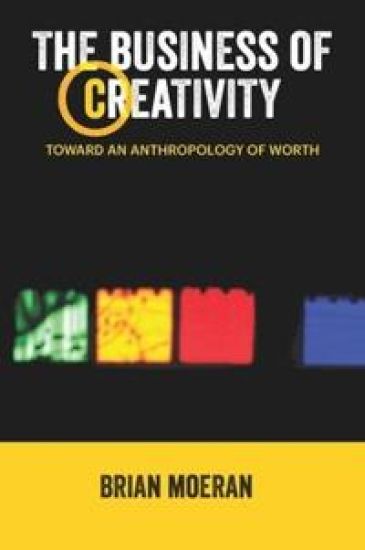
How does a group of people, brought together because of their diverse skills and professional knowledge, set out to be ‘creative’? How are ongoing tensions between beauty, fame, and money resolved? In The Business of Creativity, Brian Moeran, a leading scholar and writer on the creative industries, takes the sacred relic of creativity out of the crypt and airs it in the ethnographic alley. In contrast to the persistent image of creativity as the spontaneous inspiration of a gifted individual, Moeran shows how creativity emerges from collaborative engagements among people, genres, institutions, materials and technologies. He alternates thick description of work in fashion, advertising, and ceramic art with theoretical innovations that shed new light on the aesthetic, symbolic, and economic dimensions of creativity and the production of worth.
The Business of Creativity

The Business of Creativity

Brian Moeran

Left Coast Press Inc
2013
nidottu
How does a group of people, brought together because of their diverse skills and professional knowledge, set out to be ‘creative’? How are ongoing tensions between beauty, fame, and money resolved? In The Business of Creativity, Brian Moeran, a leading scholar and writer on the creative industries, takes the sacred relic of creativity out of the crypt and airs it in the ethnographic alley. In contrast to the persistent image of creativity as the spontaneous inspiration of a gifted individual, Moeran shows how creativity emerges from collaborative engagements among people, genres, institutions, materials and technologies. He alternates thick description of work in fashion, advertising, and ceramic art with theoretical innovations that shed new light on the aesthetic, symbolic, and economic dimensions of creativity and the production of worth.
Japanese Whaling?

Japanese Whaling?

Arne Kalland; Brian Moeran

Routledge
2013
nidottu
This book gives a social anthropological account of whaling culture in Japan. When originally published this was the first comprehensive account in English of the history of Japanese whaling, showing how it has given rise to a particular culture. The volume discusses what happens when that culture is threatened. At the same time as explaining the work organization of those involved in whaling, the role of whaling companies in local and national economies, and the role of the whale in the establishment and maintenance of local community identity (ritual, food, gift-giving), the authors address the wider political and so-called "environmental" issues surrounding whaling in general, and Japanese whaling in particular.
Language and Popular Culture in Japan
When this book was originally published it was the first work of its kind to examine the way in which language is used to express the ‘myth’ of advertising slogans and other popular cultural forms. By making use of general theories from the disciplines of anthropology, linguistics, media studies and semiotics, the book attempts to demystify Japanese culture as it has been hitherto presented in the West, and shows how such cultural forms as ‘noodle westerns’ and high-school baseball uphold the well-known ideologies of ‘selflessness’, ‘diligence’, ‘compliance’ and ‘co-operation’ typically associated with the Japanese. Ultimately, the book poses the question: are those whom we call the Japanese ‘real’ people in their own right, or merely a nation acting out a part written for them by Western civilisation?
Okubo Diary (Routledge Revivals)

Okubo Diary (Routledge Revivals)

Brian Moeran

Routledge
2011
nidottu
First published in 1985, this Routledge Revival is a lively and colourful account of life in the Japanese countryside, as seen through the eyes of an anthropologist who did fieldwork there for four years. Part journal, part ethnographic observation, part social and moral commentary, this very personal and sensitive book depicts not only the intricate relationships among the valley people, but also those between them and the anthropologist who has come from the outside world to study them.The book has a dual purpose: to portray the intimate, day-to-day lives of people living in a remote part of Japan, and to describe how one anthropologist tries – and eventually fails – to "become at one" with his informants. Throughout, the book questions the premises of participant observation, which has become a mainstay of modern anthropology.
Japanese Whaling?

Japanese Whaling?

Arne Kalland; Brian Moeran

Routledge
2010
sidottu
This book gives a social anthropological account of whaling culture in Japan. When originally published this was the first comprehensive account in English of the history of Japanese whaling, showing how it has given rise to a particular culture. The volume discusses what happens when that culture is threatened. At the same time as explaining the work organization of those involved in whaling, the role of whaling companies in local and national economies, and the role of the whale in the establishment and maintenance of local community identity (ritual, food, gift-giving), the authors address the wider political and so-called "environmental" issues surrounding whaling in general, and Japanese whaling in particular.
Language and Popular Culture in Japan
When this book was originally published it was the first work of its kind to examine the way in which language is used to express the ‘myth’ of advertising slogans and other popular cultural forms. By making use of general theories from the disciplines of anthropology, linguistics, media studies and semiotics, the book attempts to demystify Japanese culture as it has been hitherto presented in the West, and shows how such cultural forms as ‘noodle westerns’ and high-school baseball uphold the well-known ideologies of ‘selflessness’, ‘diligence’, ‘compliance’ and ‘co-operation’ typically associated with the Japanese. Ultimately, the book poses the question: are those whom we call the Japanese ‘real’ people in their own right, or merely a nation acting out a part written for them by Western civilisation?
Okubo Diary (Routledge Revivals)

Okubo Diary (Routledge Revivals)

Brian Moeran

Routledge
2010
sidottu
First published in 1985, this Routledge Revival is a lively and colourful account of life in the Japanese countryside, as seen through the eyes of an anthropologist who did fieldwork there for four years. Part journal, part ethnographic observation, part social and moral commentary, this very personal and sensitive book depicts not only the intricate relationships among the valley people, but also those between them and the anthropologist who has come from the outside world to study them.The book has a dual purpose: to portray the intimate, day-to-day lives of people living in a remote part of Japan, and to describe how one anthropologist tries – and eventually fails – to "become at one" with his informants. Throughout, the book questions the premises of participant observation, which has become a mainstay of modern anthropology.
Ethnography at Work

Ethnography at Work

Brian Moeran

Berg Publishers
2007
nidottu
Ethnography at Work follows the experiences of the author as a participant observer in the day-to-day running of a Japanese advertising agency. The book reveals the intricate behind-the-scenes planning, discussion, negotiations and strategies needed to ensure that the agency's presentation to a potential client will be preferred over that of a rival firm. The book shows how detailed ethnography can lead to an understanding of numerous different, but interlocking, theoretical issues. It demonstrates how ethnography can travel beyond the academic realm and be used by business personnel to heighten their understanding of their companies' organizational structures, strategies and daily work practices. Asking crucial questions about the role of the anthropologist in the field, Ethnography at Work introduces students to ways in which anthropologists study social systems in business.
Ethnography at Work

Ethnography at Work

Brian Moeran

Berg Publishers
2006
sidottu
Ethnography at Work follows the experiences of the author as a participant observer in the day-to-day running of a Japanese advertising agency. The book reveals the intricate behind-the-scenes planning, discussion, negotiations and strategies needed to ensure that the agency's presentation to a potential client will be preferred over that of a rival firm. The book shows how detailed ethnography can lead to an understanding of numerous different, but interlocking, theoretical issues. It demonstrates how ethnography can travel beyond the academic realm and be used by business personnel to heighten their understanding of their companies' organizational structures, strategies and daily work practices. Asking crucial questions about the role of the anthropologist in the field, Ethnography at Work introduces students to ways in which anthropologists study social systems in business.
The Business of Ethnography

The Business of Ethnography

Brian Moeran

Berg Publishers
2005
sidottu
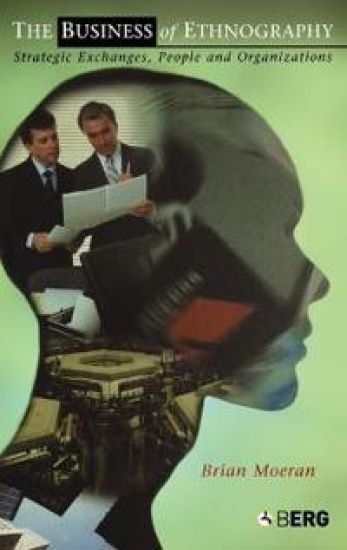
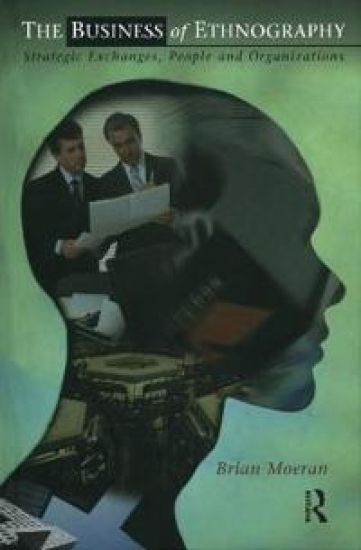
Can an anthropologist help us understand the world of business? Armed with this question, veteran anthropologist Brian Moeran embarks on an in-depth study of cultural production and creative industries in Japan. At once the blundering ethnographer and shrewd observer, Moeran is able to shed light not only on social behavior and human relations in general but, more specifically, on the importance of strategic exchange to all business practices. Moeran's fieldwork, rooted in participant-observation of business life in communities and corporations, leads him to an original theory of how business operates. Culture is not all-powerful, Moeran shows. Instead, social structures strongly influence behavior. At the heart of Moeran's analysis is a firm belief in fieldwork and ethnography - terms much bandied about in business, management and cultural studies, but rarely undertaken in depth. The Business of Ethnography not only provides a useful methodology for people studying or wishing to understand business, but also acts as a clarion call for anthropologists to rethink their discipline beyond traditional fieldwork sites.
The Business of Ethnography

The Business of Ethnography

Brian Moeran

Berg Publishers
2005
nidottu
Can an anthropologist help us understand the world of business? Armed with this question, veteran anthropologist Brian Moeran embarks on an in-depth study of cultural production and creative industries in Japan. At once the blundering ethnographer and shrewd observer, Moeran is able to shed light not only on social behavior and human relations in general but, more specifically, on the importance of strategic exchange to all business practices. Moeran's fieldwork, rooted in participant-observation of business life in communities and corporations, leads him to an original theory of how business operates. Culture is not all-powerful, Moeran shows. Instead, social structures strongly influence behavior. At the heart of Moeran's analysis is a firm belief in fieldwork and ethnography - terms much bandied about in business, management and cultural studies, but rarely undertaken in depth. The Business of Ethnography not only provides a useful methodology for people studying or wishing to understand business, but also acts as a clarion call for anthropologists to rethink their discipline beyond traditional fieldwork sites.