
Kirjailija
Brian Morris
Kirjat ja teokset yhdessä paikassa: 42 kirjaa, julkaisuja vuosilta 1970-2026, suosituimpien joukossa The European Community 1991/2. Vertaile teosten hintoja ja tarkista saatavuus suomalaisista kirjakaupoista.
42 kirjaa
Kirjojen julkaisuhaarukka 1970-2026.

Special Forces team is in for a ride on this pleasure cruise. Fighting to survive a living nightmare. Will the team prove themselves to be the best they were trained to be? Or will the team fail for the final test? Who can they trust? Who will live? and Who will die?


It's the start of the school holidays and four friends, Bob Hughes, Steve Martin, Nick Russel and Billy Price are on their way to Lizard Mountain to catch newts in their jam jars. But something strange happens when Christine Brown and Pam Martin arrive which plunges them into another world to begin a fight for their survival.



This pioneering book looks at the importance of insects to culture. While in the developed West a good deal of time and money may be spent trying to exterminate insects, in other cultures human-insect relations can be far more subtle and multi-faceted. Like animals, insects may be revered or reviled - and in some tribal communities insects may be the only source of food available. How people respond to, make use of, and relate to insects speaks volumes about their culture. In an effort to get to the bottom of our vexed relationship with the insect world, Brian Morris spent years in Malawi, a country where insects proliferate and people contend. In Malawi as in many tropical regions, insects have a profound impact on agriculture, the household, disease and medicine, and hence on oral literature, music, art, folklore, recreation and religion. Much of the complexity of human-insect relations rests on paradox: insects may represent the source of contagion, but they are also integral to many folk remedies for a wide range of illnesses. They may be at the root of catastrophic crop failure, but they can also be a form of sustenance.Weaving science with personal observations, Morris demonstrates a profound and intimate knowledge of virtually every aspect of human-insect relations. Not only is this book extraordinarily useful in terms of the more practical side of entomology, it also provides a wealth of information on the role of insects in cultural production. Malawian proverbs alone provide many such delightful examples - 'Bemberezi adziwa nyumba yake' ('The carpenter bee knows his own home'). This final volume in Morris' trilogy on Malawi's animal and insect worlds is certain to become a classic study of uncharted territory - the insect world that surrounds us and how we relate to it. Praise for The Power of Animals:Although based upon examination of a single culture, Morris incorporates ecological and anthropological concepts that expand this study of
This important textbook provides a critical introduction to the social anthropology of religion, focusing on more recent classical ethnographies. Comprehensive, free of scholastic jargon, engaging, and comparative in approach, it covers all the major religious traditions that have been studied concretely by anthropologists - Shamanism, Buddhism, Islam, Hinduism, Christianity and its relation to African and Melanesian religions and contemporary Neopaganism. Eschewing a thematic approach and treating religion as a social institution and not simply as an ideology or symbolic system, the book follows the dual heritage of social anthropology in combining an interpretative understanding and sociological analysis. The book will appeal to all students of anthropology, whether established scholars or initiates to the discipline, as well as to students of the social sciences and religious studies, and for all those interested in comparative religion.
This important textbook provides a critical introduction to the social anthropology of religion, focusing on more recent classical ethnographies. Comprehensive, free of scholastic jargon, engaging, and comparative in approach, it covers all the major religious traditions that have been studied concretely by anthropologists - Shamanism, Buddhism, Islam, Hinduism, Christianity and its relation to African and Melanesian religions and contemporary Neopaganism. Eschewing a thematic approach and treating religion as a social institution and not simply as an ideology or symbolic system, the book follows the dual heritage of social anthropology in combining an interpretative understanding and sociological analysis. The book will appeal to all students of anthropology, whether established scholars or initiates to the discipline, as well as to students of the social sciences and religious studies, and for all those interested in comparative religion.

This title looks at the importance of insects to culture. While in the developed West a good deal of time and money may be spent trying to exterminate insects, in other cultures human-section relations can be far more subtle and multi-faceted.
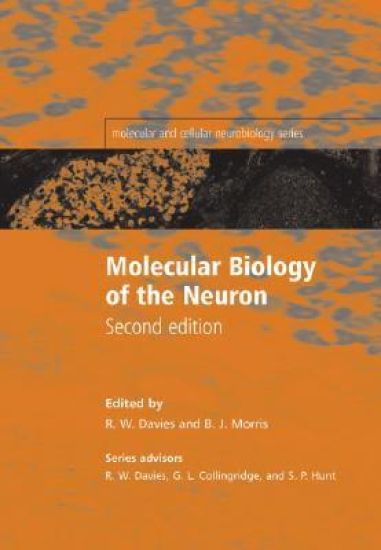
Neurons are arguably the most complex of all cells. From the action of these cells comes movement, thought and consciousness. It is a challenging task to understand what molecules direct the various diverse aspects of their function. This has produced an ever-increasing amount of molecular information about neurons, and only in Molecular Biology of the Neuron can a large part of this information be found in one source. In this book, a non-specialist can learn about the molecules that control information flow in the brain or the progress of brain disease in an approachable format, while the expert has access to a wealth of detailed information from a wide range of topics impacting on his or her field of endeavour. The text is designed to achieve a balance of accessibility and broad coverage with up-to-date molecular detail. In the six years since the first edition of Molecular Biology of the Neuron there has been an explosion in the molecular information about neurons that has been discovered, and this information is incorporated into this second edition. Entirely new chapters have been introduced where recent advances have made a new aspect of neuronal function more comprehensible at the molecular level. Written by leading researchers in the field, the book provides an essential overview of the molecular structure and function of neurons, and will be an invaluable tool to students and researchers alike.

The multiple ways in which people relate to animals provide a revealing window through which to examine a culture. Western cultures tend to view animals either as pets or food, and often overlook the vast number of roles that they may play within a culture and in social life more generally: their use in medicine, folk traditions and rituals. This comprehensive and very readable study focuses on Malawi people and their rich and varied relationship with animals -- from hunting through to their use as medicine. More broadly, through a rigorous and detailed study the author provides insights which show how the people's relationship to their world manifests itself not strictly in social relations, but just as tellingly in their relatioships with animals -- that, in fact, animals constitute a vital role in social relations. While significantly advancing classic African ethnographic studies, this book also incorporates current debates in a wide range of disciplines -- from anthropology through to gender studies and ecology.
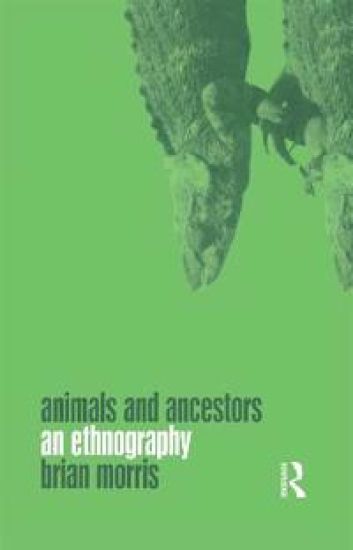
Ever since the emergence of human culture, people and animals have co-existed in close proximity. Humans have always recognized both their kinship with animals and their fundamental differences, as animals have always been a threat to humans' well-being. The relationship, therefore, has been complex, intimate, reciprocal, personal, and -- crucially -- ambivalent. It is hardly surprising that animals evoke strong emotions in humans, both positive and negative. This companion volume to Morris' important earlier work, The Power of Animals, is a sustained investigation of the Malawi people's sacramental attitude to animals, particularly the role that animals play in life-cycle rituals, their relationship to the divinity and to spirits of the dead. How people relate to and use animals speaks volumes about their culture and beliefs. This book overturns the ingrained prejudice within much ethnographic work, which has often dismissed the pivotal role animals play in culture, and shows that personhood, religion, and a wide range of rituals are informed by, and even dependent upon, human-animal relations.

Ever since the emergence of human culture, people and animals have co-existed in close proximity. Humans have always recognized both their kinship with animals and their fundamental differences, as animals have always been a threat to humans' well-being. The relationship, therefore, has been complex, intimate, reciprocal, personal, and -- crucially -- ambivalent. It is hardly surprising that animals evoke strong emotions in humans, both positive and negative. This companion volume to Morris' important earlier work, The Power of Animals, is a sustained investigation of the Malawi people's sacramental attitude to animals, particularly the role that animals play in life-cycle rituals, their relationship to the divinity and to spirits of the dead. How people relate to and use animals speaks volumes about their culture and beliefs. This book overturns the ingrained prejudice within much ethnographic work, which has often dismissed the pivotal role animals play in culture, and shows that personhood, religion, and a wide range of rituals are informed by, and even dependent upon, human-animal relations.

The multiple ways in which people relate to animals provide a revealing window through which to examine a culture. Western cultures tend to view animals either as pets or food, and often overlook the vast number of roles that they may play within a culture and in social life more generally: their use in medicine, folk traditions and rituals. This comprehensive and very readable study focuses on Malawi people and their rich and varied relationship with animals -- from hunting through to their use as medicine. More broadly, through a rigorous and detailed study the author provides insights which show how the people's relationship to their world manifests itself not strictly in social relations, but just as tellingly in their relatioships with animals -- that, in fact, animals constitute a vital role in social relations. While significantly advancing classic African ethnographic studies, this book also incorporates current debates in a wide range of disciplines -- from anthropology through to gender studies and ecology.
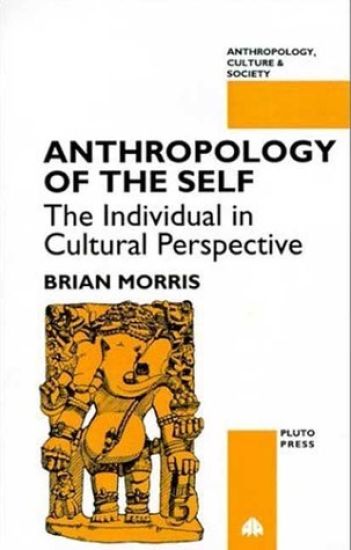
Western society is individualised; we feel at ease talking about individuals and we study individual behaviour through psychology and psychoanalysis. Yet anthropology teaches us that an individual approach is only one of many ways of looking at ourselves. In this wide-ranging text Morris explores the origins, doctrines and conceptions of the self in Western, Asian and African societies passing though Greek philosophy, Buddhism, Hinduism, Confuscism, Tao and African philosophy and ending with contemporary feminism. Scholarly and written in a lucid style, free of jargon, this work is written from an anthropological perspective with an interdisciplinary approach. Morris emphasises the varying conceptions of the self found cross-culturally and contrasts these with the conceptions found in the different Western intellectual traditions.

The life and thought of Bakunin has contemporary relevance, particularly for his definitions of freedom. This book confirms that his holistic thinking was dominated by a desire to achieve a unity of theory and practice. "Everything about him is colossalhe is full of a primitive exuberance and strength."--Richard Wagner

This is a comprehensive study of the varying conceptions of the human subject in the Western intellectual tradition. Although informed by an anthropological perspective, the author draws on material from all the major intellectual disciplines that have contributed to this tradition and offers biographical and theoretical vignettes of all the major Western scholars. By scrutinizing the classical texts of the Western tradition, he succeeds in delineating the differing conceptions of the human individual which emerge from these writings, and gives a guide to the most important ideas in Western cultural traditions.
In this important, scholarly and wide-ranging text, Brian Morris provides a lucid outline of the nature of the explanations of religious phenomena offered by such great thinkers as Hegel, Marx, and Weber. In doing so he also unravels the many theoretical strategies in the study of religion that have been developed and explored by later anthropologists. Besides discussing the classical authors and the debates surrounding their work, Morris presents perceptive accounts of more contemporary scholars such as Jung, Malinowski, Levi-Strauss, Geertz, and Godelier. Written from the standpoint of critical sympathy, and free of jargon, this book is an invaluable guide to the writings on religion of all the major figures in anthropology.