Kirjojen hintavertailu. Mukana 12 595 353 kirjaa ja 12 kauppaa.

Kirjailija

Brian Neil Peterson

Kirjat ja teokset yhdessä paikassa: 13 kirjaa, julkaisuja vuosilta 2012-2021, suosituimpien joukossa The Bible, Sexuality, and Culture. Vertaile teosten hintoja ja tarkista saatavuus suomalaisista kirjakaupoista.

13 kirjaa

Kirjojen julkaisuhaarukka 2012-2021.

The Bible, Sexuality, and Culture

The Bible, Sexuality, and Culture

Brian Neil Peterson

Resource Publications (CA)
2021
pokkari
We are living in a rapidly changing culture. Since the 1960s, the changes in our sexual ethics have become increasingly problematic. How are people--especially Evangelicals and other conservative Christians--supposed to respond? Does the Bible address these seismic changes? How is a believer supposed to raise a family in the cultural chaos of the twenty-first century? If you have asked any of these questions before, then this book is for you. Peterson argues forcefully that the changes in our culture are a direct result of a postmodern and post-Christian cultural rejection of the mandates established by God in the opening two chapters of Genesis. The reason Western culture is imploding morally is directly connected to the Enemy's undoing of each of the Genesis mandates established by God for human and cultural flourishing. With Western culture's rejection or undoing of every one of God's mandates in Genesis, is there any hope for the survival of once-thriving Judeo-Christian cultures? Peterson tackles these and many other issues in a forthright and unreserved manner. This book is not for the faint of heart. It is a call for a return to cultural sanity rooted in the fear of God and his Word.
The Bible, Sexuality, and Culture

The Bible, Sexuality, and Culture

Brian Neil Peterson

Resource Publications (CA)
2021
sidottu
We are living in a rapidly changing culture. Since the 1960s, the changes in our sexual ethics have become increasingly problematic. How are people--especially Evangelicals and other conservative Christians--supposed to respond? Does the Bible address these seismic changes? How is a believer supposed to raise a family in the cultural chaos of the twenty-first century? If you have asked any of these questions before, then this book is for you. Peterson argues forcefully that the changes in our culture are a direct result of a postmodern and post-Christian cultural rejection of the mandates established by God in the opening two chapters of Genesis. The reason Western culture is imploding morally is directly connected to the Enemy's undoing of each of the Genesis mandates established by God for human and cultural flourishing. With Western culture's rejection or undoing of every one of God's mandates in Genesis, is there any hope for the survival of once-thriving Judeo-Christian cultures? Peterson tackles these and many other issues in a forthright and unreserved manner. This book is not for the faint of heart. It is a call for a return to cultural sanity rooted in the fear of God and his Word.
Qoheleth’s Hope

Qoheleth’s Hope

Brian Neil Peterson

Lexington Books/Fortress Academic
2019
sidottu
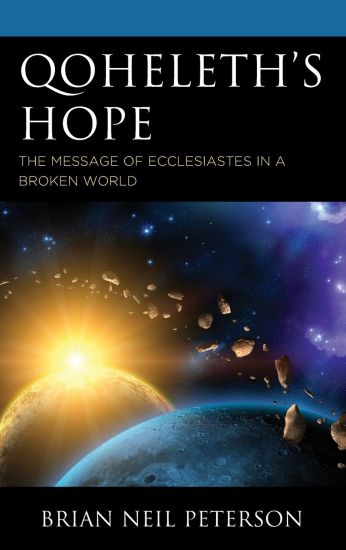
Pessimist! Hedonist! Skeptic! Fatalist! Scholars have used these and a variety of other pejoratives to describe Qoheleth, the author of the book of Ecclesiastes. But are these monikers fair assessments of this formative book of the Hebrew wisdom tradition? Brian Neil Peterson challenges this dominant scholarly perspective by arguing that Qoheleth’s message is more optimistic than is often proposed. He insists that Qoheleth—a realist who recognizes that the world is broken due to the Fall of Genesis 3—is instructing his readers to live life to the fullest in the fear of God despite the presence of injustice, oppression, and futility experienced on a daily basis. Due to the fleeting nature of life, Qoheleth offers hope to his readers and urges them to put God first and enjoy God’s good gifts, not as a destination in life, but rather as part of one’s earthly journey.
Hearing the Voice of God

Hearing the Voice of God

Brian Neil Peterson

Resource Publications (CA)
2018
sidottu
Knowing when God is speaking to you is sometimes easier said than done. Indeed, many people question how God speaks to believers today or, in some cases, if he does at all. Yet, for the believer, hearing God's voice is vital for direction in one's life and for spiritual development. In this book, Peterson offers a practical guide for hearing God's voice by presenting numerous anecdotal accounts demonstrating how this has played out in his own life. At the same time, Peterson's instruction is securely anchored in the precedent of Scripture. ""Brian Peterson's practical guide for learning to hear God's voice is a beautiful blend of the author's skill as a scholar of the Old Testament, his vocational experience as a gifted teacher and mentor to college students, and his wisdom as a loving father of four children. Weaving together insights from Scripture and personal experiences from his own faith journey, Peterson presents a rich panoply of the many and various ways God speaks to those who would train their ears and tune their lives to God's voice."" --Rickie Moore, Lee University ""Hearing the Voice of God confidently asserts that God speaks today. It also distinguishes itself from the traditional 'just read the Bible' and a culture that trusts the voice of its own inner self. This is a book about the many ways Pentecostals believe God speaks. Simply, God is truly polyphonic This book is personal. As a lifelong Pentecostal, Peterson weaves through each chapter his own experiences of hearing God's voice. This book is biblical. Each means of divine speaking and human listening has a biblical precedent--God spoke 'this way' in the Bible. This book is practical. Peterson encourages us to be bold in our listening and wise in our discernment. This book is about a spiritual tradition. It is not a Pentecostal novelty to practice listening to God but a spiritual practice in the tradition of Brother Lawrence's The Practice of the Presence of God. Hearing the Voice of God is about God speaking. It is also about human hearing."" --David A. Reed, Professor Emeritus of Pastoral Theology, Wycliffe College at the University of Toronto Brian Neil Peterson is Associate Professor of Old Testament and Hebrew at Lee University in Cleveland, Tennessee. He has authored a number of peer-reviewed articles and books including Ezekiel in Context (2012), The Authors of the Deuteronomistic History (2014), John's Use of Ezekiel (2015), What Was the Sin of Sodom? (2016), and Genesis as Torah (2018). He has also co-authored an OT survey titled, Voice, Word, and Spirit: A Pentecostal Survey of the Old Testament (2017).
Hearing the Voice of God

Hearing the Voice of God

Brian Neil Peterson

Resource Publications (CA)
2018
pokkari
Knowing when God is speaking to you is sometimes easier said than done. Indeed, many people question how God speaks to believers today or, in some cases, if he does at all. Yet, for the believer, hearing God's voice is vital for direction in one's life and for spiritual development. In this book, Peterson offers a practical guide for hearing God's voice by presenting numerous anecdotal accounts demonstrating how this has played out in his own life. At the same time, Peterson's instruction is securely anchored in the precedent of Scripture. "Brian Peterson's practical guide for learning to hear God's voice is a beautiful blend of the author's skill as a scholar of the Old Testament, his vocational experience as a gifted teacher and mentor to college students, and his wisdom as a loving father of four children. Weaving together insights from Scripture and personal experiences from his own faith journey, Peterson presents a rich panoply of the many and various ways God speaks to those who would train their ears and tune their lives to God's voice." --Rickie Moore, Lee University "Hearing the Voice of God confidently asserts that God speaks today. It also distinguishes itself from the traditional 'just read the Bible' and a culture that trusts the voice of its own inner self. This is a book about the many ways Pentecostals believe God speaks. Simply, God is truly polyphonic This book is personal. As a lifelong Pentecostal, Peterson weaves through each chapter his own experiences of hearing God's voice. This book is biblical. Each means of divine speaking and human listening has a biblical precedent--God spoke 'this way' in the Bible. This book is practical. Peterson encourages us to be bold in our listening and wise in our discernment. This book is about a spiritual tradition. It is not a Pentecostal novelty to practice listening to God but a spiritual practice in the tradition of Brother Lawrence's The Practice of the Presence of God. Hearing the Voice of God is about God speaking. It is also about human hearing." --David A. Reed, Professor Emeritus of Pastoral Theology, Wycliffe College at the University of Toronto Brian Neil Peterson is Associate Professor of Old Testament and Hebrew at Lee University in Cleveland, Tennessee. He has authored a number of peer-reviewed articles and books including Ezekiel in Context (2012), The Authors of the Deuteronomistic History (2014), John's Use of Ezekiel (2015), What Was the Sin of Sodom? (2016), and Genesis as Torah (2018). He has also co-authored an OT survey titled, Voice, Word, and Spirit: A Pentecostal Survey of the Old Testament (2017).
Genesis as Torah

Genesis as Torah

Brian Neil Peterson

Cascade Books
2018
pokkari
Should Genesis rightly be identified as law--that is, as torah or legal instruction for Israel? Peterson argues in the affirmative, concluding that Genesis serves a greater function than merely offering a prehistory or backstory for the people of Israel. As the introductory book to the Torah, Genesis must first and foremost be read as legal instruction for Israel. And how exactly is that instruction presented? Peterson posits that many of the Genesis accounts serve as case law. The Genesis narratives depict what a number of key laws in the pentateuchal law codes look like in practice. When Genesis is read through this lens, the rhetorical strategy of the biblical author(s) becomes clear and the purpose for including specific narratives takes on new meaning. ""In this creative and insightful study Brian Peterson demonstrates that Genesis is far more than an account of Israel's prehistory. It is fundamentally torah, in which the narratives illustrate at a practical level key laws that follow in the Pentateuch. This is a fascinating read that will enhance understanding of the purpose of Genesis and proclamation of its theological significance."" --Robert B. Chisholm, Jr., Chair and Senior Professor of Old Testament Studies, Dallas Theological Seminary ""Peterson shows again in his newest study a mastery of the Old Testament. His demonstration of the way Genesis' narratives give real-life instruction regarding Israel's life under covenant law is a significant step forward in biblical scholarship. The intertextual connections between narrative and legal instruction confirm the coherence and holistic character of biblical revelation."" --Kenneth Mathews, Professor of Divinity, Beeson Divinity School Brian Neil Peterson is Associate Professor of Old Testament and Hebrew at Lee University in Cleveland, Tennessee. His most recent books are Ezekiel in Context (2012), The Authors of the Deuteronomistic History (2014), John's Use of Ezekiel (2015), What Was the Sin of Sodom? (2016), and Voice, Word, and Spirit (coauthor, 2017).
Genesis as Torah

Genesis as Torah

Brian Neil Peterson

Cascade Books
2018
sidottu
Should Genesis rightly be identified as law--that is, as torah or legal instruction for Israel? Peterson argues in the affirmative, concluding that Genesis serves a greater function than merely offering a prehistory or backstory for the people of Israel. As the introductory book to the Torah, Genesis must first and foremost be read as legal instruction for Israel. And how exactly is that instruction presented? Peterson posits that many of the Genesis accounts serve as case law. The Genesis narratives depict what a number of key laws in the pentateuchal law codes look like in practice. When Genesis is read through this lens, the rhetorical strategy of the biblical author(s) becomes clear and the purpose for including specific narratives takes on new meaning. ""In this creative and insightful study Brian Peterson demonstrates that Genesis is far more than an account of Israel's prehistory. It is fundamentally torah, in which the narratives illustrate at a practical level key laws that follow in the Pentateuch. This is a fascinating read that will enhance understanding of the purpose of Genesis and proclamation of its theological significance."" --Robert B. Chisholm, Jr., Chair and Senior Professor of Old Testament Studies, Dallas Theological Seminary ""Peterson shows again in his newest study a mastery of the Old Testament. His demonstration of the way Genesis' narratives give real-life instruction regarding Israel's life under covenant law is a significant step forward in biblical scholarship. The intertextual connections between narrative and legal instruction confirm the coherence and holistic character of biblical revelation."" --Kenneth Mathews, Professor of Divinity, Beeson Divinity School Brian Neil Peterson is Associate Professor of Old Testament and Hebrew at Lee University in Cleveland, Tennessee. His most recent books are Ezekiel in Context (2012), The Authors of the Deuteronomistic History (2014), John's Use of Ezekiel (2015), What Was the Sin of Sodom? (2016), and Voice, Word, and Spirit (coauthor, 2017).
John's Use of Ezekiel

John's Use of Ezekiel

Brian Neil Peterson

Fortress Press,U.S.
2015
pokkari
Scholars have long puzzled over the distinctive themes and sequence of John's narrative in contrast to the accounts in the Synoptic Gospels. Brian Neil Peterson now offers a remarkable explanation for some of the most unusual features of the Fourth Gospel, including the exalted language of the Johannine prologue; the focus upon Jesus as Word; the imagery of light and darkness, of glory and "tabernacling"; the role-and rejection-of prophecy; the early placement of Jesus' "cleansing" of the temple and his relation to it; the emphasis on "signs" confirming Jesus' identity; and the prominence ofJesus' "I Am" sayings. Peterson finds important connections with motifs, themes, and even the macrostructure of the book of Ezekiel at just the points of John's divergence from the synoptic narrative. His examination of events and sequence in the Fourth Gospel produces a novel understanding of John as steeped in the theology of Ezekiel-and of the Johannine Christ as the fulfillment of the vision of Ezekiel.
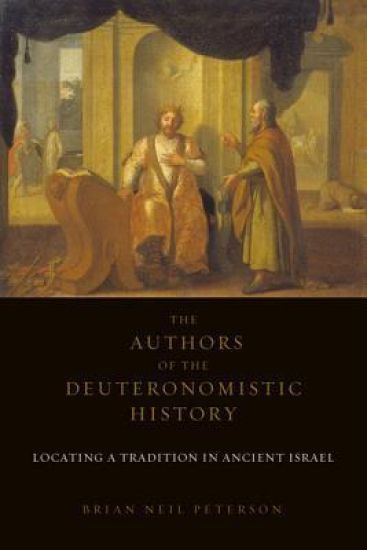
The Authors of the Deuteronomistic History

The Authors of the Deuteronomistic History

Brian Neil Peterson

Fortress Press,U.S.
2014
pokkari
Peterson engages one of the most enduring controversies in current critical scholarship on the Hebrew Bible, the identities and provenances of the authors of the various "editions" of the Deuteronomistic History. Critically reviewing the presuppositions of scholars reaching back to Martin Noth, and using careful analysis of motif and characterization at each redactional level in each book of the Deuteronomistic History, Peterson asks where we might locate a figure with both motive and opportunity to draw up a proto-narrative including elements of Joshua, Judges, Samuel, and the first part of 1 Kings. Posing his questions in the form of a "Whodunit?" Peterson identifies a particular candidate in the time of David who had both knowledge and a theological and political agenda, qualified to write the first edition. He then extends the method to identify the particular circle who became the custodians of the Deuteronomistic narrative and supplies successive redactions, informed by the original formative vision, down to the time of Jeremiah. Careful argumentation yields surprising results at each stage.