Kirjojen hintavertailu. Mukana 12 390 323 kirjaa ja 12 kauppaa.

Kirjailija

Brian P. Copenhaver

Kirjat ja teokset yhdessä paikassa: 7 kirjaa, julkaisuja vuosilta 1978-2022, suosituimpien joukossa Renaissance Philosophy. Vertaile teosten hintoja ja tarkista saatavuus suomalaisista kirjakaupoista.

7 kirjaa

Kirjojen julkaisuhaarukka 1978-2022.

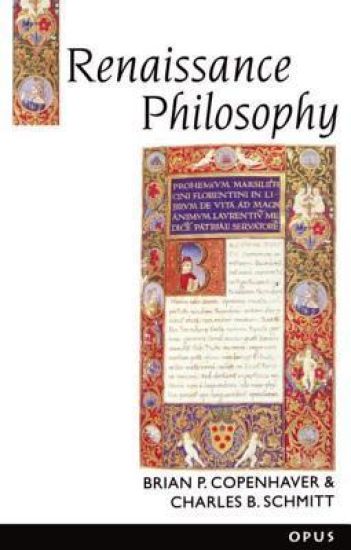
Renaissance Philosophy

Renaissance Philosophy

Brian P. Copenhaver; Charles B. Schmitt

Oxford University Press
1992
nidottu
The Renaissance has long been recognized as a brilliant moment in the development of Western civilization. However, little attention has been devoted to the distinct contributions of philosophy to Renaissance culture. This volume introduces the reader to the philosophy written, read, taught, and debated during the period traditionally credited with the `revival of learning'. The authors examine the relation of Renaissance philosophy to humanism and the universities, the impact of rediscovered ancient sources, the recovery of Plato and the Neoplatonists, and the evolving ascendancy of Aristotle. Renaissance Philosophy also explores the original contributions of major figures including Bruni, Valla, Ficino, Pico della Mirandola, Pomponazzi, Machiavelli, More, Vitoria, Montaigne, Bruno, and Campanella. Renaissance Philosophy demonstrates the uses of ancient and medieval philosophy by Renaissance thinkers, and throws light on the early modern origins of modern philosophy.
Pico della Mirandola on Trial

Pico della Mirandola on Trial

Brian P. Copenhaver

Oxford University Press
2022
sidottu
Giovanni Pico della Mirandola has been a beacon of progress in modern times, and the Oration on the Dignity of Man has been the engine of his fame. But he never wrote a speech about the dignity of man. The prince's speech announced quite different projects: persuading Christians to become Kabbalists in order to annihilate themselves in God; and convincing philosophers that their path to saving wisdom was concord rather than disputation. Pico della Mirandola On Trial: Heresy, Freedom, and Philosophy shows that Pico's work was in no way progressive - or 'humanist' - and that his main authorities were medieval clerics and theologians, not secular Renaissance intellectuals. The evidence is Pico's Apology, his self-defence against heresy charges: this public polemic reveals more about him than the famous speech that he never gave and that deliberately kept its message secret. The orator's method in the Oration was esoteric, but the defendant in the Apology made his case openly in a voice that was academic and belligerent, not prophetic or poetic. Since the middle of the last century, textbooks written for college students have promoted only one Pico, a hero of progressive humanism. But his Conclusions and Apology, products of late medieval culture, were in no way progressive. The grim scene of the Apology, his report on a battle for life and honor, was the proximate medieval past where human history was despised as the annals of sin. To understand Pico's universe of dismal expectations, our best guide is his Apology, based on lessons learned from medieval teachers.
Magic and the Dignity of Man

Magic and the Dignity of Man

Brian P. Copenhaver

The Belknap Press
2019
sidottu
“This book is nothing less than the definitive study of a text long considered central to understanding the Renaissance and its place in Western culture.” —James Hankins, Harvard UniversityPico della Mirandola died in 1494 at the age of thirty-one. During his brief and extraordinary life, he invented Christian Kabbalah in a book that was banned by the Catholic Church after he offered to debate his ideas on religion and philosophy with anyone who challenged him. Today he is best known for a short speech, the Oration on the Dignity of Man, written in 1486 but never delivered. Sometimes called a “Manifesto of the Renaissance,” this text has been regarded as the foundation of humanism and a triumph of secular rationality over medieval mysticism.Brian Copenhaver upends our understanding of Pico’s masterwork by re-examining this key document of modernity. An eminent historian of philosophy, Copenhaver shows that the Oration is not about human dignity. In fact, Pico never wrote an Oration on the Dignity of Man and never heard of that title. Instead he promoted ascetic mysticism, insisting that Christians need help from Jews to find the path to heaven—a journey whose final stages are magic and Kabbalah. Through a rigorous philological reading of this much-studied text, Copenhaver transforms the history of the idea of dignity and reveals how Pico came to be misunderstood over the course of five centuries. Magic and the Dignity of Man is a seismic shift in the study of one of the most remarkable thinkers of the Renaissance.
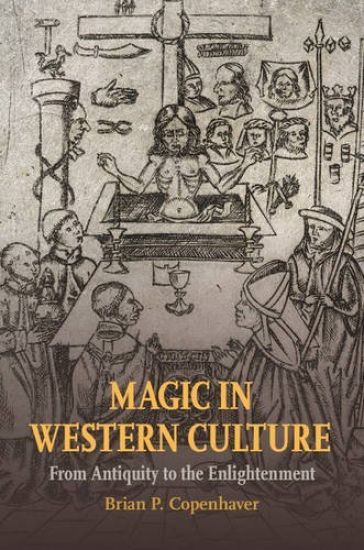
Magic in Western Culture

Magic in Western Culture

Brian P. Copenhaver

Cambridge University Press
2018
pokkari
The story of the beliefs and practices called 'magic' starts in ancient Iran, Greece, and Rome, before entering its crucial Christian phase in the Middle Ages. Centering on the Renaissance and Marsilio Ficino - whose work on magic was the most influential account written in premodern times - this groundbreaking book treats magic as a classical tradition with foundations that were distinctly philosophical. Besides Ficino, the premodern story of magic also features Plotinus, Iamblichus, Proclus, Aquinas, Agrippa, Pomponazzi, Porta, Bruno, Campanella, Descartes, Boyle, Leibniz, and Newton, to name only a few of the prominent thinkers discussed in this book. Because pictures play a key role in the story of magic, this book is richly illustrated.
Magic in Western Culture

Magic in Western Culture

Brian P. Copenhaver

Cambridge University Press
2015
sidottu
The story of the beliefs and practices called 'magic' starts in ancient Iran, Greece, and Rome, before entering its crucial Christian phase in the Middle Ages. Centering on the Renaissance and Marsilio Ficino - whose work on magic was the most influential account written in premodern times - this groundbreaking book treats magic as a classical tradition with foundations that were distinctly philosophical. Besides Ficino, the premodern story of magic also features Plotinus, Iamblichus, Proclus, Aquinas, Agrippa, Pomponazzi, Porta, Bruno, Campanella, Descartes, Boyle, Leibniz, and Newton, to name only a few of the prominent thinkers discussed in this book. Because pictures play a key role in the story of magic, this book is richly illustrated.
Peter of Spain: Summaries of Logic

Peter of Spain: Summaries of Logic

Brian P. Copenhaver; Calvin G. Normore; Terence Parsons

Oxford University Press
2014
sidottu
For nearly four centuries, when logic was the heart of what we now call the 'undergraduate curriculum', Peter of Spain's Summaries of Logic (c. 1230) was the basis for teaching that subject. Because Peter's students were teenagers, he wrote simply and organized his book carefully. Since no book about logic was read by more people until the twentieth century, the Summaries has extensively and profoundly influenced the distinctly Western way of speaking formally and writing formal prose by constructing well-formed sentences, making valid arguments, and refuting and defending arguments in debate. Some books, like the Authorized Version of the English Bible and the collected plays of Shakespeare, have been more influential in the Anglophone world than Peter's Summaries--but not many. This new English translation, based on an update of the Latin text of Lambertus De Rijk, comes with an extensive introduction that deals with authorship, dating, and the place of the Summaries in the development of logic, before providing a chapter-by-chapter analysis of Peter's book, followed by an analysis of his system from the point of view of modern logic. The Latin text is presented on facing pages with the English translation, accompanied by notes, and the book includes a full bibliography.