
Kirjojen hintavertailu. Mukana 12 546 943 kirjaa ja 12 kauppaa.

Kirjailija

Brian R Pellar

Kirjat ja teokset yhdessä paikassa: 4 kirjaa, julkaisuja vuosilta 2017-2022, suosituimpien joukossa Moby-Dick and Melville’s Anti-Slavery Allegory. Vertaile teosten hintoja ja tarkista saatavuus suomalaisista kirjakaupoista.

Mukana myös kirjoitusasut: Brian R. Pellar

4 kirjaa

Kirjojen julkaisuhaarukka 2017-2022.

The Siren Sea

The Siren Sea

Brian R Pellar

Brian Pellar
2022
pokkari
"A Fresh Tale From A Fresh, Accomplished Writer" -- Thomas Keneally, author of Schindler's ListThrough the release of Freedom of Information documents, including a sailor's journal, details of the "Fuji Jiken" nuclear weapon incident are unveiled within The Siren Sea: In 1977, while playing chess, two sailors aboard the aircraft carrier USS Midway entertain the idea of how to get a nuclear weapon past security -- as the system is set up to keep someone from getting in, not out. However, their game turns serious after several traumatizing mishaps, and they commit to taking a W57 nuclear warhead off the ship in Yokosuka, Japan for humanitarian reasons. They plan to take the warhead to Mt. Fuji, notify the press, and become heroes. The Siren Sea is work of fiction that will keep readers captivated to the very end. About the Author: Brian R. Pellar is the author of the non-fiction book Moby-Dick and Melville's Anti-Slavery Allegory (Palgrave Macmillan, 2017). He has also published six papers on the Origins of the Alphabet in the academic journal Sino-Platonic Papers (SPP 196, SPP 219, SPP 246, SPP 263, SPP 296, and SPP 328). He is also an artist and has a life-size figurative bronze sculpture, Form No. 2, permanently installed in the Chancellor's Rose Garden at UC Irvine. He also designed UC Irvine's anteater-head ceremonial graduation mace. After serving four years in the US Navy -- with two years aboard the aircraft carrier USS Midway (CV-41) in Japan -- he attended UC Irvine as an undergraduate in 1983 and a graduate student in their MFA program in fiction in 1994.Please review the video trailer for the book below: https: //www.youtube.com/watch?v=Fz_kdMx_pH0

The Siren Sea

The Siren Sea

Brian R Pellar

Brian Pellar
2022
sidottu
"A Fresh Tale From A Fresh, Accomplished Writer" -- Thomas Keneally, author of Schindler's ListThrough the release of Freedom of Information documents, including a sailor's journal, details of the "Fuji Jiken" nuclear weapon incident are unveiled within The Siren Sea: In 1977, while playing chess, two sailors aboard the aircraft carrier USS Midway entertain the idea of how to get a nuclear weapon past security -- as the system is set up to keep someone from getting in, not out. However, their game turns serious after several traumatizing mishaps, and they commit to taking a W57 nuclear warhead off the ship in Yokosuka, Japan for humanitarian reasons. They plan to take the warhead to Mt. Fuji, notify the press, and become heroes. The Siren Sea is work of fiction that will keep readers captivated to the very end. About the Author: Brian R. Pellar is the author of the non-fiction book Moby-Dick and Melville's Anti-Slavery Allegory (Palgrave Macmillan, 2017). He has also published six papers on the Origins of the Alphabet in the academic journal Sino-Platonic Papers (SPP 196, SPP 219, SPP 246, SPP 263, SPP 296, and SPP 328). He is also an artist and has a life-size figurative bronze sculpture, Form No. 2, permanently installed in the Chancellor's Rose Garden at UC Irvine. He also designed UC Irvine's anteater-head ceremonial graduation mace. After serving four years in the US Navy -- with two years aboard the aircraft carrier USS Midway (CV-41) in Japan -- he attended UC Irvine as an undergraduate in 1983 and a graduate student in their MFA program in fiction in 1994. Please review the video trailer for the book below: https: //www.youtube.com/watch?v=Fz_kdMx_pH0
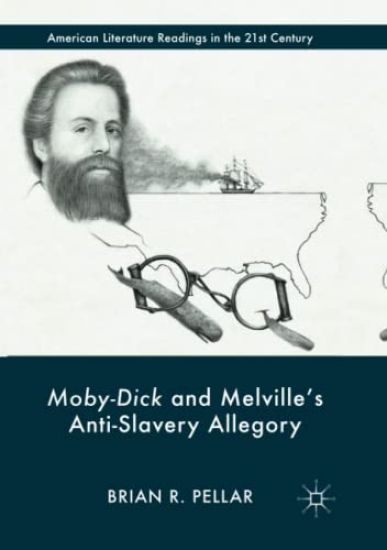
Moby-Dick and Melville’s Anti-Slavery Allegory

Moby-Dick and Melville’s Anti-Slavery Allegory

Brian R. Pellar; J. Hillis Miller

Springer International Publishing AG
2018
nidottu
This book unfurls and examines the anti-slavery allegory at the subtextual core of Herman Melville’s famed novel, Moby-Dick. Brian Pellar points to symbols and allusions in the novel such as the albinism of the famed whale, the “Ship of State” motif, Calhoun’s “cords,” the equator, Jonah, Narcissus, St. Paul, and Thomas Hobbe’s Leviathan. The work contextualizes these devices within a historical discussion of the Compromise of 1850 and subsequently strengthened Fugitive Slave Laws. Drawing on a rich variety of sources such as unpublished papers, letters, reviews, and family memorabilia, the chapters discuss the significance of these laws within Melville’s own life. After clarifying the hidden allegory interconnecting black slaves and black whales, this book carefully sheds the layers of a hidden meaning that will be too convincing to ignore for future readings: Moby-Dick is ultimately a novel that is intimately connected with questions of race, slavery, and the state.
Moby-Dick and Melville’s Anti-Slavery Allegory

Moby-Dick and Melville’s Anti-Slavery Allegory

Brian R. Pellar; J. Hillis Miller

Springer International Publishing AG
2017
sidottu
This book unfurls and examines the anti-slavery allegory at the subtextual core of Herman Melville’s famed novel, Moby-Dick. Brian Pellar points to symbols and allusions in the novel such as the albinism of the famed whale, the “Ship of State” motif, Calhoun’s “cords,” the equator, Jonah, Narcissus, St. Paul, and Thomas Hobbe’s Leviathan. The work contextualizes these devices within a historical discussion of the Compromise of 1850 and subsequently strengthened Fugitive Slave Laws. Drawing on a rich variety of sources such as unpublished papers, letters, reviews, and family memorabilia, the chapters discuss the significance of these laws within Melville’s own life. After clarifying the hidden allegory interconnecting black slaves and black whales, this book carefully sheds the layers of a hidden meaning that will be too convincing to ignore for future readings: Moby-Dick is ultimately a novel that is intimately connected with questions of race, slavery, and the state.